Higher rates help deliver 3.53 trillion yen in six months
Japan's three largest banking groups earned a combined 3.5305 trillion yen in net profit in the six months through September 2026, up 21.1% from a year earlier, as higher interest rates and strong corporate borrowing lifted all three to record interim results.
Contents
- Higher rates help deliver 3.53 trillion yen in six months
- MUFG's figures show how the earnings grew
- What changed in the profit forecasts?
- Two rate increases changed the lending environment
- Companies are still borrowing to invest
- Mizuho grows fastest, while quarterly results diverge
- Investment gains provide another source of profit
- Shareholders gain as the wider sector sets records
- Data centres and credit losses are the next tests
- Key Points
Mitsubishi UFJ Financial Group (MUFG), Sumitomo Mitsui Financial Group (SMFG) and Mizuho Financial Group announced their results on November 13. Together, they raised their profit forecasts for the year ending March 31, 2027, by 500 billion yen to 6.3 trillion yen.
MUFG led with net profit of 1.6308 trillion yen, up 26.1%. SMFG earned about 1.0032 trillion yen, a rise of 7.5% and its first interim result above 1 trillion yen. Mizuho recorded 896.49 billion yen, up 29.9%, giving it the fastest percentage growth among the three.
The banks are benefiting from a widening gap between the interest they earn on loans and the interest they pay to obtain money, including customer deposits. Companies have continued borrowing for equipment, acquisitions and everyday business needs despite the higher cost.
Shareholders will receive part of the gains through larger dividends and share purchases. Management teams also identified risks for the months ahead, particularly possible weakness in investment in artificial intelligence infrastructure and the cost of loans that become harder to repay.
MUFG's figures show how the earnings grew
MUFG's interim results highlights, published on November 13, put profit attributable to shareholders of the parent company at 1.6308 trillion yen, an increase of 337.9 billion yen. This was its fourth consecutive record for the April to September period.
Net interest income reached 1.8512 trillion yen, up 411.2 billion yen from 1.44 trillion yen. That represents growth of about 28.6%. Net interest income is the interest a bank earns from lending and investments after subtracting the interest it pays for funding.
MUFG said higher Japanese interest rates and increased lending supported that growth. Higher domestic rates contributed about 140 billion yen to net operating profit, while a weaker yen contributed about 35 billion yen.
Fees also mattered. Trust fees and net fees and commissions increased to 1.2296 trillion yen from 1.0779 trillion yen. MUFG pointed to financing services, business advice and asset management in Japan and abroad.
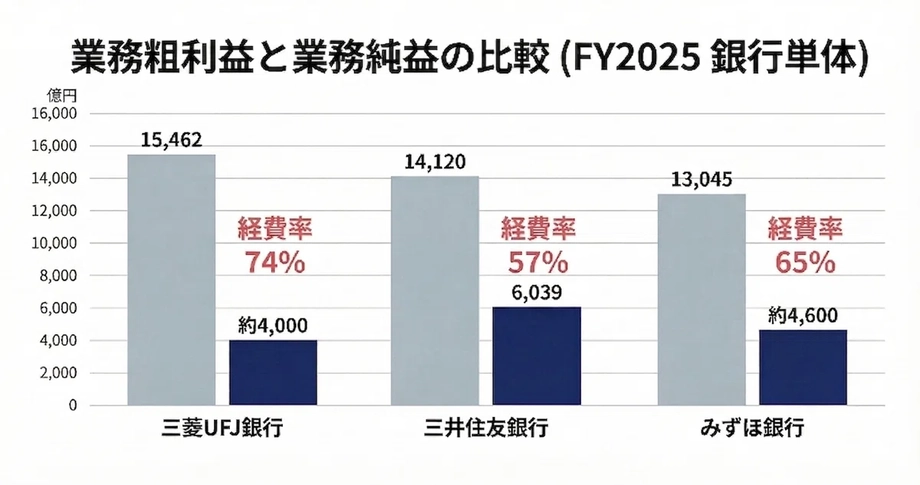
Operating expenses rose to 1.8349 trillion yen from 1.6487 trillion yen as inflation, spending on domestic retail operations and cybersecurity increased costs. Revenue grew faster than those expenses, allowing net operating profit to reach 1.6174 trillion yen.
What changed in the profit forecasts?
MUFG raised its annual net profit target from 2.7 trillion yen to 2.8 trillion yen. SMFG increased its target from 1.7 trillion yen to 1.9 trillion yen, while Mizuho lifted its forecast from 1.4 trillion yen to 1.6 trillion yen.
The combined increase takes the three groups from an earlier target of 5.8 trillion yen to 6.3 trillion yen, a rise of about 8.6%. SMFG said its revised forecast would represent annual profit growth of about 20%.
SMFG attributed 95 billion yen of its 200 billion yen upgrade to favorable market conditions, including higher interest rates. That is nearly half the increase, showing how much the changing rate environment contributes to its improved outlook.
MUFG kept its annual net operating profit target unchanged at 2.9 trillion yen even as it raised its final profit forecast. Its official statement cited strong customer businesses and increased earnings from investments in affiliated companies, while retaining room for spending intended to support future growth.
The figures cover different stages of the accounts. Net operating profit describes earnings from banking operations, while final net profit also reflects items such as investment gains, credit costs and taxes. The year closes on March 31, 2027, when the banks' actual performance can be measured against these targets.
Two rate increases changed the lending environment
The Bank of Japan raised its policy rate twice during the first half of the fiscal year. Those decisions helped push up lending rates at the banks and increased the income earned from loans.
The main dates are:
- April 1, 2026: The fiscal year began.
- June 2026: The Bank of Japan raised its policy rate to around 1.0%.
- September 2026: The central bank increased the rate to around 1.25%, bringing the combined increase in June and September to 0.5 percentage points.
- September 30, 2026: The banks completed the six months covered by their interim results.
- October 2026: The Bank of Japan left the policy rate unchanged.
- November 13, 2026: The banking groups announced their results and higher annual profit forecasts.
- March 31, 2027: The current fiscal year ends.
Higher rates can help a bank when the interest it earns on loans rises faster than its funding costs. Borrowers face the other side of that change: more expensive financing can make an investment less attractive or increase the cost of running a business.
Competition for deposits also affects the calculation. Banks need deposits to support lending, and paying customers more interest increases their own costs. The three groups described differing results in attracting deposits, although the announcements discussed here did not provide comparable figures for each bank.
Companies are still borrowing to invest
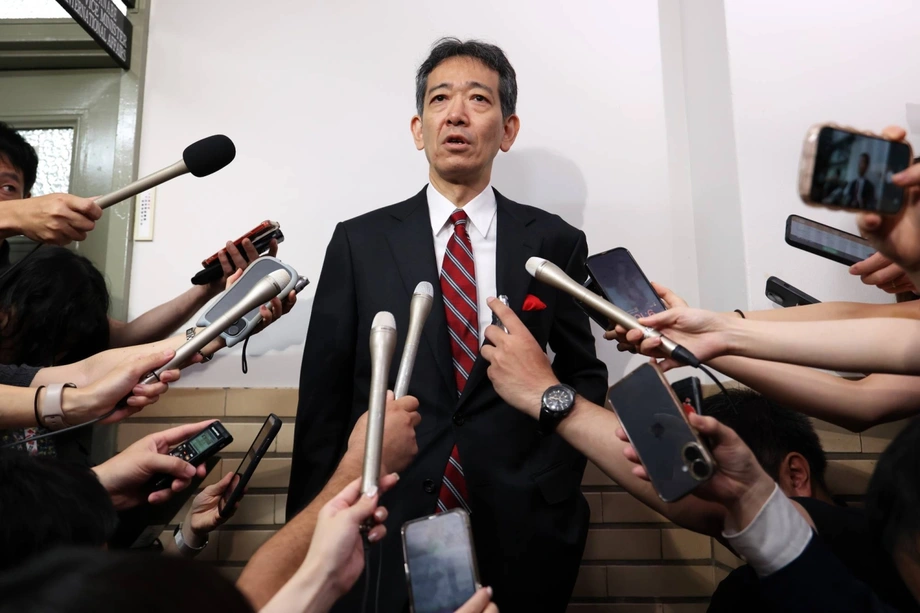
SMFG chief executive Toru Nakashima said businesses continued to seek financing despite higher rates. He described investment demand as strong:
"Companies' appetite for capital investment remains strong, as does demand for bank financing," he said.
Nakashima also said the effects of higher borrowing costs would become more visible over time, while describing their current impact as limited. His comments help explain how lending income can rise even while loans become more expensive: companies are continuing with projects they believe will generate enough income to justify the cost.
Mizuho chief executive Masahiro Kihara identified working capital, mergers and acquisitions, and new equipment investment as reasons for strong domestic corporate lending. Working capital is the money a business needs for daily expenses, such as wages, stock and payments to suppliers.
Mizuho's net interest income increased to 771.28 billion yen from 652.68 billion yen, a gain of 118.6 billion yen, or about 18.2%. Its ordinary profit, a Japanese accounting measure before tax and certain special items, rose 47.3% to about 1.25 trillion yen.
Mizuho grows fastest, while quarterly results diverge
Mizuho's 29.9% increase in interim net profit extended a pattern of faster percentage growth. In the previous fiscal year, which ended in March 2026, its annual profit rose 41.0% to approximately 1.2 trillion yen. MUFG earned about 2.4 trillion yen that year and SMFG about 1.6 trillion yen, with respective growth of 30.3% and 34.4%.
Mizuho's previous annual results showed how its lending mix helped. Its domestic lending margin widened by 0.19 percentage points to 1.10%. Much of its lending to large Japanese companies carried variable rates that could adjust as market rates increased.
The latest quarterly figures show a less uniform picture than the record interim totals. MUFG's July to September net profit rose about 10% to 821.5 billion yen. Mizuho's increased 19% to 473.6 billion yen.
SMFG's profit for the same quarter fell about 10% to 501.8 billion yen. The comparison reflects a 94 billion yen gain recorded a year earlier from selling a stake in India's Kotak Mahindra Bank. A large gain in the earlier period made the latest quarter's growth comparison tougher, even as SMFG's total profit for six months reached a record.
Investment gains provide another source of profit
MUFG's official results show that earnings from affiliated companies increased by 91.3 billion yen to 473.2 billion yen, mainly because of strong performance at Morgan Stanley. Under this accounting method, MUFG records its share of the earnings of companies in which it holds a substantial investment.
Net gains related to shares increased to 210.3 billion yen from 130.2 billion yen. MUFG cited sales of strategic shareholdings and exchange traded funds. Strategic shareholdings are stakes held partly to maintain business relationships, rather than solely to earn an investment return.
MUFG also recorded 196 billion yen in net losses on debt securities, mainly as it adjusted its investment portfolio, including sales of US mortgage backed securities. Those securities are investments supported by payments on housing loans.
MUFG president and chief executive Junichi Hanzawa said gains from selling strategic shareholdings were likely to decline. He said the group needed to take steps to support its next phase of growth. This puts greater weight on lending, fees and other businesses that can keep producing income as the pool of shares available for sale shrinks.
Shareholders gain as the wider sector sets records
MUFG raised its annual dividend forecast to 100 yen per share, 14 yen more than the previous year and 4 yen above its initial forecast. Its board also approved additional share purchases of up to 200 billion yen in the second half, taking the annual ceiling to 300 billion yen.
SMFG announced additional purchases worth 220 billion yen, bringing its annual buyback programme to 400 billion yen. Mizuho doubled its programme to 400 billion yen and planned an annual dividend of 200 yen per share, compared with 145 yen in the previous year.
Across the three groups, the announced annual buyback ceilings total 1.1 trillion yen. A buyback means a company purchases its own shares. It returns money to investors who sell and can increase the share of future earnings represented by each remaining share.
The earnings improvement extends beyond the three megabanks. Five major Japanese banking groups forecast combined annual net profit of 7.06 trillion yen, which would be their first total above 7 trillion yen. The previous record was 5.8351 trillion yen in the fiscal year ended March 2026, making the new forecast about 21% higher.
The five groups earned approximately 3.95 trillion yen in the first half, up 22.4%. Four posted record interim profits, with Resona Holdings the exception, and all five raised their annual forecasts.
Data centres and credit losses are the next tests
SMFG's Nakashima warned that slower investment in data centres could affect the Japanese and global economies and the bank's results over the next six months. Data centres house the computers that support cloud services and artificial intelligence, and their construction requires large amounts of financing.
Nakashima said SMFG had tightened its lending standards for these projects:
"This year we have adopted stricter standards on extending credit for data centre financing, for instance restricting ourselves to just hyperscalers with high credit standing," Nakashima said.
Hyperscalers are large technology companies operating extensive cloud computing networks. Mizuho's Kihara also identified possible US restrictions on data centre construction as a risk that could delay projects and increase development costs.
MUFG disclosed data centre credit exposure of 3.3 trillion yen against total credit exposure of 180 trillion yen. That works out to about 1.8% of the total, providing a measure of the direct exposure within its much larger lending and credit business.
Credit costs will also shape the final annual results. These are expenses banks record for expected or actual losses when borrowers struggle to repay. Mizuho's first half used about 7% of its annual credit cost projection, compared with about 39% at SMFG.
MUFG recorded credit costs of 70.9 billion yen, down from 76.3 billion yen, and kept its annual projection at 350 billion yen. Its annual budget therefore allows for substantially higher costs in the second half than in the first.
Cybersecurity is another spending priority. All three groups said they would continue strengthening protection against unauthorized access, while MUFG's results already show the expense of that work. The banks enter the second half with record profits, but their final earnings will depend on continued loan demand, funding costs, investment income and borrowers' ability to pay.
Key Points
- Japan's three megabanks earned a combined 3.5305 trillion yen in April to September 2026, up 21.1%, with each setting an interim record.
- MUFG earned 1.6308 trillion yen, SMFG about 1.0032 trillion yen and Mizuho 896.49 billion yen.
- Their combined annual profit target rose by 500 billion yen to 6.3 trillion yen for the year ending March 31, 2027.
- Higher lending rates, strong corporate borrowing, fees and investment earnings supported the gains.
- Annual share buyback ceilings across the three groups total 1.1 trillion yen.
- Potential weakness in data centre investment, future credit costs and competition for deposits are key risks for the second half.