Two months to collect revenue and accelerate spending
Indonesia recorded a state budget deficit of Rp379.3 trillion through October 31, 2026, while the government prepared to collect another Rp590.1 trillion in revenue and spend Rp945.2 trillion during November and December. The final two months will determine how close the budget comes to its revised annual deficit projection.
Contents
- Two months to collect revenue and accelerate spending
- The deficit projection has already increased
- The tax push targets a revised outlook
- Non-tax revenue provides a cushion
- Spending reaches households through several channels
- Regional transfers have a larger allocation
- The primary balance excludes interest payments
- Borrowing rises as the government manages cash
- What needs clarification before the final accounts
- Key Points
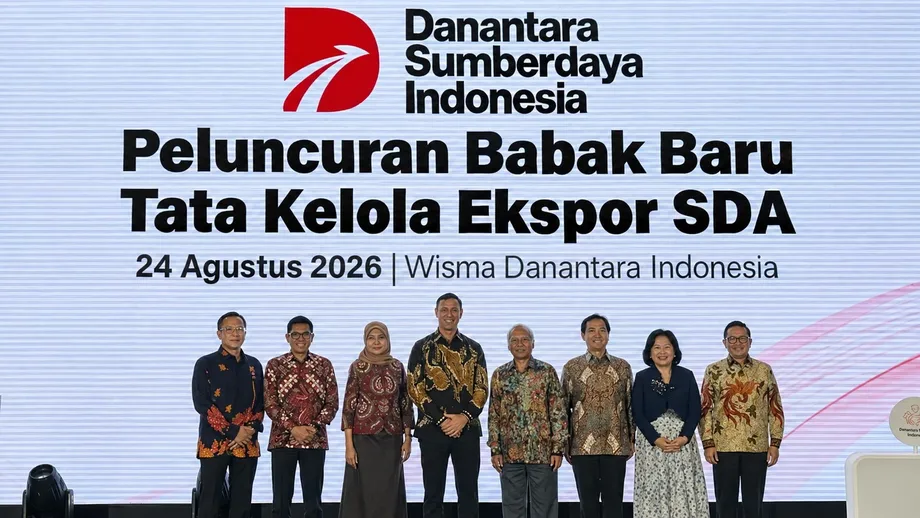
Finance Minister Suahasil Nazara announced the figures at the APBN KiTa budget briefing at the Ministry of Finance in Central Jakarta on November 13. He said the deficit, equivalent to 1.47% of gross domestic product, remained on track toward the government's projection of 2.85% for the full year.
Revenue reached Rp2,618 trillion, up 23.9% from the same period in 2025, while spending rose 15.6% to Rp2,997.2 trillion. Revenue therefore grew faster than expenditure, although the amount collected remained below the amount spent.
The immediate challenge is substantial: Rp514 trillion of the remaining revenue push is expected to come from taxes. Ministries, agencies and local governments have also been told to finish priority spending efficiently as contracts and payments approach completion in December.
APBN is the Indonesian abbreviation for the state budget, the government's annual plan for collecting and spending public money. A deficit is the gap when spending exceeds revenue. GDP measures the value of goods and services produced in the economy, allowing the budget gap to be compared with the country's economic size.
The deficit projection has already increased
The government originally planned a deficit of 2.68% of GDP for 2026. Suahasil said that projection was raised to 2.85% through the government's semester report, an increase of 0.17 percentage points.
The revised projection leaves a margin of 0.15 percentage points below the 3% ceiling that the government has pledged to observe. October's deficit of 1.47% was 1.38 percentage points below the revised annual projection, with the largest remaining spending push still ahead.
Suahasil explained that the budget was deliberately designed to spend more than it collects so it could fund public needs. He described government budgeting in terms of expenditure for the population rather than the profit and loss calculation used by a business.
The timetable matters because work and payment do not always happen together. Suahasil said ministries and agencies often complete contracts in December, with payments arriving after work has already been carried out. Spending can therefore accelerate sharply near the end of the budget year.
The tax push targets a revised outlook
Tax receipts reached Rp1,796.8 trillion through October, growing 23.2% from a year earlier and meeting 76.2% of the original Rp2,357.7 trillion annual target. Suahasil said officials still needed to collect Rp514 trillion before the budget year ended.
That Rp514 trillion would bring collections to Rp2,310.8 trillion, the government's tax revenue outlook, rather than the original target. The outlook is about 98% of the original target and Rp46.9 trillion below it. Reaching the original target would instead require Rp560.9 trillion after October.
Collecting Rp514 trillion in two months would require an average of Rp257 trillion a month. Tax collections averaged Rp179.68 trillion a month over the first ten months, meaning the required monthly pace would be about 43% higher. This comparison shows the scale of the task, although receipts can vary through the year.
Value added tax and the tax on luxury goods sales were major contributors. Together, they generated Rp793.55 trillion, up 39.1% from a year earlier. Suahasil attributed their growth to domestic consumption and household purchasing power. These taxes are connected to purchases of goods and services, with the luxury tax applying to specified goods.
Non-tax revenue provides a cushion
Customs and excise receipts reached Rp267.2 trillion, or 79.5% of their target. Combined with tax receipts of Rp1,796.8 trillion, they brought the broader taxation total to Rp2,064 trillion, up 20.8% from a year earlier and equivalent to 76.6% of its budget target.
The broader taxation figure includes both ordinary tax receipts and customs and excise. That explains why the Rp2,064 trillion total is larger than the Rp1,796.8 trillion figure used for the tax collection drive.
Non-tax state revenue, known as PNBP, reached Rp551.8 trillion. It grew 37% from the same period in 2025 and achieved 120.2% of its annual target, making it the revenue category already above its planned annual level.
Suahasil identified enforcement involving forest areas and Bank Indonesia's surplus as contributors. Non-tax revenue covers government income outside taxation; in this case, receipts associated with forest oversight and the central bank helped strengthen collections while taxes and customs remained below their targets.
Spending reaches households through several channels
Central government spending reached Rp2,343.6 trillion through October, up 24.7% from a year earlier and equivalent to 74.4% of its allocation of about Rp3,149 trillion. This spending accounted for roughly 78% of total state expenditure of Rp2,997.2 trillion.
Ministries and agencies spent Rp1,239.1 trillion, compared with Rp961.2 trillion a year earlier, and had used 82% of their allocation. Suahasil said these expenditures included the Free Nutritious Meals programme, known as MBG, social assistance, infrastructure, education services and disaster response.
Spending outside ministries and agencies reached Rp1,104.5 trillion, compared with Rp918.4 trillion a year earlier, and stood at 67.4% of its allocation. This category includes pensions, subsidies, compensation for fuel and electricity, and interest on government debt.
For residents, the pace of spending affects when assistance, services and completed projects reach them. For the budget, the same payments determine how quickly expenditure rises during the final weeks of the year. Suahasil called for faster delivery of priority programmes while maintaining efficiency.
Regional transfers have a larger allocation
Transfers to regional governments reached Rp653.6 trillion through October. That was 94.3% of the initial allocation of Rp693 trillion, suggesting most of the original transfer budget had already been distributed.
The Finance Ministry subsequently increased the allocation to Rp726.2 trillion, an addition of Rp33.2 trillion. Measured against that larger allocation, the amount transferred through October was about 90%, leaving Rp72.6 trillion still to be transferred.
Regional transfers move money from the national budget to regional governments. They are separate from spending carried out directly by central ministries and agencies, so both levels of government have a role in completing the spending programme.
Suahasil's call for faster priority expenditure therefore applied to regional administrations as well as national institutions. His instruction paired speed with efficient use of funds, rather than simply distributing the remaining allocation as quickly as possible.
The primary balance excludes interest payments
Indonesia recorded a primary surplus of Rp114.8 trillion through October, even while the full budget showed a deficit. The primary balance compares revenue with expenditure after excluding interest payments on government debt.
In simple terms, revenue was sufficient to cover spending other than interest, with Rp114.8 trillion left over. Once interest payments were included, total spending exceeded revenue by Rp379.3 trillion.
The difference between those two balances implies interest payments of about Rp494.1 trillion over the period. This is calculated by adding the Rp114.8 trillion primary surplus to the Rp379.3 trillion budget deficit.
The budget had been designed with a primary deficit of Rp89.7 trillion. October's primary surplus was therefore Rp204.5 trillion above that planned annual balance. Suahasil said the position was expected to change as the budget year progressed, particularly as remaining expenditure was paid.
Borrowing rises as the government manages cash
Total budget financing reached Rp595.2 trillion, or 86.4% of the initial Rp689.1 trillion target. Financing provides funds for the budget's needs, including the gap between revenue and expenditure.
Within the financing accounts, net debt financing reached Rp629.3 trillion, or 75.6% of its Rp832.2 trillion target. It was Rp58.6 trillion higher than the Rp570.7 trillion recorded during the same period in 2025, an increase of about 10.3%.
Government securities accounted for Rp586.1 trillion, equivalent to 73.3% of their Rp799.5 trillion target. The comparable figure in 2025 was Rp538.7 trillion, or 83.8% of that year's smaller Rp642.6 trillion target. Securities are instruments through which investors lend money to the government.
Loan financing reached Rp43.2 trillion, exceeding its Rp32.7 trillion annual target by Rp10.5 trillion. It also exceeded the Rp32.1 trillion recorded during the same period in 2025, when the annual loan financing target was much larger at Rp133.3 trillion.
Suahasil said borrowing decisions take account of government cash needs and financial market conditions, with the aim of keeping financing costs low. Net debt financing and total budget financing cover different accounting categories, so the broader financing total also reflects financing outside debt.
What needs clarification before the final accounts
The original annual revenue target of Rp3,153.6 trillion leaves an arithmetic gap of Rp535.6 trillion after October's Rp2,618 trillion collection. Suahasil's stated remaining revenue requirement was Rp590.1 trillion, Rp54.5 trillion higher.
The original spending allocation of Rp3,842.7 trillion similarly leaves Rp845.5 trillion after October's expenditure of Rp2,997.2 trillion. The announced November and December spending plan was Rp945.2 trillion, Rp99.7 trillion higher. A full reconciliation between the original allocations and these remaining plans was not given.
If the government collects the stated Rp590.1 trillion and spends the planned Rp945.2 trillion, spending would exceed revenue by another Rp355.1 trillion in the final two months. Added to October's reported deficit, that would produce a gap of about Rp734.4 trillion. This is a calculation using the announced plans, rather than a final budget result.
The key dates and periods are:
- During the semester review, the government raised its annual deficit projection from 2.68% to 2.85% of GDP.
- October 31, 2026: The reporting period closed with a Rp379.3 trillion deficit and a Rp114.8 trillion primary surplus.
- November 13, 2026: Suahasil presented the figures at the APBN KiTa briefing in Central Jakarta.
- November and December 2026: Officials aim to collect Rp590.1 trillion and carry out Rp945.2 trillion in spending before the budget year ends.
The final position will depend on actual collections, completed payments and the government's financing accounts. The immediate tasks are to increase tax receipts and complete priority expenditure while keeping the deficit below the government's stated ceiling.
Key Points
- Indonesia's budget deficit reached Rp379.3 trillion, or 1.47% of GDP, through October 2026.
- The annual deficit projection is 2.85% of GDP, raised from 2.68%, with a commitment to remain below 3%.
- Revenue reached Rp2,618 trillion and spending totaled Rp2,997.2 trillion.
- The Rp514 trillion tax collection push would meet the revised tax outlook, which is below the original target.
- Non-tax revenue exceeded its annual target, reaching Rp551.8 trillion.
- The government plans Rp945.2 trillion in spending during November and December while urging efficient delivery.
- The primary balance showed a Rp114.8 trillion surplus, while net debt financing reached Rp629.3 trillion.