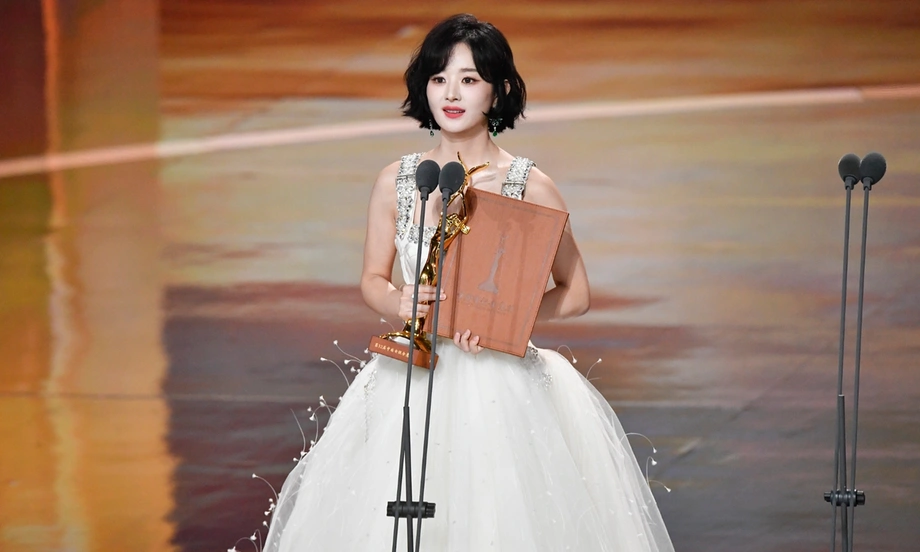
A celebrity likeness dispute reaches Beijing's online court
Actress Zhao Liying has taken the companies behind Hongguo Short Drama to court over allegations that her likeness was used without permission in short dramas generated with artificial intelligence. The case was listed for November 10, 2026, at the Mentougou District People's Court in Beijing, with subsequent coverage describing an online hearing that afternoon.
Contents
- A celebrity likeness dispute reaches Beijing's online court
- What Zhao alleges and who she is suing
- Which compensation claim belongs to which case?
- Complaints accumulated from March to November
- Why recognizability matters more than an exact copy
- Why distribution platforms can also face responsibility
- Voices are part of the same dispute
- Rapid growth has increased the pressure on review
- Regulators and researchers focus on permission before release
- Key Points
The defendants are Beijing Bimo Liuxiang Technology Co., the company associated with the Hongguo app; its sole shareholder, Beijing Douyin Information Service Co.; and an individual identified as Shi Moulun. Zhao's allegations involve AI techniques that replace or combine faces, as well as the use of her photographs on drama covers to attract viewers and generate commercial revenue.
Zhao is seeking removal of the drama at issue, a public apology in newspapers, compensation for economic losses and reasonable expenses incurred in protecting her rights, and payment of litigation costs. A judgment or settlement has not been announced, and the monetary demand in this particular case remains unclear.
The dispute follows months of complaints from actors, voice performers and people outside the entertainment industry about synthetic characters that resemble them. Hongguo's own removal figures show the scale of the moderation problem: during the first quarter of 2026, it removed 1,718 animated short dramas for policy violations, including 670 suspected of using facial information without consent.
Those 670 titles represented about 39% of the animated dramas removed for violations during that period. For performers, the immediate concern is concrete: audiences may see a familiar face in a production that the person never performed in or approved.
What Zhao alleges and who she is suing
Zhao's complaint concerns more than a passing resemblance between an actress and a fictional character. The allegations describe the use of facial features in synthetic performances and photographs in promotional covers. A cover can bring a viewer into a drama before any episode begins, making the promotional image part of the commercial dispute.
Face swapping replaces a face in an image or video with another face. Face blending combines facial features to create a new appearance. Both techniques can produce a recognizable likeness even when the result is not an exact copy of an existing photograph.
Beijing Bimo Liuxiang Technology was established in July 2021 with registered capital of 1 million yuan. Its listed business activities include television and drama production, internet information services and film distribution. Beijing Douyin Information Service wholly owns the company.
By naming the app company, its shareholder and an individual, Zhao's lawsuit places several participants in the distribution chain before the court. Each defendant's conduct and legal responsibility will need to be assessed individually.
Hongguo had not responded to a request for comment described in the initial coverage. Customer service representatives have separately described AI short dramas as a new genre and acknowledged possible shortcomings in the review process. That response came from customer service rather than a published legal response to Zhao's claims.
Which compensation claim belongs to which case?
Zhao is also pursuing a separate portrait rights case against Henan Weima Culture Industry Development Co. The stated demands in that action include stopping production and sales of the products involved, ending the alleged infringement, publishing an apology and paying 810,000 yuan for economic losses and reasonable expenses incurred in protecting her rights.
The same 810,000 yuan amount has also been attributed to her Hongguo claim. With the figure attached to both proceedings in descriptions of the litigation, readers should keep the two defendants and sets of requested remedies separate. Zhao's requests in the Hongguo dispute include removing the drama from distribution, while the Henan action concerns production and sales of allegedly infringing products.
The practical remedies also serve different purposes. Removal would stop continued circulation of the disputed material. An apology would publicly correct the association between Zhao and the production. Compensation would address financial harm and the expense of pursuing the case.
Complaints accumulated from March to November
Several actors challenged AI dramas using their likenesses before Zhao's case drew widespread attention. Their studios described gathering evidence, instructing lawyers and seeking removal of productions. The chronology shows repeated complaints across several months:
- March 20, 2026: Yang Zi's studio issued a statement and commissioned lawyers to gather evidence over her likeness in Reborn: I Became My Mother's Guardian. The videos were later removed.
- April 4: A likeness resembling Jackson Yee appeared in Midnight Bus: She's a Ghost Hunter! and other short dramas. His studio issued a statement early the following day, and the productions were subsequently taken down.
- April 6: Deng Wei's studio announced legal action over a character in Tempting the Lord, also translated as Tempting the Monarch.
- November 1: A National Radio and Television Administration campaign targeting problems in micro dramas began, including unauthorized use of faces and voices.
- November 10: Zhao's case was listed for an online hearing at the Mentougou District People's Court.
- November 12: The hashtag about Zhao suing Hongguo became a trending topic on Weibo.
Zhang Jingyi's studio also said unauthorized AI videos and dramas using her image infringed her rights and that lawyers had been instructed to preserve evidence and take action. Step by Step, which circulated on Hongguo, was alleged to have reproduced her likeness without permission and reached a reported platform popularity score of 32.53 million.
That figure is a platform popularity measure; the material describing it does not give a corresponding viewer count. Xiao Zhan and Cheng Yi were also named among actors whose likenesses were allegedly used without authorization, prompting protests from fan communities.
Why recognizability matters more than an exact copy
China's Civil Code defines a portrait through the external image of an identifiable person. In an AI dispute, the central question can therefore be whether audiences recognize a particular individual in the generated character.
Li Yunkai, an intellectual property lawyer at Beijing Tianyuan Law Firm, explained that public recognition is central to assessing alleged portrait infringement. Comments beneath videos and discussion on social platforms can help show whom viewers believe they are seeing.
A Beijing Internet Court case disclosed on March 23 illustrates how that reasoning can work. An actress discovered her likeness mapped onto a character in a drama lasting 90 minutes. Viewers believed she had performed in it, and she sued companies involved in its production and distribution.
Zhao Qi, a judge at the Beijing Internet Court who handled that case, described the legal importance of a recognizable likeness:
Even if an AI-generated face differs slightly from the original, it's still infringement if the public can recognize the person and no permission was given,
The production company argued that it had used a generic prompt such as "pretty journalist" and that the resemblance was coincidental. During the trial, the companies were unable to demonstrate their AI production processes because of technical and account problems. The court ordered apologies and compensation.
Why distribution platforms can also face responsibility
The Beijing Internet Court case also addressed the position of a streaming company that said it had legally obtained distribution rights and had not created the disputed character. The court held it accountable for inadequate review of the content.
A distribution agreement gives a platform permission to show a production under that agreement. Permission from the person whose face appears in the production is a separate issue. For a platform screening AI dramas, checking the right to distribute a video and checking authorization for a recognizable likeness are different tasks.
Li said distribution parties may bear responsibility alongside producers. He also identified possible reputation disputes when synthetic content places a recognizable person in vulgar scenes, creates a false endorsement or associates that person with a damaging storyline.
People outside celebrity circles have already pursued similar complaints. In March, a fantasy short drama with more than 23 million views prompted objections from a model surnamed Ma and a photographer over the use of the model's likeness and a makeup style designed by the photographer. The series was removed, and negotiations produced a compensation settlement concerning portrait rights and copyright.
Hongguo also removed Peach Blossom Hairpin after bloggers, including models and enthusiasts of traditional Chinese clothing, complained that facial features, outfits and makeup had been reproduced without permission. The platform suspended the producer from uploading new content for 15 days because proof of compliance concerning facial imagery was insufficient.
Voices are part of the same dispute
Weibo users discussing Zhao's case shared screenshots and clips of characters resembling her, including scenes with synthetic voices that sounded similar to hers. For performers whose work depends on a distinctive voice, imitation can create the same unwanted association as a copied face.
Ji Guanlin, a voice actor, described unauthorized use affecting both herself and colleagues:
I have indeed seen many colleagues around me, including myself, whose voices have been used in various types of videos and audio content without our personal authorization,
Ji said voice actors had spoken out together on social media, while some had sought legal remedies. China's Civil Code applies the relevant portrait protection provisions to a person's voice.
A September opinion issued by the Supreme People's Court addressed AI voice imitation. It described potential infringement where a person's voice is used without consent as AI training material to reproduce recognizable features such as timbre, intonation and pronunciation style. In everyday terms, the issue is a synthetic voice that listeners identify as belonging to a real person.
Rapid growth has increased the pressure on review
QuestMobile put the number of monthly active short drama users at 718 million by February 2026. More than 3,200 new short dramas were released nationwide during the Spring Festival holiday alone. These productions typically use a vertical video format, with episodes lasting just a few minutes.
DataEye found that AI animated productions accounted for 38% of the top 100 comic style dramas in January, compared with 7% a year earlier. That is an increase of 31 percentage points in that particular ranking, showing how quickly AI productions gained a place among popular titles.
Production estimates described costs falling from 50,000 yuan to 5,000 yuan per episode, a reduction of 90%. Production schedules were described as shrinking from two to four weeks to three to seven days. The figures help explain why more creators can publish dramas quickly, while platforms face a growing volume of material to check.
Zheng Ning, head of the law department at the Communication University of China's Cultural Industries Management School, said generative AI can now be used throughout production, including scripts, characters, scenes, voices, music, editing and promotion.
Chen Peng, a short video industry professional, described improvements in visual quality and the ability to keep a character's appearance consistent across scenes. A face or voice can consequently recur through a complete story rather than appear only in an isolated clip. For the person being imitated, removal may involve an entire production and its promotional material.
Regulators and researchers focus on permission before release
The National Radio and Television Administration's campaign runs from November 1 through the end of December 2026. Its stated targets include vulgar and repetitive micro dramas, unauthorized use of faces and voices, and problems in the production of AI dramas.
Zhang Peng, a cultural researcher and associate professor at Nanjing Normal University, recommended authorization checks, labels identifying AI content, prompt removal of infringing material and suspensions for repeat offenders. He also proposed digital watermarking, technologies for tracing content and databases recording permissions.
Watermarking can place an identifier in a file, while tracing tools can help connect circulated material to its origin. Authorization records serve another purpose: showing whether a person agreed to a particular use of their face or voice. Each addresses a different part of the process, from identifying synthetic content to establishing who approved it.
Zhang described the principle he wants creators to follow:
Creators should develop the understanding that authorization must come before use,
For Zhao and the other performers involved, the immediate stakes are control over where their faces and voices appear, correction of unwanted associations and recovery of losses and legal expenses. For Hongguo and its producers, the cases put permission checks and review practices under judicial scrutiny as AI dramas expand.
Key Points
- Zhao Liying sued two companies associated with Hongguo Short Drama and an individual over alleged unauthorized use of her likeness.
- The case was listed for November 10, 2026, in Beijing's Mentougou District People's Court, with an online hearing subsequently described.
- Her requests include removal of the drama, a newspaper apology, compensation and litigation costs.
- Yang Zi, Jackson Yee, Deng Wei and Zhang Jingyi have also challenged alleged unauthorized AI use of their images.
- Hongguo removed 670 animated dramas suspected of using facial information without consent during the first quarter of 2026.
- Chinese courts have treated public recognition of an AI likeness as central to portrait rights disputes, with distribution platforms also facing responsibility.
- A national regulatory campaign addressing unauthorized faces and voices runs through the end of December 2026.