A prevention push as scam exposure rises
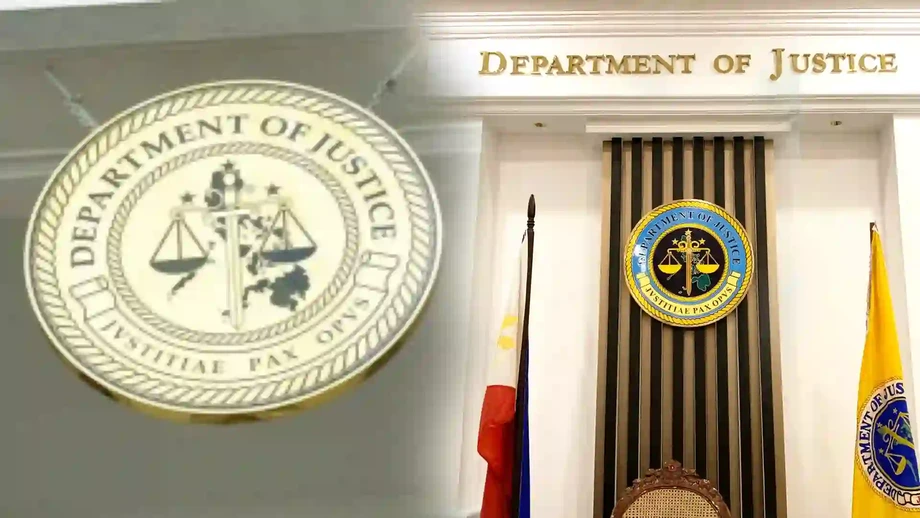
The Philippine Department of Justice has launched the SURE Ka Na Ba campaign as a survey of 1,160 Filipino adults found that 84% encountered a scam attempt in the past year, while just 4% reported a scam to authorities. The initiative brings government agencies, banks, telecommunications companies and digital payment providers into a campaign focused on stopping fraud before money is lost.
Contents
- A prevention push as scam exposure rises
- What the survey says about confidence and risk
- How the four SURE steps work
- The people behind the losses
- Why banks, telecom firms and broadcasters are involved
- Messages, digital wallets and children
- Reporting is a central part of prevention
- Prosecution continues alongside public education
- A proposed national hub and the next decision
- Key Points
The Global Anti-Scam Alliance (GASA), in its 2026 State of Scams report dated October 8, 2026, put exposure at seven percentage points above the 77% recorded in 2025. Fifteen percent of respondents lost money, including through stolen personal information that led to financial loss.
Justice Secretary Fredderick Vida said pursuing criminals must go together with public education and earlier intervention. Launched on a Thursday at the Department of Justice through its Office of Cybercrime, the campaign takes its name from a familiar Filipino question meaning, "Are you sure?"
SURE stands for Spot, Understand, Report and Empower. Its aim is to turn a moment of doubt about an online message, investment offer or request for money into a decision to check before acting, then help others recognize the same danger.
Vida described the effort as a shared responsibility involving institutions that people use every day. He said banks, telecommunications companies, schools and families all have a part in preventing fraud.
The fight against online scams is not just the government's battle," Secretary Vida said. "It is the fight of every bank, every telecommunications company, every school, every family, and every Filipino.
What the survey says about confidence and risk
GASA's findings show a gap between feeling prepared and responding safely when a scam arrives. Fifty-eight percent of participants said they were confident they could recognize scams. Yet 60% of those exposed went on to interact with a scammer, according to the organisation's published report summary.
A figure presented in coverage of the October 8 National Anti-Scam Forum put interaction at 44% of those exposed. GASA's published summary gives the higher figure of 60%; both accounts describe substantial engagement after the initial approach.
The increase from 77% to 84% means seven more adults in every 100 surveyed encountered a scam compared with the previous year's figure. Exposure means receiving or encountering an attempted deception. The survey then tracks further steps, including interaction, financial loss and reporting.
Fifteen percent of all respondents reported financial harm. That category includes people whose personal information was stolen and then used in a way that caused them to lose money. A scam can therefore cause damage through access to information as well as through a direct request for payment.
The report also estimated Philippine scam losses at P121.8 billion over a year and cited an average loss of P10,427 per victim. For households, the consequences described at the forum included difficulty paying for basic essentials, alongside distress and shame.
How the four SURE steps work
The Office of Cybercrime is using four simple actions to explain what people can do when they encounter suspicious activity. The campaign covers phishing, romance scams, fraudulent investments and banking fraud, alongside other schemes that exploit everyday online transactions.
- Spot a scam: recognize warning signs in a message, account, website or offer.
- Understand how it works: identify what the sender wants, such as money, personal information or access to an account.
- Report suspicious incidents: alert authorities when a possible scam appears.
- Empower others: share warnings and knowledge so relatives, friends and colleagues can protect themselves.
Phishing is deception through fake accounts, emails or websites designed to obtain personal information or money. A video shown at the launch explained how scammers use fear, curiosity, urgency, authority or the promise of a reward to push someone into responding.
A message that appears to come from a trusted institution can create pressure to act immediately. Understanding that pressure is part of understanding the scheme: the criminal wants the recipient to respond before checking whether the request is genuine.
Vida said the campaign should encourage participation rather than blame victims. He also described personally encountering a scam involving the use of his name and telephone number, illustrating how impersonation can reach even senior officials.
The people behind the losses
Vida described three examples of the harm the campaign seeks to prevent: a retired worker who lost lifetime savings to an investment scam, an overseas Filipino worker who sent money to someone posing as a relative, and a young professional deceived by a fake job offer.
Each example involves a different need. Retirement savings are meant to provide security. A request from a supposed relative draws on family responsibility. A job offer reaches someone trying to earn a living. The fraud works by making a false request appear connected to something the person already cares about.
Overseas workers can face particular pressure when a message appears to concern family at home. The example Vida gave involved an impostor claiming to be a relative, turning a normal act of financial support into a route for theft.
Vida, explaining why financial fraud should be a national priority, described the damage in terms that went beyond the amount taken.
"These are not merely financial losses. They represent broken trust, lost opportunities and, in many cases, years of hard work taken away in a matter of minutes," he said.
Why banks, telecom firms and broadcasters are involved
The Department of Trade and Industry, Bangko Sentral ng Pilipinas and National Telecommunications Commission are participating in the campaign. Private sector partners include Smart Communications, Globe Telecom, DITO, Maya and the Bank of the Philippine Islands, together with the Kapisanan ng mga Brodkaster ng Pilipinas.
The range of participants reflects how a single fraud can pass through several services. A criminal may approach a target through a communications platform, impersonate a trusted person or business, and then seek payment through a bank or digital wallet.
Vida said some perpetrators operate from another country, while stolen funds can move across borders within seconds. That speed makes prevention and cooperation across institutions central to the DOJ's response.
The justice secretary explained why the department was seeking participation beyond law enforcement.
"No single government agency, no matter how capable, can address these threats alone. This is why we must strengthen cooperation across government and build meaningful partnerships with the private sector," he said.
Broadcasting organisations also have a practical role. Survey findings presented at the October forum identified news coverage as the most effective help in recognizing or avoiding scams for 48% of respondents. Social media posts or videos followed at 44%.
Messages, digital wallets and children
Text messages were the most frequently cited route for scam attempts in the survey findings presented at the forum, at 68%. Instant messaging applications accounted for 39%, while social media platforms were cited at 6%. These channels give criminals ways to reach people during routine conversations, shopping and payments.
A further reported finding put the digital wallet incident figure at 73% in 2026, compared with 34% in 2025. The increase places digital payment services near the centre of the prevention effort, alongside the communications networks through which suspicious requests arrive.
One in five parents surveyed said at least one of their children had been scammed. That finding concerns the experiences parents described about their children, extending the campaign's relevance beyond the adults who took part in the survey.
Brian Hanley, GASA's Asia Pacific director, spoke at the National Anti-Scam Forum on October 8 about children's use of gaming, social media and digital purchases. He gave the example of scams involving items bought for online games.
Hanley urged families to begin discussing scams early.
"It's never too early to start educating your kids, because people are scamming kids," Hanley said.
Roy D. Ibay, Smart Communications' vice president and head of regulatory affairs, also raised concern about online promises of game rewards that entice children into dangerous tasks. He urged authorities to consider such threats in planning a broader national response.
Reporting is a central part of prevention
GASA's published summary says only 4% reported a scam to authorities. That low level of reporting sits beside much wider exposure and gives the campaign a practical challenge: helping people move from recognizing suspicious activity to telling an agency that can act.
DOJ Office of Cybercrime Assistant Director Chris Maño said online scams can be reported through [email protected]. The campaign encourages people to report suspicious incidents, including approaches identified before a payment is made.
Reporting and prosecution serve different stages of the response. A suspicious approach can alert authorities to a scheme, while a criminal case requires evidence connecting particular people to an offence. The DOJ says it is strengthening both public prevention and the work needed to build cases.
Families and other trusted contacts are also part of the warning network. Forty percent of survey respondents identified warnings from friends, relatives or colleagues as helpful in recognizing or avoiding scams. Information from banks and personal experience with scams were each cited by 42%.
Forty-one percent said they recognized common warning signs, including messages that appeared illegitimate, online searches that revealed warnings or negative information, and offers that seemed too good to be true. SURE's final step, empowering others, connects those individual discoveries to a wider circle of potential targets.
Prosecution continues alongside public education
The DOJ says its National Prosecution Service and Office of Cybercrime will continue strengthening cybercrime case preparation, prosecution, preservation of electronic evidence and cooperation with law enforcement abroad.
Electronic evidence includes digital records relevant to a suspected offence. Preserving it means keeping that material available and reliable for investigators and courts. This work matters when a fraud involves messages, accounts and financial transactions across several services.
International cooperation addresses another part of the problem Vida identified: a victim, a payment provider and a suspected criminal may be in different countries. Philippine investigators may need assistance from foreign authorities as they trace activity and develop a case.
Vida's prevention approach seeks to intervene earlier, before a target sends money or gives away information. Public awareness, education about online safety and early intervention are therefore being placed alongside the department's existing responsibility to pursue offenders.
A proposed national hub and the next decision
The campaign comes as officials discuss a National Anti-Scam Hub, known as NASH, intended to bring complaints, intelligence and response efforts together. Cybercrime Investigation and Coordinating Center Associate Secretary Alvin Navarro described the proposed hub as a central point for work now spread across separate channels.
Navarro explained the proposed arrangement at the October forum.
"The NASH is envisioned as a coordinating point where complaints, intelligence, and response actions can meet, instead of being scattered across many separate channels," he said.
The policy sequence spans an existing financial protection law and more recent coordination proposals:
- July 20, 2024: The Anti-Financial Account Scamming Act was enacted to protect bank accounts, digital wallets and online financial platforms from fraud and related criminal activity.
- September 29, 2026: The NASH proposal was discussed at the Presidential Anti-Organized Crime Commission's third quarter commission meeting involving the DOJ.
- October 8, 2026: GASA's report was dated and the National Anti-Scam Forum brought together discussion of survey findings and the proposed hub.
CICC Director Rojun Hosillos said officials expected President Ferdinand Marcos Jr. to sign a document concerning NASH in the near future. No date was given for that decision or for the hub to begin operating. The CICC was meanwhile engaging government and private sector partners and developing technology for the collaboration.
The proposed hub would work alongside the Anti-Financial Account Scamming Act. Its intended contribution is a common coordination point, while the SURE campaign concentrates on what people can recognize and report before or during a scam attempt.
Key Points
- The DOJ launched SURE Ka Na Ba through its Office of Cybercrime to promote spotting, understanding and reporting scams, and helping others avoid them.
- GASA surveyed 1,160 Filipino adults and found 84% encountered a scam attempt, up from 77% in 2025.
- Fifteen percent reported financial loss, including losses connected to stolen personal information; the published summary says only 4% reported a scam to authorities.
- Government agencies, telecommunications companies, banks, payment providers and broadcasters are participating in the campaign.
- The Office of Cybercrime accepts scam reports at [email protected].
- The DOJ is continuing prosecution and evidence preservation work while officials develop a proposed National Anti-Scam Hub.