Two revenue divisions planned as minister promises legal action
Bangladesh has finalised in principle its plan to replace the National Board of Revenue (NBR) with two divisions, Finance and Planning Minister Amir Khosru Mahmud Chowdhury said on Wednesday, November 11. The proposed Revenue Policy Division and Revenue Management Division would separate the work of designing tax rules from collecting taxes and administering them.
Contents
- Two revenue divisions planned as minister promises legal action
- What would the two divisions do?
- Who would control the new bodies?
- How the reform reached this point
- Why the earlier ordinance faced another review
- Staff resistance left a difficult legacy
- Income tax and customs grow while VAT lags
- IMF discussions extend beyond the NBR split
- Revenue reform meets pressure on spending and jobs
- Key Points
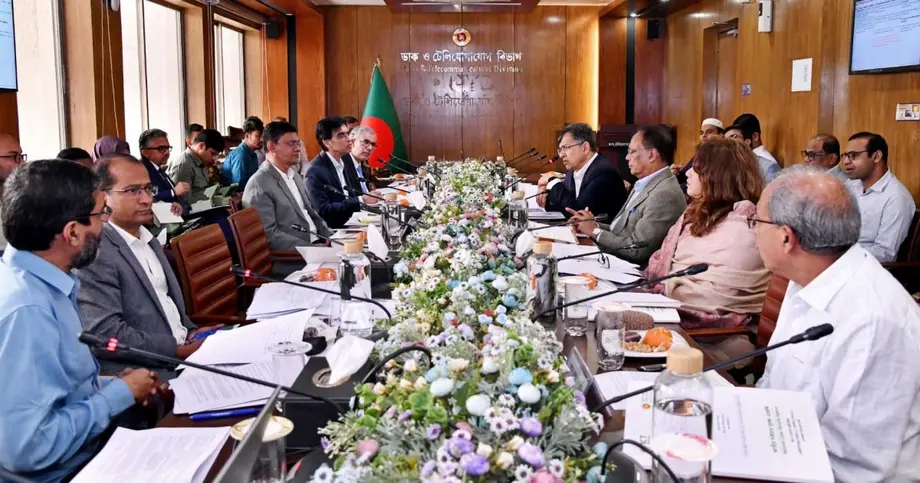
Speaking after a meeting with customs and tax officials at the NBR headquarters in Agargaon, Dhaka, the minister said the decision would receive legal backing soon. A government committee comprising nine members has submitted recommendations, and a bill could be introduced in the next parliamentary session.
The announcement advances a restructuring effort that began under the interim government with an ordinance on May 12, 2025. Since then, disagreements over leadership, staff representation and legal authority have slowed the transition. The government now faces the task of turning agreement on the split into a functioning administration.
For taxpayers and businesses, the practical issue is how the new bodies would divide responsibility for tax rules, returns, payments and enforcement. For the government, the reform sits alongside efforts to increase revenue, control spending and agree on the next stages of its economic programme with the International Monetary Fund (IMF).
What would the two divisions do?
The proposed Revenue Policy Division would handle policy formulation, while the Revenue Management Division would oversee implementation. In simple terms, one body would work on the rules governing taxation, and the other would put those rules into practice.
The committee report outlines how to establish the divisions and distribute responsibilities between them. Prime Minister Tarique Rahman's adviser Md Ismail Zabihullah chaired the committee, although some members reportedly objected to parts of its recommendations.
Separating policy from administration changes where decisions are made. A policy body considers how taxation should serve the economy and public finances. An administration body manages the collection process. The proposed division of responsibilities makes leadership and coordination central to whether the new arrangement works.
The government has not publicly settled the leadership arrangements or announced an exact date for introducing the bill. Officials familiar with the preparations have also cautioned that completing administrative procedures could take time after parliamentary approval.
Who would control the new bodies?
NBR officials have indicated that the head of the Revenue Management Division could be chosen from the income tax or customs cadres. These cadres are specialised career groups within the civil service whose officers work on taxation and customs duties.
Amir Khosru reportedly favours a council of experts to manage the Revenue Policy Division. Administration cadre officials, however, are seeking control of that division, leaving the council proposal uncertain.
The leadership dispute has been central to resistance against the reform. Income tax and customs officers argued that the interim government's original arrangement reduced their role and gave administration cadre officials disproportionate authority. Administration officials subsequently opposed aspects of the revised arrangements.
During an earlier review of the ordinance, Amir Khosru said the purpose of tax policy should be to serve the economy and raise revenue. The finance minister described the competing claims in these terms:
Any group's control or privilege must not get priority. Such a major policy must be framed to increase tax collection.
The staffing decisions therefore carry consequences beyond senior appointments. They will determine which professional groups shape policy and which lead the collection machinery, two responsibilities that the restructuring is intended to separate.
How the reform reached this point
The latest announcement follows an ordinance, amendments, protests and a legal challenge. Several dates show how a decision to reorganise the revenue authority became a prolonged dispute over its design and implementation:
- May 12, 2025: The interim government issued an ordinance establishing separate divisions for revenue policy and administration.
- September 2025: A revised gazette addressed some concerns, although distrust reportedly persisted among officials working in the field.
- January 28: Cabinet Division Joint Secretary Tanvir Ahmed sent a legal notice to seven secretaries challenging the abolition of the NBR and seeking cancellation of the relevant ordinances.
- April 12, 2026: A senior revenue official identified this as the deadline for parliamentary approval of the earlier ordinance, saying it would otherwise cease automatically.
- November 11: Amir Khosru said the split had been finalised in principle and would receive legal backing soon.
The January notice sought to challenge the legal basis for the restructuring. The present route centres on committee recommendations and a possible bill in the next parliamentary session.
Why the earlier ordinance faced another review
The earlier ordinance was among 133 proposed laws examined by a parliamentary committee. During that review, Amir Khosru described the restructuring as incomplete and said it needed further work.
The finance minister explained the committee's role at the time:
"We are reviewing it cautiously. The committee is scrutinizing the ordinance and would come up with its observation," he said.
A senior revenue official said the ordinance required parliamentary approval by April 12, 2026, or it would cease automatically. The subsequent legal outcome of that ordinance has not been specified in the latest announcement.
The interim government had also formed a separate committee of five members, led by adviser Dr Foujul Kabir Khan, to amend the ordinance after objections to provisions allowing officers from other cadres to lead the policy division. That earlier amendment process and the current committee of nine members represent different stages of the reform.
The proposed legislation now being discussed would need to give a workable legal form to the government's decision, including the responsibilities and leadership of the successor bodies.
Staff resistance left a difficult legacy
Income tax and customs officials protested the original restructuring, alleging that it departed from the recommendations of a revenue reform committee. The dispute intensified when officials defied government directives.
Accounts of disciplinary action alleged that around 30 officials were suspended, five were sent into retirement and hundreds were transferred. The Anti-Corruption Commission also began investigating the assets of several officials.
The revised gazette in September 2025 eased some concerns, but officials working in the field reportedly continued to distrust the process. A later attempt to make the two divisions operational before the election stalled amid opposition from administration cadre officials.
These disputes help explain why implementation may take longer than passing a bill. The government must establish an agreed chain of authority and allocate staff while maintaining everyday revenue collection. Businesses will still need customs clearances, and taxpayers will still need to submit returns during the transition.
Dr M Masrur Reaz, chairman of Policy Exchange Bangladesh and a former senior economist at the World Bank Group, supported the separation while urging attention to its purpose:
"Bifurcation should not be undertaken for the sake of bifurcation alone. The government must carefully consider how to ensure that the restructuring achieves its intended objectives," he said.
Income tax and customs grow while VAT lags
Amir Khosru presented an encouraging picture of parts of revenue collection. He said income tax receipts had grown by more than 14 percent and customs revenue by about 14 percent. Value added tax (VAT) collection was growing more slowly.
VAT is a tax applied to the value added as goods and services move through production and sale. Businesses submit returns setting out their taxable transactions and the tax they owe. The minister expected a return to monthly VAT filing to support collection.
A complete report covering one month of VAT receipts was still pending, he said. He expected the fuller figures to show an improving trend once they became available.
The minister also expected revenue collection and economic activity to gain momentum in the second, third and fourth quarters compared with the first. His comments set out the government's expectations rather than completed results for those later periods.
The distinction matters for public finances: growth in income tax and customs receipts provides current encouragement, while the expected improvement in VAT and later quarters still depends on collection performance.
IMF discussions extend beyond the NBR split
Amir Khosru described engagement with the IMF as part of a broader economic programme. A working group is holding regular discussions on the programme and related structural issues, with a clearer progress report and roadmap expected by January.
The government is also working with the World Bank, Asian Development Bank and Islamic Development Bank. Bonds and other financing sources form part of the funding effort, alongside support from international development institutions. The minister said there was no difficulty obtaining loans or assistance.
Earlier discussions concerned resuming a stalled IMF lending programme worth $5.5 billion. An IMF delegation led by Krishna Srinivasan, director of the fund's Asia and Pacific Department, visited Bangladesh for two days and met Prime Minister Tarique Rahman and Amir Khosru.
The IMF has supported separating revenue policy from administration. The NBR split was described during the earlier parliamentary review as linked to the lending programme but outside its formal structural benchmarks. A structural benchmark is a specific reform milestone used to assess progress under an IMF programme.
The January target therefore concerns the wider programme and structural discussions. The minister's announcement places revenue reform within that broader effort to improve economic management and organise financing.
Revenue reform meets pressure on spending and jobs
Amir Khosru has also described constraints on raising more money through taxation. During the earlier ordinance review, he pointed to factory closures, job losses, increasing poverty, falling investment and declining private imports of capital machinery, the equipment businesses buy to produce goods.
He said increasing tax rates was difficult in those conditions. The government was instead working on corruption, revenue leakage, waste and policy adjustments as ways to improve domestic revenue collection.
At the November briefing, the minister stressed the use of taxpayers' money. He said projects and investments were being assessed for the returns they could generate and the employment they could create.
Amir Khosru explained the government's approach to public investment:
"We are planning projects in a way that ensures an appropriate return on every investment and creates new employment opportunities," he said.
For public projects, assessing a return means considering what benefits spending will deliver in exchange for its cost. The minister said expenditure was being guided by calculations and specific plans, with the aim of keeping revenue and spending in balance.
The NBR restructuring, stronger collection and closer scrutiny of expenditure are therefore connected parts of the government's programme. The immediate decisions concern the legal structure and leadership of the revenue bodies; the practical test will be whether those arrangements support collection while keeping tax administration working.
Key Points
- The government has finalised in principle the replacement of the NBR with revenue policy and revenue management divisions.
- A committee of nine members has submitted recommendations, and a bill could reach the next parliamentary session.
- Leadership arrangements remain contested among tax, customs and administration officials.
- The reform follows a May 2025 ordinance, amendments, staff protests and a legal challenge.
- The finance minister cited income tax growth above 14 percent and customs growth of about 14 percent, with VAT lagging.
- A clearer roadmap for IMF engagement and related structural issues is expected by January.