Bangkok launch puts shared protection at the centre
The Global Anti-Scam Alliance (GASA) has launched a Thailand Chapter as its research estimates that consumers across 13 Asian markets lost US$136.5 billion to scams over the preceding 12 months. Thailand's estimated losses reached THB65.86 billion, with six in 10 people who lost money saying they had been defrauded more than once.
Contents
- Bangkok launch puts shared protection at the centre
- What the regional survey measured
- Thailand's exposure rises to nearly four in five adults
- Calls, social platforms and fast payments connect the fraud
- The damage continues after money is lost
- Three priorities for the Thailand Chapter
- Why banks and platforms want information to move faster
- Thailand cites account suspensions and falling recorded losses
- Beyond local raids, the focus turns to criminal leaders
- Key Points
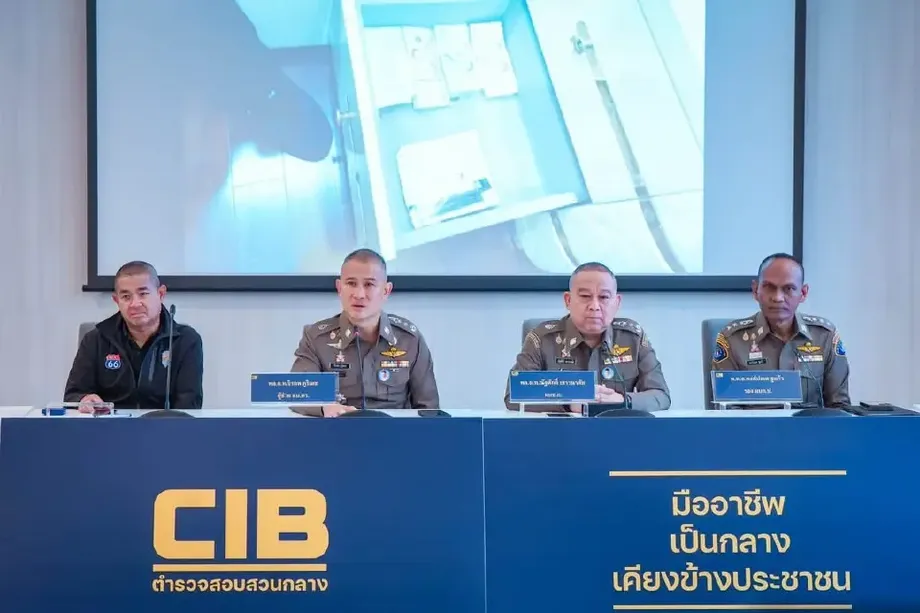
The announcement came at the Global Anti-Scam Summit Asia 2026, held on November 10 and 11 at Pullman Bangkok King Power. More than 800 participants from government, police, banking, telecommunications, technology and civil society gathered to discuss how to interrupt fraud that moves between services and across national borders.
The new chapter will connect organisations in Thailand with GASA's international network. Its priorities are cooperation between industries and public agencies, sharing information that can support action, and public education. The practical goal is to help organisations recognise connected warning signs before a scam reaches another person or another payment account.
GASA organised the summit with the Royal Thai Police, the Bank of Thailand and the Ministry of Digital Economy and Society. Supporting companies included Gogolook, Meta, Google, Trend Micro, CUBE AI and Outseer.
The meeting brought together two urgent concerns: the large number of people encountering scams and the difficulty of protecting those already deceived. Thai adults reported more exposure than a year earlier, while regional findings showed that confidence in recognising fraud often existed alongside continued contact with scammers.
What the regional survey measured
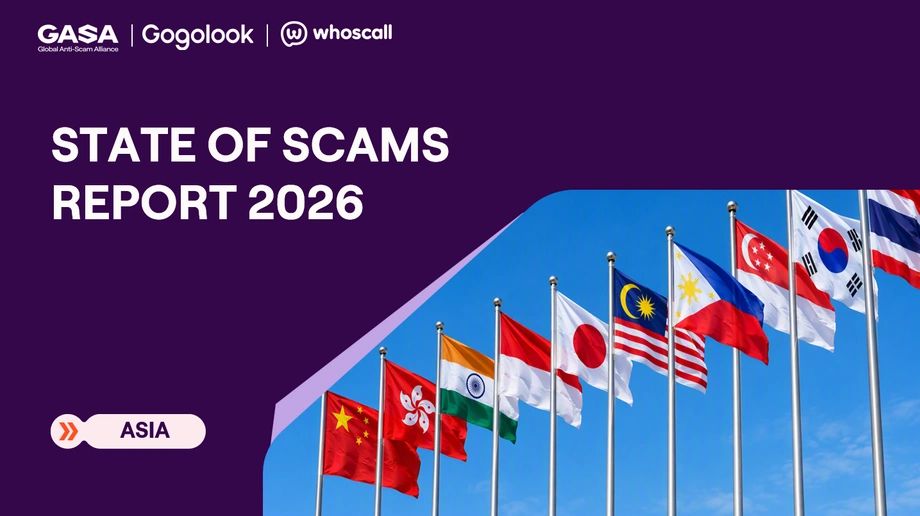
GASA's State of Scams in Asia 2026, dated October 21, surveyed 17,460 adults across 13 Asian markets. It found that 71% had encountered a scam in the previous year. The US$136.5 billion loss figure is an estimate drawn from consumer research.
Some 66% of respondents said they were confident they could recognise scams. Among people exposed to a scam, however, 62% went on to interact with a scammer. The report also says 9% lost money or personal information that led to financial loss, while only 4% reported a scam to the authorities.
Each percentage describes a different part of the problem. Encountering a fraudulent message or call is exposure; replying or continuing a conversation is interaction; losing money is a financial consequence. The findings show why a campaign that teaches people to recognise suspicious approaches also needs systems that can interrupt contact and help people report what happened.
Jeff Kuo, Gogolook's co-founder and chief executive, presented the regional findings at the summit. He called for faster reporting, easier access to assistance and support that helps people regain confidence in digital services after fraud.
Thailand's exposure rises to nearly four in five adults
The State of Scams in Thailand 2026 report, prepared by GASA with Mastercard and Whoscall, estimated annual consumer losses at THB65.86 billion, or approximately US$1.85 billion. The average financial loss per victim was THB11,951.20.
Some 79% of Thai adults reported encountering scams, compared with 72% in 2025. That is an increase of seven percentage points. Thailand's exposure rate was also eight percentage points above the regional figure of 71%.
Repeat losses were especially common. Six in 10 Thai respondents who lost money had been scammed more than once, compared with 51% of those who lost money across the Asian survey. The Thai share was nine percentage points higher.
These figures make assistance after an initial loss a central part of prevention. A person who has already transferred money may need help reporting the incident, contacting the relevant service and recognising further approaches. GASA managing director Jorij Abraham said repeated victimisation revealed gaps in protection both before and after a first financial loss.
Calls, social platforms and fast payments connect the fraud
Telephone contact remained widespread, reaching 72% in Thailand compared with 56% across Asia. Facebook and LINE were the most frequently reported social platform channels used to contact people in Thailand, at 54% and 48%, respectively.
Kuo described scams that move between services. A false advertisement on Facebook may draw someone into a conversation on LINE or Messenger, where the scammer continues building trust and eventually seeks payment. Personal information leaked from organisations can make such approaches more convincing by giving criminals details about the intended victim.
Scammers are also using artificial intelligence to create voices that imitate someone familiar, such as a supervisor. A recognisable voice can add pressure to a request, especially when a caller demands quick action. Impersonation, fraudulent online sales and investment scams were among the methods discussed.
Bank and other electronic transfers accounted for 49% of payments to scammers in Thailand, compared with an Asian average of 36%, a gap of 13 percentage points. Digital wallets accounted for another 29% in Thailand.
Rajat Maheshwari, a GASA chapter leader, warned that criminals adapt their methods to exploit the speed and convenience of digital payments. Thailand's immediate payment services, including PromptPay, allow money to move quickly. For organisations trying to stop fraud, the time between a suspicious conversation and a completed transfer is therefore critical.
The damage continues after money is lost
Thai victims described consequences that lasted beyond the payment itself. Some 35% remained worried about being targeted again, 32% reported less trust in digital platforms, 30% had lost confidence in themselves and 26% experienced increased tension within their families.
The regional findings also recorded substantial harm to mental wellbeing, with 72% of affected victims reporting an impact. Financial loss can therefore come with anxiety, reduced confidence and strained relationships, making recovery a broader task than dealing with a bank transaction.
Kuo urged organisations to build a response around rapid reporting, accessible assistance and restoring trust. Abraham similarly called for stronger care before and after a first loss, alongside faster exchanges of intelligence between governments, banks, telecommunications operators, technology platforms and police.
For consumers, those proposals would mean a more connected response when they seek help. A warning about a suspicious contact, information about the account receiving money and a report to authorities could become parts of the same effort, rather than separate problems handled by separate organisations.
Three priorities for the Thailand Chapter
Kodchasorn Jaijam, managing director of Gogolook Thailand, outlined three areas of work for the new chapter. The first is regular cooperation through meetings, roundtable discussions and joint projects involving government agencies and private organisations.
The second is sharing information that can be used in practice. This includes research, emerging scam methods, international experience and lessons that can guide Thai policy and prevention measures. The third is public education, developed with consumer protection bodies and civil society organisations.
The chapter brings together participants from technology, telecommunications, payment services and government. It will also welcome other organisations committed to consumer protection. Working groups will examine joint research, law enforcement cooperation, intelligence sharing, prevention and education.
No timetable was given for launching a shared information system or putting the chapter's proposed initiatives into operation. Its announced role is to connect organisations and turn research findings into coordinated prevention and assistance.
Why banks and platforms want information to move faster
Nakarin Amarase, deputy director of the Bank of Thailand's Payment Systems Policy and Financial Consumer Protection Group, called for banks, telecommunications providers, digital platforms and government agencies to exchange information in real time. That means passing useful warnings as events unfold, while there is still an opportunity to act.
Nakarin said scams damage trust even before money is lost. He argued that protection should be a shared responsibility across the services involved, rather than a burden placed mainly on people who have been deceived.
Beth Ann Lim, Meta's director of public policy strategy for Asia-Pacific, described scam networks that operate across borders and use services from several industries. She supported closer links between platforms, banks, telecommunications companies, regulators and law enforcement, building on Meta's cooperation with Thai authorities.
Andrei Skorobogatov, GASA's policy director, explained that individual organisations see only part of a wider criminal operation. He described the legal and geographic obstacles that make cooperation necessary:
We have jurisdictions and barriers, but criminals do not. We have privacy laws that we have to follow, but criminals do not. We have issues around following money through borders, which criminals do not. This is why collaboration is really, really important.
The challenge is to connect useful information while meeting the legal duties of each organisation. A platform may see a suspicious advertisement, a telecommunications provider may see the contact channel, and a bank may see the payment. Bringing those views together is the central purpose of the proposed cooperation.
Thailand cites account suspensions and falling recorded losses
Chaichanok Chidchob, Thailand's minister of digital economy and society, said cooperation through the Anti Online Scam Operation Centre, known as AOC 1441, and other agencies had helped suspend more than one million mule accounts. These are accounts used to receive or move money for criminals.
The ministry said online scam losses fell from THB6.577 billion during January to May 2026 to THB3.801 billion during June to October. The two periods each cover five months. The reduction was THB2.776 billion, or about 42.2%.
The ministry's figures track losses over those two reporting periods, while GASA's THB65.86 billion figure estimates consumer losses over a year through survey research. The figures describe different measures of the problem.
Chaichanok proposed faster information sharing to interrupt financial flows, responsible use of AI for detection, public education and victim assistance. He also called for banks, telecommunications providers and digital platforms to take responsibility for safeguards from the start.
Meta said it had acted against 15,000 elements of scam networks and removed more than 65 million scam items from Facebook and Instagram during the first half of 2026. The company said 94% were detected proactively, meaning its systems identified them before relying on a user report.
Beyond local raids, the focus turns to criminal leaders
A British National Crime Agency official at the Bangkok conference urged action against the leadership of networks running scam compounds, alongside enforcement against local operating hubs. The summit also examined human trafficking, the financial networks supporting fraud and the growing use of AI in criminal activity.
Other sessions covered survivor experiences, national systems for fighting scams, digital service security, and blocking fraudulent calls and messages. The Scam Fighter Awards recognised initiatives with measurable results in detecting fraud, disrupting operations and supporting enforcement.
Bangkok was the third event in GASA's 2026 regional summit series. The year's sequence brought the same cooperation agenda to Europe, the Americas and Asia:
- June 9 and 10: Global Anti-Scam Summit Europe in Portugal.
- September 2 and 3: Global Anti-Scam Summit America in San Francisco.
- October 21: Publication date of GASA's State of Scams in Asia 2026 report.
- November 10 and 11: Global Anti-Scam Summit Asia in Bangkok, concluding on Wednesday.
The Thailand Chapter gives domestic organisations a continuing network beyond the conference. Its stated priorities connect the main findings from Bangkok: widespread exposure, rapid movement between services, repeated losses and a need for help that continues after the first incident.
Key Points
- GASA estimates that consumers across 13 Asian markets lost US$136.5 billion to scams over 12 months.
- Thailand's estimated annual losses were THB65.86 billion, averaging THB11,951.20 per victim.
- Some 79% of Thai adults encountered scams, up from 72% in 2025.
- Six in 10 Thai respondents who lost money had been scammed more than once.
- The new Thailand Chapter will focus on cooperation, practical information sharing and public education.
- Thai authorities called for faster exchanges of information and shared responsibility across banks, telecommunications providers and platforms.