A film star joins a national effort beside the Mau Chhu
Actor Jet Li joined volunteers in southern Bhutan as 108 Buddhist stupas, each 15 metres tall, were raised on November 1, 2026, along the Mau Chhu river at Gelephu Mindfulness City. The coordinated operation brought together months of construction training, preparations by monks and a public gathering estimated at about 200,000 people.
Contents
- A film star joins a national effort beside the Mau Chhu
- How 108 structures rose together
- Who took part, and how many came?
- What makes these monuments sacred?
- A royal anniversary and a Buddhist festival
- Buddhist leaders gather across traditions
- What the world record recognised
- A spiritual centre for a city seeking jobs
- The volunteers keeping Gelephu clean
- Key Points
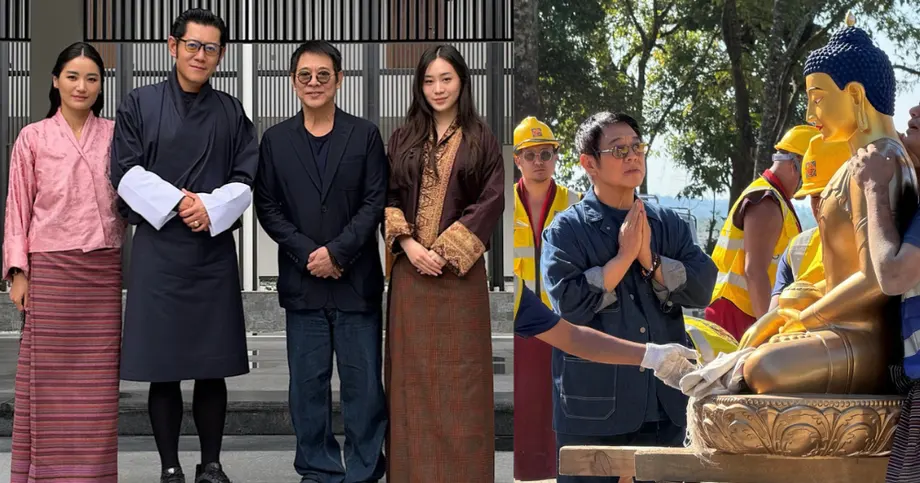
Li shared photographs on Instagram and said he and his team were humbled and honoured to have been invited to volunteer. He thanked King Jigme Khesar Namgyel Wangchuck and Queen Jetsun Pema, described the construction as historic and expressed hope that it would bring joy and benefit to many people. His daughter Jada, 23, accompanied him.
The actor, who previously visited Bhutan in 2017, has devoted more time to Buddhism and attended major Buddhist gatherings since stepping back from acting. His appearance drew attention to a project whose central work rested with Bhutanese construction teams, religious communities and volunteers providing services across Gelephu.
Project 108 was conceived by the King and announced on February 21, 2026, his 46th birthday. The completed monuments now form a corridor approximately 11.7 kilometres long, with 108 metres between neighbouring stupas. They give a visible spiritual centre to a planned city intended to create jobs while preserving Bhutan's religious and environmental values.
November 1 brought together the project's construction deadline, the Buddhist festival of Lhabab Duchen and the 18th anniversary of the King's coronation rites. Religious activities extended through November 4, turning the raising of the structures into the opening of a gathering lasting four days.
How 108 structures rose together
Construction crews worked simultaneously at sites along the river rather than moving from one finished stupa to the next. Foundations were already prepared, components had been manufactured and organised, and teams had practised the assembly process for more than three months.
The detailed construction account records a start at 3 a.m. and completion by noon, nine hours later and three hours ahead of a target of 12 hours; visiting Theravada monk Venerable Pannakara described watching an operation running from 2 a.m. to 2 p.m., about four hours ahead of schedule.
Workers trained at Pelrithang using materials for 10 stupas. They repeatedly assembled and dismantled the structures, with different groups taking turns at each task. Early practice assemblies took almost 13 hours, and some training sessions began as early as 1 a.m.
Each stupa used carbon steel manufactured in China and 2,269 bolts. Across 108 structures, that amounts to 245,052 bolts, illustrating how much repeated, precise work the teams had to coordinate. Pulley systems helped raise the core structures above their concrete foundations.
About 23 to 24 construction workers were assigned to each site in the detailed workforce account. At 11 a.m., the event command centre recorded progress at 82 percent. The final coordinated raising completed a process that had begun months before the public ceremony.
Who took part, and how many came?
Project officials put the wider volunteer effort at about 40,000 people. A closer account of the assembly work identified approximately 2,500 construction volunteers and 2,000 monks, describing the specialised teams responsible for the structures and their sacred interiors within that broader mobilisation.
Officials estimated attendance at about 200,000, while Bhutan Waste Management and Recycling Association vice chairman Pem Dorji described a gathering exceeding 100,000 when explaining the pressure on cleaning services. The event also recorded 130,945 registrations from 54 countries, a count of registrations rather than everyone present.
Gelephu's existing population is about 10,000. An estimated gathering of 200,000 would therefore be roughly 20 times the town's usual population, helping explain why transport, food, camps and waste collection became major parts of the undertaking.
Li and Jada joined a gathering that included the King and Queen, their children, former king Jigme Singye Wangchuck, Buddhist teachers, foreign officials and families travelling from across Bhutan. Thailand's Prime Minister Anutin Charnvirakul attended, while minister Kiren Rijiju represented India.
What makes these monuments sacred?
A chorten is the Bhutanese term for a stupa, a Buddhist monument containing sacred objects such as religious texts, relics and rolled mantras. The structures built at Gelephu are Jangchub Chortens, or Stupas of Enlightenment, commemorating the Buddha's enlightenment at Bodh Gaya in India.
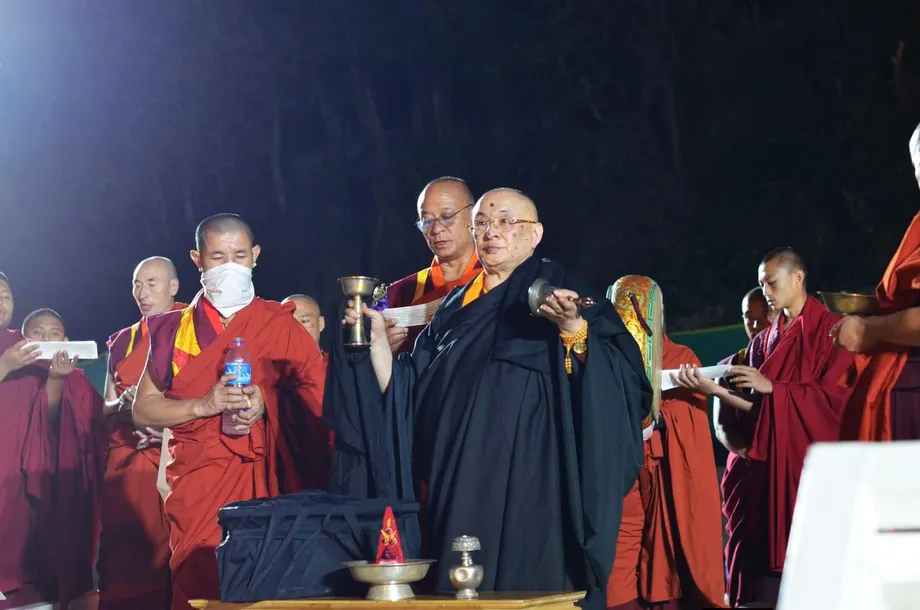
Monks spent months preparing the zung, the sacred contents placed inside the monuments. These underwent a consecration process lasting 21 days before being taken to the construction sites. Consecration means dedicating a place or object for religious use through prayers and rituals.
Each stupa required 18 monks for its interior preparations and religious duties, including 11 installing relics. The monks arrived in Gelephu on October 29, prepared over the following two days and received training in placing the sacred contents. The interior design was intended to resemble Zangdo Pelri, the celestial palace associated with Guru Rinpoche.
Dawa Tshering, a monk aged 33 who participated in the project, described the responsibility of completing so many sacred structures together:
"We prayed for the successful completion of all the stupas but were constantly worried because there were 108 stupas to be completed in a single day," he said.
The number 108 shaped both the number of monuments and their spacing. Buddhist prayer beads commonly come in sets of 108, and the number is traditionally associated with afflictions or desires that practitioners seek to overcome. For devotees, supporting a chorten is a way to generate merit, understood as spiritual benefit arising from good actions.
A royal anniversary and a Buddhist festival
November 1, 2026, fell on Lhabab Duchen, the festival commemorating the Buddha's return to the human world after teaching in a celestial realm. The date follows the Buddhist lunar calendar and changes from year to year in the Gregorian calendar.
Bhutan also observes the occasion as Mother's Day, connecting the account of the Buddha teaching his mother with gratitude for parental care. Temple visits, butter lamp offerings and prayers are among the ways families mark it.
The same date marked 18 years since the King received the sacred ceremonial scarf at Punakha Dzong on November 1, 2008, as part of his coronation rites. He had assumed the responsibilities of head of state after his father's abdication in December 2006.
The project's main dates show how the single day of construction fitted into a longer undertaking:
- February 21, 2026: The King announced Project 108 at the Gelephu Chorten groundbreaking in Chuzergang.
- October 29: Monks arrived in Gelephu ahead of final preparations.
- November 1: Teams raised the 108 stupas while religious ceremonies and public prayers took place.
- November 3: Guinness World Records recognition was announced, and the programme included walking around the monuments in prayer.
- November 4: The programme's final day included teachings, blessings and a scheduled long life empowerment by the 17th Karmapa.
Buddhist leaders gather across traditions
Bhutan's Je Khenpo, the chief abbot and head of the Central Monastic Body, presided over religious observances. More than 70 international spiritual leaders and over 100 Bhutanese religious leaders attended, bringing together representatives of different Buddhist traditions.
Participants included the 17th Gyalwa Karmapa, Ogyen Trinley Dorje; the 105th Gaden Tripa, Jetsun Lobsang Dorje Pelsangpo; Sakya Gongma Trichen Rinpoche; Kyabje Yongzin Ling Rinpoche; Dzongsar Jamyang Khyentse Rinpoche; Gyetrul Jigme Rinpoche; Khondung Asanga Vajra Sakya Rinpoche; and Khondung Vajra Avikrita Vajra Sakya Rinpoche.
Pannakara attended with his teacher, Venerable Ratanaguna, and others. Earlier in the year, Pannakara had completed a Walk for Peace lasting 108 days and covering 2,300 miles from Fort Worth, Texas, to Washington, D.C. His participation brought a Theravada presence alongside leaders from Tibetan Buddhist schools.
Dasho Tashi Dorji, who leads the Gelephu Mindfulness City Authority's Spiritual Workstream, described the purpose of bringing people together around the monuments:
Project 108 is envisioned as a collective offering to the world.
India's participation also included a dedication within the corridor. Rijiju and the King unveiled a plaque dedicating stupa number 76 to Indian Prime Minister Narendra Modi, linking the religious gathering with the relationship between Bhutan and its southern neighbour.
What the world record recognised
Gelephu Mindfulness City governor Dr Lotay Tshering announced the Guinness World Record on November 3. The recognised category was "Most Stupas/Chortens Consecrated Simultaneously (Multiple Venues)."
Guinness adjudicator Swapnil said the minimum requirement was 85 newly built stupas. The structures had to be constructed simultaneously and consecrated according to local customs. Bhutan's total of 108 exceeded that threshold by 23.
The adjudication involved reviewing documentation and video evidence, with monks present at the different sites to witness the ceremonies. The record category centred on simultaneous consecration across multiple locations, with construction and religious requirements both forming part of the verification.
The achievement followed the months of preparation described in the earlier Project 108 construction plan. That plan allocated US$200,000 to each chorten, or US$21.6 million across 108 structures, through public donations and crowdfunding from Bhutan and abroad. Final expenditure has not been disclosed.
A spiritual centre for a city seeking jobs
Gelephu Mindfulness City was established by royal charter in 2024 in southern Bhutan, near the border with India's Assam state and about 240 kilometres south of Thimphu. Danish architects designed the development, which is intended to combine economic activity with ecological sustainability and community wellbeing.
Bhutan faces unemployment, a falling birth rate and the departure of skilled workers seeking opportunities abroad. The city is intended to attract investment in areas including finance, technology, tourism, healthcare, green energy, agriculture and logistics, creating reasons for more young people to build their futures at home.
The stupas place religious practice within that development from an early stage. People can visit the corridor, offer prayers and walk around the monuments as other parts of the city take shape. In his address, the King linked the collective effort behind Project 108 to the cooperation needed for the city's wider ambitions.
Lee Seow Hiang, co chief executive of the Gelephu Mindfulness City Authority, credited Bhutanese unity and international support for completing the undertaking. His fellow chief executive, Pang Yee Ean, pointed to the community spirit and trust in the King shown by participants.
Thousands of devotees began circumambulating the completed stupas, meaning walking around them as a religious practice, usually clockwise. Wangmo, 65, travelled from Paro to witness the raising and walk around all 108 with friends. Tshewang, a devotee from Zhemgang, described the opportunity as something he had never imagined witnessing.
The volunteers keeping Gelephu clean
More than 250 volunteers from the Bhutan Waste Management and Recycling Association handled rubbish across the main gathering area, stupa sites, camps, food stalls and entertainment spaces. The association deployed about 25 trucks during the event.
Workers separated recyclable materials for scrap dealers and sent biodegradable waste to Jigmeling. Their tasks continued throughout the programme, extending the volunteer effort beyond construction and religious ceremonies.
Pem Dorji, the association's vice chairman, said its largest previous gathering had involved around 20,000 people. He described the available volunteers and vehicles as insufficient for the much larger crowd in Gelephu and called for more resources at future events.
The cleaning operation gave a practical measure of the demands facing a city built around sustainability. Large gatherings require enough people, vehicles and disposal capacity to handle what visitors leave behind, alongside the organisation needed to welcome them.
Key Points
- Jet Li and his daughter Jada joined Bhutan's Project 108 gathering at Gelephu Mindfulness City.
- Teams raised 108 stupas, each 15 metres tall, on November 1, 2026, after months of preparation.
- The detailed construction account recorded nine hours of work, with approximately 2,500 construction volunteers and 2,000 monks performing specialised tasks.
- Officials estimated attendance at about 200,000, while the wider volunteer effort involved about 40,000 people.
- The monuments stretch approximately 11.7 kilometres along the Mau Chhu river, with 108 metres between neighbouring structures.
- Guinness World Records recognition for simultaneous consecration was announced on November 3.
- Religious activities ran through November 4, and devotees began walking around the completed stupas in prayer.