A day of building backed by months of preparation
Bhutan raised 108 Buddhist chortens in 24 hours on November 1, 2026, creating a corridor of sacred monuments along the Mau Chhu river in Gelephu Mindfulness City. Each structure stands 15 metres tall. Preparations called for at least 40,000 trained volunteers, while more than 200,000 people were expected to gather for the construction and religious ceremonies.
Contents
- A day of building backed by months of preparation
- The King's challenge to work together
- How large is the corridor?
- What a chorten holds inside
- The hidden labour at Sarpang Dzong
- Why November 1 and the number 108 matter
- Buddhist communities gather across traditions
- A pilgrimage brings business to Tsirang
- India adjusts roads and border security
- Medical teams prepare for the gathering
- What participants hope will last
- Key Points
Project 108 brings together a royal challenge, months of monastic work and a large public mobilisation. With USD 200,000 allocated to each chorten, the combined allocation comes to USD 21.6 million, financed through public donations and crowdfunding from Bhutan and abroad.
The raising took place on Lord Buddha's Descending Day, observed in Bhutan as Mothers' Day, and the 18th anniversary of King Jigme Khesar Namgyel Wangchuck's coronation. A gathering of Buddhist teachers, international guests and devotees was scheduled from November 1 to 4, with the Je Khenpo, Bhutan's chief abbot, due to preside over the consecration on November 2.
The completed monuments give an early physical form to Gelephu Mindfulness City's ambition to place spiritual values alongside economic development. They also connect the future city to a much wider network of people: monks preparing sacred contents, families donating possessions, volunteers building the structures, and businesses serving travellers.
Final attendance, the number of volunteers who actually worked on the day and final expenditure have not been given. The large crowd and workforce figures were expectations announced before the event.
The King's challenge to work together
King Jigme Khesar announced Project 108 on February 21, 2026, at the groundbreaking ceremony for the Gelephu Chorten in Chuzergang. He presented the undertaking as a test of cooperation and determination, with a deadline intended to turn shared ambition into practical work.
Speaking at the ceremony, the King described what he wanted the project to demonstrate:
It is an ambitious undertaking that demands courage, unity and deep commitment," His Majesty said. "We must do it to prove to ourselves that, as we face the challenges ahead, there is no limit to what we can achieve when we stand together.
The King compared his role to that of a football coach: recognising ability, placing people where they can contribute best and encouraging them to fulfil their potential. His emphasis was on the people carrying out the work.
He expressed that view directly:
"I tell well-wishers of Bhutan that I am not the superstar - it is my people who are the superstars," His Majesty said.
The King, Queen and royal children were in Gelephu ahead of the raising. Thousands of volunteers were already preparing the sites as people travelled south from across Bhutan.
How large is the corridor?
The 108 chortens stand in a line beside the Mau Chhu, also called the Mao River, with planned spacing of 108 metres. The King's announcement described an 11 kilometre stretch; subsequent project descriptions put the corridor at about 12 kilometres.
The spacing helps explain the approximate scale. A line of 108 structures has 107 gaps between the first and last. At 108 metres per gap, those intervals alone cover 11,556 metres, before allowing for how the structures and corridor boundaries are measured.
Each chorten rises 15 metres, compared with the roughly 10 metres used in project descriptions for a conventional building with three storeys. The monuments therefore stand about 50 percent taller than that comparison building. Their repeated form and spacing make the riverbank itself part of the design.
The public allocation of USD 200,000 per structure gives a combined figure of USD 21.6 million. Donations and crowdfunding make financial participation another part of the undertaking, alongside construction, ritual preparation, food provision and other services.
What a chorten holds inside
A chorten is the Himalayan form of a Buddhist stupa, a sacred monument associated with the Buddha and his teachings. Jamyang Dorji, a Karma Kagyu monk who travelled from Rumtek Monastery in Sikkim, explained that chortens symbolise the Buddha's enlightened mind and remind devotees of Buddhist teachings.
Inside each structure are sacred contents known as zung. These include scriptures, rolled mantras, relics and symbolic offerings. A mantra is a sacred phrase recited in Buddhist practice. The contents represent the body, speech and mind of enlightened beings.
A specially prepared wooden pole, called the sokshing or zungshing, forms the central axis. Monks inscribe it with sacred letters and mantras, then arrange the other contents according to ritual instructions. Once the chorten is sealed, this carefully prepared interior is hidden from visitors.
The Zhung Dratshang, Bhutan's Central Monastic Body, described sacred images prepared for the project, including Buddha Shakyamuni, Guru Rinpoche, Zhabdrung Ngawang Namgyel, Avalokiteshvara, Buddha Amitayus and Buddha Aksobhya. In Buddhist belief, consecration makes the completed monument a sacred presence through which devotees can offer prayers and accumulate merit, the spiritual benefit associated with virtuous actions.
The hidden labour at Sarpang Dzong
Monks from all 20 dzongkhags, Bhutan's districts, worked on the zung at Sarpang Dzong for roughly five months. The Central Monastic Body said preparation and assembly took place under the guidance of Leytshog Lopen Sangay Dorji.
The youngest worker was Dorji Wangchuk, a 16-year-old from Laya; the oldest was 60. Dorji arrived without experience in preparing zung and learned by watching his teacher and practising. Scripture rolls had to be tight, even and undamaged. Rolls that loosened or lost their shape were opened and made again.
The Central Monastic Body described a mobilisation of more than 2,400 monks. Assignments included 20 masters of zung installation, 60 supporting monks, 1,080 monks preparing offerings for the 108 chortens, 540 for the Dance of the Sixteen Offering Dakinis, 216 for the Fire Cleansing Dance and 500 for consecration.
Families supported the work with food, drinks and provisions. Offerings for the sacred interiors included heirlooms, gold and silver ornaments, ritual objects, musical instruments and farming tools such as hoes and ploughs. Gempo Tshering, known as Apala, and other kitchen workers prepared meals for the monks and helpers.
The work therefore passed on skills as well as producing sacred contents. Younger monks learned techniques from older practitioners, while community contributions connected the monuments to family histories and everyday livelihoods.
Why November 1 and the number 108 matter
Lhabab Duechen, or Lord Buddha's Descending Day, commemorates the Buddhist account of the Buddha returning to earth after teaching in heaven, including teaching his mother, Mayadevi. Devotees believe the spiritual benefit of virtuous actions is greatly multiplied on this day.
Sangay Tshering, Lam Neten of Sarpang Rabdey, linked the convergence of the religious occasion and coronation anniversary to the bond between the King and the people. He described the chortens as a spiritual undertaking intended to purify negativity and support peace, health, timely rain and good harvests.
The number 108 is built into both the count of monuments and their spacing. Sangay Tshering connected it to the mental afflictions that Buddhist practice seeks to overcome. Traditional prayer beads commonly have 108 beads, allowing practitioners to count recitations. Bhutan already has a group of 108 memorial chortens at Dochula Pass.
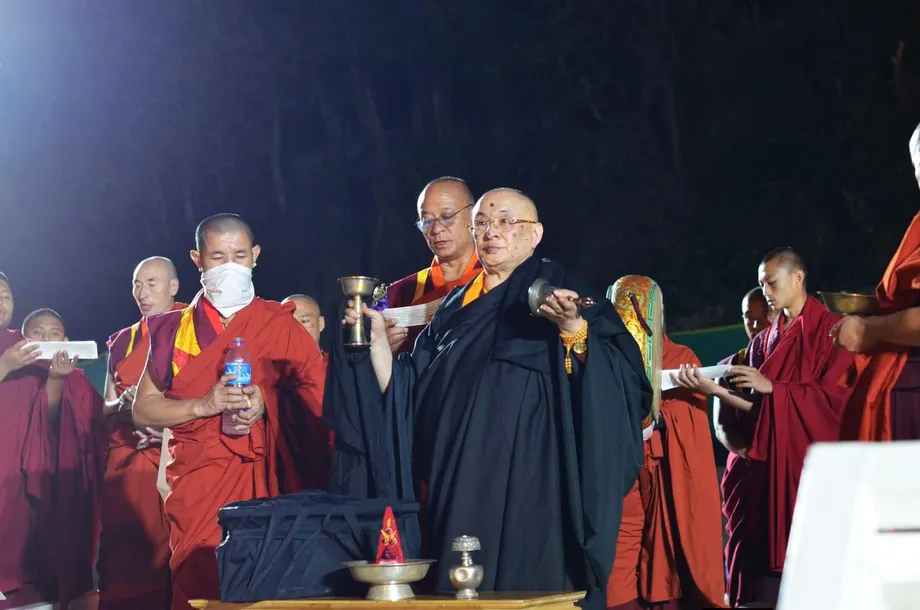
Religious preparations extended beyond the objects placed inside the structures. Masters from the districts performed a ceremony lasting 21 days for the sacred contents. The Je Khenpo and other senior religious figures also presided over Si-Nyon rituals at the designated sites.
Sangay Tshering explained the purpose of the site ritual:
"The ritual is performed to suppress negative forces and eliminate obstacles to the successful establishment of the chortens," said Lam Neten Sangay Tshering.
Buddhist communities gather across traditions
More than 70 spiritual leaders from abroad and over 100 from Bhutan confirmed plans to attend. The programme brought together teachers from several Buddhist traditions, giving the gathering an international reach beyond the construction effort.
Expected Sakya participants included the 41st Sakya Trizin, Sakya Gongma Trichen, alongside the 42nd Sakya Trizin, Ratna Vajra Rinpoche, and the 43rd Sakya Trizin, Gyana Vajra Rinpoche. The 17th Gyalwang Karmapa, Ogyen Trinley Dorje, head of the Karma Kagyu lineage, was also expected.
The Gelug tradition's announced representatives included the 105th Gaden Tripa, Jetsun Lobsang Dorjee Pelsangpo. Nyingma teachers included Dzigar Kongtrul Rinpoche and Khenchen Namdrol Tshering Rinpoche. The international delegation also included Malaysia's Buddhist Chief High Priest, Datuk K Sri Dhammaratana Nayaka Maha Thera, and Ajahn Amaro, abbot of Amaravati Buddhist Monastery in England.
The ceremony was scheduled to begin in the early hours with 58 sets of dungchens, the long horns used in Tibetan and Himalayan Buddhist ceremonies. The main milestones stretch across several months:
- February 21, 2026: The King announced Project 108 at the groundbreaking in Chuzergang.
- By late September: A ceremony lasting 21 days began for the prepared sacred contents.
- November 1: The 108 chortens were raised in 24 hours.
- November 2: The Je Khenpo was scheduled to preside over consecration.
- November 1 to 4: Buddhist leaders, delegates and devotees were scheduled to gather.
A pilgrimage brings business to Tsirang
More than 40,000 vehicles were expected to travel to Gelephu, including over 9,000 passing through Tsirang. The movement of devotees brought immediate business to hotels and roadside sellers along the route.
Sari Maya Saru, a staff member at Damphu Residency in Tsirang, said the hotel had been fully booked for about a week and had received meal orders for three days. Travel plans were still changing: a lunch reservation for 30 people was cancelled when the group decided to leave for Gelephu earlier.
Dawa Dolma Tamang, a roadside vegetable seller, said daily earnings had risen from the usual Nu. 700 to 1,000 to about Nu. 6,000 to 7,000. Comparing the lower figures gives an increase of about 8.6 times; comparing the upper figures gives seven times the usual earnings.
Families were making personal choices to attend. Kencho Wangdi travelled from Punakha with his daughter while his 82-year-old wife remained at home. He said their presence would represent the family. Passang Dem travelled from Thimphu after setting aside other important tasks to offer prayers.
India adjusts roads and border security
India deployed around 500 Sashastra Seema Bal personnel along the route between Samthaibari and the Gelephu gate from October 25 to November 5. The border force staffed bridges, junctions and checkpoints in shifts throughout the day and night.
Assam's Chirang district administration issued an order on October 24 restricting heavy vehicles and goods traffic on the road from Samthaibari to the Dadgiri-Hatisar crossing. Restrictions applied daily from 6am to 8pm, October 25 to November 6, with exemptions for emergency services and essential government convoy vehicles.
The Royal Bhutan Police required travellers entering Gelephu through India to attend the event. Those leaving after the ceremony were required to complete a designated form and carry it on Indian highways, following instructions from the Indian border force.
The route benefited from the resurfacing of the 40 kilometre road between Gelephu and Samthaibari in July 2025. India's Union Minister for Parliamentary Affairs, Kiren Rijiju, was also due to attend the November 1 event.
Medical teams prepare for the gathering
The National Medical Services coordinated about 200 volunteer health workers, including 18 specialists, 24 medical officers and 67 nurses. Thirteen ambulances were to be mobilised, with medical preparations beginning a month before the raising.
A temporary hospital with 10 beds and 26 staff was established at Tareythang Gyalsung Academy, where international guests were staying. Chhuzagang Primary Health Centre was to expand to 10 beds, while about 13 mobile medical units were assigned near the event sites. Military medical personnel were also deployed across the chorten locations.
Gelephu Central Regional Referral Hospital added eight emergency beds. Its medical superintendent, Dr Choeda Gyaltshen, advised people with diabetes and other chronic illnesses to bring enough prescribed medication and take it on schedule. He also advised attendees to bring masks because of expected dust around the river.
The scale of these arrangements shows the practical demands behind a spiritual gathering: caring for older visitors, managing chronic illnesses and keeping emergency treatment accessible across a long corridor.
What participants hope will last
Tshering Yangki, a mother of four from Thimphu, expressed the broad spiritual hopes attached to the monuments:
"I pray that these 108 stupas benefit all living beings, not just human beings but animals too. May they protect our country from diseases and disasters," she said.
Mangali Limbu, a 50-year-old farmer from Gomtu in Samtse, said the project encouraged her to make more time for spiritual practice. Melam Wangmo, a nun from Anim Dratshang, hoped it would unite people through faith and preserve Buddhist heritage. Laya School principal Kinley Dorji saw the chortens as a way to pass traditional values to younger generations.
Nidup Dorji, one of 108 photographers documenting the project, is recording the construction and the people behind it. Their work will preserve a record of an undertaking whose most visible stage lasted one day, but whose preparation involved months of patient labour.
For Gelephu Mindfulness City, the monuments create a place where residents and visitors can walk, pray and remember that collective effort. Their lasting role will be lived through those ordinary visits, alongside the new city's development.
Key Points
- Bhutan raised 108 chortens, each 15 metres tall, in 24 hours on November 1, 2026.
- The monuments stand along the Mau Chhu, with planned spacing of 108 metres.
- Preparations called for at least 40,000 trained volunteers and more than 200,000 attendees.
- The allocation of USD 200,000 per chorten totals USD 21.6 million, supported by donations and crowdfunding.
- Monks from all 20 districts prepared sacred contents over several months.
- The gathering required expanded medical services, traffic restrictions and border security arrangements.
- The Je Khenpo was scheduled to preside over consecration on November 2.