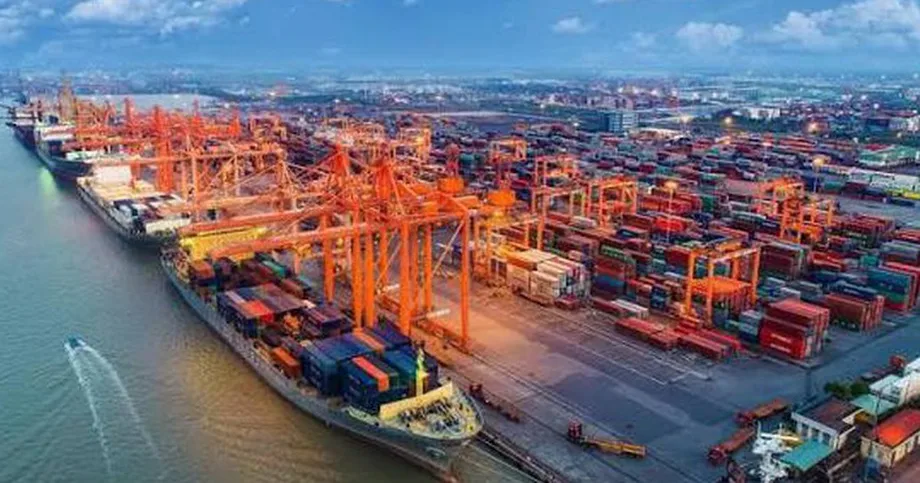
Unanimous Vote Sets Spending and Savings Priorities
Vietnam's National Assembly approved VND4,073.935 trillion in state spending for 2027, approximately US$159.04 billion, on November 9, 2026, with all 471 participating deputies voting in favour. The package includes VND80.4 trillion for salary reform and requires ministries and local authorities to redirect savings towards urgent investment projects and social welfare.
Contents
- Unanimous Vote Sets Spending and Savings Priorities
- How the Central and Local Budgets Fit Together
- Why Borrowing Exceeds the Deficit
- VND80.4 Trillion Reserved for Salary Reform
- Savings Must Be Redirected From the Start
- A 9.1% Revenue Target Focuses Attention on Tax Collection
- Investment Money Will Follow Projects That Can Proceed
- Money From Earlier Years Will Support Schools and Welfare
- Who Will Check How the Budget Is Used?
- Key Points
The resolution sets revenue at VND3,334.338 trillion, approximately US$130.17 billion, and authorises a deficit of VND739.597 trillion, equivalent to 4.5% of gross domestic product (GDP). GDP measures the value of goods and services produced in the economy.
National Assembly Chairman Tran Thanh Man chaired the sitting, with Vice Chairman Nguyen Thi Hong conducting proceedings. Justice Minister Hoang Thanh Tung presented the government's explanation of revisions before the electronic vote. The 471 votes represented 94.20% of all National Assembly deputies.
The resolution's six articles cover the 2027 budget, arrangements between central and local authorities, salary and social policies, and the management of money remaining from 2026. Its practical reach extends from public employees and pensioners to construction projects and boarding schools in communes along Vietnam's land borders.
The spending plan combines a larger revenue target with instructions to control costs from the moment money is allocated. Authorities must save 5% of public investment expenditure for key and urgent projects, while setting aside 10% of eligible recurrent expenditure for social welfare. Salaries and other specified personnel costs are excluded from that second calculation.
Revenue would cover approximately 81.8% of planned spending, based on the approved totals. The remaining 18.2% is the budget deficit, making borrowing and debt management central to delivering the spending programme.
How the Central and Local Budgets Fit Together
The central government is assigned revenue of VND1,775.593 trillion and spending of VND2,364.411 trillion. Local budgets are assigned revenue of VND1,558.745 trillion and spending of VND1,709.524 trillion.
The central expenditure figure includes VND408.747 trillion in general balancing transfers to local budgets and VND311.363 trillion in targeted transfers. General balancing transfers help local authorities meet their spending responsibilities, while targeted transfers provide money for specified purposes.
Together, those transfers total VND720.110 trillion, about 30.5% of central expenditure. The stated local expenditure total excludes spending financed by these transfers, keeping the same money from being counted twice in the national total.
Revenue sharing percentages between central and local budgets will apply from the 2027 financial year until the National Assembly decides to change them. Where a locality's assigned revenue exceeds its expenditure estimate calculated under allocation rules, the difference must support development investment after the legally required budget reserve is provided.
Priority uses for that additional local investment include key projects and connections between regions, across the country and internationally. This gives localities with stronger revenue a defined route for directing the excess towards infrastructure rather than unrestricted routine spending.
Why Borrowing Exceeds the Deficit
The National Assembly approved total state budget borrowing of VND1,279.717 trillion for 2027. The central deficit is VND588.818 trillion, equivalent to 3.6% of GDP, while the local deficit is VND150.779 trillion, or 0.9% of GDP.
Borrowing exceeds the annual deficit by VND540.120 trillion. A deficit measures the gap between revenue and expenditure during a year. Total borrowing also accounts for financing needs such as replacing debt that falls due for repayment.
The government must strictly manage the national deficit, local borrowing and its debt repayment obligations. Inspection must cover how money is borrowed, how borrowed funds are used and whether repayments are made. Those duties connect the budget's immediate spending promises with the cost of servicing debt in later years.
VND80.4 Trillion Reserved for Salary Reform
The budget's recurrent expenditure estimate exceeds VND2.06 quadrillion, including VND80.4 trillion for salary reform. Recurrent expenditure pays for continuing government operations and services, rather than the construction or acquisition of major assets.
Central recurrent spending is VND980.970 trillion, while the local component exceeds VND1.08 quadrillion. Using the rounded national figure, recurrent expenditure accounts for roughly half of the entire spending plan, and the salary reform allocation represents about 3.9% of recurrent spending.
The salary allocation follows the government's proposal in Report No. 129/BC-CP, dated October 16, 2026. Accumulated salary reform reserves may support salary regimes, allowances and income policies, alongside adjustments to pensions, social insurance benefits, monthly allowances and preferential benefits for people recognised for service to the revolution.
The resolution also permits these reserves to finance workforce streamlining. Surplus local salary reform reserves may fund social welfare policies introduced by the central government as well as workforce streamlining, widening the permitted uses of money accumulated for pay reform.
Unused central salary reform allocations face a strict return rule. Agencies and local authorities must send money remaining at year end, including unused allocations from 2026, back to the central salary reform reserve rather than spend it on another purpose. The resolution does not specify individual salary increases, pension adjustments or payment dates.
Savings Must Be Redirected From the Start
Ministries and local authorities must identify the required savings when allocating their 2027 budgets. The 5% public investment saving is to be redirected towards key and urgent projects. Localities may prioritise urgent projects within their own areas when using savings from their investment budgets.
The 10% recurrent spending requirement excludes money set aside to generate salary reform funding, salaries, payments related to salaries and other personnel expenditure. The percentage therefore applies to an eligible portion of recurrent spending, with the resulting savings assigned to social welfare.
Local authorities must use those recurrent savings to help pay their required share of social welfare policies introduced by the central government. The government is responsible for issuing implementation guidance, which will determine how agencies apply the savings requirements in their allocations.
A 9.1% Revenue Target Focuses Attention on Tax Collection
The National Assembly instructed the government to strive for revenue growth of approximately 9.1% in 2027 compared with actual collections in 2026. The comparison is with money collected, rather than simply the previous year's original budget estimate.
Tax authorities are tasked with recovering overdue taxes, tackling evasion and preventing revenue losses linked to transfer pricing. Transfer pricing concerns transactions between related businesses. When prices are manipulated to shift taxable profits away from where they were earned, governments can lose revenue.
E-commerce, businesses operating through digital platforms, and the exploitation of natural resources and minerals are specifically identified as areas for broadening the revenue base. For businesses in these sectors, the budget places attention on whether taxable activity is being fully captured and payments collected.
The government must also improve tax legislation and revenue policies to make them more transparent and effective. Authorities may not introduce tax benefits beyond those allowed by law unless authorised by the competent authorities.
Spending discipline accompanies the collection target. The resolution bars new policies that increase expenditure without a funding source, links financial management to the responsibility of agency heads, and calls for a review of policies that assign fixed spending percentages to particular sectors.
Investment Money Will Follow Projects That Can Proceed
The government must concentrate on implementing the public investment plan for 2026 to 2030, with better project preparation and faster completion of investment procedures. Key projects and projects expected to benefit surrounding areas receive particular attention.
Projects already under construction take priority for capital allocation so they can be completed and brought into use sooner. Before approving money for new starts, authorities must examine whether funding will remain available, especially where construction depends on revenue from land use.
Capital assigned to delayed projects is to move to projects that can proceed and disburse funds but lack sufficient financing. Disbursement means paying allocated money out as implementation progresses. The instruction seeks to direct scarce capital towards work that can actually advance.
Projects using official development assistance also require better preparation and approval, with specific implementation plans for each stage. Official development assistance is financing provided through development partners, often as grants or loans on favourable terms.
Money From Earlier Years Will Support Schools and Welfare
The resolution also addresses the closing months of 2026. Ministries and local authorities are instructed to seek the strongest possible revenue performance, spend economically and strive to disburse 100% of their public investment capital plans while keeping borrowing and deficits within authorised limits.
Central agencies' savings from recurrent expenditure in 2026 will supplement the central salary reform reserve under Government Resolution No. 135/NQ-CP, dated May 22, 2026. Local recurrent savings may pay the locally financed portion of social welfare policies introduced by the central government in 2026, with the balance directed to key infrastructure projects.
Unused local savings assigned to those purposes may carry forward into 2027. This allows the funding to remain available when the associated welfare obligations or infrastructure work continue beyond the end of the year.
Increased central revenue from 2025 earmarked for combined primary and lower secondary boarding schools in communes along the land border may also carry into 2027. The permission covers both funding already allocated but not fully used and funding awaiting allocation.
The main dates linking the reserve rules and the new budget are:
- 2025: Increased central revenue provides earmarked funding for boarding schools in land border communes.
- May 22, 2026: Government Resolution No. 135/NQ-CP sets provisions cited for using recurrent spending savings to support salary reform.
- October 16, 2026: Government Report No. 129/BC-CP presents the salary reform funding proposal referenced in the budget.
- November 9, 2026: All 471 participating deputies approve the 2027 budget resolution.
- 2027: The new revenue sharing arrangements apply, and authorised carryover funds remain available for their assigned purposes.
Who Will Check How the Budget Is Used?
The National Assembly assigned oversight responsibilities to its Standing Committee, Ethnic Council, committees, deputy delegations and individual deputies. The Vietnam Fatherland Front and its member organisations also have monitoring responsibilities within their authority.
The State Audit Office is tasked with auditing implementation in accordance with the law. Its role sits alongside the government's duty to inspect borrowing, the use of borrowed money and debt repayment.
The government must coordinate fiscal policy, its decisions on taxation and spending, with monetary policy and other economic policies. The stated objectives include supporting growth, maintaining economic stability and responding to unexpected domestic or international developments.
If economic conditions change or new policies affect revenue, performance against the 2027 financial and budget tasks will be assessed using adjusted estimates. For ministries and localities, implementation therefore involves collecting revenue, applying the savings rules, returning unused restricted funds and shifting investment money towards projects capable of moving forward.
Key Points
- All 471 participating deputies approved the 2027 budget on November 9, 2026.
- Spending is set at VND4,073.935 trillion, approximately US$159.04 billion, against revenue of VND3,334.338 trillion.
- The approved deficit is VND739.597 trillion, or 4.5% of GDP, with total borrowing of VND1,279.717 trillion.
- Salary reform receives VND80.4 trillion within recurrent expenditure exceeding VND2.06 quadrillion.
- Authorities must redirect 5% of public investment spending and 10% of eligible recurrent spending towards priority projects and social welfare.
- Investment funding will prioritise ongoing projects and move away from delayed projects where other work can proceed.
- Authorised funds for border boarding schools, welfare and infrastructure may carry into 2027 under specified rules.