Three routes promise faster journeys, but provinces face hard choices
Vietnam's government has asked the National Assembly to approve three expressway projects covering 430.5 kilometres at a preliminary cost of VND162.393 trillion, with substantial completion targeted for 2030 and traffic expected to start in 2031. Lawmakers support the roads, but some warn that the proposed funding arrangement could force Lai Chau to postpone two hospitals and three schools.
Contents
- Three routes promise faster journeys, but provinces face hard choices
- What would be built?
- Why the government proposes public funding
- Could Lai Chau lose hospitals and schools?
- Funding must stretch beyond 2030
- Short missing sections could limit the benefits
- Quang Ngai has approved its contribution
- Thousands of households face changes to homes and farmland
- Forests, spoil heaps and energy projects complicate construction
- Can the engineering schedule match the opening target?
- Contract awards and maintenance need firm rules
- Key Points
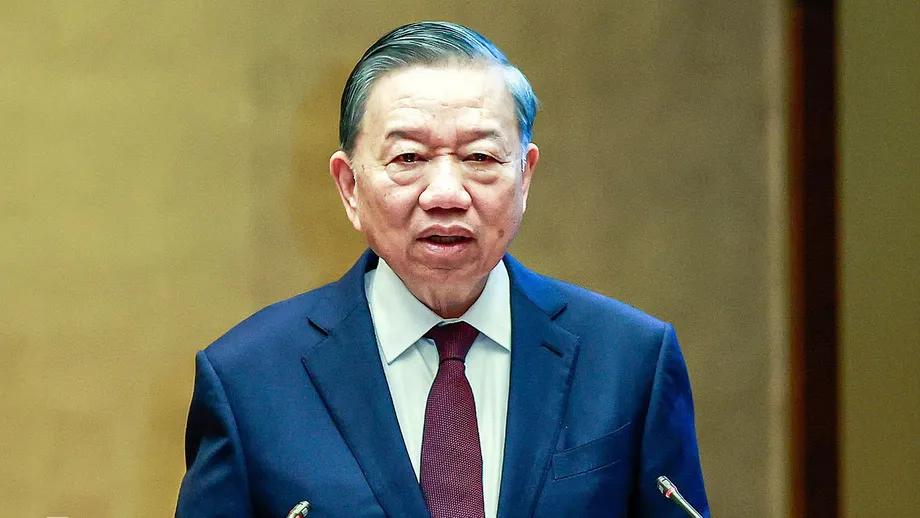
Construction Minister Tran Hong Minh presented the proposals on November 7, 2026. They cover the section of the Moc Chau - Son La - Dien Bien Expressway within Son La province, the Bao Ha - Tan Phong section of the Bao Ha - Lai Chau Expressway, and the Quang Ngai - Kon Tum Expressway.
The government expects the roads to cut journey times by about 50% to 60% compared with existing national highways. Lai Chau, described during the debate as Vietnam's only province without an expressway, would gain access to the network, extending expressway coverage to all 34 provinces and centrally governed cities.
The National Assembly's Economic and Financial Committee backed the need for investment while requesting closer examination of funding, forest clearance, resettlement and construction schedules. Deputies also challenged whether the proposed sections would reach the connections needed to deliver the promised benefits for border trade and freight transport.
The central budget would provide VND158.342 trillion, about 97.5% of the total, while Lai Chau and Quang Ngai would contribute VND4.051 trillion between them. That small local share of the national package represents a much larger claim on the resources of the provinces expected to pay it.
What would be built?
The government proposes four lanes on each route, alongside interchanges, traffic monitoring systems, management centres and rest stops. Construction would be divided into 14 component projects, allowing different sections and tasks to be managed separately.
- Moc Chau - Son La - Dien Bien, within Son La: 179.5 kilometres, with preliminary investment of VND63.120 trillion.
- Bao Ha - Tan Phong, part of Bao Ha - Lai Chau: 119 kilometres, costing VND50.990 trillion.
- Quang Ngai - Kon Tum: an initial 132 kilometres, costing VND48.283 trillion in the government proposal.
The Son La section would help form a continuous Hanoi - Phu Tho - Son La - Dien Bien corridor in 2030 and 2031, with links toward the Asian Highway AH13 and the wider ASEAN road network. Quang Ngai - Kon Tum is intended to connect the Central Highlands with coastal ports and the eastern and western North - South expressway corridors.
The government's presentation gives a design speed range of 80 to 120 kilometres per hour, although other descriptions of the package give 80 to 100 kilometres per hour. The Son La proposal specifically uses 80 kilometres per hour. Design speed is the engineering standard used to shape curves, slopes and visibility along a road; the debate over higher standards concerns how much capacity and flexibility to build into the projects from the start.
Why the government proposes public funding
The government examined partnerships with private investors under build-operate-transfer contracts, known as BOT. Under this model, an investor builds a road, operates it for a period to recover its investment, usually through tolls, and later transfers it to the state.
For Bao Ha - Tan Phong, Minh said calculations could not identify a workable investment recovery period even if the state covered 50% to 70% of the preliminary cost. Parliamentary discussion also described BOT financing as unworkable for the three projects.
The proposed routes cross mountainous and border areas with difficult economic conditions and substantial ethnic minority populations. The government's case for public investment rests on broader gains, including lower transport costs, better access to markets, poverty reduction and improved national defence and security.
Existing highways have limited capacity, low technical standards and frequent exposure to landslides during heavy rain. Public funding would allow the government to pursue those regional goals while taking responsibility for financing construction. Deputies want the financial plan to extend beyond opening day to the continuing cost of keeping the roads safe.
Could Lai Chau lose hospitals and schools?
Lai Chau would contribute VND2.004 trillion, while the central budget would provide VND48.986 trillion for Bao Ha - Tan Phong. Quang Ngai's proposed contribution is VND2.047 trillion. The local money would support compensation, assistance and resettlement, with contributions described as covering roughly half of those costs in the relevant localities.
National Assembly deputy Vu Minh Dao, a full time member of the Culture and Social Affairs Committee, warned that Lai Chau might have to halt two hospital projects and three schools serving several education levels to provide its contribution. Deputy Trieu Kim Thang said planned commune military command offices had already been paused to reserve resources for the expressway.
Lai Chau's proposed contribution equals about 38.7% of its VND5.178 trillion public investment plan for five years, according to figures discussed by deputies. That would leave about VND3.174 trillion before other adjustments, while the province still has 73 infrastructure investment tasks to carry out.
Can Tho deputy Vu Danh Hiep cited much smaller shares elsewhere: 6.4% of Nghe An's public investment plan for land clearance on the Vinh - Thanh Thuy route, and 2.2% in Gia Lai for Quy Nhon - Pleiku. He urged the government to shift the land clearance contribution of poorer provinces to the central budget, including through additional central revenue collected in 2026.
Deputies Nguyen Huu Toan, Nguyen Danh Tu and others also sought an explanation for the different treatment of neighbouring provinces. Lao Cai would make no local contribution to Bao Ha - Lai Chau, while Lai Chau would pay VND2.004 trillion. The government says Son La cannot contribute because it has already committed resources to 17 connecting roads and the Hoa Binh - Moc Chau Expressway.
Funding must stretch beyond 2030
The government expects to allocate VND119.398 trillion from the central budget during 2026 to 2030. Compared with the proposed central contribution of VND158.342 trillion, that leaves VND38.944 trillion to be covered outside that allocation.
The Son La project illustrates the timing problem. Its stated requirement is VND43.812 trillion during 2026 to 2030 and VND19.308 trillion after 2030. The later amount represents about 30.6% of its VND63.120 trillion total.
Nghe An deputy Thai Thi An Chung asked how the remaining money would be secured when the road is supposed to be substantially complete in 2030 and open in 2031. Hai Phong deputy Nguyen Ngoc Son cited about VND34.600 trillion needed after 2030 for the Son La and Bao Ha - Lai Chau projects together, alongside a VND5.312 trillion funding gap for Quang Ngai - Kon Tum during 2026 to 2030.
Deputies want the National Assembly's resolution to identify responsibility for those amounts and establish priorities for the 2031 to 2035 investment plan. Committee chairman Phan Van Mai also requested an assessment of whether agencies could effectively spend the large Son La allocation in 2031, the first year of that budget cycle.
Short missing sections could limit the benefits
Bao Ha - Tan Phong covers 119 kilometres of the planned 163 kilometre Bao Ha - Lai Chau route. The remaining 44 kilometres would extend toward Ma Lu Thang border gate. The appraisal committee requested a roadmap for that section.
Quang Ngai - Kon Tum has a similar connection issue. The provincial plan describes a route of 136 kilometres, but the national proposal covers the first 132 kilometres. Deputies said the initial section would stop at the Ho Chi Minh Road before reaching the western North - South expressway.
Hai Phong deputy Tran Lan Phuong asked the government to include the final four kilometres now. She pointed to the agricultural potential around Dak Ha, including coffee, durian and passion fruit, and the value of connecting production areas with processing facilities and export markets.
Nguyen Ngoc Son urged planners to count benefits from border trade and logistics according to when the necessary connections would actually be completed. The government's wider trade ambitions include access through Tay Trang, Chieng Khuong, Long Sap, Ma Lu Thang and Bo Y border gates.
Deputy Hoang Van Tuyen also requested named projects, funding and responsible agencies for roads linking expressway interchanges to villages, farms and processing plants. A faster main road would bring less relief to producers if the journey from their fields to the interchange remained expensive and difficult.
Quang Ngai has approved its contribution
Quang Ngai's provincial People's Council unanimously approved VND2.047 trillion in local funding on November 6. The provincial administration said it had completed a preliminary feasibility study for the wider route, estimating investment at about VND52 trillion, compared with VND48.283 trillion for the 132 kilometre project submitted nationally.
The provincial assessment describes the full 136 kilometre route as passing through 13 communes and wards. It estimates land requirements at about 1,454 hectares, with around 405 hectares of natural forest affected. About 896 cases would be affected by land acquisition, including 246 households requiring resettlement.
Quang Ngai estimates compensation, land clearance and resettlement at VND3.796 trillion for the full route and VND3.724 trillion for the first 132 kilometres. Its VND2.047 trillion contribution was set under government instructions dated August 18, 2026. Deputies have nevertheless asked the central government to consider greater support for Quang Ngai as well as Lai Chau.
Thousands of households face changes to homes and farmland
The three projects are estimated to require 4,583 hectares, with VND19.056 trillion allocated in preliminary calculations for compensation, assistance and resettlement. That is about 11.7% of the combined investment estimate.
Nguyen Ngoc Son cited nearly 5,000 affected households in Son La, including 920 requiring resettlement, and estimated land clearance costs of VND8.958 trillion. Son La delegation head Hoang Van Nghiem said the province's public investment resources were about VND6.800 trillion, below the cost of clearing land for the expressway alone.
For Bao Ha - Lai Chau, An Giang deputy Nguyen Ngoc Hung cited project documents indicating about 1,320 affected households, including around 660 requiring resettlement. Half of the affected households would therefore need new homes.
The appraisal committee requested that resettlement areas have essential infrastructure before residents move. Deputies called for access to schools, healthcare, drinking water and markets, alongside farmland, jobs and support for changing occupations. Son La deputy Quang Van Huong urged planners to reduce displacement and allow resettlement nearby where residents wish.
Households remaining in their homes also need attention. Losing much of a farm, or being separated from fields by the new road, can disrupt income without requiring relocation. Deputies requested service roads, bridges and underpasses based on local travel needs, with support that respects community culture and farming practices.
Forests, spoil heaps and energy projects complicate construction
About 1,155 hectares of forest land could be converted for the roads, roughly 25.2% of the estimated total land requirement. Can Tho deputy Nguyen Manh Hung cited about 780 hectares of natural forest within the affected area.
The Economic and Financial Committee requested another review of alignments, greater use of viaducts and mountain tunnels where appropriate, and funding and land for replacement planting. Its concerns cover natural forest, forests protecting watersheds and forests designated for conservation.
Son La's earthworks would be enormous. Parliamentary discussion cited 117.9 million cubic metres of excavation, 56.5 million cubic metres of fill and about 60.8 million cubic metres requiring disposal. Deputies requested safe disposal locations, measures against slope failure and blocked waterways, and restoration after construction.
The Son La alignment also crosses areas planned for the Mai Son 4, Mai Son 5, Mai Son 7 and Yen Chau 4 solar projects, and the Nam Het 1 and Nam Het 2 hydropower projects. The committee asked for precise coordinate checks to protect electricity infrastructure and reservoirs. Deputies also raised overlaps with rare earth mining areas and requested proper handling of minerals discovered during construction.
Can the engineering schedule match the opening target?
The three routes include about 229 bridges and eight tunnels. Bao Ha - Lai Chau alone has six tunnels totalling about 11 kilometres, helping explain its higher estimated investment per kilometre: VND428 billion, compared with VND352 billion for Son La and VND366 billion for Quang Ngai - Kon Tum.
Nguyen Ngoc Son cited an estimated 48 months to build Khau Co tunnel and 39 to 48 months for the bridge and tunnel works around Violak Pass and Mang Den. A start in the final quarter of 2027 would carry those construction periods into 2031. He requested a precise explanation of which works could finish in 2030.
The proposed schedule and the parliamentary steps are:
- November 5, 2026: the National Assembly Standing Committee proposed adding consideration of the three projects.
- November 6, 2026: Quang Ngai approved its local contribution.
- November 7, 2026: the government presented the proposals and deputies discussed them in groups.
- 2026 to 2027: project preparation.
- 2027: compensation, resettlement and construction to begin.
- 2030: substantial completion targeted.
- 2031: opening to traffic planned.
Thai Thi An Chung proposed studying six lanes and acquiring enough land for that width immediately, to reduce future expansion costs. Quang Van Huong supported an initial speed standard of 80 kilometres per hour in mountainous terrain while preserving the ability to upgrade to 100 kilometres per hour. The committee requested further study of the higher standard.
Contract awards and maintenance need firm rules
The government seeks five groups of special provisions covering adjustments to investment approval, compensation and resettlement, direct contractor appointments, planning changes and construction waste sites. Phan Van Mai requested clear limits on their scope and duration, with explicit responsibility for implementation.
The committee favours competitive bidding wherever contracts can be opened to competition. Nguyen Manh Hung proposed limiting direct appointments to urgent tasks such as planning consultancy and resettlement infrastructure. Thai Thi An Chung supported direct appointments as a way to use experienced contractors and shorten delivery. Vu Danh Hiep proposed returning to the National Assembly if investment costs rise more than 20% above the approved amount.
Deputies also requested annual operating and maintenance estimates and forecasts of toll revenue. Tunnels need ventilation, lighting, fire protection and rescue arrangements, while mountain roads require continuing attention to slopes, drainage and bridges. Those annual costs have not yet been quantified in the figures presented during the debate. The proposals remain under parliamentary consideration, with funding arrangements, technical standards and special provisions still to be settled.
Key Points
- Vietnam proposes three expressway projects totalling 430.5 kilometres and VND162.393 trillion.
- The government targets substantial completion in 2030 and opening in 2031.
- Lai Chau's VND2.004 trillion contribution would consume about 38.7% of its investment plan for five years.
- Deputies warn that local contributions could displace spending on hospitals, schools and other essential projects.
- Missing connections toward Ma Lu Thang and the western North - South expressway require further decisions.
- Forest conversion, household livelihoods, tunnel schedules and maintenance funding are central concerns.
- The parliamentary appraisal committee supports investment while seeking tighter funding and contracting safeguards.