A digital identity for every land parcel
Vietnam would give every land parcel a unique nationwide identification code, recognise electronic land certificates as legally equal to paper versions, and stop officials from asking residents to resubmit information already held in government databases under a proposed overhaul of its Land Law.
Contents
- A digital identity for every land parcel
- What would change at the land office?
- A shorter law and a deadline for passage
- Idle projects would face rising costs
- Land recovery puts household protections in focus
- Land prices would rely on tables and data
- Protecting the final 5% of a property contract
- Project transfers would move closer to local authorities
- Rental housing would get its own rules
- Social housing resale and apartment disputes
- Key Points
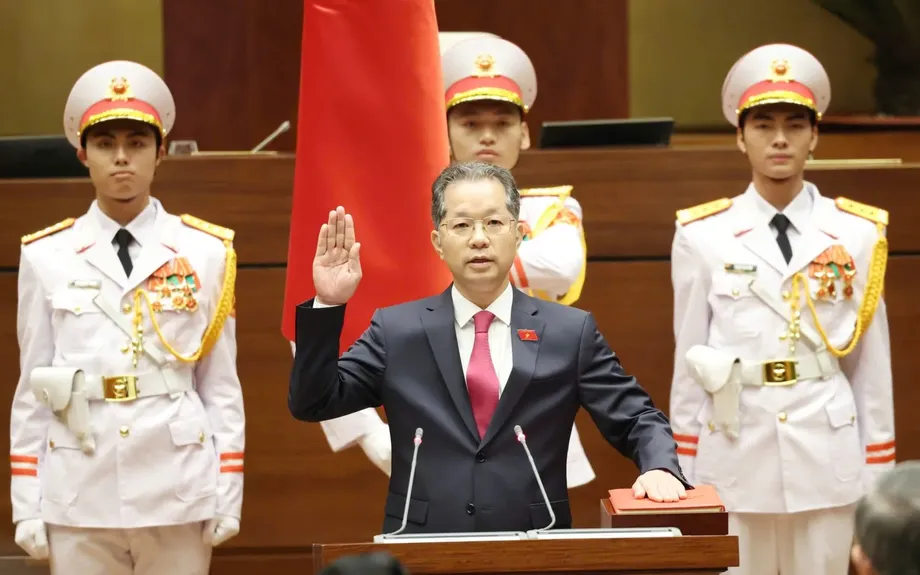
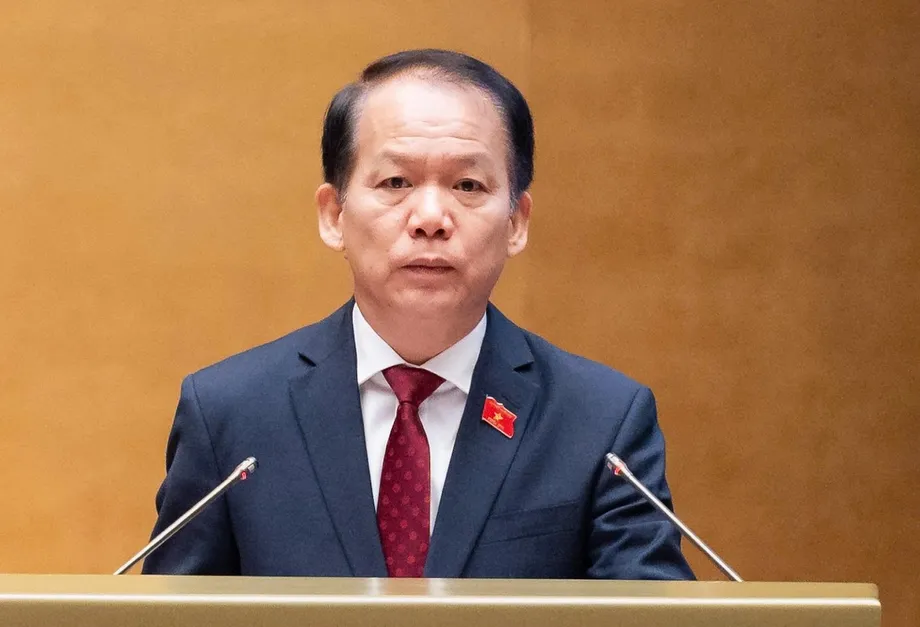
Justice Minister Hoang Thanh Tung presented the proposal on October 22 at the second session of the 16th National Assembly, alongside amendments to the Housing Law and Real Estate Business Law. Together, the three drafts would change how land is registered, valued, recovered and developed, how property buyers are protected, and how rental and social housing are provided.
The land proposal combines simpler administration with stronger pressure on developers to use allocated land. Investors whose projects leave land unused or fall behind would face payments that increase with the duration of the violation. Land remaining unused for more than 60 months could be recovered by the state.
For households, the most immediate proposed changes concern paperwork, compensation and access to housing. Electronic records would carry legal weight, residents losing residential land would have several possible compensation arrangements, and rental housing would receive a dedicated chapter in the Housing Law.
National Assembly committees supported the need for revisions while seeking stronger safeguards. Their concerns include unnecessary land recovery for business projects, the management of money owed under property contracts, and eligibility checks to keep housing support focused on intended beneficiaries.
The bills remain under consideration. The land revision is intended for passage in 2026, ahead of the February 28, 2027 expiry of certain existing provisions governing decentralisation and measures to resolve land administration difficulties.
What would change at the land office?
The proposed parcel code would give each piece of land one identifying reference across Vietnam. A parcel is an individually recorded area of land. A unique code would help officials connect its registration, certificate and other administrative records without relying only on addresses or descriptions.
Paper and electronic land registrations and certificates covering land use rights and ownership of assets attached to land would have equal legal value. Residents could therefore use a recognised electronic document for the same legal purpose as its paper equivalent.
Authorities handling administrative procedures would be barred from requesting information already available in databases. For a resident completing a land procedure, that would mean fewer repeated submissions when the necessary information is already recorded.
Responsibility would also be divided more explicitly between commune and provincial authorities. Communes would generally handle matters involving households, individuals and residential communities. Provinces would deal with organisations, people of Vietnamese origin living abroad, and projects extending across at least two communes.
The Economic and Financial Committee also called for solutions to outstanding registration and certificate applications. Its review connected the new administrative framework with a practical concern: resolving cases that have already been waiting for documents.
A shorter law and a deadline for passage
The amended Land Law would contain 13 chapters and 112 articles, compared with 16 chapters and 260 articles in the 2024 law. That is a reduction of 148 articles, or about 57%. Provisions directly concerning land users' rights that remain suitable would stay in the law, while detailed procedures would be assigned to government guidance.
The government said the revision would implement Resolution 21-NQ/TW, dated July 28, 2026, and address difficulties encountered in applying the 2024 Land Law. The legislative timetable also reflects the approaching expiry of temporary arrangements.
The main dates are:
- July 28, 2026: Resolution 21-NQ/TW set directions for revising the Land Law and related legislation.
- October 16: Pham Thi Hong Yen, a full time National Assembly deputy serving on the Economic and Financial Committee, outlined the policy direction at a briefing on the session.
- October 22: The Assembly heard presentations and committee reviews of all three bills, with group discussions scheduled later that day.
- During 2026: The stated objective is to complete and enact the revised Land Law, with consideration and passage expected at the second session.
- February 28, 2027: Certain existing land provisions expire, creating a requirement to enact the replacement before March 1.
The committee requested stable, consistent rules on land recovery, compensation and resettlement across the country. Moving detailed procedures into government guidance makes the division between statutory rights and implementing rules an important part of completing the legislation.
Idle projects would face rising costs
Developers leaving investment project land unused, or delaying its use, would have to pay progressively increasing amounts as the violation continued. If the land still had not been brought into use after more than 60 months, the state would recover it.
Sixty months is five years. The proposal therefore combines a growing financial cost with eventual recovery, rather than relying on a single payment while a stalled project continues to occupy land.
An investor's previous performance would also matter when seeking land for another project. Progress in using land and carrying out earlier investments would become a basis for decisions on land allocation, leasing and permission to change land use purposes.
The draft would distinguish between allocating land through an auction of land use rights and selecting a project investor through bidding. Bidding would apply to projects requiring particular financial capacity, experience, technology, construction quality, delivery schedules or coordinated infrastructure. Auctions would apply to land recovered or managed by the state, including certain leases paid annually.
People and organisations leasing land from the state would be allowed to choose between paying once for the lease period and paying annually. The draft would also distinguish changes of land use that require permission from those that do not.
Land recovery puts household protections in focus
The draft largely retains the grounds for land recovery for defence, security and development serving national or public interests under the 2024 Land Law and Resolution 254/2025/QH15. The government proposes adding one defence or security case and two development cases serving national or public interests.
Economic and Financial Committee Chairman Phan Van Mai called for close scrutiny of those grounds, particularly where projects have a business purpose. The committee wants recovery to be genuinely necessary and protected against abuse.
People whose residential land is recovered could receive compensation in land with the same use, other land, or money. Proposed arrangements also include resettlement at the original location, moving the affected residential area to the remaining part of a parcel, or using another parcel held by the same resident within the commune.
Resettlement areas would offer different housing standards and sizes to suit compensation amounts and household ability to pay. For a family facing relocation, the choices would affect where they live and how much additional money they might need.
At the October 16 briefing, deputy Pham Thi Hong Yen described a policy direction requiring resettlement arrangements to be completed before approval of compensation and resettlement plans and land recovery. The committee's subsequent review sought clarification of protections where recovery occurs before a compensation plan is approved. The sequence of relocation, compensation approval and recovery therefore remains an issue for lawmakers to settle.
The committee also sought rules that protect housing, living conditions and livelihoods after recovery, connecting compensation with the practical costs of rebuilding daily life.
Land prices would rely on tables and data
The draft would remove the current provisions on specific land prices and land price consulting organisations, concentrating instead on land price tables and adjustment coefficients. A price table provides listed values, while a coefficient is a multiplier used to adjust a listed value for the relevant calculation.
The proposed framework would also set rules on rates used to calculate land use payments, rent and compensation, as well as the determination of infrastructure construction costs. Those calculations affect both what land users pay the state and what residents receive when land is recovered.
The government says valuation should be objective, public and transparent, drawing on land records and relevant specialist databases. Pham Thi Hong Yen described connecting those datasets and using scientific methods as ways to limit price manipulation and artificial prices.
Phan Van Mai's committee asked for guidance allowing local price tables and coefficients to move down as well as up. It also requested further work on pricing land in industrial zones and clusters built with public funds, and on using public assets associated with land.
Land planning would change alongside valuation. Land use content would be integrated into provincial planning rather than maintained as a separate planning category. Commune land use plans would be simplified, digitised and connected with relevant plans.
The committee wants commune plans to track needs and implementation progress rather than become another layer of planning or a separate legal basis for investment projects. It favours flexibility in most land allocation targets, while retaining strict area controls for forest, rice, defence and security land.
Protecting the final 5% of a property contract
The Real Estate Business Law draft would introduce a safeguard for the remaining 5% of contract value, using a secured or escrow account or an arrangement agreed by the parties. An escrow account holds money under specified conditions governing its release.
Phan Van Mai's committee wants the law itself to state how that money is managed and how risks are handled. It also requested clearer rules on buyers or lease purchasers voluntarily carrying out their own ownership certificate procedures, and on when guarantees are approved and issued to individual buyers.
Deposits are another concern. The committee called for a clear distinction between a genuine deposit and money collected from customers as advance financing before a project qualifies for sale. That affects when developers can take customer funds and what protections attach to those payments.
The draft would recognise electronic property contracts and create electronic identification codes for covered organisations, individuals and properties. Apartment sale contracts would be published on the housing and property market information system before use under the proposed approach.
The committee asked lawmakers to clarify how publishing contracts would fit with existing requirements for registering standard contracts, and when notarisation or certification would be compulsory or optional. Combined with parcel identification under the Land Law, these measures would expand the use of digital records across property administration and transactions.
Project transfers would move closer to local authorities
Provincial People's Committees would decide on transfers of all or part of a property project, including projects whose investment policy had been approved by the prime minister. Provincial leaders would be responsible for checking whether transfer conditions were met.
Developers transferring a project would have duties to hand over legal documents, project files, customer records, money and related rights and obligations. For a buyer waiting for a home, that would make the transfer of customer commitments a defined part of changing the developer.
The Economic and Financial Committee requested further consideration of stalled projects where the existing investor lacks capacity or has unpaid land obligations, but a capable replacement is willing to continue. It sought assessment of debt recovery, costs, timing and customer obligations, including possible arrangements for a new investor to assume unpaid financial duties.
The business law draft would have 10 chapters and 61 articles, 22 fewer than the 2023 law. It proposes removing seven business conditions, five concerning property transaction platforms, eliminating four of 12 administrative procedures and simplifying seven others. Four of 12 represents one third of the existing procedures.
A related land policy choice also remains open: whether to incorporate Resolution 171/2024/QH15 into permanent law for commercial housing projects using transferred or existing land use rights, or continue the pilot under that resolution. The committee asked the government to settle on one approach.
Rental housing would get its own rules
The Housing Law draft would classify housing into four groups: commercial, rental, official duty and policy housing. It would contain 13 chapters and 130 articles, 68 fewer than the 2023 law, with a new chapter dedicated to rental housing.
The rental chapter would cover eligible tenants, public and private investment, project requirements, investment procedures, incentives, rents and management. Investors could agree rents with tenants, but the amount could not exceed the framework set by the provincial People's Committee.
Proposed rent calculations would account for recovery of construction investment, maintenance, operation, taxes, fees, other reasonable costs and profit under the business plan. The design links investor returns with a provincial limit on what tenants can be charged.
Provincial authorities would decide how commercial housing developers fulfil obligations to provide rental or social housing: through land within the project, land elsewhere, or an equivalent payment. The Law and Justice Committee, chaired by Phan Chi Hieu, asked for careful consideration of developer responsibilities, including infrastructure contributions.
The housing draft would transfer 20 of 21 administrative procedures to local authorities and remove three quarters of business conditions. The Ministry of Construction would retain the procedure for leasing official duty housing. Certain staff assigned or rotated to especially disadvantaged communes, border areas or islands would receive an exemption from official housing rent.
Social housing resale and apartment disputes
Social housing buyers would be allowed to resell after five years from full payment, provided they had received a certificate and sold to someone eligible to buy social housing. The timing would therefore run from completion of payment, with eligibility conditions continuing to apply to the next buyer.
The draft would also incorporate pilot social housing measures under National Assembly Resolution 201/2025/QH15 and Government Resolution 66.15/2026/NQ-CP. Phan Chi Hieu's committee called for transparent checks on beneficiaries to prevent misuse of support and housing speculation.
Local authorities would decide where developers may subdivide land and sell plots for residents to build homes in grade III urban areas and other covered areas. The committee recommended keeping that practice to a minimum in urban locations, especially large cities.
Apartment redevelopment provisions would connect rebuilding with urban renewal and protection of property rights. The committee sought solutions to disputes involving maintenance funds, management boards, parking and the boundary between common and private ownership.
The land draft also proposes mandatory mediation before state authorities resolve land disputes, followed by access to court challenges where residents disagree with complaint decisions by provincial or commune People's Committee chairpersons. Mediation is an attempt to reach agreement before an authority decides the dispute.
Across the three bills, the practical changes would reach beyond shorter forms: households would use different records, investors would face new duties, and local authorities would make more decisions. The committees are seeking precise rules on compensation, customer money, eligibility and responsibility before those powers are exercised.
Key Points
- Every land parcel would receive a unique nationwide code, with electronic certificates legally equal to paper documents.
- Authorities could not request information already held in databases.
- Idle project land would face rising charges and state recovery after more than 60 months of nonuse.
- Lawmakers are seeking stronger safeguards on land recovery, compensation and resettlement.
- The property business draft would protect the remaining 5% of contract value and expand electronic transactions.
- A dedicated rental housing chapter would combine agreed rents with provincial price limits.
- Social housing resale after five years from full payment would require a certificate and an eligible buyer.
- The revised Land Law is targeted for enactment in 2026, before temporary provisions expire on February 28, 2027.