A victory declaration at a former operations hub
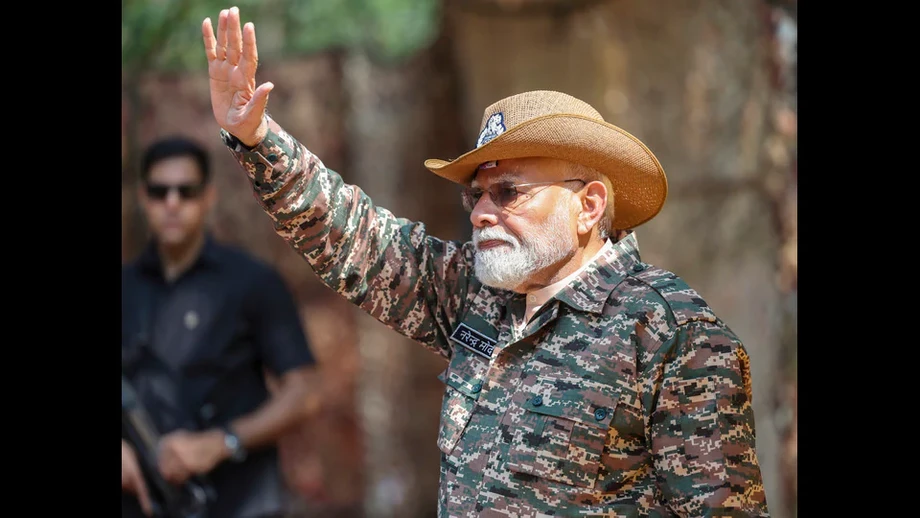
Prime Minister Narendra Modi declared that every district in India was free from Naxalism as he celebrated Diwali with security personnel on November 8, 2026, at the CoBRA Operations Base in Karanpur, in Chhattisgarh's Bastar district. He also warned that people he called "dimagi Naxals", meaning ideological supporters of Naxalism, continued to threaten the country through political parties and other organisations.
Contents
- A victory declaration at a former operations hub
- What the claim means for Bastar
- A timeline from heavy losses to the Diwali visit
- The losses behind the celebration
- How Modi described the security strategy
- Roads, mobile towers and a route back to civilian life
- The warning about ideological supporters
- Why poverty and sport featured in the speech
- A celebration with a continuing agenda
- Key Points
The location gave his declaration particular weight. Karanpur served as a training centre and a base for launching operations into Bastar and Abujhmad, areas long associated with armed Maoist activity. During the visit, Modi paid tribute to fallen Central Reserve Police Force personnel at the camp memorial.
Modi, India's prime minister, described the festival as a turning point after decades of violence:
This Diwali in 2026 is truly special. This is the first Diwali since the nation won its decades-long battle against Naxalism and Maoist terror. This is the first Diwali where every single district in the country is free from Naxalism. This is the first Diwali where crores of our citizens have overcome the fear of Naxalism.
The declaration followed the central government's March 31 announcement that India had been freed from Naxalism after operations against Maoist leaders and cadres and the surrender of hundreds of others. Modi used the November visit to connect that security claim with roads, communications, education and the return of ordinary public life.
What the claim means for Bastar
Bastar has been a central arena of India's conflict with armed Maoist groups, also called Naxalites. The government uses the term Left-Wing Extremism for this security challenge. In this context, it refers to an armed movement seeking political change through insurgency rather than elections.
Modi said more than 230 districts across nearly 20 states had once been affected. He named a broad area stretching through Bihar, Maharashtra, Odisha, Uttar Pradesh, Madhya Pradesh and Chhattisgarh. For residents of affected villages, he described restrictions that reached far beyond encounters between armed groups and security forces.
According to Modi, daily activity in some places stopped after sunset because people feared leaving their homes. Maoist intimidation also deprived people of the ability to exercise their voting rights. His account presented freedom from violence in practical terms: families moving about without fear, children attending school and citizens taking part in public life.
Bastar has experienced intensified security operations, large numbers of surrenders and an expansion of development initiatives. The government's declaration places the region at the centre of a new task, turning gains against armed groups into lasting access to services and opportunities.
A timeline from heavy losses to the Diwali visit
Modi linked the celebration to several stages of the conflict and his government's response. The dates explain why the November visit was presented as a milestone rather than an isolated festival appearance.
- 2004 to 2013: Modi said security personnel killed each year outnumbered Maoists killed.
- 2010: Deadly attacks in Dantewada became a central example in his account of the conflict's human cost.
- 2014: Modi said his government brought a change in political will and gave security forces greater freedom to act.
- March 31, 2026: The central government announced that India had been freed from Naxalism.
- November 8, 2026: Modi celebrated Diwali at Karanpur and declared every district free from Naxalism.
The timeline also shows how the speech combined remembrance, a defence of government policy and a warning about threats Modi said continued beyond the armed conflict.
The losses behind the celebration
Modi said that, for the first time in 47 years, no CRPF member had been killed in the line of duty during the preceding year. He credited government policies, political determination and the courage and restraint of personnel. The CRPF is a central police force with a major role in internal security, including operations against Maoist groups.
Chhattisgarh alone had lost more than 1,000 security personnel to Naxalite violence over the course of the conflict, Modi said. He also referred to personnel who lost limbs in explosions involving improvised explosive devices, commonly called IEDs.
Recalling Dantewada in 2010, Modi cited 76 CRPF personnel killed in one incident and 44 civilians in another. Other figures attributed to the same speech were 66 personnel and 41 civilians. Those conflicting totals need clarification before a definitive combined toll can be stated.
At Karanpur, Modi thanked the CRPF, its specialised CoBRA units, the Border Security Force, the Indo-Tibetan Border Police, the Sashastra Seema Bal, Indian Reserve Battalions and state police. He also recognised Bastar Fighters, women commandos and the families of personnel, saying families shared the responsibilities and sacrifices of service.
How Modi described the security strategy
Modi argued that the government's approach combined greater operational freedom with action against the networks that sustained armed groups. He said funding channels, counterfeit currency networks and weapons supply lines had been disrupted.
Modi accused previous governments of preventing security personnel from responding effectively to attacks. Describing his administration's approach, the prime minister said:
We gave security forces the freedom to take all necessary decisions.
He also alleged that people within government and the administration had supported Left-Wing Extremism, and said his government had worked to dismantle that support. These were political accusations made as part of his explanation for the change in security conditions.
Modi described the aim in human terms: preventing a mother from losing a child, a family from being devastated or a young person from taking up arms. He said sustained operations and improvements in daily life had helped bring communities affected by violence closer to the government and security forces.
Roads, mobile towers and a route back to civilian life
Modi presented development as part of the security campaign itself. He said Maoist groups had sought to obstruct development and that the government had responded by expanding infrastructure and public services alongside operations against them.
He cited more than 9,500 mobile towers, around 200 Eklavya schools for tribal children, about 50 industrial training institutes and 50 skill development centres in affected areas. Industrial training institutes, often called ITIs, teach practical skills intended to help young people find work.
The road construction figure attributed to Modi was more than 15,000 kilometres, while another tally of his remarks gave more than 1,500 kilometres. The difference is tenfold, making the precise distance an important outstanding detail in assessing the scale of construction.
Thousands of post offices, bank branches and ATMs were also described as part of the expansion. For remote communities, such facilities can shorten the journey needed to withdraw money, receive payments or use basic financial services. Roads and mobile connections can make it easier to reach schools, healthcare and markets.
The government also offered rehabilitation to Maoists who surrendered, Modi said. That adds another part to the transition he described: helping people leave armed groups and return to civilian life, alongside building services for communities that endured the conflict.
The warning about ideological supporters
Modi's strongest warning concerned people he called "dimagi Naxals". He alleged that ideological supporters had entered political parties and other organisations and were encouraging people to act against India's Constitution and democracy. He had previously used the expression in his Independence Day address at the Red Fort.
Addressing the security personnel, the prime minister said:
We must remember one thing. Naxalites have been eliminated, but the threat is not yet over. While armed Naxalites have been wiped out from the forests, 'Dimagi Naxals' have taken control of several organisations.
He called for such people to be identified and defeated. His remarks shifted the focus from armed groups operating in forests to alleged political and organisational networks. The expression has also become a point of dispute between the BJP and opposition leaders and activists.
Modi's address did not set out a new legal measure or a timetable for action against the organisations he described. His warning nevertheless made clear that the government's victory declaration was accompanied by a continuing political and security campaign against alleged supporters.
Why poverty and sport featured in the speech
Modi linked the changes in Bastar to his government's wider economic record. Citing a recent World Bank report, he said around 50 crore people, equivalent to 500 million, had moved out of extreme poverty in India over 12 years. He connected that claim with the government's fight against Naxalism and separatism.
He named Jan Dhan bank accounts, housing under PM Awas Yojana, Mudra loans, Ayushman Bharat healthcare support and free foodgrain distribution among the initiatives contributing to improved living conditions. Each addresses a different household need, from access to banking and business credit to housing, medical treatment and food.
The poverty figure was a national claim, while the roads, towers and education facilities concerned areas affected by Maoist violence. Together, they formed Modi's argument that security operations and better living conditions had reinforced each other.
The Bastar Olympics supplied a more local example. Modi pointed to children participating in sport after growing up under the shadow of violence. Their participation illustrated the kind of change his speech celebrated: public spaces being used for competition and community activity rather than being shaped by fear.
A celebration with a continuing agenda
Union Home Minister Amit Shah described the occasion as the first Diwali in five decades when the country was free from Naxalism. He credited security personnel and recalled Modi's practice of spending the festival with forces deployed away from their families.
Shah, who heads the ministry responsible for internal security, dedicated the occasion to personnel who had sacrificed for the country's peace:
This Diwali is dedicated to the valour and sacrifice of those heroes who gave their all for the country's security and peace. A grateful nation will always remain indebted to them.
Modi compared the role of personnel maintaining internal security with that of forces guarding India's borders. He said both protected national unity and that weakness inside the country could give external enemies opportunities.
The prime minister described the elimination of Naxalism as a starting point and called for work towards an India free from drugs, more self reliant and developed. For Bastar, the concrete priorities in his address were continued access to services, opportunities for young people and the rehabilitation of those leaving armed groups.
Key Points
- Modi celebrated Diwali at the CoBRA Operations Base in Karanpur, Bastar, on November 8, 2026.
- He declared every Indian district free from Naxalism, following the central government's March 31 announcement.
- He said no CRPF member had been killed in the line of duty during the preceding year, calling it the first such year in 47 years.
- He credited security operations, disrupted support networks and expanded public services.
- He warned about alleged ideological supporters in political parties and organisations.
- Conflicting figures attributed to the speech require clarification on Dantewada casualties and road construction.