A final solar wing completes five years of work
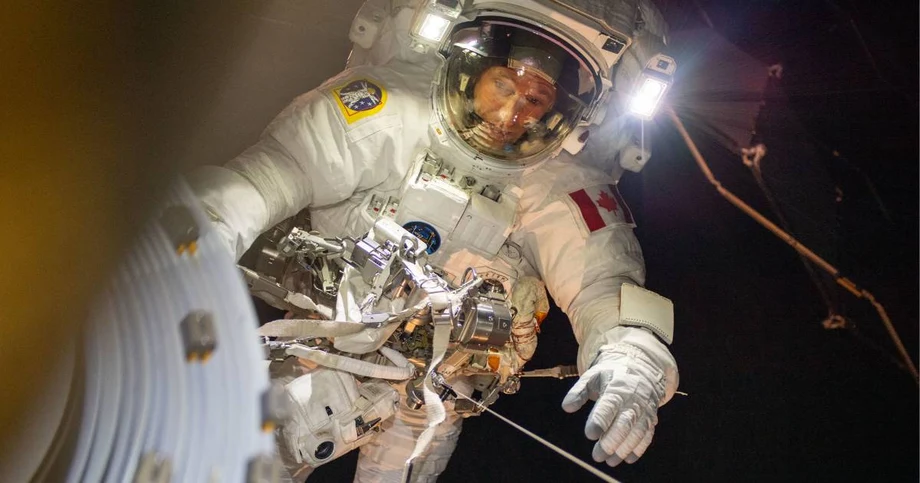
NASA astronaut Anil Menon and Canadian Space Agency astronaut Joshua Kutryk completed the International Space Station's final upgraded solar array installation on November 5, 2026, finishing a spacewalk that lasted six hours and 59 minutes. Their work closed an installation campaign that began in June 2021 and is intended to provide more electricity for research, commercial experiments and daily operations aboard the orbiting laboratory.
Contents
- A final solar wing completes five years of work
- How much more electricity will the station have?
- Moving a large array by hand and robotic arm
- Why an electrical glitch delayed deployment
- How a rolled blanket becomes a solar wing
- From a 2017 demonstration to the eighth installation
- The people supporting the astronauts
- A Canadian milestone built on careful preparation
- What comes after the power upgrade?
- Key Points
The eighth and final International Space Station Roll-Out Solar Array, known as IROSA, was fitted to the 3B power channel on the starboard side of the station's truss, its large structural backbone. Starboard means the right side when facing the station's designated forward direction.
The spacewalk began at 8:36 a.m. EST and ended at 3:35 p.m. It was Menon's fifth excursion outside the station and Kutryk's second. The same pair installed the seventh array on October 29, exactly one week earlier.
A temporary electrical problem complicated the final installation. Ground controllers and the astronauts worked through cable checks and waited for the station to enter Earth's shadow before completing the deployment. The crew returned inside with supplies remaining in their suits.
Menon credited the teams supporting the operation from Earth. Describing how they adjusted their work during the spacewalk, the NASA astronaut said:
We had a plan. We changed that plan, and the teams down there did such an incredible job pivoting, and we got it done.
How much more electricity will the station have?
The Canadian Space Agency describes the completed upgrade as increasing the station's electricity generating capacity by up to 30 percent. The published capacity figures put the change at about 160 kilowatts before the upgrade and roughly 215 kilowatts afterward.
Those endpoints represent an increase of approximately 55 kilowatts. Calculating directly from the rounded figures gives about 34 percent, while the agency's stated estimate is up to 30 percent. Both describe a substantial increase in the electricity available to the station.
A kilowatt measures power, meaning the rate at which electricity is generated or used. The newly installed wing can produce about 20 kilowatts. That figure describes the individual array, while the change from 160 to roughly 215 kilowatts describes the station's combined power system.
The eight new wings sit in front of portions of the original solar panels, which continue contributing electricity. Their combined effect depends on how the new and older equipment work together, rather than simply adding eight individual ratings to the previous station total.
More electricity gives the ISS greater capacity to run scientific instruments and commercial payloads while maintaining the equipment needed to keep the station operating. The upgrade also supports operations through the station's planned final years and eventual controlled departure from orbit.
Moving a large array by hand and robotic arm
Menon and Kutryk first had to release the folded array from its temporary storage equipment. Although objects float in orbit, a large piece of hardware still resists changes in motion. Moving it requires careful control, secure restraints and coordination between the astronauts and the robotic arm operators.
Menon secured his feet in an adjustable restraint attached to Canadarm2, the station's Canadian robotic arm. NASA astronauts Luke Delaney and Jessica Watkins operated the arm from inside the ISS, moving Menon and the array toward the installation location.
Kutryk travelled along the station's exterior using handholds and safety tethers. At the work site, he secured himself in another foot restraint so that he could use both hands to receive and position the array.
The final mounting area lay slightly beyond the robotic arm's reach. Kutryk took control of the array, and Menon moved from his position on Canadarm2 to another secured position on the station. Working together, they could then complete the installation on the 3B power channel.
Kutryk served as the lead spacewalker, using the call sign EV1. Red stripes on his spacesuit helped controllers and viewers distinguish him from Menon, who used the call sign EV2. Early in the excursion, the pair were about 30 minutes ahead of their planned schedule.
Why an electrical glitch delayed deployment
Mission Control detected a problem while the astronauts were making electrical connections. Controllers saw only about half the expected shunt current, an electrical reading used to check the array's power handling before deployment.
Solar cells generate electricity when sunlight strikes them. A shunt provides a route for current to be diverted as part of controlling the electrical system. An unexpected reading meant the crew and ground teams needed to check the connections before allowing the array to unfurl.
The troubleshooting focused on a cable identified as P23-A. The crew inspected connectors, and the operation continued during a later passage through Earth's shadow, when the solar equipment was no longer receiving direct sunlight.
Once satisfactory current readings were detected, the astronauts released two bolts and allowed the array to deploy. They then completed the remaining cable work and cleanup before returning to the Quest airlock.
Kutryk praised the response as the excursion drew to a close. The Canadian astronaut said:
It was so impressive to see the team respond, and get us to where we needed to be, despite the challenges that we encountered along the way.
How a rolled blanket becomes a solar wing
Redwire Space manufactured the arrays under contract to Boeing, NASA's prime contractor for station operations. The design uses a flexible blanket covered with photovoltaic cells, the devices that turn sunlight into electricity.
Each wing extends approximately 19.4 metres when deployed. Folded for transport, the equipment occupies far less space, allowing it to travel in the unpressurised trunk of a SpaceX Cargo Dragon spacecraft.
The deployment system relies on composite booms that store mechanical energy while rolled up. When released, the booms straighten and draw out the solar blanket. The basic idea resembles a tightly rolled strip that wants to return to its extended shape, although the flight hardware is engineered to control that movement precisely.
This approach allows the wing to unfold without motors or a complicated set of mechanical hinges. The deployed structure must also remain stiff enough to hold its shape during station operations.
The compact design has a reported stowed power density of roughly 40 kilowatts per cubic metre. In simple terms, that measures how much generating capacity can be packed into a given volume for launch. Space inside a cargo vehicle is limited, so equipment that packs tightly can make delivery more practical.
From a 2017 demonstration to the eighth installation
The technology behind the new wings was demonstrated outside the ISS in 2017. Operational installation began four years later, as the station moved from testing the concept to using it as part of its electricity supply.
The final wing completed a sequence of deliveries and spacewalks spread across several years. The principal milestones were:
- 2017: Roll-out solar array technology was demonstrated outside the space station.
- June 2021: Astronauts installed the first operational IROSA.
- 2023: Six upgraded arrays were in use aboard the ISS.
- October 2026: The final pair arrived aboard SpaceX's 35th commercial resupply services mission.
- October 29, 2026: Menon and Kutryk installed the seventh array.
- November 5, 2026: The pair installed and deployed the eighth and final array.
The November 5 activity was designated U.S. Spacewalk 101. It was also the 286th spacewalk devoted to station assembly and maintenance, and the 18th since 2021 associated with augmenting the ISS power supply. The numbers count different categories of work.
The original solar equipment has been operating for decades, with the first of the station's main arrays entering service in December 2000. Solar cells gradually lose generating capacity after years in the space environment. Adding new wings helps the station maintain a useful electricity supply as its older equipment ages.
The people supporting the astronauts
Delaney and Watkins handled more than the robotic transfer. Before the spacewalk, they helped prepare the suits and airlock, including fitting Menon's emergency rescue unit. They removed and reinstalled it after encountering difficulty securing it.
The unit, called Simplified Aid For EVA Rescue, or SAFER, is a small propulsion pack intended for use if an astronaut becomes separated from the station. Throughout the excursion, the spacewalkers also carried out checks of each other's equipment, including gloves and possible water accumulation inside their helmets.
CSA astronaut Jenni Gibbons served as capsule communicator, or CAPCOM, at NASA's Johnson Space Center in Houston. Nichole Stilwell served as the spacewalk communicator, relaying instructions for the work outside. The roles placed several layers of support between the astronauts, station systems and specialist teams on the ground.
Robotics teams in Houston and at CSA headquarters in Longueuil, Quebec, monitored Canadarm2 operations. Their work included checking the arm's condition, geometry, camera views and movement against the planned procedures.
CSA robotics controllers Roxanne Côté-Bigras and Stephen Takacs described how those responsibilities are coordinated between Canada and the United States. Neither was directly assigned to these solar array spacewalks, but their account explains the wider operation: controllers must understand both the machinery and the precise sequence that astronauts will follow.
A Canadian milestone built on careful preparation
Kutryk arrived at the ISS on October 1 for a mission expected to last six months. Within little more than a month, he had completed two spacewalks totalling about 14 hours.
His October 29 excursion made him the fifth Canadian to perform a spacewalk, following Chris Hadfield, Steven MacLean, Dave Williams and David Saint-Jacques. Saint-Jacques had been the most recent Canadian outside the station, in 2019.
The work began well before the outer hatch opened. Kutryk and Menon performed preparations to remove nitrogen from their bodies before moving into the lower pressure of their spacesuits. This reduces the risk of decompression sickness, in which nitrogen forms harmful bubbles in blood and tissues as pressure falls.
The Quest airlock was gradually depressurised from the station's normal atmosphere to a vacuum. The crew paused for suit leak checks, and much of the air was pumped back into the station to conserve supplies.
During the excursion, the astronauts also adjusted their suits for changing thermal conditions as the ISS moved between sunlight and shadow. Those repeated changes affected both the crew's working environment and the timing of the electrical troubleshooting.
What comes after the power upgrade?
NASA's next planned spacewalk work was focused on upgrading and repairing the Alpha Magnetic Spectrometer in January 2027. The instrument, mounted on the station's truss, detects cosmic rays, energetic particles arriving from space.
Gaurang Patel, operations integration manager for NASA's Low Earth Orbit Program, outlined the planned January work at an October 20 briefing. NASA had not named the astronauts who would carry it out. Kutryk was expected to remain aboard the ISS during that period.
Robotics teams were already preparing for the spectrometer work, including rehearsals connected to astronaut training at NASA's Neutral Buoyancy Laboratory near Houston. The large pool lets astronauts practise movements around submerged station structures while wearing spacesuits.
A Northrop Grumman Cygnus cargo launch was also scheduled for no earlier than November 29. Canadarm2 would again have a central role, this time helping the station crew capture and berth a visiting supply spacecraft.
The completed solar campaign leaves the ISS with its full planned set of eight upgraded arrays. The immediate result is more generating capacity for the laboratory's remaining operations, while the installation experience provides practical information for solar systems on future spacecraft.
Key Points
- Anil Menon and Joshua Kutryk installed the eighth and final upgraded ISS solar array on November 5, 2026.
- The spacewalk lasted six hours and 59 minutes, from 8:36 a.m. to 3:35 p.m. EST.
- The array was mounted on the 3B power channel on the station's starboard truss.
- The crew resolved a temporary electrical problem before deploying the wing.
- The upgrade campaign began in June 2021 and brings stated station power capacity from about 160 to roughly 215 kilowatts.
- Menon completed his fifth spacewalk and Kutryk his second, supported by crew aboard the ISS and teams in Houston and Longueuil.
- NASA planned further spacewalks in January 2027 to work on the Alpha Magnetic Spectrometer.