1,364 rescues and a demand to end abuse
Bangladesh's foreign ministry has told a parliamentary committee that 1,364 female domestic workers have been rescued and repatriated from Saudi Arabia, where about 169,000 Bangladeshi women work. The figures bring a concrete measure to a problem described for years by women returning home with unpaid wages, serious injuries and accounts of violence inside employers' homes.
Contents
- 1,364 rescues and a demand to end abuse
- A promised job becomes an escape from violence
- Recruitment expanded faster than protection
- Warnings stretch from 2007 to 2025
- What Kenyan workers describe inside Saudi homes
- Why a telephone and a passport matter
- Updated rules leave domestic workers outside the labour law
- Justice and compensation can take years
- Bangladesh's missions face a capacity problem
- Key Points
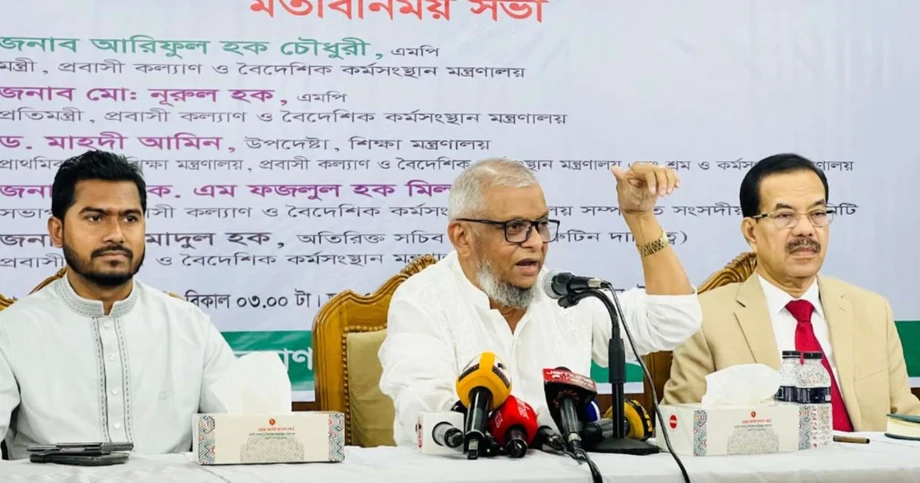
At a parliamentary meeting on 25 October, the ministry estimated that 1% to 2% of Bangladeshi female workers in Saudi Arabia experience abuse. Applied to the population it cited, that would mean approximately 1,690 to 3,380 women. The ministry did not specify the period covered by its rescue total or explain how it calculated the abuse estimate, leaving the scale and frequency of harm difficult to measure.
Jahrat Adib Chowdhury, chair of the Parliamentary Standing Committee on Foreign Affairs, rejected the idea that a small percentage made the problem acceptable.
"People may consider 1–2% a small proportion, but 1,364 rescued workers is not acceptable," he said.
The committee instructed the ministry to work toward bringing abuse incidents down to zero. Bangladesh's missions already conduct welfare checks when workers collect passports, and the ministry says outside organisations also carry out surveys. Yet accounts from Bangladeshi survivors and investigations covering other nationalities show why help must reach women who cannot freely leave a house, use a telephone or approach an embassy.
A promised job becomes an escape from violence
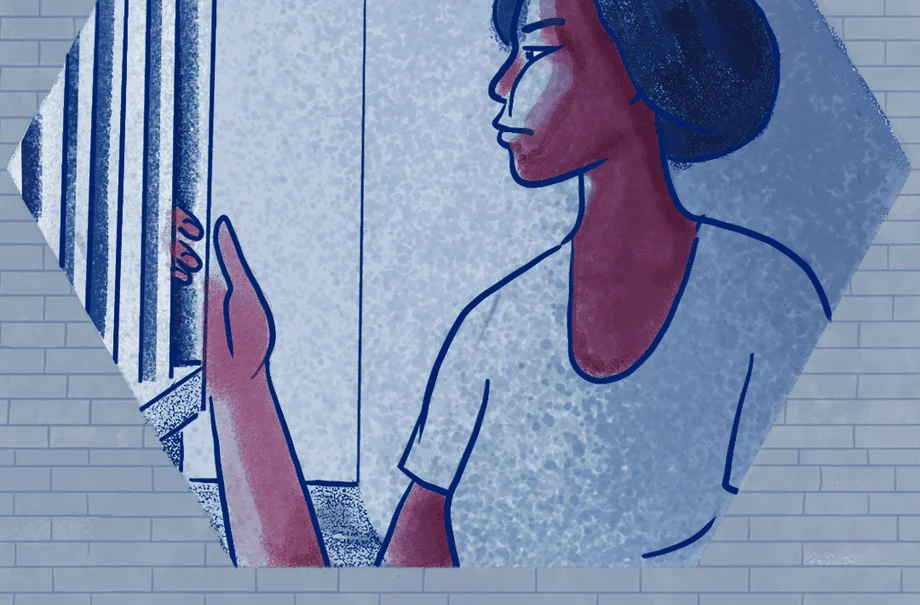
Dalia Akhter's experience shows how an overseas employment contract can turn into dependence on an abusive household. She left Bangladesh in July 2018, aged 25, expecting to care for an elderly Saudi woman and earn 1,000 riyals a month. She left her husband and young child in Dhaka.
Akhter described the working day she encountered:
"I had to work from 5 a.m. to 10 p.m. every day without a break," she said.
Her account describes a working day of 17 hours. Childcare was added to her duties, while her promised monthly pay fell from 1,000 to 800 riyals, a reduction of 20%. She said she was beaten for failing to understand Arabic. When she sought help from the recruitment company in Dhaka, she said the response blamed her for travelling unprepared.
Akhter said her first employer transferred her to another family after five months. The violence continued, and she said the second employer broke her leg with a stick. She eventually jumped from a building with two storeys to escape torture, suffering a fractured vertebra.
By November 2019, she had returned to Bangladesh after nine months without pay and was spending 12 hours a day in bed. Akhter described the lasting effect on her ability to earn a living:
"Now I'm too weak to work," she said.
Her experience connects several failures: a job that changed after arrival, a recruitment agency that failed to provide effective help, violence by successive employers and an escape that left her with further injuries.
Recruitment expanded faster than protection
Saudi Arabia sent a team of 19 recruitment officials to Dhaka in 2015, ending a long employment ban and opening a new channel for Bangladeshi women seeking work. For families with few reliable sources of income, domestic employment abroad offered the possibility of regular earnings.
About 83,000 Bangladeshi women went to West Asia for work in 2017, four times the number two years earlier. That figure covers the region, rather than Saudi Arabia alone, but it shows how quickly recruitment grew after the 2015 agreement.
BRAC, the Bangladeshi development organisation, recorded about 200 women returning from Saudi Arabia each month in the period described in 2019, many with accounts of abuse, excessive work or unpaid salaries. Compensation reached only 318 women through Bangladesh's Bureau of Manpower Employment and Training in 2018, averaging 9,200 taka each.
For a worker who returns injured and without months of wages, the financial damage continues after arrival. Medical care costs money, and an injury can prevent her from taking another job. Akhter's account shows how migration intended to support a family can instead leave that family caring for someone who can no longer work.
Warnings stretch from 2007 to 2025
Human Rights Watch documented lethal violence against domestic workers in its August 2007 statement. Two Indonesian women died after being beaten by members of their employers' family, while two others suffered serious injuries. Saudi authorities detained the employers.
The statement described domestic workers facing long hours, confinement, low wages and physical or sexual abuse. It also recorded obstacles to justice, including missing interpretation, lack of legal assistance and delays in notifying diplomatic missions. Almost two decades later, research published in 2025 described several of the same problems.
The main developments span years of recruitment and repeated warnings:
- 2005: Indonesian domestic worker Nour Miyati suffered severe injuries and lost fingers to gangrene after abuse described by Human Rights Watch.
- 17 August 2007: Human Rights Watch called for stronger protection following the deaths of two Indonesian domestic workers.
- 2015: Saudi Arabia sent a recruitment delegation to Dhaka, reopening an employment route for Bangladeshi women.
- July 2018: Dalia Akhter travelled to Saudi Arabia for a domestic job that she said became abusive.
- 2023: Saudi Arabia issued updated regulations for domestic workers.
- May 2025: Amnesty International published findings from interviews with more than 70 Kenyan women who had worked in Saudi households.
The timeline shows that rescue and repatriation have operated alongside a much longer struggle to prevent abuse and secure remedies after it happens.
What Kenyan workers describe inside Saudi homes
Amnesty International's May 2025 findings document the experiences of more than 70 Kenyan women formerly employed as domestic workers in Saudi Arabia. Their accounts add detail about conditions within the same employment sector in which Bangladeshi women work.
The women described working at least 16 hours a day, often longer, cleaning, cooking and caring for children. Their reported average monthly wage was 900 Saudi riyals, about $240. Amnesty calculated average earnings at roughly $0.50 an hour when measured against hours worked. None of the women interviewed received overtime pay.
Almost all said they had received no day off during their stay, which lasted as long as two years for some. Employers sometimes delayed or withheld wages, confiscated passports and phones, and prevented workers from leaving the house.
Women also described inadequate food, sleeping on floors or in storage spaces, verbal abuse and sexual violence, including rape. Some who complained faced retaliation, accusations of theft or the loss of unpaid wages. Amnesty said many of the abuses it documented amounted to forced labour or human trafficking.
Forced labour means work extracted through threats or coercion rather than genuine freedom to choose. In these accounts, confinement, withheld documents and fear of punishment worked together to make leaving dangerous or difficult.
Why a telephone and a passport matter
Domestic work takes place in private homes, away from the colleagues, public entrances and routine contact that can make problems in other workplaces easier to notice. A woman whose employer controls her phone may struggle to contact relatives, a recruitment agency or a diplomatic mission.
Amnesty's interviews also described racial insults and degrading treatment directed at African women, including restrictions on using household utensils used by the family. The Kenyan testimonies document experiences specific to those women while showing how nationality, race, gender and dependence on an employer can combine within domestic employment.
Walk Free's January 2025 assessment described domestic workers using social media as a last resort to seek help over sexual abuse and mistreatment. It warned that workers fleeing abusive employers can end up outside formal employment arrangements, exposed to further exploitation or immigration detention.
These conditions affect how Bangladesh can detect abuse. Asking about welfare during a passport collection visit provides an opportunity to hear from workers who reach a mission. Women confined to a home need another route to assistance. The ministry's rescue total shows that interventions occur, while survivor accounts show the practical importance of being able to request them.
Updated rules leave domestic workers outside the labour law
Saudi Arabia issued updated domestic worker regulations in 2023 with the stated aim of improving working hours and conditions. Amnesty's 2025 assessment said domestic workers remained excluded from the country's general labour law and from much of the limited reform extended to other migrant workers.
The kafala system links a migrant's immigration status to a sponsoring employer. Amnesty said that, in most cases, domestic workers still needed their employer's permission to change jobs or leave the country. For someone experiencing violence, dependence on that employer can make escape and lawful employment elsewhere difficult.
Saudi authorities have rejected allegations of widespread abuse and pointed to changes to sponsorship rules, protection against harsh summer working conditions and health insurance provisions, according to Walk Free. Amnesty said Saudi and Kenyan authorities did not respond to its requests for comment or information for its investigation.
Amnesty identified weak monitoring, inspection and enforcement as central problems. It said many documented acts already violated Saudi law, yet employers committed them without punishment. The organisation called for equal protection under labour law, effective inspection and the dismantling of employer control through kafala.
Justice and compensation can take years
Nour Miyati's case illustrates the risks a survivor can face after seeking help. Human Rights Watch said her employer confined, abused and deprived her of food in 2005. She suffered severe injuries and lost fingers to gangrene.
She then faced an accusation of making false allegations against her employer and received a sentence of 79 lashes. Another court later stopped the conviction and sentence. When Human Rights Watch published its statement in August 2007, she was still awaiting a final financial settlement and the chance to return to Indonesia.
Human Rights Watch also described women who lacked basic information about their cases, interpretation or legal representation. It said Saudi authorities sometimes took months or years to notify foreign missions about an arrest or hospitalisation, delaying access to help.
Nisha Varia, then a senior researcher in the organisation's Women's Rights Division, called for police training on investigating abuse inside private homes, where few witnesses may be present, and for labour law to cover domestic workers. Those demands connect protection before an assault with the ability to seek wages, compensation and justice afterward.
Bangladesh's missions face a capacity problem
Bangladesh's foreign ministry told the parliamentary committee that its three missions in Saudi Arabia were struggling to serve about 3.5 million Bangladeshis. The embassy in Riyadh had 14 officers under the ambassador, the consulate in Jeddah had about 22 officers, and the permanent mission to the Organisation of Islamic Cooperation had one officer under its representative.
Those offices have different functions. Alongside labour welfare, their responsibilities include passports, visas, bilateral relations, trade and Hajj management. The ministry described existing staffing as inadequate for the population and workload.
The staffing problem matters directly to a woman seeking emergency help. Contacting an employer, arranging safe accommodation, assisting with a legal complaint and organising travel home can require sustained attention. Amnesty's recommendations to countries sending workers abroad included shelters, financial support and legal assistance, alongside regulation of recruitment agencies.
Bangladesh's committee has demanded an end to abuse, but the account of its meeting gave no deadline for achieving that goal or timetable for expanding mission capacity. The concrete tasks are already apparent: make emergency assistance reachable, pursue unpaid wages and compensation, and ensure that a worker can leave danger without becoming more vulnerable.
Key Points
- Bangladesh's foreign ministry says 1,364 female domestic workers have been rescued and repatriated from Saudi Arabia.
- The ministry estimates that 1% to 2% of about 169,000 Bangladeshi women working there experience abuse.
- Bangladeshi survivor accounts describe excessive hours, reduced pay, violence and lasting injuries.
- Amnesty's 2025 research on Kenyan domestic workers documents confinement, withheld wages, sexual violence and working days of at least 16 hours.
- Saudi Arabia updated domestic worker regulations in 2023, but Amnesty says exclusion from the general labour law and weak enforcement continue.
- Bangladesh's missions report staffing shortages, while a parliamentary committee has instructed the ministry to work toward zero abuse.