Young lives lost as motorcycle deaths pass 16,000
Motorcycle crashes killed 16,027 people and injured 14,547 across Bangladesh from January 2020 through September 2026, according to the Road Safety Foundation (RSF). Its tally of 16,402 crashes comes as the government prepares a proposed road safety law that would provide free emergency treatment, protect people who help crash victims and increase penalties for repeat traffic offenders.
Contents
- Young lives lost as motorcycle deaths pass 16,000
- What the figures show over time
- Heavy vehicles and loss of control dominate
- Regional roads carry the largest crash burden
- Dhaka's toll extends beyond motorcycle riders
- Why people keep choosing motorcycles
- Helmets, speed and working hours need attention
- The wider death toll needs better accounting
- What the proposed law would change
- Key Points
The foundation's detailed analysis through July shows where much of the danger lies: heavy vehicles struck motorcycles in 6,314 crashes, while riders lost control in another 5,497. People aged 13 to 35 accounted for 58% of those killed or injured. Regional roads recorded more crashes than national highways, city streets or rural roads.
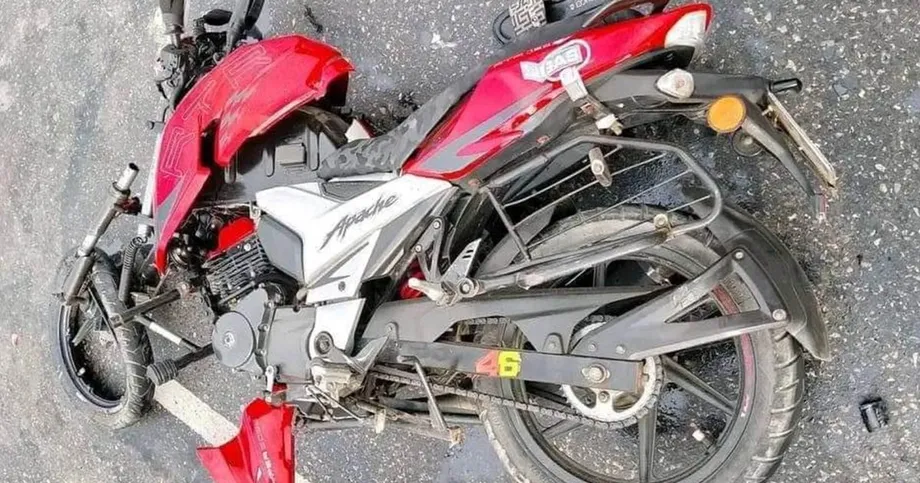
Behind those numbers are families losing workers, parents and children. On September 23, a truck struck a motorcycle carrying two friends in Dhaka's Sayeednagar area of Bhatara. Sumon, a metal grille worker who was riding the motorcycle, died after being taken to hospital. His friend Robiul, 22, was injured. Another passenger, Imam Hossain, died after a bus struck a motorcycle that same day.
On September 9, Hridoy, 27, died after losing control of a motorcycle near Kuchiamora Bridge on the Dhaka–Mawa Expressway in Sirajdikhan, Munshiganj. Sazzad, 24, was seriously injured. Hridoy had returned from Saudi Arabia four months earlier and was preparing to go back to work. He left behind a daughter.
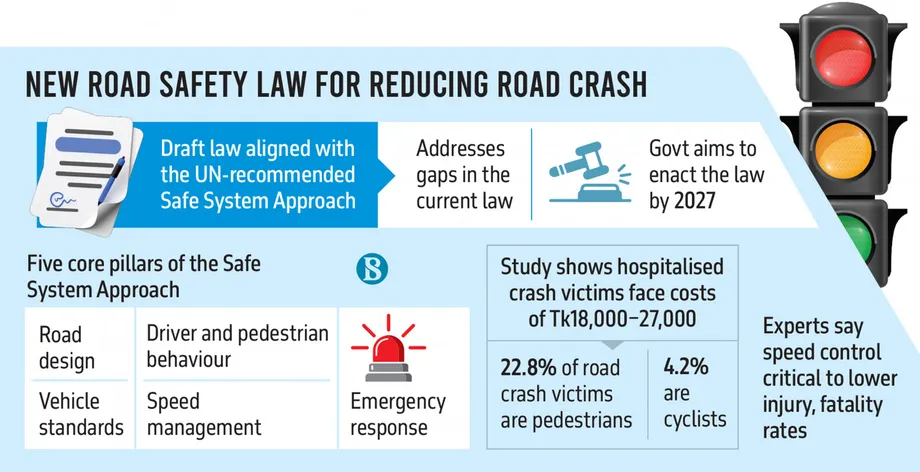
The government's pledge to enact a comprehensive road safety law by 2027 now sits alongside demands for immediate changes: lower speeds, safer encounters between motorcycles and trucks, better helmets, regulated working hours and public transport that people can comfortably use.
What the figures show over time
The RSF released its detailed motorcycle crash analysis on August 8, covering January 2020 through July 2026. It recorded 16,065 crashes, 15,712 deaths and 14,143 injuries. The later September totals extend that period by two months. The breakdowns by crash type, responsibility and road location belong to the July dataset.
The annual death figures show a sharp rise after 2020, a peak in 2022 and a continuing heavy toll in later years:
- 2020: 1,463 people killed in motorcycle crashes.
- 2021: 2,214 killed.
- 2022: 3,091 killed, the highest annual death toll listed.
- 2023: 2,487 killed.
- 2024: 2,609 killed.
- 2025: 2,671 killed in the foundation's annual report; another RSF tally gives 2,672.
- January–July 2026: 1,177 killed.
- January–September 2026: 1,492 killed.
Using the annual report's figures, motorcycle deaths increased by about 83% between 2020 and 2025, from 1,463 to 2,671. The 2025 toll was below the 2022 peak of 3,091, but it was higher than in both 2023 and 2024.
In 2025, motorcycles were involved in 3,029 of the 7,584 road crashes recorded by the foundation, or 39.93%. Motorcycle riders and passengers accounted for 2,671 of the 7,359 road deaths, or 36.29%.
Heavy vehicles and loss of control dominate
Heavy vehicle impacts accounted for 39.30% of the 16,065 motorcycle crashes examined through July 2026. Losing control accounted for 34.21%, while 3,548 head-on collisions represented 22.08%. Another 706 crashes fell into other categories.
Together, heavy vehicle impacts and loss of control made up 11,811 crashes, nearly three quarters of the total. Those figures put two concrete tasks at the centre of prevention: controlling motorcycle speeds and making roads safer where motorcycles travel alongside much larger vehicles.
The foundation's assessment of responsibility also gives goods vehicles a larger share than motorcycle riders. It attributed 6,481 crashes, or 40.34%, to vehicles carrying goods, compared with 5,831, or 36.29%, attributed solely to motorcycle riders. Buses accounted for another 2,164 crashes, or 13.47%.
Tejgaon traffic division deputy commissioner Rafiqul Islam described riders travelling without helmets or licences, avoiding police stops and speeding until they could no longer control their motorcycles. He also pointed to the pressure to deliver passengers quickly and the temptation to accelerate on open highways.
Regional roads carry the largest crash burden
Regional roads recorded 6,689 motorcycle crashes through July, or 41.63% of the foundation's total. National highways followed with 4,773 crashes, city roads with 2,646 and rural roads with 1,957. Regional roads therefore recorded 1,916 more motorcycle crashes than national highways.
Rafiqul Islam singled out Dhaka's wide Purbachal road, commonly called the 300 Feet Road, as a place where relatively light congestion encourages drivers to increase speed. His account connects an everyday attraction of a broad, open road with a recurring safety problem: riders may travel faster precisely because traffic feels easier.
The foundation has recommended service roads for slower vehicles and road dividers on highways. Service roads provide a separate route beside a main road, reducing encounters between vehicles travelling at very different speeds. Dividers separate opposing traffic and reduce opportunities for head-on collisions.
Bangladesh Jatri Kalyan Samity, the passenger welfare organisation, has also called for safer pedestrian crossings, clearer signs and road markings, regular safety audits and the removal of ageing public transport vehicles. These measures address the road environment alongside the behaviour of individual drivers.
Dhaka's toll extends beyond motorcycle riders
Dhaka recorded 1,849 road crashes between January 2020 and July 2026, killing 1,384 people and injuring 2,488, according to the foundation. The dead included 536 motorcycle riders and passengers and 592 pedestrians.
Those two groups together accounted for 1,128 deaths, about 81.5% of the capital's total. The figures connect motorcycle safety with the safety of people walking to work, crossing roads or reaching public transport.
Nighttime crashes killed 519 people, representing 37.5% of Dhaka's recorded road deaths during the period. Heavy goods vehicles were involved in 33.25% of crashes and motorcycles in 26%. Heavy vehicle movements at night, occupied footpaths and mixed traffic have prompted calls for safer crossings and closer control of truck movements.
Nationally, the foundation recorded 4,211 road deaths in 4,614 crashes between January and September 2026. Motorcycle crashes killed 1,492 people, about 35.4% of that total. In September alone, 154 motorcycle crashes killed 139 people, while 106 pedestrians and 53 vehicle drivers and assistants also died on the roads.
Why people keep choosing motorcycles
Bangladesh Road Transport Authority figures put the number of registered motorcycles at 4,997,090. Dhaka metropolitan registrations stood at 1,325,394 through May. The foundation says motorcycles represent about 71% of all registered motor vehicles.
Passenger welfare association secretary general Mozammel Hoque Chowdhury estimated that about eight million motorcycles were operating nationally, a broader figure than the authority's registration count of almost five million. The actual number travelling on Dhaka's roads each day is unknown because motorcycles registered elsewhere also enter the capital, while some registered vehicles stay off the road.
Chowdhury described a practical reason for the shift towards motorcycles: a bus with 40 seats may carry 80 passengers. Crowding and unreliable journeys make a motorcycle attractive to people trying to arrive at work or reach another destination quickly.
The foundation similarly links motorcycle dependence to inadequate public transport and severe congestion. Its recommendations therefore include affordable, accessible and comfortable public transport, alongside stronger motorcycle regulation.
Liton Ershad, secretary general of Nirapad Sarak Chai, has called for implementation of Dhaka's planned bus rationalisation. This means organising routes and operations into a coordinated network, with the aim of reducing the competition between buses for passengers that can lead to racing and abrupt manoeuvres.
Helmets, speed and working hours need attention
The foundation identifies poor use of quality helmets as a major contributor to motorcycle deaths. It cites research suggesting that suitable helmets can reduce the risk of death in a crash by about 48%, and recommends making certified helmets compulsory.
Schools, colleges and social media are other targets for prevention. The organisation wants safety campaigns in educational institutions, digital campaigns through the Bangladesh Telecommunication Regulatory Commission and changes to motorcycle advertising that it says encourages excessive speed. It also identifies fast motorcycle rallies associated with political activity as a dangerous practice.
RSF executive director Saidur Rahman has called for technology to monitor speeds and training to improve driving behaviour. He also says professional drivers may work for as long as 18 hours, without fixed pay or predictable schedules, while facing fatigue and health problems.
Rahman argued that transport operators and regulators share responsibility for those conditions. In translated remarks, he said:
The responsibility for crashes lies not just with the driver, but with management too.
Fixed wages, regulated working hours, formal employment arrangements and stronger vehicle inspections are among the proposed changes. Bangladesh University of Engineering and Technology civil engineering professor Md Shamsul Hoque has also urged licensing authorities to test whether drivers can handle real road conditions before allowing them to drive.
The wider death toll needs better accounting
The passenger welfare association recorded 95,761 deaths and 168,000 injuries in 69,448 road crashes between 2014 and 2025. For 2025 alone, it counted 9,111 deaths, compared with the foundation's 7,359.
A later association statement covering January 2014 through June 30, 2026, gave a much higher cumulative toll of 125,405 deaths, alongside 176,249 injuries and 72,736 crashes. The association did not explain how that death total reconciles with its figure through 2025.
Both the association's later statement and the foundation's 2025 annual report used information compiled from news coverage. The association said actual casualties could be higher. Better crash records are therefore part of the safety agenda, giving authorities a firmer basis for deciding where to change roads, deploy enforcement and improve emergency care.
At an October 19 discussion organised by the Centre for Injury Prevention and Research Bangladesh, participants called for accurate crash documentation, first aid training for ambulance drivers and guidance for care after crashes. They also proposed including people with disabilities in safety programmes and involving transport owners and workers in prevention.
What the proposed law would change
The draft Road Safety Act 2026 proposes free emergency treatment for crash victims and legal protection for people who assist them. It would also introduce a demerit point system and double fines for repeat offenders. Under a demerit system, recorded traffic violations add points to a driver's record, allowing repeated offences to trigger further penalties.
Road transport, railway and shipping minister Sheikh Rabiul Alam has pledged a comprehensive road safety law by 2027. He has also outlined work on helmet standards, speed limits, emergency treatment and safer highway infrastructure. The proposals remain at the draft stage, with no exact enactment date announced.
The foundation has meanwhile urged effective enforcement of the Road Transport Act 2018. The existing law and the proposed legislation feature alongside Bangladesh's commitment to halve road deaths by 2030.
National Road Safety Day falls on October 22. Nirapad Sarak Chai scheduled a rally from its Kakrail office in Dhaka to the National Press Club at 10am. Its leader, actor Ilias Kanchan, has called for speed controls near schools, hospitals, markets and homes, safer pedestrian crossings, proper vehicle checks and adequate driver training.
Kanchan also identifies delays in emergency care as a contributor to fatalities. That concern connects the draft law's treatment proposals with the immediate needs of families after a collision: prompt help, transport to hospital and access to care.
Key Points
- The Road Safety Foundation recorded 16,027 motorcycle deaths in 16,402 crashes from January 2020 through September 2026.
- Its detailed analysis through July found that people aged 13 to 35 accounted for 58% of those killed or injured.
- Heavy vehicle impacts and loss of control together accounted for nearly three quarters of the crashes analysed through July.
- Regional roads recorded 6,689 motorcycle crashes, the largest share by road category.
- Motorcycle crashes accounted for 36.29% of the foundation's recorded road deaths in 2025.
- The draft Road Safety Act 2026 proposes free emergency care, protection for helpers and stronger penalties for repeated violations.
- The government has pledged a comprehensive road safety law by 2027, alongside a commitment to halve road deaths by 2030.