A 16.98 yuan share reaches 150.58 yuan
Crown New Materials Technology raised about 956 million yuan selling new shares, then watched its stock climb as much as 787% when trading began on November 3, 2026. The Shenzhen debut pushed chairman and chief executive Michael Mai, a former elementary school teacher in southern China, and his sister Mai Huixia into the ranks of billionaires on paper.
Contents
- A 16.98 yuan share reaches 150.58 yuan
- From a Zhongshan classroom to a family manufacturer
- What Crown sells to electronics and vehicle makers
- What the IPO raised, and where the money goes
- Why a small pool of shares mattered
- How quickly paper gains changed
- Sales increased, but profit growth slowed
- What happened to the valuation
- A hot debut in a weak wider market
- Key Points
The maker of adhesive materials and protective films, whose customers include Apple, Tesla and BYD, opened at 56 yuan against an offer price of 16.98 yuan. Its shares reached 150.58 yuan during the session, triggering two temporary trading halts, before closing at 84.55 yuan. Even after retreating from the peak, the stock finished almost 398% above its offer price.
Mai, 62, had an estimated fortune of $2.5 billion based on his stake, while his sister, 64, the company's vice chairperson, had an estimated $2 billion. Those estimates depend on the market value of their holdings. Their wealth moves with the share price, and restrictions on selling mean much of it remains tied to the business.
By Wednesday morning, November 4, Crown was trading at about 77 yuan. That was roughly 49% below Tuesday's high, although still more than four times the price paid by investors who received shares in the initial public offering, or IPO.
The sharp reversal put two parts of the story side by side: an extraordinary increase in the quoted value of a family business, and a manufacturer whose sales were growing faster than its profits. Crown's listing notice had warned about speculation, limited shares available for trading and the possibility of losses.
From a Zhongshan classroom to a family manufacturer
Mai, also identified as Mai Huiquan, taught at an elementary school in Zhongshan, Guangdong province, from 1981 to 1984. He left teaching in December 1984 and entered the adhesive materials business in January 1985.
His route into manufacturing included work at local factories and overseeing an adhesive tape producer. Mai Huixia also gained experience in sales and management at manufacturing businesses before the siblings established Crown in June 2000 with registered capital of 2 million yuan.
Zhongshan remains the company's base. Over the following decades, Crown grew into a supplier serving electronics, vehicles, batteries and household appliances, with four manufacturing plants in China and one in Vietnam.
Mai is an Australian citizen and a permanent resident of Hong Kong. His sister is a Chinese citizen. Before the listing, the siblings jointly controlled 87.17% of Crown, according to its IPO prospectus.
The business also involves the next generation. Mai's daughter Mai Christal sits on the board, while his spouse, other daughters and Mai Huixia's daughter hold indirect interests. Crown also has investment backing from Shenzhen Capital Group.
What Crown sells to electronics and vehicle makers
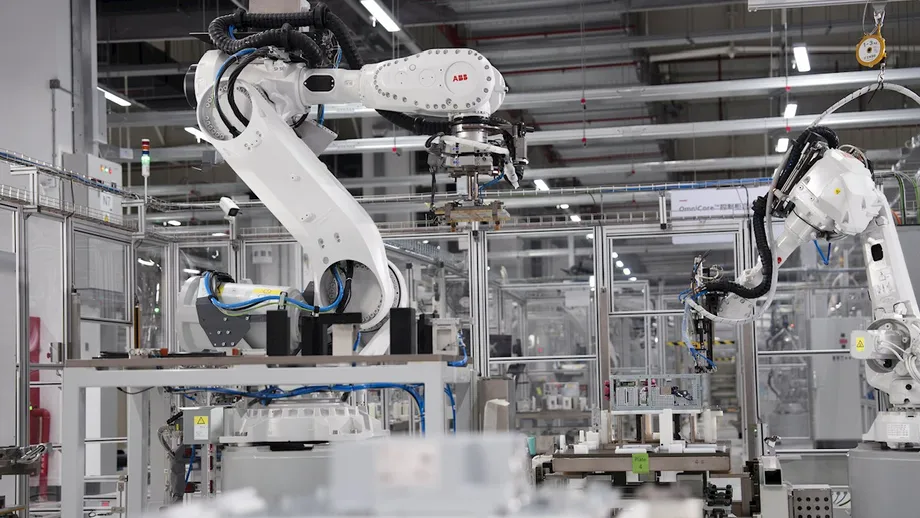
Crown develops, produces and sells industrial and electronic adhesive materials, alongside functional films. These are materials designed for particular jobs, such as joining components or protecting sensitive surfaces during manufacturing.
Its tapes help hold parts together in products ranging from vehicle roofs to smartphones. In semiconductor production, protective films shield wafers, the thin discs on which chips are made, from dust and damage.
The company's named customers include Huawei, OPPO, vivo, Google and Amazon in electronics; Tesla, BYD, CATL, Gotion High-tech and CALB in vehicles and batteries; and Gree and Galanz in appliances. The different uses connect Crown to several manufacturing markets rather than a single finished product.
Crown has domestic and international invention patents and has participated in drafting national and industry standards. Its operations combine research, manufacturing and sales. In its prospectus, the company identifies American manufacturer 3M and Japan's Nitto Denko as global competitors, alongside Chinese materials producers.
For customers, an adhesive or film is one part of a much larger assembly process. Crown's business depends on supplying materials that perform the required task while meeting the production needs of companies making phones, cars, batteries and other goods.
What the IPO raised, and where the money goes
Crown issued 56,304,768 new shares at 16.98 yuan each, raising approximately 956 million yuan before expenses. The company plans to use the proceeds to expand production and build a research center in China.
The distinction between that fundraising and the stock market rally matters to the company's finances. Crown received money from issuing the new shares. Once trading began, investors buying and selling those shares determined the market price, with those transactions taking place between market participants.
No existing shareholders sold shares as part of the offering, according to the listing notice issued by Crown and its sponsor, China International Capital Corporation, on November 2. After the IPO, Crown had 468.98 million shares outstanding and traded under stock code 001381 on the Shenzhen Stock Exchange main board.
At the offer price, that share count valued the company at about 7.96 billion yuan. At the opening price of 56 yuan, the figure was about 26.3 billion yuan. Applying the same share count to the intraday peak gives a market value of approximately 70.6 billion yuan, before it fell to about 39.7 billion yuan at the close.
New factories and research facilities take time to build and start producing returns. Crown's listing notice warned that its net assets could initially grow faster than profit as the IPO money arrived before the funded projects began generating benefits.
Why a small pool of shares mattered
Only 44,097,241 Crown shares were available for unrestricted trading at the start, representing 9.40% of the total after the offering. Investors seeking an immediate stake were therefore competing for fewer than one in 10 of the company's shares.
The rest were subject to restrictions. Existing shareholders and investors receiving strategic allocations faced lock periods of 12 or 36 months, depending on their category. A portion of shares allocated to investors through the offline placement process was locked for six months.
Shen Meng, managing director of Beijing investment bank Chanson & Co., attributed the rally to investor enthusiasm for new listings and conservative IPO pricing in mainland China. When buyers are eager and the pool of tradable shares is small, their orders can drive prices sharply higher.
Crown also began trading under rules allowing unusually large price movements. Its first five trading days have no daily price limit. After that period, the daily limit is 10%. Temporary trading halts can still interrupt an exceptionally volatile session, as happened twice on Tuesday morning.
The listing notice warned about irrational speculation and limited liquidity, meaning the risk that investors cannot buy or sell the amount they want at an acceptable price. It also warned that borrowing to trade shares could magnify losses and lead to demands for more collateral.
How quickly paper gains changed
An investor allocated 500 shares at the offer price would have paid 8,490 yuan. At Tuesday's high, that holding was worth 75,290 yuan, a paper gain of 66,800 yuan.
At the closing price of 84.55 yuan, the same shares were worth 42,275 yuan. The gain was still substantial, at 33,785 yuan, but almost half the peak paper profit had disappeared. At about 77 yuan on Wednesday morning, the holding was worth approximately 38,500 yuan.
A buyer entering at the peak faced the reverse experience. Five hundred shares bought for 75,290 yuan would have lost 33,015 yuan in quoted value by Tuesday's close. The price paid, rather than the size of the headline gain from the IPO, determined each investor's result.
The family's estimated fortunes were similarly sensitive to the price used to value their holdings. Crown's peak, closing price and Wednesday morning price represented very different valuations within little more than one trading day.
The main dates trace both the long business history and the speed of the market move:
- 1981 to 1984: Mai worked as an elementary school teacher in Zhongshan.
- January 1985: He entered the adhesive materials business after leaving teaching.
- June 2000: The siblings established Crown with registered capital of 2 million yuan.
- Late October 2026: Crown raised about 956 million yuan through its IPO.
- November 3, 2026: Trading began in Shenzhen, with the shares reaching 150.58 yuan and closing at 84.55 yuan.
- November 4, 2026: The shares traded at about 77 yuan during the morning.
Sales increased, but profit growth slowed
Crown's annual revenue rose from 2.895 billion yuan in 2023 to 3.159 billion yuan in 2024 and 3.408 billion yuan in 2025. Net profit attributable to the parent company increased from 278 million yuan to 302 million yuan and then 309 million yuan over the same period.
Between 2023 and 2025, revenue therefore grew about 17.7%, while net profit grew about 11.2%. Profit represented roughly 9.6% of revenue in 2023 and 9.1% in 2025. Put simply, Crown sold more, but kept a slightly smaller share of each yuan of sales as net profit.
The pattern continued in the first half of 2026. Revenue reached 1.789 billion yuan, up 12.35% from a year earlier, while net profit rose 2.36% to 159 million yuan.
A company filing estimate for the first nine months put revenue at about 2.8 billion yuan, up roughly 12%, and net profit at 225 million yuan, down about 7.9%. Another company forecast put revenue at 2.714 billion to 2.754 billion yuan and net profit at 225 million to 244 million yuan, ranging from little change to a decline of about 8%. Final results for that period were not included.
Crown attributed pressure on net income to higher material costs and global trade tensions. The figures show the concrete challenge behind the stock market excitement: turning rising sales into a matching increase in earnings.
What happened to the valuation
Crown's offer price corresponded to a price to earnings ratio of 25.87, using its stated calculation based on 2025 earnings after allowing for the enlarged share count. This ratio compares the share price with the annual profit attributable to each share.
The November 2 listing notice compared that figure with an average of 27.65 for the rubber and plastics industry over the preceding month and 45.47 for selected comparable listed companies. Those comparisons used market data as of October 14.
Once Crown's price surged, its earnings valuation changed too. Holding the notice's earnings calculation constant, the intraday high implied a ratio of about 229, while the closing price implied about 129. These are calculations from the disclosed offer ratio and subsequent share prices.
The business had not produced a corresponding jump in annual earnings during the trading session. Investors were paying a much higher price for the same earnings base, making future profit growth more important to the valuation. Crown's production and research projects are intended to support its business, while its recent results show cost pressure on profits.
A hot debut in a weak wider market
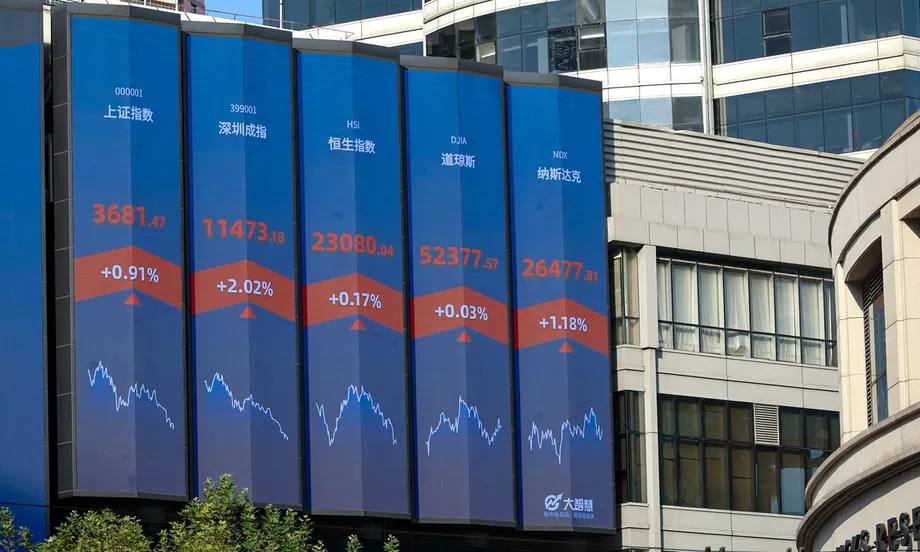
Crown's surge arrived during a difficult period for established Chinese stocks. The CSI 300 fell 8.5% in October, while the technology focused STAR 50 lost about 40% in less than four months, erasing roughly $480 billion in market value.
New listings were attracting a different reception. According to brokerage Guotai Haitong Securities, shares debuting in Shanghai and Shenzhen gained an average of 234% on their first trading day in September. Crown's closing gain of almost 398% exceeded even that strong average.
Beijing had also stepped up support for the market. About two weeks before Crown's debut, roughly $19 billion flowed into exchange traded funds through a state intervention, the largest such operation since early 2025. These funds hold baskets of securities, allowing purchases to support a broader group of shares.
China's securities regulator was also reported to have instructed investment banks on Monday, November 2, to pause new IPO applications while allowing applications already in the pipeline to proceed. No public timetable for reopening submissions was given. The measure would limit new companies seeking market funding while leaving existing candidates able to advance.
Crown's debut captured that contrast in a single session: intense demand for a small supply of newly listed shares, even as the wider market struggled. For the manufacturer, the lasting business change was the capital raised for expansion and research. For shareholders, the immediate change was a valuation that moved dramatically from hour to hour.
Key Points
- Crown New Materials debuted in Shenzhen on November 3, 2026, rising from an offer price of 16.98 yuan to a peak of 150.58 yuan.
- The shares closed at 84.55 yuan after two temporary trading halts and traded at about 77 yuan the following morning.
- Chairman Michael Mai and vice chairperson Mai Huixia had estimated paper fortunes of $2.5 billion and $2 billion.
- The IPO raised about 956 million yuan for production expansion and a research center.
- Only 9.40% of Crown's shares were initially available for unrestricted trading.
- Revenue growth outpaced profit growth, with higher material costs and trade tensions putting pressure on earnings.