Four routes regain nonstop service
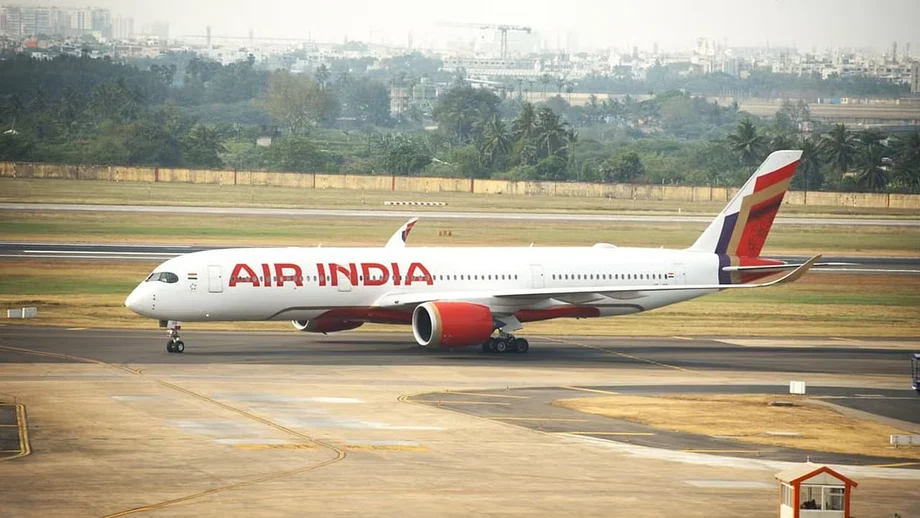
Air India has restored nonstop flights from Delhi and Mumbai to New York's John F. Kennedy International Airport and Newark Liberty International Airport after Iraqi airspace became available again, removing a refuelling stop in Rome that had added hours to the journey.
Contents
The change covers four routes: Delhi to JFK, Delhi to Newark, Mumbai to JFK and Mumbai to Newark. The restored journeys are expected to take about 15 to 16 hours, compared with nearly 20 hours when aircraft stopped at Rome Fiumicino. An airline source gave a different estimate of the improvement, from 21 hours to 18 hours. The practical gain is the same: passengers avoid the additional landing, refuelling wait and takeoff.
November 4, 2026, a Wednesday, is the reported restart date, although Thursday was also given as the first day of the restored service. Air India expects the nonstop operation to continue through November and December, with stronger winds potentially bringing back some fuel stops from January.
For passengers, the biggest change is time spent aboard the aircraft. During the Rome stop, travellers could not leave the plane, according to an airline source. Removing that stop shortens an already lengthy journey between India and the New York metropolitan area.
What changed over Iraq?
Iraqi airspace gives Air India a shorter route between India and the United States while other useful corridors remain unavailable. The airline resumed using it following reduced assessments of security risks along routes involving Iraq, Syria and Jordan.
The Iraqi Civil Aviation Authority announced the reopening of Iraqi airspace and all airports effective Wednesday, April 8, 2026, following a U.S.-Iran ceasefire, saying the situation had stabilised and conditions had returned to normal. The decision permitted all civil flights, including overflights, takeoffs and landings, to resume under approved regulations and instructions.
A further announcement dated Monday, June 8, 2026, reopened Iraqi airspace to all domestic and international commercial flights following a comprehensive safety review, lifting previous transit restrictions and restoring operations to and from all Iraqi airports. Air traffic was to resume immediately under standard approved operational procedures. The authority said it would continue monitoring regional security in coordination with defense and security agencies and notify airlines and passengers of further operational updates through official government channels.
Airlines must consider both permission to enter a country's airspace and the safety of operating there. Air India's operations team monitors conditions along its routes, including conflict risks, before deciding where aircraft can fly. The improved assessment made a route through Iraq usable again.
An Air India official confirmed that the change gives the airline greater flexibility for flights to Western destinations. That flexibility matters because a route that is manageable with one set of airspace permissions can become much longer when several countries must be avoided.
Iranian airspace remains unavailable to the airline, while Pakistan continues to restrict Indian carriers. Air India therefore still faces detours even after removing Rome from these four services.
How the route has shifted
Delhi departures were described as travelling over Rajasthan and Gujarat before continuing through Oman, the United Arab Emirates, Kuwait and Iraq. Aircraft then head towards Turkey, Europe and the United States.
Mumbai departures first cross the Arabian Sea before joining the same broad corridor. The value of Iraq is its position along that journey: access allows aircraft to take a shorter path towards Turkey and onward across Europe.
When Iraqi airspace was unavailable, Delhi flights were described as passing over Oman, Yemen and southern Saudi Arabia before stopping in Rome. That longer journey required a fuel stop to complete the trip to the United States.
The route descriptions show why an airspace decision far from either India or New York can change a passenger's itinerary. A flight needs a continuous usable path between its departure and arrival airports. Closing part of that path can require a substantial detour.
The disruptions behind the Rome stop
Restrictions affecting Pakistan and Iran had already narrowed Air India's choices for flights heading west. Pakistan's closure to Indian carriers lengthened journeys from Delhi, while the loss of access to Iranian airspace made those journeys harder to operate without refuelling.
The reported sequence leading to the restoration is:
- April, before the February disruption: Pakistan's airspace closure to Indian carriers lengthened routes towards Western destinations.
- February 28, 2026: The reported outbreak of war between the United States and Iran led to further airspace disruption.
- Late February onward: Air India used a Rome refuelling stop to maintain the affected services to the New York area.
- November 4, 2026: Nonstop operations reportedly resumed after the Iraqi corridor became available.
- January following the November and December operating period: Stronger winds could require temporary fuel stops on some flights.
Rome allowed the airline to keep these services operating while flying a longer route. Its removal now depends on a combination of shorter routing, acceptable security conditions and enough fuel capacity to complete the journey.
No reopening date has been given for Pakistani or Iranian airspace for these operations. Those restrictions continue to shape how much flexibility Air India has when planning flights to North America.
Why a shorter journey still limits capacity
Air India still faces a tradeoff between carrying fuel and carrying passengers or cargo. Pilots operating these routes say the extra fuel needed for detours continues to impose a load penalty, meaning the aircraft may have to carry fewer passengers or less freight.
Every aircraft has a maximum permitted takeoff weight. Fuel, passengers, baggage and cargo all count towards it. When a longer route requires more fuel, the airline may need to reduce another part of the load to stay within that limit.
Removing the Rome stop changes the calculation. An aircraft that previously replenished its fuel in Italy must now leave India with enough for the uninterrupted journey, including required reserves. A shorter route helps make that possible, but the remaining detours still consume fuel and limit the weight available for commercial loads.
An airline source said those capacity restrictions offset the expected savings from the shorter routing at a time of rising aviation turbine fuel prices. The airline has not disclosed a monetary estimate of the savings or the number of seats and amount of cargo affected.
Passengers gain a shorter journey, while Air India must balance that benefit against how much it can carry on each departure. The commercial calculation includes both the cost of operating the flight and the revenue from seats and freight.
Why January could bring another change
Air India expects the restored nonstop services to remain feasible through November and December. Stronger headwinds from January could make some departures more difficult, particularly when passenger and cargo loads are high.
A headwind blows against the direction of travel. It reduces an aircraft's speed over the ground, so reaching the destination takes longer and uses more fuel. On a journey already close to its practical operating limits, that extra requirement can change whether a fuel stop is needed.
Flight planners must assess the route, forecast winds, aircraft weight and fuel reserves together. A departure with a lighter load may be able to operate nonstop under conditions that would require a heavier flight to refuel along the way.
The January warning means individual flights may need different arrangements as conditions change. No specific date has been announced for fuel stops to return, and the expectation described is that some services could need them temporarily.
What passengers and Air India gain
Travellers booking these four routes regain a straightforward benefit: an uninterrupted flight between India and the New York area. They avoid the additional airport operation in Rome and the wait aboard the aircraft while it refuels.
Air India also regains a selling point against Gulf carriers whose journeys between India and the United States involve a connection. For passengers choosing between itineraries, an aircraft that reaches the destination without an intermediate stop can be attractive even when the flight itself remains long.
The improvement is substantial across either set of journey estimates. A reduction from nearly 20 hours to 15 or 16 hours saves roughly one fifth to one quarter of the journey. The airline source's estimate of 21 hours falling to 18 hours represents a saving of about one seventh.
Air India's broader ability to add nonstop services to Western destinations remains tied to usable airspace. Access to Iraq has made these four routes workable again; access to additional corridors would give planners more options for managing distance, fuel and capacity.
Key Points
- Air India has removed the Rome refuelling stop from four routes linking Delhi and Mumbai with JFK and Newark.
- Restored journey times are reported at 15 to 16 hours, down from nearly 20 hours; an airline source gave an alternative estimate of 18 hours instead of 21.
- Access to Iraqi airspace and reduced route risk assessments enabled the change.
- Restrictions involving Pakistan and Iran continue to lengthen flights and affect passenger and cargo capacity.
- Nonstop operations are expected through November and December, with possible temporary fuel stops from January because of stronger headwinds.