A parliamentary majority ends seven years of transition
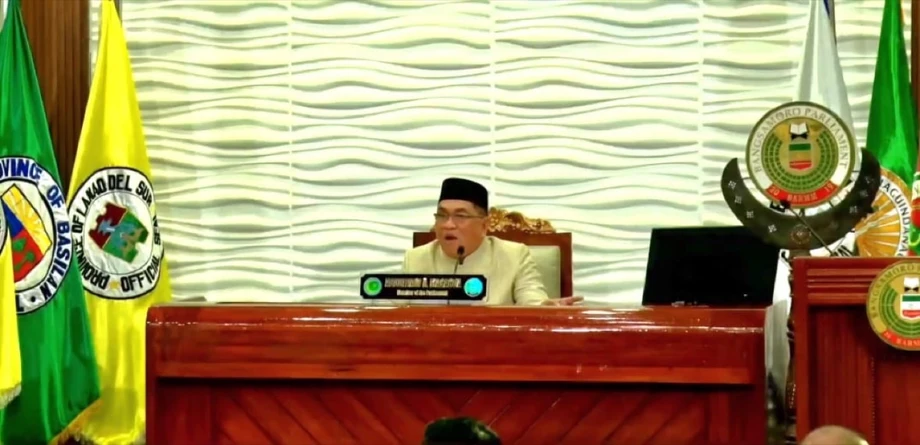
Abdulraof "Sammy Gambar" Macacua won 51 votes against former leader Ahod "Al Haj Murad" Ebrahim's 27 on October 30, 2026, becoming chief minister under the Bangsamoro Autonomous Region in Muslim Mindanao's first elected Parliament. The vote in Cotabato City ended more than seven years of administration by an appointed transition authority.
Contents
- A parliamentary majority ends seven years of transition
- How lawmakers chose the government
- A coalition reaches beyond party loyalties
- From armed struggle to rival political camps
- Promises of inclusion face an early test
- Cabinet building and legislative work begin
- Peace commitments extend beyond the election
- Jobs, education and the money behind autonomy
- Civil society demands safeguards for autonomy
- Key Points
Macacua, 69, a former commander of the Moro Islamic Liberation Front's armed wing, secured 10 votes more than the 41 required in the chamber of 80 members. One lawmaker abstained and another was absent because of illness. His support represented 63.75 percent of the full Parliament.
The Bangsamoro Parliament's announcement records that 79 lawmakers attended the inaugural session and that members assumed office at noon. Their term runs until June 30, 2031.
Macacua had already headed the interim government. What changed was the basis of his authority: lawmakers chosen through the September 14 regional elections selected him to lead the regular government, replacing an administration whose members had been appointed by the Philippine president.
Amer Zaakaria Rakim of the BARMM Grand Coalition won the speakership by the same margin, defeating Mohammad Yacob, 51–27. The two results gave the governing alliance control of the executive leadership and the Parliament's presiding office, while leaving Ebrahim's supporters with a substantial presence in the chamber.
How lawmakers chose the government
MP Kitem Kadatuan nominated Macacua, chairman of the Bangsamoro Federalist Party, while MP Mohagher Iqbal nominated Ebrahim of the United Bangsamoro Justice Party. Temporary presiding officer Ishak Mastura oversaw the nominations and election.
Lawmakers voted by standing to indicate their preferred candidate. Republic Act No. 11054, the Bangsamoro Organic Law, requires support from a majority of all MPs, rather than just a majority of those attending. With 80 seats, the winning threshold remained 41 despite one member's absence.
Macacua took his oath before Sheikh Muslim Guiamaden, the Bangsamoro wali, or ceremonial head, and then presided over the election of the speaker. Abdulrahman Mangudadatu, the absent MP, had informed the parliamentary secretariat that he was unwell.
Bangsamoro voters choose representatives who then select the chief minister from among themselves. Under the former Autonomous Region in Muslim Mindanao, voters directly elected a regional governor. The new arrangement makes support inside Parliament central to forming and running the regional government.
The chamber contains 40 party representatives, 32 district representatives and eight sectoral representatives. The sectoral seats represent women, youth, traditional leaders, Muslim religious scholars known as the Ulama, non-Moro Indigenous peoples and settler communities. The Commission on Elections' Regional Board of Canvassers recorded 2,018,478 voters in the September election, a turnout of 84.34 percent.
A coalition reaches beyond party loyalties
Macacua's party emerged from the regional election without the 41 seats needed to govern alone. Negotiations among parties and individual lawmakers therefore determined who could assemble a majority. Before the inaugural session, the Bangsamoro Federalist Party had claimed support from 46 MPs; Macacua ultimately received 51 votes.
Ebrahim's defeat also exposed divisions within the political movement that had led the transition. Four district representatives from his United Bangsamoro Justice Party voted against him: Tawakal Midtimbang of Maguindanao del Sur, and Hamza Gauraki, Lampa Pandi and Ahmad Amir Balindong of Lanao del Sur. Ebrahim gained support from Ali Sangki of the BARMM Grand Coalition.
President Ferdinand Marcos Jr., who addressed Parliament before voting began, said the majority and parliamentary leadership had already been agreed upon. He briefly spoke with Macacua before leaving the session hall.
Rakim's identical 51–27 victory showed that the alliance held together for both principal leadership contests. His responsibilities differ from Macacua's: the chief minister runs the executive administration, while the speaker manages proceedings in the institution that debates laws, approves budgets and examines government spending.
From armed struggle to rival political camps
Macacua fought government forces as a teenager during the rule of President Marcos's father. He later became chief of staff of the Bangsamoro Islamic Armed Forces, the MILF's military wing, before taking roles in peace negotiations and civilian administration.
The regional government's leadership profile says Macacua served on the MILF Peace Negotiating Panel and the Bangsamoro Transition Commission, which drafted the Bangsamoro Organic Law. He also helped develop regional electoral and local governance legislation during the transition.
Macacua served as minister of environment, natural resources and energy from 2019 to 2022, later became senior minister under Ebrahim, and was appointed officer in charge of the newly created Maguindanao del Norte province in 2023. He now represents that province's third parliamentary district.
Marcos's decision to replace Ebrahim with Macacua as interim chief minister in 2025 met opposition from senior MILF leaders. The regional government's profile dates the appointment to February 2025; Parliament's announcement places the start of his interim tenure in March 2025.
Macacua subsequently broke with the United Bangsamoro Justice Party leadership and headed the Bangsamoro Federalist Party. The MILF central committee accused him of accepting the interim post without consultation, and he lost his military leadership role before the election. The parliamentary contest brought that split into the open through competing nominations and votes.
The milestones leading to the new government span more than a decade:
- 2014: The government and MILF signed the Comprehensive Agreement on the Bangsamoro.
- 2019: BARMM was established, with Ebrahim leading an appointed transition government.
- 2023: Macacua became officer in charge of Maguindanao del Norte.
- 2025: Macacua succeeded Ebrahim as interim chief minister.
- September 14, 2026: Voters chose the first regular Bangsamoro Parliament.
- October 30, 2026: Parliament elected Macacua chief minister and Rakim speaker.
- June 30, 2031: The first elected Parliament's term is scheduled to end.
Promises of inclusion face an early test
Macacua described his mandate as an amanah, an Arabic word meaning a trust or responsibility. He pledged to serve constituents regardless of their political loyalties and to continue the Moral Governance Agenda associated with Ebrahim.
In his acceptance speech, Macacua addressed the meaning of taking office:
Today is not merely about the assumption of leadership. It is about the continuing fulfillment of a promise.
Ebrahim walked over to congratulate and embrace Macacua after the election. In a subsequent statement, the MILF chairman and United Bangsamoro Justice Party president pledged continued work on reforms, peace and development, encouraging residents to participate in building the region.
Cooperation faced an immediate procedural test during the selection of parliamentary officers. MP Mary Ann Arnado, a settler community representative aligned with the United Bangsamoro Justice Party, asked that the minority be allowed to nominate its floor leader and deputies. The session ended without electing a minority floor leader.
MP Naguib Sinarimbo defended the majority's right to organize the government formed by its coalition. The dispute left the organization of minority leadership unresolved as the new administration began its term.
Cabinet building and legislative work begin
Macacua must form a Cabinet, with a majority of its members drawn from Parliament, and present a government platform for lawmakers' approval. Under the Bangsamoro Organic Law, he also nominates two deputy chief ministers for election by the chamber.
Lawmakers elected Hadjimar Matba deputy chief minister for Southwestern Mindanao and Mamintal Adiong III deputy chief minister for North Central Mindanao during the inaugural session. They also chose 10 deputy speakers, a majority floor leader and Bantuas Lucman as secretary general.
Committee chairpersons were designated so Parliament could begin examining legislation, holding public hearings and reviewing government programs. Those committees will provide a route for scrutinizing how ministries spend money and deliver services.
Education, healthcare, infrastructure, agriculture and employment now fall within the regular government's legislative, budget and oversight workload. For residents, the shift to elected rule will be experienced through practical decisions: which roads receive funding, whether schools and clinics have adequate resources, and how assistance reaches vulnerable households.
Marcos urged lawmakers to pass responsive legislation, improve services and use public resources responsibly. He said the goal was to ensure that the benefits of peace reached Bangsamoro families in their daily lives.
Peace commitments extend beyond the election
The 2014 agreement created the route from armed conflict to autonomous parliamentary government. Government estimates put the conflict's toll at at least 150,000 combatants and civilians killed, with millions displaced before the peace settlement.
The MILF says more than 14,000 fighters still await decommissioning, the process of leaving organized armed service under the peace agreement. It says some promised social and economic assistance for earlier groups of former combatants has yet to be fulfilled.
Violence also affected the September 14 election. Shootings and explosions occurred, and the United Bangsamoro Justice Party said five of its supporters died. Completing the political transition leaves the government and MILF with continuing responsibilities for security and the remaining peace commitments.
Burhan Undalayan, 57, a former MILF combatant from Nabalawag, offers a concrete example of how those commitments affect families. After illness led to a leg amputation and ended his participation in the conflict, he became a fisherman. Under the interim administration, he received prosthetic legs and financial assistance through a disability welfare program, helping pay for his children's education.
Undalayan said he had discouraged his children and grandchildren from joining armed rebellion:
so they can just go to school.
Raissa Jajurie, a former social services and development minister who entered the new Parliament as a United Bangsamoro Justice Party representative, called for continued cooperation among the regional government, national authorities and international development partners. She linked assistance for vulnerable residents with maintaining confidence in peace.
Jobs, education and the money behind autonomy
BARMM has more than 4.5 million residents. Its economy grew by 5.0 percent in 2025, supported by services, while household poverty incidence fell to 12.8 percent from 26 percent in 2023. That is a decline of 13.2 percentage points in two years, leaving the reported rate at less than half its earlier level.
The region has long been described as the country's poorest and as having its lowest literacy rates. The newer household poverty figures show substantial improvement, making continued progress in incomes and education a central task for the elected administration.
The interim government's Economics Division urged the incoming leadership to strengthen local production and accelerate public investment. Those priorities connect economic growth with jobs, transport and access to services across communities that experienced decades of conflict.
National funding will remain central to the regional budget. The proposed Philippine budget for 2027 tentatively provides more than 115 billion pesos, about $1.8 billion, in transfers to BARMM. The amount is a proposal, with final funding dependent on the national budget process.
Hessa Ladiasan, a university student aged 21 from Datu Odin Sinsuat, said she wanted more learning opportunities for young people, including study abroad. Her younger sister Heisei, 15, wanted a safer environment and firm enforcement of the law. Their expectations place education and everyday security alongside the new government's institutional tasks.
Civil society demands safeguards for autonomy
Katungod Bangsamoro and allied civil society groups welcomed the elected Parliament while calling for stronger protection against corruption, political dynasties and interference from the national government. They urged transparency in spending, independent oversight and wider public participation.
The consortium also pressed lawmakers to address ancestral land claims, land grabbing, resource exploitation and unequal economic opportunities. The Moro-Christian Peoples Alliance called attention to families displaced by the 2017 Marawi siege and landlessness among Moro farmers and non-Moro Indigenous communities.
Katungod Bangsamoro described its expectations in a statement:
The new Parliament must make the fight against corruption a defining commitment of its administration.
Fauzea Guiani, chairperson of Anakbayan-Southern Mindanao, criticized national intervention in regional affairs. Amira Lidasan, secretary general of the Moro-Christian Peoples Alliance, warned that Macacua's alignment with the Marcos administration could weaken regional independence. Macacua has pledged constructive cooperation, while Marcos has promised continued national support.
Cotabato City residents also experienced immediate costs around the inauguration. Heightened police and military security restricted movement and disrupted businesses, drawing complaints from vendors and residents about lost income. Their concerns brought the practical demands of daily life into a day dominated by political ceremony.
The new leadership begins with a majority strong enough to elect its principal officers. Its next tasks are to turn that alliance into a functioning administration, organize meaningful parliamentary scrutiny and carry unfinished peace commitments into budget and policy decisions.
Key Points
- Abdulraof Macacua defeated Ahod Ebrahim, 51–27, on October 30, 2026, to lead BARMM's first elected regular government.
- Seventy-nine of 80 MPs attended; one abstained and one was absent because of illness.
- Amer Zaakaria Rakim won the speakership by the same 51–27 margin.
- The vote ended more than seven years of appointed transition government following the September 14 parliamentary elections.
- The MILF says more than 14,000 fighters still await decommissioning under the peace process.
- Proposed national transfers to BARMM exceed 115 billion pesos for 2027, subject to the budget process.
- The first elected Parliament's term runs until June 30, 2031.