November verdict depends on how much time the defense needs
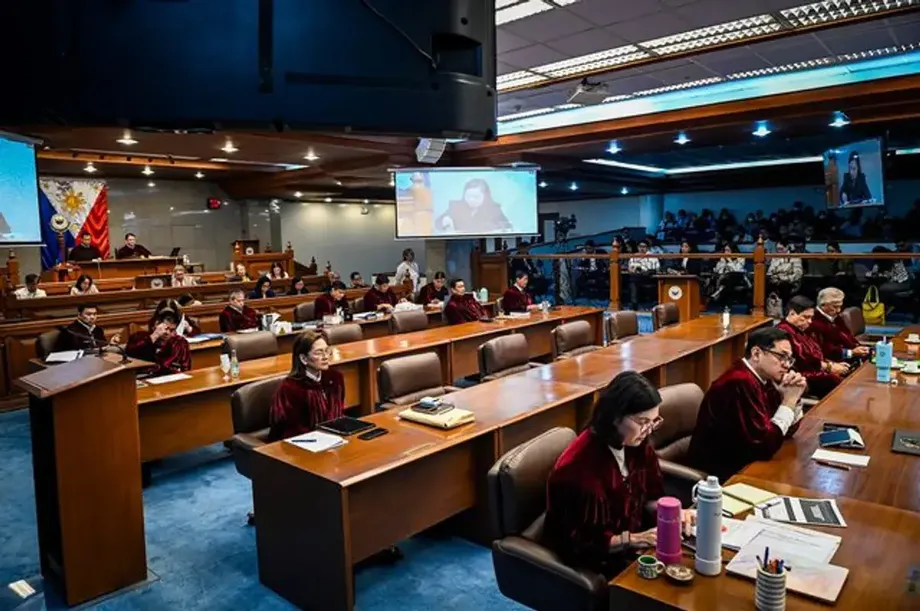
Philippine Vice President Sara Duterte's impeachment trial is scheduled to resume on November 9, 2026, with eight sitting dates listed for the month and only one charge remaining: alleged unexplained wealth. Lead House prosecutor Gerville Luistro says a November finish is possible if the defense completes its evidence within 10 full trial days, although Senate President Sherwin Gatchalian expects proceedings to extend into December.
Contents
- November verdict depends on how much time the defense needs
- Eight days, 10 days or the original 30?
- Why the case now centers on wealth
- What the financial evidence alleges
- Will Duterte testify personally?
- Why the conviction threshold is disputed
- The budget adds another scheduling constraint
- The dates that shape the next stage
- Removal, disqualification and succession
- Key Points
The timetable has consequences beyond the courtroom. Senators must also consider the proposed 2027 national budget, while a pending Supreme Court challenge could determine whether conviction requires 14 votes under the impeachment court's current calculation or 16 votes based on the Senate's full membership.
Duterte denies wrongdoing. Prosecutors have completed their presentation, and the defense is due to answer financial allegations involving the vice president and her husband, lawyer Manases Carpio. The court has not delivered a verdict.
Luistro hopes the proceedings will finish before Christmas, but the defense's final request for trial time and the court's December calendar have not been settled. Senator-judges will also need time to examine the completed record before deciding the case.
Eight days, 10 days or the original 30?
Luistro initially described an expected defense request for 10 full trial days on the remaining article. She subsequently said she had received information that Duterte's lawyers were seeking eight days, while stressing that this information still needed verification. Gatchalian said he had no information confirming an arrangement for eight days.
The defense originally requested 30 trial days to address all four impeachment articles. Prosecutors argue that withdrawing three articles should shorten the time needed for a response. House trial spokesperson Robert Ace Barbers nevertheless said the defense could seek to use its original allocation, subject to the court's permission.
Luistro, the lead prosecutor and a Batangas representative, explained why she expected a shorter presentation:
Originally the defense asked for 30 trial days to present their evidence, but then 30 days is intended for four Articles of Impeachment, we have to consider that the prosecution withdrew three, this is approved by the Impeachment Court, so there is one remaining charge,
The November calendar lists proceedings on November 9, 10, 11, 12, 13, 19, 20 and 23. Those eight dates would accommodate a presentation lasting eight sitting days. A presentation lasting 10 full days would require additional sittings beyond those listed. Either schedule would still leave the court to consider the evidence and reach judgment.
Why the case now centers on wealth
The Senate impeachment court accepted the withdrawal of three articles on October 13, leaving Article II, which concerns allegedly unexplained wealth, incomplete asset disclosures and questionable financial transactions. The discarded articles concerned confidential funds, bribery of Department of Education officials and grave threats against President Ferdinand Marcos Jr. and others.
Prosecutors said narrowing the case would shorten proceedings and maintained that Article II could support a conviction on its own. The remaining charge focuses on whether Duterte properly disclosed assets and business interests and whether financial records can account for the wealth attributed to her and Carpio.
Lead defense counsel Sheila Sison previously objected that withdrawing allegations after public testimony, but before the defense presented its evidence, left damaging accusations aired without an equivalent opportunity to answer them in court. Presiding officer Francis Escudero ruled that senators would deliver neither a conviction nor an acquittal on the withdrawn articles.
The confidential funds and threats articles were withdrawn with prejudice, meaning Escudero's ruling bars their revival against Duterte during the same term and the 20th Congress. The bribery article was withdrawn without prejudice because prosecutors had not presented evidence on it, leaving open the possibility of a later proceeding.
What the financial evidence alleges
Alexander Cabrera, the prosecution's final witness and a forensic accounting expert, identified P817.87 million in alleged unexplained wealth involving Duterte and Carpio between 2022 and 2025. Cabrera is chairman emeritus of Isla Lipana & Co., the Philippine member firm of PwC.
His examination drew on bank records, income tax returns, insurance policies, corporate documents and Duterte's Statements of Assets, Liabilities and Net Worth, commonly called SALNs. A SALN records an official's assets, debts and resulting net worth. Net worth is the value left after debts are subtracted from assets.
Cabrera also described a broader calculation that could reach P1.5 billion before deductions for applicable liabilities. The P817.87 million figure and the larger calculation use different scopes and adjustments. Explaining which assets, transactions and debts belong in the calculation will be central to the defense's response.
The prosecution says the records reveal gaps between declared assets and bank balances, reported income and money entering accounts, and business interests and disclosures. Its evidence included material from the Anti-Money Laundering Council, Bureau of Internal Revenue, Securities and Exchange Commission and banks.
Cabrera's analysis also examined investments in GenCorp Industries Inc., which operates five Jollibee branches. The defense presentation gives Duterte's lawyers the opportunity to address the ownership, funding and disclosure of business interests identified during the prosecution's case.
Will Duterte testify personally?
Duterte had not confirmed whether she would personally testify when the defense presentation begins. House Deputy Speaker Janette Garin, an Iloilo representative, urged her to appear and answer the financial allegations, saying a failure to respond could help prosecutors secure 16 votes against her.
Garin's statement was a political assessment, not an announced count of committed senator-judges. Her reference to 16 votes also comes as the legal threshold for conviction is being challenged before the Supreme Court.
A Social Weather Stations survey conducted from September 21 to 27 found that 78% of adult Filipinos considered Duterte's personal testimony important, while 15% did not. Those figures show a gap of 63 percentage points between the two positions.
The defense's task extends beyond deciding whether Duterte takes the stand. Its lawyers must determine which witnesses and documents to present in response to the prosecution's financial case. Gatchalian has said the Senate should hear that evidence before discussing an outcome.
Why the conviction threshold is disputed
The impeachment court voted 13 to 1 on September 23 to change how it calculates the two thirds majority needed for conviction. Under its revised approach, the calculation depends on the senators legally and factually able to participate when judgment is delivered.
With four senators considered unable to participate, the voting base would be 20, requiring 14 votes to reach at least two thirds. A calculation using all 24 Senate seats requires 16 votes. The court's current number could change if the eligible membership changes before judgment.
Senators Robin Padilla and Christopher "Bong" Go, together with PDP-Laban officials and other petitioners, argue that Article XI, Section 3(6) of the Constitution requires two thirds of the full Senate membership. The impeachment court maintains that its ruling preserves the two thirds requirement while defining which senator-judges count toward the total.
The Supreme Court, acting as a full court, issued a resolution dated October 14, 2026, directing the Senate impeachment court and House of Representatives to comment within five days of receiving notice. The deadline cannot be extended.
The petition also seeks orders that would temporarily block the revised rule or restore the previous position while the challenge proceeds. No final ruling or restraining order had been announced. Gatchalian said the trial would continue under the revised rule unless the Supreme Court intervenes.
The budget adds another scheduling constraint
Gatchalian expects the defense presentation and consideration of the proposed 2027 budget to push the trial into December. He is coordinating the Senate's calendar with finance committee chairperson Senator JV Ejercito.
Under a tentative arrangement, the Senate would initially prioritize the impeachment trial, pause it for about one to two weeks of plenary budget deliberations, then resume the case if the defense has not finished. Plenary deliberations are the stage when the full chamber considers the spending proposal.
The prosecution's completion date is described differently: Luistro's account puts the conclusion of its main evidence presentation on October 12, while Gatchalian's account says it rested its case on October 15. Both place the defense's next turn on November 9.
Gatchalian has expressed hope for a conclusion before the end of 2026, citing political uncertainty and its effect on business investment. He has declined to promise a December verdict, saying the timing depends on the defense's witnesses and testimony.
The dates that shape the next stage
The trial calendar and Supreme Court proceedings now run alongside the Senate's budget work. The main dates are:
- September 21 to 27, 2026: Social Weather Stations surveyed views on whether Duterte should testify personally.
- September 23: The impeachment court voted 13 to 1 to revise its calculation of the conviction threshold.
- October 13: The court accepted the withdrawal of three impeachment articles, leaving Article II.
- October 14: The Supreme Court ordered comments on the voting rule challenge within five days of receipt of notice.
- November 9 to 13, 19, 20 and 23: Listed trial dates for the defense stage.
- Beginning of November: The court is expected to consider its December schedule in light of the defense's request.
The sequence leaves several decisions concentrated around the resumption of proceedings: how much time the defense receives, when senators interrupt the trial for budget deliberations, and whether more sitting dates are needed.
Removal, disqualification and succession
Luistro has argued that conviction must bring both removal from office and disqualification from future public office. She bases that position on Article XI, Section 3(7) of the 1987 Constitution, which limits impeachment judgments to removal and disqualification from holding office under the Republic of the Philippines.
The prosecutor interprets the provision's use of "and" as requiring both penalties. She rejected unverified speculation about a compromise that would allow Duterte to remain eligible for future elections after a conviction. No such agreement has been announced.
Escudero, the impeachment court's presiding officer, said he would reject an offer to become vice president if Duterte were removed because he would have participated in deciding her case:
I have already said that in the past. I will not accept it for a simple reason: conflict of interest. We were the ones who decided, so that doesn't seem right,
Gatchalian has declined to discuss succession while the case remains unresolved. The immediate work before the court is to hear the defense, review the completed trial record and decide the remaining wealth charge under the applicable voting rule.
Key Points
- Duterte's defense is scheduled to begin presenting evidence on November 9, 2026.
- Luistro says a November finish is possible; Gatchalian expects proceedings to extend into December.
- Only Article II, concerning alleged unexplained wealth and financial disclosures, remains for judgment.
- Cabrera identified P817.87 million in alleged unexplained wealth involving Duterte and Carpio from 2022 to 2025.
- The Supreme Court challenge concerns whether conviction requires 14 votes under the current calculation or 16 based on all 24 Senate seats.
- Duterte denies wrongdoing and has not confirmed whether she will testify personally.
- The defense schedule, budget deliberations and time needed to review evidence will shape the verdict date.