A preventable failure across three healthcare clusters
A contractor's failure to complete a required security update caused the October 13 disruption to Singapore's public healthcare systems, forcing about 4,000 outpatient appointments to be rescheduled and leaving some patients waiting up to two hours. The interruption lasted about nine and a half hours and affected NHG Health, the National University Health System and SingHealth.
Contents
- A preventable failure across three healthcare clusters
- What patients and staff experienced
- How the disruption unfolded
- Why one DNS service mattered so much
- Why two data centres were not enough
- Responsibility remains with Synapxe
- Faster diagnosis is part of the recovery plan
- Keeping care running when systems fail
- Key Points
Senior Minister of State for Health Tan Kiat How said the update concerned a shared Domain Name System, or DNS, service. National health technology agency Synapxe had contracted a service provider to carry out the work, but it was not completed before a scheduled global change. Tan described the lapse as preventable and apologised for a disruption that he said should not have happened.
The investigation also explained why backup infrastructure could not solve the problem. Singapore's public healthcare systems had two data centres, but both depended on the same DNS service and security configuration. Moving operations from one centre to the other would have left the underlying failure in place.
No patient safety incidents attributable to the disruption were reported. Investigators found no cyberattack, unauthorised access, compromise or loss of patient data. The immediate consequences were disrupted services, longer waits and appointments that had to be rearranged.
What patients and staff experienced
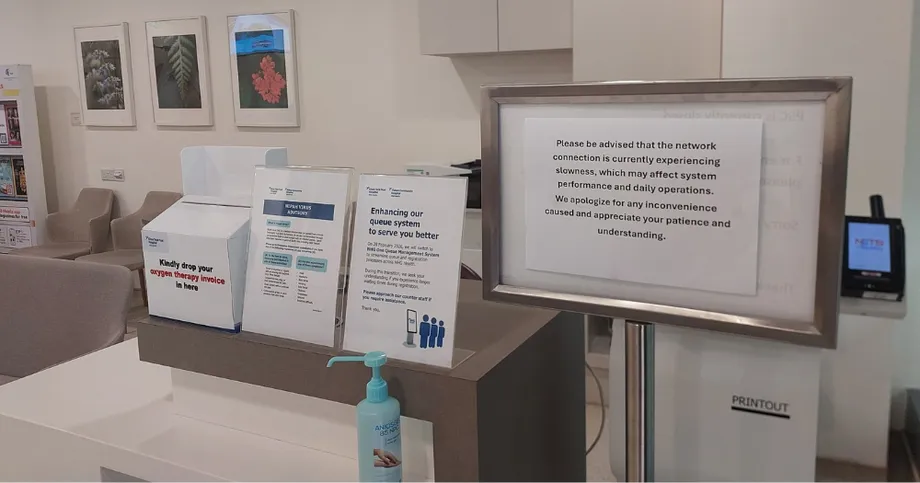
Appointment bookings, visitor registration, medication dispensing and billing were among the services affected. Connectivity problems varied across the three clusters, so the disruption did not look identical at every institution.
For patients, the effects extended beyond a computer screen failing to load. Some waited longer for services, while others had outpatient appointments moved to another time. About 4,000 appointments were rescheduled, although that figure counts appointments rather than everyone who experienced inconvenience during the outage.
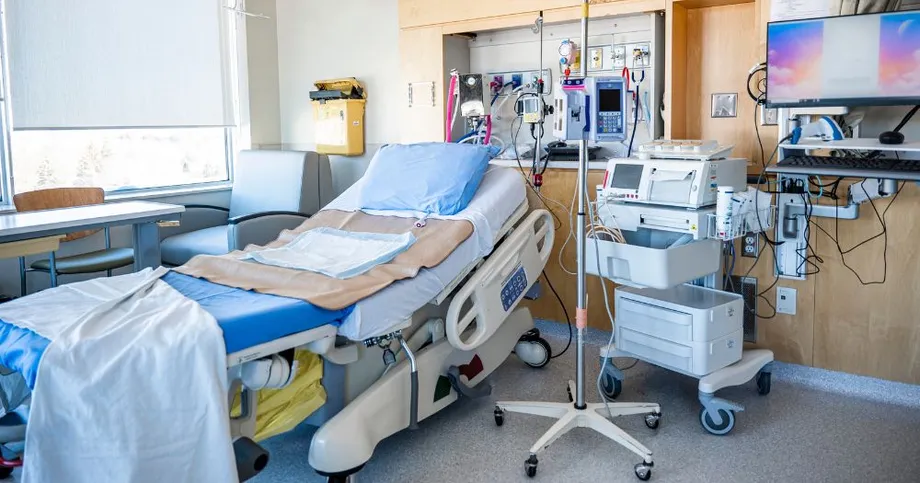
Healthcare institutions activated downtime procedures, the arrangements used when normal computer systems are unavailable. They deployed additional staff and continued essential care using manual workflows and selected patient records available in a separate, read-only form.
Read-only records allow staff to consult information without changing it through that system. They gave clinicians access to selected patient information while normal services were disrupted. Staff also had to manage the extra work created by processes that usually run electronically.
How the disruption unfolded
Synapxe's account of the incident places the start at about 7.10am on October 13. Services began returning progressively at about 3pm, and all affected services were restored by 4.37pm. The interval between the reported start and full restoration was nine hours and 27 minutes, consistent with the rounded description of a disruption lasting nine and a half hours.
- October 13, about 7.10am: A technical issue affecting network connectivity began disrupting services across the three public healthcare clusters.
- October 13, about 3pm: Affected services began to return progressively.
- October 13, 4.37pm: All affected services had been restored, according to Synapxe.
- October 13, about 5.40pm: Synapxe issued a further statement confirming restoration.
- November 3: MPs were due to question the government about the outage, its effect on patients and the reliability of backup arrangements.
Synapxe initially described a technical problem affecting network connectivity and said there was no indication of a cyber incident while investigations continued. The subsequent findings identified the missed security update as the cause and confirmed that patient data had not been compromised or lost.
Why one DNS service mattered so much
A DNS service helps computer systems locate and connect to applications. It works like a directory: a system asks where a service can be found, and the DNS supplies the information needed to reach it. When that shared directory stops working properly, several otherwise separate applications can become difficult or impossible to access.
The required security update applied to the shared DNS. Because the contractor did not complete it before the scheduled global change, a technical dependency used across public healthcare became the point of failure.
Tan said the change was known in advance. The central operational failure was therefore the failure to complete required preparation for an expected change. Tracking an instruction is only part of that process; confirming that the work has actually been completed is also necessary.
The government's corrective work includes stronger tracking and verification of critical technical changes. In practical terms, the organisation responsible for a system needs a reliable way to establish that a required update has been applied before the change it prepares for takes effect.
Why two data centres were not enough
Public healthcare systems had backup infrastructure, including two data centres. Such arrangements allow services to be moved when a particular facility or part of its infrastructure becomes unavailable. In this incident, however, both centres relied on the same DNS service and security configuration.
Switching facilities would therefore have led systems back to the same unresolved problem. The second location provided another place to run services, but the shared dependency prevented it from providing an effective recovery route for this particular failure.
The government is addressing shared dependencies and improving recovery arrangements as part of its response. The practical issue is whether a backup can operate when a service used by both the primary and backup systems fails.
Nominated MP Haresh Singaraju sought answers about whether the systems had an independent backup, how quickly services were supposed to be restored and whether that target was achieved. MP Joan Pereira also asked why backup infrastructure had not prevented the disruption and sought figures on affected patients.
Responsibility remains with Synapxe
Synapxe is reviewing the service provider's contractual obligations and will take appropriate action if a breach is established. Tan said the agency remains accountable for the resilience of its critical systems regardless of its outsourcing arrangements.
The contractor's responsibility to perform the update and Synapxe's responsibility to keep healthcare systems reliable are both part of the response. Hiring another organisation to carry out technical work leaves the agency responsible for overseeing systems on which hospitals, clinics and patients depend.
The provider's identity, any contractual penalty and a timetable for completing corrective measures were not specified. MP Cassandra Lee sought an investigation update and measures to reduce the likelihood of another interruption.
Synapxe has appointed an expert panel drawn from organisations with similar engineering profiles. Its task is to review the investigation findings and proposed remedies, and to identify further improvements. The Ministry of Health will oversee corrective actions and verify their effectiveness.
Faster diagnosis is part of the recovery plan
Monitoring detected abnormal activity during the incident, but finding the underlying problem and restoring services safely took time. Detecting that something is wrong and identifying exactly what must be repaired are different stages of a response.
Synapxe is strengthening monitoring and fault diagnosis to support faster recovery. For a system serving several healthcare clusters, the challenge includes tracing problems through shared services rather than examining each affected application in isolation.
In its statement after services were restored, Synapxe described the experience of patients and visitors and the work undertaken with healthcare institutions:
During the disruption, patients and visitors at some public healthcare institutions experienced longer waiting times for certain services.
"Our teams worked closely with the public healthcare clusters to restore affected services as quickly as possible.
The restoration times show that recovery happened in stages. Some services began returning at about 3pm, more than an hour and a half before all affected services were back. Staff therefore had to manage a period in which normal operations were returning unevenly.
Keeping care running when systems fail
Healthcare institutions maintained essential care through additional staffing, selected read-only records and manual procedures. Tan reported no patient safety incidents attributable to the outage, even as patients faced delays and thousands of appointments were rescheduled.
The government plans to strengthen downtime systems, staff readiness and regular exercises, including practice for partial outages. A partial outage can leave some applications available while others remain inaccessible, requiring staff to decide which processes can continue normally and which need an alternative.
The response now has three connected aims: prevent a repeat through better control of technical changes, reduce the reach of failures by addressing shared dependencies, and keep care functioning through stronger operational preparation.
For patients, success would mean fewer cancelled or delayed appointments when a technical problem occurs. For healthcare staff, it would mean dependable access to essential information and workable procedures during disruption. Tan said healthcare technology must become more reliable while ensuring staff can continue caring for patients safely when systems fail.
Key Points
- A missed security update caused the October 13 outage across Singapore's three public healthcare clusters.
- About 4,000 outpatient appointments were rescheduled, and some patients waited up to two hours.
- Services were disrupted from about 7.10am, with full restoration by 4.37pm.
- Both data centres depended on the same DNS service and security configuration, preventing an effective switch to backup infrastructure.
- No patient safety incidents attributable to the outage were reported, and investigators found no cyberattack or loss of patient data.
- Synapxe is reviewing the contractor's obligations, while the Ministry of Health will oversee corrective action and verify its effectiveness.