National reserves reach retailers as unhealthy air persists
Singapore's Ministry of Health (MOH) has released N95 masks from its national stockpile to help retailers meet rising demand, as the country reached its 16th consecutive day of unhealthy air on Oct. 20, 2026. FairPrice has drawn masks from the reserve, while three other supermarket chains are working towards stocking all their outlets by the end of the week.
Contents
- National reserves reach retailers as unhealthy air persists
- Where shoppers can find masks
- Why empty shelves prompted concern
- Six weeks of haze, with another unhealthy day forecast
- How the response developed
- What N95, KN95, KF94 and FFP2 mean
- Buy what is needed and check before reuse
- Action also targets companies linked to fires
- Key Points
MOH said N95 masks or equivalent products were available at all NTUC FairPrice outlets and at pharmacies including Guardian, Unity and Watsons. Cold Storage, Giant and Sheng Siong were expected to make them available progressively across their stores before the week ended.
The ministry said retailers and pharmacies had sufficient supplies in their warehouses, although individual shops could temporarily run short while awaiting deliveries. Consumers had encountered empty shelves, and officers from the Consumers Association of Singapore (CASE) also found N95 masks sold out at shops they visited.
In its statement on the release of national reserves, MOH sought to reassure shoppers about supplies:
We would like to assure the public that MOH maintains a stockpile of N95 masks (or equivalent) and has released the stockpile to support retailers to manage the demand.
In an earlier MOH statement dated Aug. 29, 2016, the ministry said:
To date, a total of 4.15 million N95 masks have been released from MOH's stockpile: 3.15 million to retailers and 1 million to the People's Association for distribution to low-income families. The cost of the masks, including transport and storage, is recovered from the retailers.
Those quantities refer to the release reported in 2016, not the current release.
The immediate task is to move masks from warehouses to shops quickly enough to meet demand. MOH urged people to buy quantities sufficient for their own use, helping to avoid waste while retailers replenish shelves.
Where shoppers can find masks
FairPrice, Guardian, Unity and Watsons formed the main network of outlets identified by MOH as selling N95 masks or equivalent products on Oct. 20. The planned expansion to all Cold Storage, Giant and Sheng Siong outlets would give households more places to buy them during the continuing haze.
Minister for Sustainability and the Environment Grace Fu said FairPrice and Unity had sufficient stocks and that customers could also order online. She said retailers were stepping up deliveries to replenish supplies quickly.
Fu visited a FairPrice warehouse to review restocking and speak with the team handling deliveries. She said FairPrice had obtained a batch of masks from MOH's national stockpile, putting government reserves into the retail supply chain.
MOH did not disclose how many masks it had released in the current episode or provide a timetable for individual store deliveries. Its commitment for the three additional supermarket chains was to make masks available progressively at all outlets by the end of the week. The ministry directed the public to its website and social media channels for supply updates.
Why empty shelves prompted concern
CASE President Melvin Yong said the association had received reports of temporary N95 shortages and that some shops had run out of air purifiers. CASE officers who visited retail outlets on the Friday before the announcement also found N95 masks sold out.
CASE's contact with major retailers produced the same broad picture as MOH's checks: retailers held sufficient mask stocks across their operations and were replenishing affected branches. For a shopper, however, availability depends on what has reached the local outlet, rather than what remains in a warehouse.
The stockpile release addresses that pressure by giving retailers another source of masks as demand increases. Faster deliveries are also needed to turn those supplies into products that customers can actually buy.
Air purifiers and replacement filters were among the haze products drawing concern. The announced government stockpile release covered masks; no comparable release of air purifiers or filters was announced.
Six weeks of haze, with another unhealthy day forecast
Singapore's air quality first entered the unhealthy range on Sept. 4, 2026. By Oct. 20, the country had experienced more than six weeks of hazy conditions, with periodic bouts of poor air followed by a sustained stretch of unhealthy readings.
The run of 16 consecutive unhealthy days was two days longer than the 14 day stretch cited during the 2015 haze crisis. That comparison helps explain the continuing pressure on supplies: households have faced repeated demand for protective masks rather than a single brief episode of poor air.
Oct. 18 marked the 14th consecutive day of unhealthy air since Oct. 5. The comparable stretch in 2015 was reported as lasting 14 days, from Sept. 23 to Oct. 7. At 10pm on Oct. 18, islandwide PSI readings ranged from 104 to 171, within the unhealthy band of 101 to 200. The west had reached a season-high PSI of 230 at 10am, in the very unhealthy band of 201 to 300.
Shorter-term particle readings showed a different picture that evening. At 10pm on Oct. 18, PM2.5 readings ranged from 32 to 44 in the north, south, east and central regions, within the normal band of 0 to 55. The west recorded 78, within the elevated band of 56 to 150. NEA's advisory on the evening of Oct. 17 had forecast PSI readings between 150 and 220.
The National Environment Agency (NEA) forecast a 24 hour Pollutant Standards Index (PSI) of 110 to 180 for Wednesday, Oct. 21, placing the expected reading in the unhealthy range. PSI is an index used to describe air pollution levels and communicate their potential health effects.
NEA expected showers in Singapore and nearby areas, but also forecast a wind shift from east southeasterly to southeasterly. Those winds could carry smoke from fires in Indonesia's Kalimantan region towards Singapore.
Some surrounding areas were expected to receive rain in the following days. NEA nevertheless warned that hotspots and smoke could persist, especially in places that had experienced prolonged dry weather, leaving a continuing risk of severe haze crossing national borders.
How the response developed
Government action expanded as pollution readings rose and consumers reported difficulty finding masks. The main developments were:
- Sept. 4: Singapore's air quality first entered the unhealthy range during the 2026 haze episode.
- Oct. 14: Hourly PM2.5 readings reached the very high range. The government subsequently began distributing N95 masks to vulnerable Singaporeans during that week.
- Oct. 18: The Singapore Environment Council issued a temporary restriction notice concerning Asia Pulp & Paper's green label certification.
- Oct. 20: MOH announced that it had released stockpiled masks to support retailers and outlined plans to expand availability across three more supermarket chains.
- Oct. 21: NEA forecast unhealthy air, with a 24 hour PSI between 110 and 180.
PM2.5 refers to fine airborne particles measuring 2.5 micrometres or less across. These particles are small enough to travel deep into the lungs. The hourly PM2.5 reading describes a shorter period than the 24 hour PSI forecast, so the two figures tell readers about different time windows of air pollution.
The response now includes both targeted distribution to vulnerable residents and retail sales for the wider public. The earlier distribution provides a direct route to protection for those selected for assistance, while restocking supermarkets and pharmacies supports broader access.
What N95, KN95, KF94 and FFP2 mean
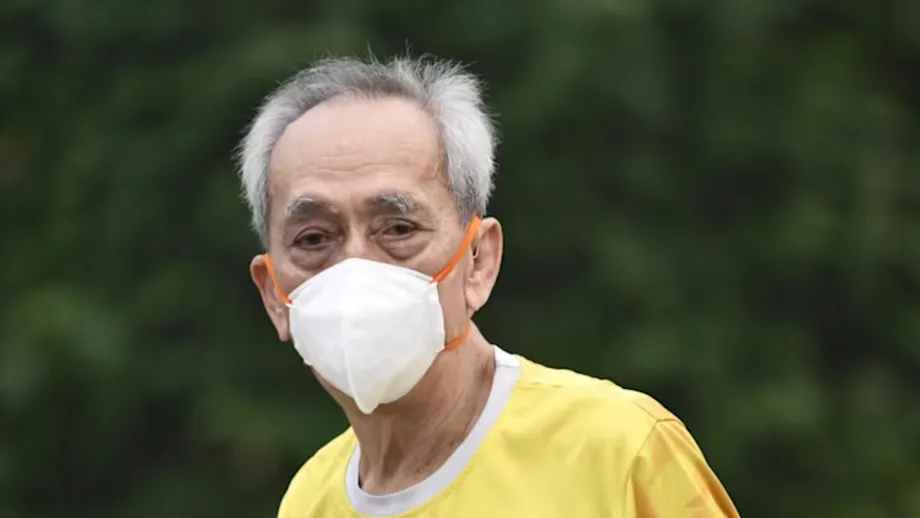
MOH said KN95, KF94 and FFP2 masks are also effective in reducing exposure to haze particles. Shoppers therefore have several recognised types to consider when an outlet has limited supplies of a particular product.
N95 masks meet standards set by the United States National Institute for Occupational Safety and Health. They are designed to form a tight seal around the face and filter at least 95% of airborne particles under the relevant test conditions. Fine particles in the range of 0.1 to 0.3 micrometres are among those described in the mask guidance accompanying the announcement.
KN95 is a Chinese standard requiring filtration of at least 95% of test particles. KF94 is a South Korean standard requiring at least 94%, while FFP2 is a European classification with a similar purpose. The different names identify different standards and testing systems.
A close fit matters because air can enter through gaps around the edges of a mask. The filter material and the seal around the face work together to reduce the particles a wearer breathes in. MOH's advice gives consumers alternatives when choosing protection against haze.
Buy what is needed and check before reuse
Fu urged households to avoid buying more masks than they needed. In her public message about restocking, she also described the conditions under which masks could be reused:
I encourage everyone to buy only what you need. Masks can be reused as long as they are not soiled or dirty, damp, damaged or out of shape.
Her advice makes the condition of the mask central to deciding whether to use it again. Dirt, moisture, damage or a change in shape are reasons to replace it. A mask that has lost its shape may also lose the close fit needed around the face.
CASE separately warned shoppers against buying masks or air purifiers from unauthorised sellers on secondary market platforms, including social media. Yong said such purchases could expose consumers to scams.
Consumers facing an empty shelf therefore have several recognised retail chains to check, along with the online purchasing option described by Fu. MOH's supply updates provide another way to follow the rollout as stores receive deliveries.
Action also targets companies linked to fires
Singapore's response extends beyond protective equipment. NEA had issued notices requiring preventive measures to seven companies linked to fires in Indonesia and was considering further action.
The Singapore Environment Council's Oct. 18 notice required Asia Pulp & Paper to strengthen oversight of fire prevention and firefighting by its wood suppliers and submit daily reports on its response to forest fires. Failure to comply could lead to the withdrawal of its green label certification.
Fu welcomed the council's action and said companies should not be allowed to engage in greenwashing. The term describes presenting a business as more environmentally responsible than its conduct supports. She also pointed to the importance of tracing supplies to protect the credibility of environmental labels.
These measures address a different part of the haze problem from mask distribution. Retail supplies help people reduce exposure now, while company notices and certification requirements place demands on businesses connected to the fires producing smoke.
Key Points
- MOH released N95 masks or equivalent products from national reserves to help retailers meet rising demand.
- FairPrice, Guardian, Unity and Watsons were identified as selling masks, with all Cold Storage, Giant and Sheng Siong outlets expected to stock them progressively by the end of the week.
- Retailers had sufficient warehouse supplies, but some individual shops temporarily ran short while awaiting deliveries.
- Singapore reached its 16th consecutive day of unhealthy air on Oct. 20, and unhealthy conditions were forecast for Oct. 21.
- MOH said KN95, KF94 and FFP2 masks also reduce exposure to haze particles.
- Authorities urged consumers to buy only what they needed, check masks before reuse and avoid unauthorised sellers because of scam risks.