A white light at the centre of a privacy dispute
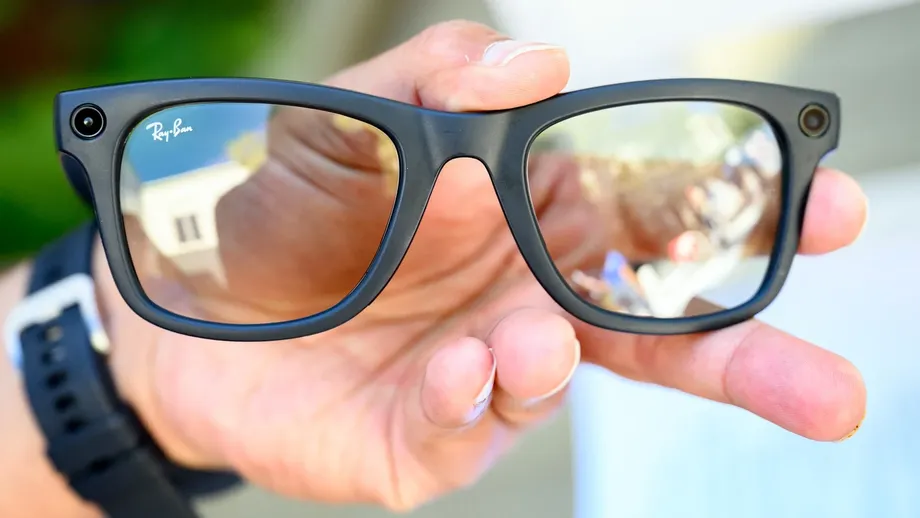
Meta says its Ray-Ban Meta and Oakley Meta AI glasses stop recording when their white warning light is covered, and that physically damaging or modifying the light disables the camera. The company outlined those safeguards at a November 2 online media briefing following the glasses' launch in Hong Kong in October 2026.
Contents
- A white light at the centre of a privacy dispute
- What happens when the indicator is covered?
- Regulators want a warning people can recognise
- Hong Kong guidance puts duties on the wearer
- AI questions and ordinary recordings follow different routes
- Why access and privacy are colliding
- WhatsApp AI receives what people share with it
- What parents can see, and what AI may learn
- The dates shaping the Hong Kong rollout
- Key Points
Chua Chin Wen, Meta's general manager for product public policy in Asia Pacific, said users cannot switch off the indicator. It flashes briefly for a photograph and continues flashing during video recording. Meta says the light and camera are linked so that blocking the warning also blocks the recording.
The assurances address one part of a wider concern: glasses can capture people without the obvious gesture of raising a phone. Hong Kong's privacy regulator issued guidance on October 27 urging users to notify people before filming, avoid recording in places such as changing rooms and clinics, and collect only the personal information they need.
Another question concerns what happens after an image reaches an AI service. At a separate interview in Dublin, Meta executive Maxine Williams said pictures taken to answer AI questions could be used to train models, with an option for users to opt out. That adds a data use issue to the debate about whether people can see that a camera is operating.
What happens when the indicator is covered?
Meta described three responses to interference with the recording light. If someone covers it before recording begins, the camera cannot start until the obstruction is removed. If the light is covered during recording, the recording stops. If someone physically modifies or damages the indicator, Meta says the camera becomes unavailable for both photographs and video.
The company said it tested different colours and brightness levels before choosing white to make the signal noticeable in daylight. It also said safety specialists, including organisations concerned with women's safety, were consulted during development.
Meta said it would remove advertisements, posts and Marketplace listings promoting modifications to the light, and take legal action against businesses providing such services. Its response therefore extends beyond the device to people selling ways to alter it.
Williams, Meta's vice president for accessibility and engagement, described the safeguards during an interview at the company's Dublin headquarters. Explaining the response to attempts to disable the warning, she said:
We learned that people were trying to drill the light to disable it, so we built something to stop that,
Reports of people successfully covering or drilling the indicator have accompanied the privacy controversy. Meta's explanation presents its protections as something it has changed in response to misuse, making the performance of those protections central to its public assurances.
Regulators want a warning people can recognise
European regulators raised the visibility problem years before the latest Hong Kong launch. In its September 2021 statement, Ireland's Data Protection Commission addressed the launch of Facebook View glasses with Ray-Ban in Ireland and Italy.
The Irish commission and Italy's Garante said Facebook and Ray-Ban had not demonstrated comprehensive testing in real settings showing that the small indicator effectively notified people they were being recorded. They called on Facebook Ireland to demonstrate its effectiveness and run a public information campaign explaining the less obvious recording capability.
The regulators compared glasses with smartphones: a visible phone or camera commonly gives people a clue that recording may be happening. A camera built into ordinary looking eyewear depends more heavily on a small signal and on people understanding its meaning.
The European Data Protection Board returned to that issue in an October 13 statement recommending easily noticeable lights or sounds. It warned that a white LED could look like a reflection or sunlight glare, while people with impaired vision might struggle to notice it.
Chua said an audible shutter signal was worth considering, but that sound could be difficult to hear because of distance or surrounding noise. Meta has announced no new shutter sound measure. Its current focus is a light that users cannot turn off or bypass.
Hong Kong guidance puts duties on the wearer
Hong Kong Privacy Commissioner Ada Chung warned that photographs, video and sound collected by smart glasses may undergo further AI analysis, creating additional privacy risks. Her office's October 27 guidance asks people handling personal data to follow the Personal Data (Privacy) Ordinance and use the devices with respect for others.
The practical advice begins before recording. Users should read the supplier's privacy policy to understand how information will be used, how long it will be kept and whether it will be shared with third parties. They should also review privacy settings and limit that sharing where possible.
The commissioner advised users to notify people before photographing or filming them, avoid excessive or continuous recording, and switch off recording when it is unnecessary. Hospitals, clinics and changing rooms were identified as places where people reasonably expect privacy.
Sharing creates another decision. Before publishing a recording online or sending it to someone else, users should consider whether it would disclose another person's personal information without consent. The guidance also recommends deleting information no longer needed, updating applications and strengthening security settings.
Chua said Meta had met the commissioner's office and agreed in principle with its recommendations for responsible use. For someone wearing the glasses, that means the camera's technical safeguards sit alongside decisions about where to record, whom to notify and what to share.
AI questions and ordinary recordings follow different routes
Meta said asking the glasses about an object or the surrounding scene briefly activates the camera to obtain the image needed for an answer. In that process, faces and vehicle number plates are automatically blurred, and the image used to generate the answer is not saved to the user's photo album.
Those arrangements apply to visual questions directed to Meta AI. Users can still save ordinary photographs and videos they deliberately capture. Meta also said it neither offers nor is developing a facial recognition function that identifies strangers through the glasses.
Australia's eSafety Commissioner recommended in August that smart glasses automatically blur faces of people who have not agreed to be filmed. It also called for recording indicators that are clearly visible and difficult to cover. Meta's described blurring applies specifically to AI visual queries, while the Australian recommendation addresses people captured without consent more broadly.
Williams explained that an image captured for an AI answer may have another use beyond producing that answer. Describing a question about identifying a plant, she said:
If you were to ask the AI a question, like 'what plant is this?', then it has to take a photo to know what you're asking about and analyse that. That photo could then be used to keep training the model.
She said users have an option to opt out of having their images used for AI model training. Saving an image to a personal album and sending it for AI processing are different steps, so the privacy settings for AI use matter even when an image never appears in the album.
Why access and privacy are colliding
Meta has faced criticism over people secretly filming women and girls with the glasses and posting the footage without consent. Reports earlier in the year also described workers at a company in Kenya contracted by Meta viewing graphic, intimate images captured through the glasses.
Williams said courts, offices, bars and restaurants had banned the devices. She also described being refused entry to a store while wearing them, although the store allowed filming with a phone.
For blind people and people with limited vision, the glasses can perform practical tasks such as reading text, identifying objects and describing surroundings. Meta announced plans in August to donate 15,000 pairs to Vision Ireland, the national charity supporting people with sight loss.
Williams illustrated the value of identifying objects while preparing food at home:
Imagine being blind and not being able to tell when you want to make a meal in your own home, which are beans and which are peas, because they feel the same,
The same camera that helps a wearer understand a room may also capture other people in it. That creates a concrete challenge for venues: supporting someone who relies on visual assistance while protecting people who expect privacy. A warning that depends on sight also needs to account for bystanders who cannot readily see it.
WhatsApp AI receives what people share with it
Chua also addressed concerns about Meta AI in WhatsApp. He said personal messages and calls remain protected by end to end encryption, and that the optional assistant can process only messages users deliberately send or share with it.
End to end encryption protects ordinary conversations so their contents can be read by the intended participants rather than the service carrying them. Sending a message to an AI assistant adds that service as a recipient for processing.
The Electronic Frontier Foundation warned in September 2025 that a group member using @Meta AI sends the relevant message to Meta AI, outside the protection applying to ordinary encrypted chat messages. Other group messages that are not shared with the assistant remain encrypted.
WhatsApp's Advanced Chat Privacy setting can prevent chat exports, automatic media downloads to phones and the use of some Meta AI functions within that conversation. Leaving the setting off does not give Meta AI automatic access to encrypted messages.
The setting must be enabled separately for each conversation; there is no single switch covering every chat. Group members can change it by default, but administrators can restrict that ability to administrators through the Edit Group Settings permission.
What parents can see, and what AI may learn
Meta said parental supervision became available in its AI application in Hong Kong in early October 2026. Parents can view the subjects their children asked the assistant about during the previous seven days, rather than the full conversations.
Parents can also replace the default content setting, intended for users aged 13 and above, with the stricter Limited Content option. Meta said its supervision tools would notify parents when AI conversations involving supervised teenagers on Instagram, Facebook or Messenger involve suicide or self harm risks.
On model training, Meta identified public online information, licensed material and publicly shared Facebook and Instagram posts as data sources. Training is the process through which an AI system learns patterns from examples so it can generate responses.
Asked at the Hong Kong briefing whether private interactions with Meta AI would be used for training, Chua repeated the public and licensed data sources and referred to information and choices in the company's privacy centre. He did not directly answer that question. Williams' comments in Dublin addressed the narrower issue of images taken for visual AI queries and the option to exclude them from training.
Meta said realistic images generated with Meta AI receive an "Imagined with AI" label. It also uses content signals to apply "AI Info" labels to generated images, audio and video on Facebook, Instagram and Threads. These labels tell viewers about how content was made, while privacy controls govern how information is collected and used.
The dates shaping the Hong Kong rollout
Hong Kong users are receiving the glasses alongside new privacy advice and parental controls. The sequence also shows how long regulators have been asking whether a small recording light gives people adequate notice.
- September 17, 2021: Ireland's Data Protection Commission published its concerns about the recording indicator on Facebook View glasses.
- August 2026: Australia's eSafety Commissioner recommended visible recording indicators and automatic blurring for people filmed without consent.
- Early October 2026: Meta said parental supervision became available in its AI application in Hong Kong.
- October 2026: Ray-Ban Meta and Oakley Meta AI glasses went on sale in Hong Kong.
- October 13: The European Data Protection Board recommended noticeable lights or sounds and warned about the limits of white LEDs.
- October 27: Hong Kong's privacy commissioner issued guidance on smart glasses.
- November 2: Meta explained its camera safeguards at an online media briefing.
Cantonese support is still being developed. Chua said Meta hoped to introduce it in Hong Kong as early as the beginning of 2027, but gave no confirmed launch date. For buyers, language availability remains a separate practical consideration alongside camera controls and data settings.
Key Points
- Meta says covering the recording light stops video capture, while physical modification or damage disables the camera.
- Hong Kong's privacy regulator advises notifying people before filming, avoiding private settings and limiting collection and sharing.
- European regulators have questioned whether a small white light gives everyone an effective warning.
- Meta says AI visual queries blur faces and number plates; ordinary saved photographs and videos follow a different process.
- Images used for AI answers may be used for model training, according to Meta executive Maxine Williams, who said users can opt out.
- WhatsApp AI processes messages deliberately shared with it; other private conversations remain encrypted.
- Meta hopes to introduce Cantonese support as early as the beginning of 2027, without a confirmed date.