A bigger screen and a higher entry price
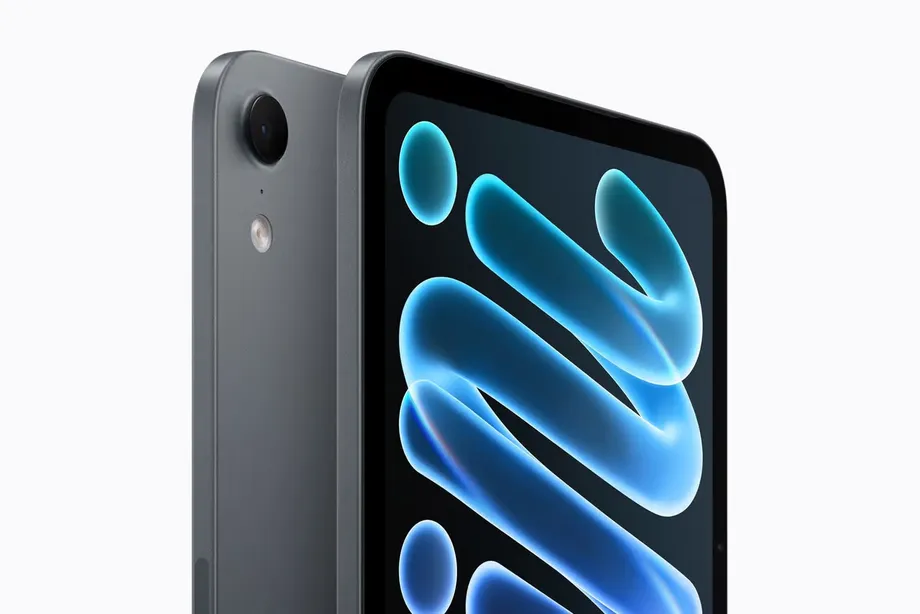
Apple's new iPad mini starts at HK$5,299 in Hong Kong, HK$1,500 above the 2024 model's launch price, bringing an 8.5-inch OLED display, an A20 Pro chip and IP67 protection against dust and water. Preorders open at 1:10 a.m. Hong Kong time on October 29, 2026, with sales beginning November 6.
Contents
- A bigger screen and a higher entry price
- What each Hong Kong configuration costs
- OLED changes contrast more than screen size
- Storage now determines computing hardware
- A lighter body with protection against water
- Sound and cameras suit use in landscape
- Faster wireless, with familiar battery targets
- AI features depend on language and software
- Launch dates and the full purchase budget
- Key Points
The update also changes what buyers get when they choose more storage. The 128GB and 256GB versions have a CPU with five cores and a Neural Engine with 16 cores. The 512GB version adds a sixth CPU core and doubles the Neural Engine arrangement to two sets of 16 cores, giving the most expensive storage option extra computing hardware.
Apple calls the device iPad mini with A20 Pro. Commonly described as the iPad mini 8, it replaces the A17 Pro model introduced in 2024. Both generations support Apple Pencil Pro, Apple Pencil with USB-C and Apple Intelligence, so the clearest changes for existing owners are the screen, lighter body, camera placement and water resistance.
Apple's product announcement sets US starting prices at US$699 for Wi-Fi and US$849 for Wi-Fi + Cellular. Hong Kong buyers face a different local price list, reaching HK$9,699 for the configuration with the most storage, cellular connectivity and nano-texture glass.
Dave Pakula, Apple's vice president of Hardware Engineering, described the range of people the company is targeting:
iPad mini is beloved for its fantastic portability, performance, and display by a wide range of users, from creators and small business owners to doctors, field service workers, and gamers,
What each Hong Kong configuration costs
Hong Kong prices depend on three choices: storage, connectivity and display glass. Midnight and starlight are the two finishes, replacing the previous generation's selection of space gray, blue, purple and starlight.
- 128GB, standard glass: HK$5,299 with Wi-Fi or HK$6,499 with cellular connectivity.
- 256GB, standard glass: HK$6,099 with Wi-Fi or HK$7,299 with cellular connectivity.
- 256GB, nano-texture glass: HK$6,899 with Wi-Fi or HK$8,099 with cellular connectivity.
- 512GB, standard glass: HK$7,699 with Wi-Fi or HK$8,899 with cellular connectivity.
- 512GB, nano-texture glass: HK$8,499 with Wi-Fi or HK$9,699 with cellular connectivity.
Cellular connectivity adds HK$1,200 at every storage level. Nano-texture glass adds HK$800, but is available only with 256GB or 512GB. Buyers seeking that glass therefore start at HK$6,899, HK$1,600 above the basic 128GB Wi-Fi model.
The new 128GB Wi-Fi price is about 39.5% above the previous model's HK$3,799 launch price. In Taiwan, the equivalent price rises from NT$16,900 in 2024 to NT$22,900, an increase of NT$6,000, or about 35.5%. Both comparisons use launch prices, rather than current discounts on older stock.
Education pricing starts at HK$4,899 in Hong Kong and NT$21,290 in Taiwan. Taiwan's standard glass Wi-Fi models cost NT$22,900, NT$26,400 and NT$33,400 for the three capacities. Cellular connectivity adds NT$5,000, while eligible nano-texture configurations add NT$3,500.
US buyers are also paying more, although the comparison depends on the date. The previous model launched at US$499 in 2024 and rose to US$599 in June 2026. The new US$699 starting price is US$100 above that later price and US$200 above the original launch price.
OLED changes contrast more than screen size
The new Super Retina XDR display measures 8.5 inches diagonally, up from 8.3 inches. Apple says the borders around it are 24% thinner, allowing a larger screen within a body of roughly the same size.
OLED gives each pixel its own light control. Dark parts of an image can become much darker because individual pixels can switch off, while nearby bright areas remain lit. Apple lists a contrast ratio of 2,000,000:1 and support for the P3 wide color gamut, which covers a broad range of colors used in photographs and video.
Resolution increases from 2266 by 1488 pixels to 2316 by 1512. Pixel density stays at 326 pixels per inch, so the larger screen gains pixels while retaining the same density of detail.
Brightness requires a closer look. Normal SDR content reaches 600 nits, compared with 500 nits on the previous model, a 20% increase. HDR content also reaches 600 nits across the full screen, with highlights peaking at 1,200 nits. A nit is a measure of brightness; HDR allows a wider range between dark and bright parts of a picture.
The display can dim to 1 nit for use in dark surroundings. Nano-texture glass addresses a different problem, reducing glare in bright environments. Apple includes a polishing cloth with that option.
Technical comparisons describe a single stack LTPS OLED panel operating at 60Hz. Apple's published specifications omit both a refresh rate and ProMotion support. Refresh rate describes how often the screen updates each second, which affects the appearance of scrolling and motion; buyers seeking the iPad Pro's refresh rates of up to 120Hz have no such feature listed here.
Storage now determines computing hardware
The A20 Pro uses a manufacturing process described as 2 nanometers. Apple claims up to 60% faster CPU performance when several processing cores work together, graphics performance up to 2.7 times as fast and AI performance up to 4.5 times as fast as the previous iPad mini.
All three capacities have a GPU with seven cores, compared with five in the A17 Pro model. Each GPU core includes Neural Accelerators, hardware intended to speed up AI calculations. Hardware support for ray tracing helps games and rendering software calculate lighting, reflections and shadows.
The CPU and Neural Engine vary by storage:
- 128GB and 256GB: two super cores and three efficiency cores in the CPU, plus a Neural Engine with 16 cores.
- 512GB: two super cores and four efficiency cores in the CPU, plus dual Neural Engines with 16 cores each.
The CPU handles general computing work. Its efficiency cores are designed to handle tasks using less power, while the Neural Engine specializes in calculations used by machine learning software.
Moving from 256GB to 512GB costs HK$1,600 and brings both more storage and the extra computing hardware. Moving from 128GB to 256GB costs HK$800 and keeps the same CPU and Neural Engine configuration. Apple's performance figures are maximum gains from its testing; the improvement a buyer experiences will depend on the application and workload.
Technical comparisons also put memory at 12GB, up from 8GB, while Apple's published specification list leaves memory capacity unstated. Independent benchmark results for the new tablet were not available at announcement, leaving Apple's test figures as the main performance guide.
A lighter body with protection against water
The Wi-Fi model weighs 255 grams, down from 293 grams, a reduction of 38 grams or about 13%. The cellular version falls from 297 grams to 263 grams, saving 34 grams. Separating the connectivity versions gives buyers the relevant comparison for the device they intend to carry.
Thickness drops from 6.3 millimeters to 5.4 millimeters, about 14%. The new body measures 195.3 by 132.6 millimeters, slightly narrower than the previous model's 195.4 by 134.8 millimeters. Those changes matter most when the tablet is held for reading, drawing or work away from a desk.
Apple's technical specifications give the tablet an IP67 rating under IEC standard 60529. The rating covers protection against dust and water immersion to a maximum depth of 1 meter for up to 30 minutes under controlled testing conditions.
Water resistance can decline with wear. Liquid damage is outside the standard warranty, and a wet device should not be charged. The practical benefit is additional protection when carrying the tablet in places where rain or splashes are possible.
Touch ID remains in the top button. Apple also says the tablet contains 35% recycled material, including recycled aluminum throughout the enclosure and recycled cobalt throughout the battery. The company says manufacturing uses 40% renewable energy across the supply chain.
Sound and cameras suit use in landscape
The new Acoustic Display changes how the tablet produces stereo sound. Apple describes woofers paired through the display for bass, with tweeters hidden between the glass and aluminum enclosure for higher frequencies. The sealed enclosure also contributes to the IP67 rating.
The front camera moves to the long edge of the tablet, placing it in a more central position when the device is held horizontally for a video call. It remains a 12MP Center Stage camera, with an aperture of f/2.0 compared with f/2.4 previously. Center Stage adjusts the camera view to help keep people in the frame.
The rear camera remains a 12MP wide camera with an f/1.8 aperture. It supports Smart HDR 4, digital zoom up to five times and panoramas up to 63MP. An Adaptive True Tone flash adjusts illumination for photographs and document scanning.
Rear video recording reaches 4K at 60 frames per second, while the front camera records at up to 1080p at 60 frames per second. For people who mainly use a mini for meetings, the front camera's new position is likely to be more immediately useful than the rear camera specifications.
Faster wireless, with familiar battery targets
Apple's N1 wireless chip brings Wi-Fi 7, Bluetooth 6 and Thread, replacing Wi-Fi 6E and Bluetooth 5.3. Thread is a networking technology used by compatible smart home devices. Wi-Fi performance depends on the router, network conditions and internet connection.
Cellular models use Apple's C2 modem, replacing the previous Qualcomm modem. Apple claims up to 50% faster cellular data speeds and better power efficiency. These models support 5G and eSIM, with no slot for a physical SIM card, so buyers need a compatible mobile data plan.
The battery has a capacity of 18.9 watt-hours, compared with the previous model's reported 19.3 watt-hours. Apple's advertised endurance remains up to 10 hours of browsing over Wi-Fi or watching video, and up to nine hours of browsing over cellular data.
Fast charging reaches up to 50% in around 30 minutes using a USB-C adapter capable of supplying at least 35W. Apple's listed box contents include a 20W adapter and a USB-C cable. The higher power adapter needed for that charging target is a separate purchase.
USB-C transfer speeds remain up to 10 gigabits per second. The port supports one external display at up to 4K resolution and 60Hz. Apple says extended display mode, which provides additional workspace for apps on the connected screen, arrives with iPadOS 27.2.
AI features depend on language and software
The tablet ships with iPadOS 27 and supports Apple Intelligence. Apple describes new photo editing tools, photorealistic image generation in Image Playground and a Safari feature called Notify Me that can monitor changes such as restocks or price reductions.
Siri AI is designed to use personal context from messages, emails and photos, understand content on the screen and answer a broader range of questions. Apple says requests use processing on the device and Private Cloud Compute. For requests handled by that cloud system, the company says personal data is neither stored nor accessible to Apple.
Apple's announcement describes Siri AI as rolling out in beta with iPadOS 27, while Hong Kong availability details place its beta in iPadOS 27.2. The initial languages listed for that rollout are English, French, Japanese, Korean, Portuguese and Spanish. A release date for iPadOS 27.2 is not specified.
Apple Intelligence supports Traditional Chinese, while Siri AI has its own language and regional conditions. Some features using server models may also have daily usage limits. Hong Kong buyers planning to use Cantonese or Chinese need to check the particular feature and software version rather than rely on the general Apple Intelligence label.
Launch dates and the full purchase budget
The announcement and sales schedule span several dates, with the local preorder time falling on the following calendar day in Hong Kong:
- October 26, 2026: Apple announces the new iPad mini.
- October 28: preorders begin in 36 countries and regions, including the US.
- October 29, 1:10 a.m. Hong Kong time: local preorders open through Apple's online store and Apple Store app.
- November 6: deliveries and retail availability begin.
- iPadOS 27.2: extended display mode becomes available with this software version.
Hong Kong orders are limited to six Wi-Fi models and six Wi-Fi + Cellular models per customer. Both midnight and starlight are available across the three storage capacities.
Accessories add to the budget. Apple Pencil Pro costs HK$999, Apple Pencil with USB-C costs HK$619, and the new TechWoven Smart Folio costs HK$599. The folio is a magnetic cover with adjustable viewing positions, sold in navy blue and taupe.
A basic 128GB Wi-Fi tablet with Apple Pencil with USB-C and the folio totals HK$6,517. The same tablet with Apple Pencil Pro and the folio totals HK$6,897. A suitable adapter for the advertised fast charging would be another expense for anyone who needs one.
Existing A17 Pro owners already have support for both Pencils and Apple Intelligence. Their purchase decision centers on whether OLED, reduced weight, water resistance and the camera's new position justify the cost. Buyers choosing between the new configurations face a second decision: whether they need extra storage alone, or the additional CPU and AI hardware reserved for 512GB.
Key Points
- Hong Kong prices start at HK$5,299, up HK$1,500 from the 2024 launch price.
- Local preorders begin October 29 at 1:10 a.m.; sales begin November 6.
- The 8.5-inch OLED display reaches 600 nits across the screen and 1,200 nits for HDR highlights.
- The 512GB version adds a CPU core and dual Neural Engines with 16 cores each.
- Cellular connectivity adds HK$1,200; eligible nano-texture glass adds HK$800.
- The Wi-Fi model weighs 255 grams, and the new design carries an IP67 rating.
- Fast charging needs an adapter supplying at least 35W; the listed included adapter supplies 20W.
- Extended display mode requires iPadOS 27.2, while Siri AI availability depends on software, language and region.