16,127 new cases put lung cancer first among men
Lung cancer accounts for an estimated 16,127 new cases among Vietnamese men in figures attributed to GLOBOCAN 2024, ahead of colorectal cancer with 12,570 cases and liver cancer with 11,155. Together, these three cancers represent 39,852 cases, or about 46.5% of all new cancer diagnoses in men.
Contents
- 16,127 new cases put lung cancer first among men
- What the cancer figures show
- How the rankings have changed
- Tobacco remains the main preventable danger
- Air pollution adds exposure across entire communities
- Workplaces and homes also need attention
- Who should discuss an annual lung scan?
- Symptoms need assessment, not a screening appointment
- Prevention must reach beyond the lungs
- Key Points
The figures put lung cancer at the centre of two connected challenges: preventing years of exposure to tobacco smoke and other harmful substances, and finding disease early enough for treatment to offer the best chance of recovery.
Across women and men, lung cancer accounts for an estimated 21,340 deaths, about 19.2% of Vietnam's 111,015 cancer deaths. Breast cancer has the largest number of new diagnoses across both sexes, while lung cancer causes the most cancer deaths.
Associate Professor Do Hung Kien, deputy director of K Hospital, says only about 20% of patients with lung cancer reach the health system at an early stage when surgery is possible. Stage 4 disease accounts for roughly 40% to 50% of patients, while stage 3 accounts for about 25% to 30%.
For families, the practical message goes beyond a change in rankings. People with substantial smoking histories need access to appropriate screening before symptoms appear. People already experiencing warning signs need medical assessment, while reducing tobacco smoke and harmful air pollution remains essential to preventing future cases.
What the cancer figures show
GLOBOCAN, the cancer estimation programme of the International Agency for Research on Cancer (IARC), is used to describe the burden of cancer across countries. The figures attributed to its 2024 estimates put Vietnam's total at 177,404 new cases, including 85,748 among men and 91,656 among women.
Among men, the five cancers with the most new cases are:
- Lung cancer: 16,127 cases, or 18.8%.
- Colorectal cancer: 12,570 cases, or 14.7%.
- Liver cancer: 11,155 cases, or 13%.
- Stomach cancer: 7,900 cases, or 9.2%.
- Oesophageal cancer: 6,362 cases, or 7.4%.
Lung cancer exceeds liver cancer by 4,972 cases among men. Colorectal cancer exceeds liver cancer by 1,415 cases, placing a second major preventable cancer above the disease that previously led the male rankings.
Across both sexes, breast cancer accounts for 25,711 new cases, followed by lung cancer with 23,085, colorectal cancer with 22,584, liver cancer with 14,591 and stomach cancer with 12,373. Keeping the male rankings separate from the national rankings helps explain why breast cancer can lead nationally while lung cancer leads among men.
The estimates also identify 404,153 people alive who had received a cancer diagnosis within the preceding five years. This measure, called five year prevalence, describes people living after a recent diagnosis, including those receiving treatment and those receiving follow up care.
How the rankings have changed
Vietnam's cancer rankings have shifted over successive GLOBOCAN editions. The national figures below cover women and men together:
- 2020: Liver cancer ranked first with 26,418 new cases, narrowly ahead of lung cancer with 26,262. Breast cancer ranked third with 21,555.
- 2022: Breast cancer moved into first place with 24,563 cases, followed by liver cancer with 24,502 and lung cancer with 24,426.
- 2024: Breast cancer remained first with 25,711 cases. Lung cancer ranked second, colorectal cancer third and liver cancer fourth.
Dr Nguyen Duy Anh, deputy director of the Centre for Oncology, Radiotherapy and Nuclear Medicine at Phuong Dong General Hospital, describes the changing pattern as a substantial development that clinicians had reason to expect.
He connects it with three developments: efforts to control hepatitis B, the delayed effects of smoking, and lifestyles associated with urbanisation. Hepatitis B is a virus that can damage the liver over many years and increase the risk of liver cancer. Vietnam has provided hepatitis B vaccination for infants for more than two decades, alongside improvements in treatment for hepatitis.
Anh says people who began smoking in the 1990s and 2000s are now reaching ages when lung cancer becomes more common. Cancer can develop after decades of exposure, meaning the consequences of smoking often appear long after the habit begins.
Tobacco remains the main preventable danger
Anh identifies tobacco as the leading risk factor, citing estimates that link smoking to about 80% to 85% of lung cancer cases and place the risk among smokers at 15 to 30 times that of people who do not smoke. These are broad risk estimates; a person's risk also depends on how much they smoke and for how long.
Secondhand smoke puts other household members at risk. Anh cites an increase of about 20% to 30% in lung cancer risk from exposure, with spouses and children among those affected when smoking occurs at home.
Vietnamese waterpipe tobacco, known as thuoc lao, also contains substances that cause cancer. Anh warns against treating it as a safer alternative to cigarettes. He also points to uncertainty about the health effects of electronic cigarettes and heated tobacco over many years, alongside their ability to cause nicotine addiction.
Quitting smoking has benefits at any age. Anh says lung cancer risk can fall by about half after 10 years without smoking compared with continuing to smoke. Keeping homes free of tobacco smoke protects relatives while a person works towards quitting.
Air pollution adds exposure across entire communities
IARC classified outdoor air pollution and particulate matter in outdoor air as carcinogenic to humans in 2013. This classification means there is sufficient evidence that the exposure can cause cancer in people.
PM2.5 consists of particles measuring 2.5 micrometres or less across. Their small size allows them to travel deep into the lungs. Anh explains that particles can carry metals and harmful organic compounds, contributing to persistent inflammation and damage to the genetic instructions inside cells.
He also describes research suggesting that pollution can encourage cells already carrying certain genetic changes, including changes involving the EGFR gene, to grow into tumours. EGFR helps regulate cell growth. This research offers one explanation for lung cancer developing in some people who have never smoked.
Anh cites studies associating each additional 10 micrograms of PM2.5 per cubic metre of air with an increase of about 8% to 10% in lung cancer risk. He says annual concentrations in Hanoi have at times reached five to eight times the World Health Organization's annual guideline of 5 micrograms per cubic metre. That corresponds to about 25 to 40 micrograms per cubic metre.
For an individual, smoking carries a much larger increase in risk. Pollution still creates a substantial public health burden because large populations breathe the same air every day, often for decades.
Workplaces and homes also need attention
Construction, mining, metalworking and transport can expose workers to substances associated with lung cancer. Anh lists asbestos, silica dust, welding fumes, diesel exhaust and certain metals, including chromium, nickel and arsenic.
Workers who smoke while also encountering harmful dust or fumes can face a greater combined risk. Employers therefore have a direct role in controlling exposure, providing suitable protective equipment and making sure protective measures are used.
Inside homes, burning wood or coal in enclosed spaces creates another source of harmful smoke. Radon, a naturally occurring radioactive gas released from soil and rock, is also an established lung cancer risk. Anh says it receives little attention in Vietnam.
A family history of lung cancer, chronic obstructive pulmonary disease (COPD), pulmonary fibrosis and previous tuberculosis are other factors worth discussing with a doctor. COPD restricts airflow, while pulmonary fibrosis causes scarring in the lungs. A person's full exposure and medical history can help guide decisions about assessment.
Who should discuss an annual lung scan?
The 2021 recommendation from the United States Preventive Services Task Force (USPSTF) calls for annual screening with low dose computed tomography, or LDCT, for adults aged 50 to 80 who have a smoking history of at least 20 pack years and either still smoke or quit within the past 15 years.
Pack years combine smoking intensity and duration. Smoking one pack daily for 20 years equals 20 pack years. Smoking two packs daily for 10 years produces the same total.
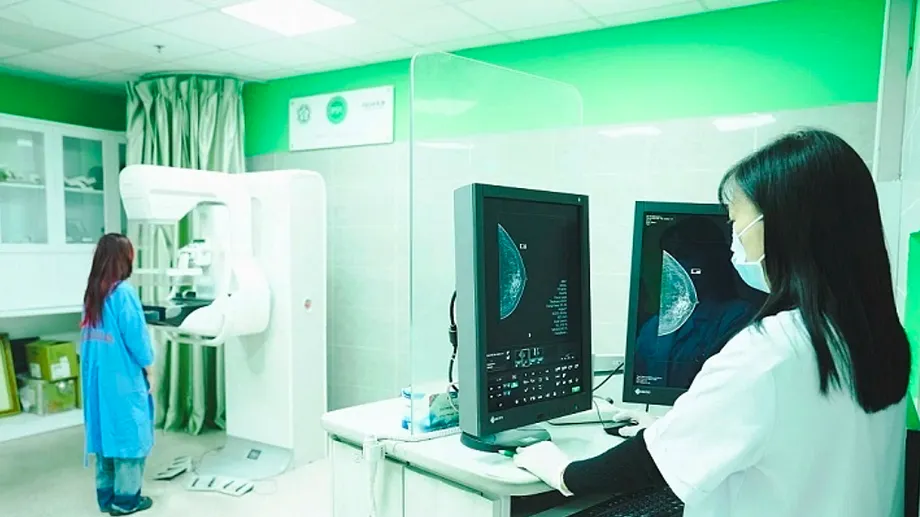
LDCT uses X rays to create detailed images of the lungs with less radiation than a conventional diagnostic chest CT. Large screening trials, including the National Lung Screening Trial in the United States and NELSON in Europe, found reductions in lung cancer deaths of roughly 20% to 24% in the populations studied.
These US criteria give patients a concrete starting point for a discussion with a clinician in Vietnam. Anh says doctors may also assess people with other substantial risks, such as prolonged occupational exposure, a family history of lung cancer or chronic lung disease. Whether screening is suitable depends on the individual and access to appropriate follow up.
Screening also involves tradeoffs. A scan may find a small lung nodule that requires repeat imaging, and some findings lead to further tests even when they turn out to be harmless. Patients should understand the possible benefits, radiation exposure and next steps before beginning regular screening.
Symptoms need assessment, not a screening appointment
Lung cancer can develop without obvious symptoms in its early stages. Anh advises medical assessment for a cough lasting more than three weeks, coughing up blood, persistent hoarseness, chest pain or unexplained weight loss.
Screening looks for cancer in people who feel well. Someone with symptoms needs a diagnostic evaluation, with tests chosen to investigate the cause. Waiting for the next annual screening scan could delay that assessment.
A routine chest X ray can miss small lung nodules, and blood tests for tumour markers are not recommended for lung cancer screening. If a suspicious nodule is found, doctors may recommend further imaging, observation with repeat scans or a biopsy, depending on its features.
A biopsy removes a small tissue sample for examination. PET/CT may help assess suspicious tissue and how far cancer has spread. If cancer is diagnosed, testing for genetic changes can help doctors choose targeted medicines for some patients. Treatment decisions depend on the cancer type, stage and the patient's health.
Prevention must reach beyond the lungs
Colorectal cancer's position as the second most common cancer among Vietnamese men adds urgency to prevention outside tobacco control. Anh identifies diets high in red and processed meat, low fibre intake, alcohol use, limited physical activity and excess body weight as relevant risks.
He recommends discussing colorectal screening from age 45, using colonoscopy or testing for hidden blood in stool. Colonoscopy allows a doctor to examine the large intestine and remove certain growths before they develop into cancer. The most suitable test and schedule depend on medical history and local clinical guidance.
People with hepatitis B, hepatitis C or cirrhosis also need continuing liver care and monitoring as advised by their doctors. Liver cancer still accounts for an estimated 11,155 new cases among men, keeping it among Vietnam's largest cancer burdens.
For lung health, Anh recommends reducing exposure on polluted days through measures such as a properly fitted N95 or KN95 mask, suitable indoor air filtration and workplace protection. Cleaner air and safer working conditions require action by public authorities and employers as well as individuals.
Vietnam's immediate opportunity is to connect prevention with earlier diagnosis: help people stop smoking, protect households and workers from harmful exposure, identify those likely to benefit from screening, and investigate warning symptoms promptly.
Key Points
- Figures attributed to GLOBOCAN 2024 put lung cancer first among Vietnamese men, with 16,127 new cases.
- Colorectal cancer ranks second among men with 12,570 cases, followed by liver cancer with 11,155.
- Lung cancer accounts for an estimated 21,340 deaths across both sexes, about 19.2% of Vietnam's cancer deaths.
- K Hospital's deputy director says only about 20% of lung cancer patients reach care early enough for surgery.
- The USPSTF recommends annual low dose CT for eligible adults aged 50 to 80 with substantial smoking histories.
- Stopping smoking, reducing harmful exposure and promptly investigating symptoms are central to reducing the burden.