Chinese talks target fuel supplies and the Bukhara refinery
Uzbekistan is negotiating with Chinese companies to buy gasoline rated AI-92 and above, diesel, and additional crude oil and gas condensate for its Bukhara Oil Refinery, as a sharp decline in monthly gasoline imports puts pressure on domestic supplies and prices.
Contents
- Chinese talks target fuel supplies and the Bukhara refinery
- What Uzbekistan wants to buy
- October meetings build on a broader relationship
- Why stronger annual imports conceal a recent squeeze
- Higher import costs reach a market already under pressure
- Russia's large share explains the search for alternatives
- Cooperation exceeds fuel purchases
- What the talks could change for consumers
- Key Points
Farid Muminov, deputy chairman of Uzbekneftegaz, outlined the discussions at a press conference on October 27, 2026. The company has held talks with PetroChina, a subsidiary of China National Petroleum Corporation (CNPC), about both finished fuels and raw materials that could be processed in Uzbekistan.
The negotiations follow a steep reversal in import volumes. Uzbekistan brought in about 141.8 million litres of gasoline in April, but only 11.4 million litres in August. Over those four months, the average import cost rose from about $576 to almost $995 per 1,000 litres.
Muminov said the aim was to reduce the risk of interruptions to the supply of petroleum products. He described the company's reasoning:
Today, there are various risks related to the stable provision of the population with petroleum products. To eliminate these risks and prevent their occurrence, we are considering diversifying imports.
Diversifying imports means buying from a wider range of suppliers. For Uzbekistan, which has relied heavily on Russian gasoline, the practical aim is to have more purchasing options when a major source cannot deliver enough fuel.
What Uzbekistan wants to buy
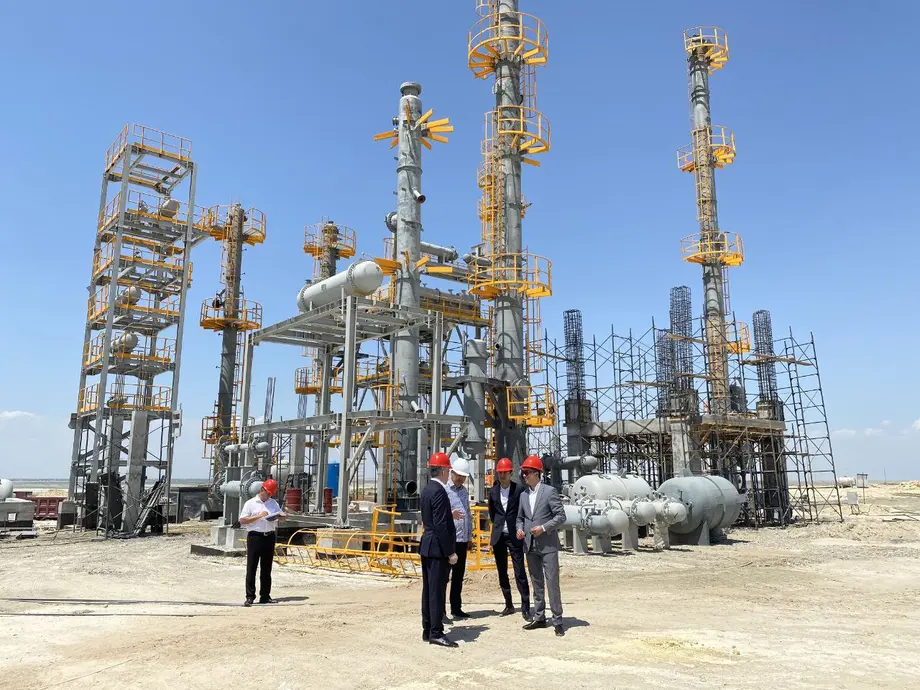
PetroChina and Uzbekneftegaz discussed two routes for supplying the domestic market. One involves importing gasoline and diesel ready for sale. The other involves bringing in more crude oil and condensate for processing at Bukhara, allowing part of the fuel supply to be produced inside Uzbekistan.
Condensate is a light petroleum liquid recovered during natural gas production. Like crude oil, it can serve as a raw material for a refinery. Buying finished fuel addresses supply needs directly, while buying refinery inputs supports domestic processing.
Muminov identified the gasoline under discussion as having an octane rating of 92 or higher. The rating describes a fuel's resistance to premature ignition inside an engine. It is a fuel specification, separate from the quantity being purchased.
The negotiations remain open. Muminov said supply volumes would depend on domestic demand; no agreed quantities, contract prices, delivery timetable or transport arrangements were announced. The possibility of purchases therefore remains at the negotiation stage.
October meetings build on a broader relationship
Uzbekneftegaz Chairman Abdugani Sanginov met a CNPC delegation led by its president, Zhou Xinhui, on October 20. The talks covered the possibility of arranging long term petroleum product supplies for Uzbekistan's domestic market, expanding cooperation in oil and gas, and speeding up joint projects.
The companies also considered opening a permanent CNPC representative office in Tashkent. That proposal would give the Chinese group a continuing local presence alongside its existing business activities, although it was presented as a possibility under discussion.
The developments fit into a sequence of supply pressure and negotiations:
- April 2026: gasoline imports reached about 141.8 million litres before falling in each of the following four months.
- June 29: AI-92 gasoline traded at 13.919 million soums per tonne, nearly 11.8% above its price at the start of June.
- August: monthly gasoline imports fell to 11.4 million litres, while average domestic gasoline prices were 20.2% higher than a year earlier.
- September: the Energy Ministry attributed the sharp import decline to refinery shutdowns in Russia and said alternative suppliers were being considered.
- October 20: Sanginov and the CNPC delegation discussed possible long term supplies.
- October 27: Muminov publicly outlined the talks with Chinese companies, including PetroChina.
Why stronger annual imports conceal a recent squeeze
Uzbekistan imported 721.5 million litres of gasoline in January through August 2026, an increase of 41.2% compared with the same period a year earlier. The value of those purchases rose faster, climbing 48.6% to $437.4 million.
Those cumulative figures describe eight months together. The monthly figures show how sharply conditions changed within that period: imports fell from about 141.8 million litres in April to 72 million in May, 50.7 million in June, 18.6 million in July and 11.4 million in August.
August's volume was roughly 92% below April's, calculated from those two monthly totals. Put another way, April's imports were more than 12 times August's. Compared with August a year earlier, imports were down 76.8%.
The difference matters for drivers and fuel sellers because a strong total for the first eight months can coexist with much smaller deliveries near the end of that period. Earlier imports lift the cumulative figure, while recent monthly arrivals show the supply conditions buyers are currently facing.
Higher import costs reach a market already under pressure
The average cost of imported gasoline increased by about 73% between April and August, from approximately $576 to almost $995 per 1,000 litres. Expressed per litre, that is a rise from about $0.58 to almost $1, before domestic distribution costs and other charges.
Uzbekistan was therefore receiving substantially less gasoline from abroad while paying a higher average amount for each litre imported. Across January through August, the faster increase in spending than in volume also points to a higher average import cost than in the corresponding period of 2025.
Domestic prices were rising too. The National Statistics Committee recorded an average gasoline price increase of 1.9% in August compared with July and 20.2% compared with August 2025. For motorists, the annual figure means fuel was taking a larger amount of money to buy than a year earlier.
Pressure had appeared earlier in exchange trading. On June 29, AI-92 gasoline sold for 13.919 million soums per tonne, nearly 11.8% above its price at the beginning of that month. The amount of gasoline offered for sale on Uzbekistan's exchange also fell during June.
The exchange price is a measure of fuel traded in bulk, while the statistics committee's figures track changes in domestic gasoline prices. Together, they show price pressure at different points in the market, from wholesale purchasing to the costs faced by consumers.
Russia's large share explains the search for alternatives
Uzbekistan's Energy Ministry said in September that Russia had accounted for 85% to 90% of gasoline imports. It attributed the sharp reduction in incoming supplies to shutdowns at Russian oil refineries.
A supplier with that share has a large influence on the receiving country's fuel market. At the ministry's stated proportions, only 10% to 15% of imported gasoline came from other countries. Expanding purchases elsewhere would spread the supply burden across more sources.
Authorities had already been exploring Azerbaijan, Turkmenistan and Belarus as alternative supply directions. The discussions with Chinese companies add another option to that effort.
Russia also introduced restrictions on exports of gasoline and other petroleum products. Uzbekistan's Energy Ministry had said supplies covered by agreements between the two governments should be exempt. An exemption permits shipments under those arrangements, while actual deliveries still depend on fuel being available from suppliers.
Asked whether the Chinese negotiations were connected to conditions in Russia's fuel market, Muminov did not directly confirm that link. He explained the talks in terms of reducing risks to Uzbekistan's petroleum supplies.
Cooperation exceeds fuel purchases
Uzbekneftegaz says the total value of its cooperation with CNPC has exceeded $1 billion. That figure covers import contracts, service work and joint projects across the relationship, rather than a budget assigned to the proposed gasoline and diesel purchases.
The October 20 meeting also covered geological exploration, well drilling, seismic surveys, improvements in gas production efficiency, digital technology and supplies of modern equipment. Seismic surveys use sound waves to help map rock formations underground and guide exploration decisions.
Uzbekneftegaz works in these areas with CNPC companies including Xibu, BGP, CCDC and CNLC. The fuel negotiations are therefore taking place within an existing network of commercial and technical cooperation, extending from finding and producing hydrocarbons to processing and supplying them.
What the talks could change for consumers
Uzbekistan's proposed purchases address two parts of the same supply problem. Finished gasoline and diesel could enter the domestic market directly, while additional crude oil and condensate could supply Bukhara's processing operations.
The concrete benefit being sought is a steadier flow of fuel when deliveries from an established supplier decline. The eventual contribution will depend on the quantities purchased and the terms agreed. Consumers face immediate price pressure, while Uzbekneftegaz is still negotiating the supply arrangements intended to reduce the risk of further interruptions.
Key Points
- Uzbekneftegaz is discussing AI-92 and higher grades of gasoline, diesel, crude oil and condensate with Chinese companies, including PetroChina.
- Monthly gasoline imports fell from about 141.8 million litres in April to 11.4 million litres in August 2026.
- The average import cost increased about 73% over the same period, reaching almost $995 per 1,000 litres.
- The Energy Ministry said Russia had supplied 85% to 90% of gasoline imports and linked the import decline to Russian refinery shutdowns.
- CNPC cooperation exceeds $1 billion across imports, services and joint projects; that total covers much more than the proposed fuel purchases.
- Supply quantities will depend on domestic demand, and negotiations are continuing.