A 2027 Prototype Anchors Foxconn's Quantum Ambitions
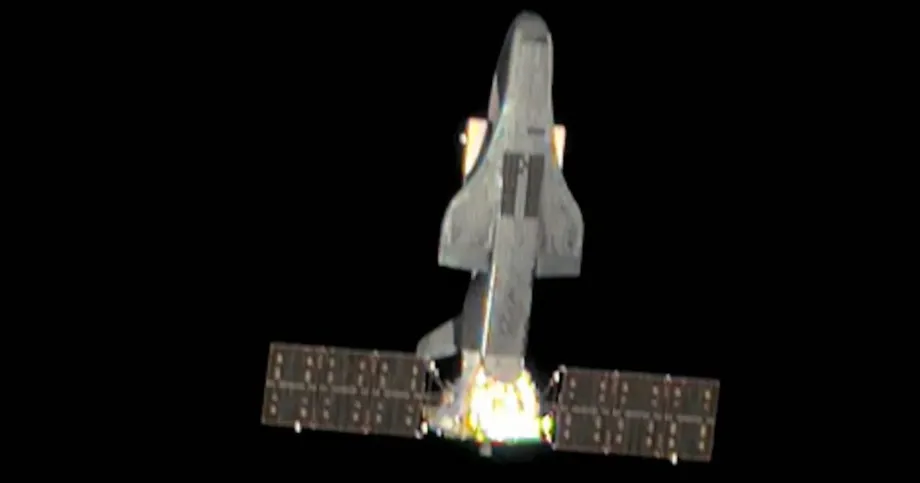
Foxconn plans to introduce an ion trap quantum computer prototype containing five to 10 qubits in 2027, a concrete step toward chairman Young Liu's ambition to make the company the world's largest manufacturer of quantum computers. Alongside that effort, Liu says Foxconn has launched four satellites to learn how to build spacecraft that can carry customers' equipment, including data center components.
Contents
- A 2027 Prototype Anchors Foxconn's Quantum Ambitions
- Building Systems Around Other Companies' Technology
- Why Liu Describes Quantum Computing as an Accelerator
- What the Small Prototype Is Meant to Achieve
- A Faster Outlook, With Several Dates to Watch
- Other Technology Groups Are Pursuing Different Routes
- Four Satellites Support a Second Manufacturing Bet
- Key Points
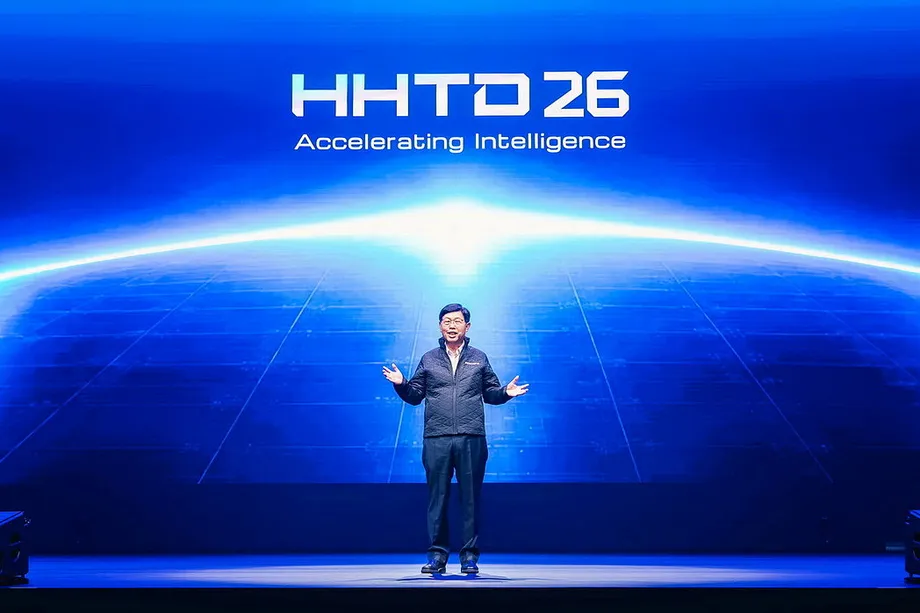
Liu outlined the strategy during an October interview at Foxconn's technology day, with details published on November 1, 2026. His argument connects two demanding fields: companies developing new computing technologies may need a manufacturing partner capable of turning specialist designs into complete systems.
Foxconn, also known as Hon Hai Precision Industry and listed in Taiwan under stock code 2317, intends to work with quantum technology developers and companies selling branded systems. Liu said the company can concentrate on manufacturing without needing to own the underlying quantum computing technology.
The commercial timetable is becoming more optimistic, although substantial development work remains. In May 2026, Liu had placed quantum computing business opportunities after 2030. In October, he estimated that moving from research to commercial viability would require at least another two years across the industry.
For customers, that puts the emphasis on development milestones before large commercial deployments. Foxconn's immediate target is a small experimental machine, while its broader ambition is to become the factory partner for a market whose technical designs and business models are still developing.
Building Systems Around Other Companies' Technology
Foxconn's strategy separates inventing a quantum computing platform from manufacturing the equipment needed to operate it. A technology developer might supply the central design, while Foxconn assembles and integrates the wider system.
That division of work is central to Liu's ambition. Foxconn does not need every customer to use the same underlying technology if it can build reliable systems around different partners' designs. The commercial opportunity would come from manufacturing expertise and production capacity, rather than exclusive ownership of a quantum processor.
Foxconn is nevertheless conducting research across several parts of quantum computing. Its work includes algorithms, fault tolerance, ion trap hardware, development tools and research involving academic and industry partners across countries. Algorithms are instructions for carrying out calculations; fault tolerance concerns keeping calculations reliable when components make errors.
Those activities give Foxconn experience with the requirements its future manufacturing customers may bring. They also show that producing a quantum computer involves much more than assembling a processor: software, control equipment and the physical environment must work together.
Why Liu Describes Quantum Computing as an Accelerator
Liu described a quantum computer as a computing accelerator, intended for selected tasks rather than as a replacement for a general purpose computer. An accelerator is a specialist device that takes on a particular kind of calculation while other computers manage the rest of the work.
Ordinary computers process information using bits, which take values of zero or one. Quantum computers use qubits, whose behavior allows quantum algorithms to manipulate information differently. Turning that behavior into useful calculations requires precise control and protection against errors.
Liu pointed to difficult problems in the NP category when explaining the potential applications. In computer science, NP refers to problems for which a proposed answer can be checked efficiently, even when finding that answer may be difficult. The speed of a quantum calculation depends on the particular problem, algorithm and machine.
For businesses buying computing equipment, Liu's description suggests a future in which quantum systems work alongside conventional processors and graphics processing units. Different devices would handle the parts of a workload best suited to them.
Foxconn's existing server business remains part of that picture. At its technology day, the company also presented its ability to integrate AI server racks and said weekly production capacity had doubled. A starting production figure was not given, so the increase cannot be translated into a number of additional racks.
What the Small Prototype Is Meant to Achieve
Foxconn's planned 2027 machine will use trapped ions. An ion is an atom with an electrical charge; an ion trap holds such particles in place so their quantum states can be controlled and used for calculations.
A prototype with five to 10 qubits gives engineers a manageable system for testing how the hardware and its controls work together. Its value lies in developing that engineering experience as Foxconn prepares for more demanding systems.
Qubit count is one measure of a quantum computer, alongside how accurately it performs operations and how reliably it produces results. Fault tolerance becomes important as machines grow, because errors can spread through a calculation unless the system detects and manages them.
Liu highlighted component costs as another obstacle. He said a cable designed to withstand extremely low temperatures can cost about $1,000. Such requirements help explain why moving from a laboratory demonstration to equipment customers can afford and operate is a separate engineering challenge.
Different quantum designs have different temperature and control requirements. Liu's cable example illustrates the expense associated with demanding quantum hardware, while Foxconn's announced prototype follows the ion trap approach.
A Faster Outlook, With Several Dates to Watch
Liu's changing outlook matters because manufacturers must decide when to commit staff, equipment and production resources. His October estimate of at least two more years suggests commercial viability around 2028 or later, compared with his May expectation that opportunities would emerge after 2030.
The two statements describe broad expectations rather than a fixed sales calendar. Foxconn's clearest announced delivery target remains the prototype planned for 2027. No firm date for commercial shipments, customer orders or expected quantum manufacturing revenue was disclosed.
The main milestones place Foxconn's plans alongside a wider industry effort:
- May 2026: Liu expected quantum computing business opportunities after 2030 and discussed research connecting quantum computing with cybersecurity.
- October 2026: Liu said the industry needed at least another two years to move from research toward commercial viability.
- 2027: Foxconn plans to introduce an ion trap prototype containing five to 10 qubits.
- 2029: Microsoft is targeting commercialization, while IBM plans to introduce its Starling quantum computer.
For Foxconn, the sequence creates a period in which it can develop a prototype and work with potential partners before the commercial milestones targeted by other technology companies.
Other Technology Groups Are Pursuing Different Routes
Microsoft, Google, Intel and IBM are also pursuing quantum computing, with efforts spanning processors, software and complete machines. Their approaches give Foxconn several possible types of future partner, although no manufacturing agreement with those companies was announced in Liu's comments.
Microsoft's stated commercial target is 2029. Google is expanding research into quantum computing using neutral atoms alongside its existing work with superconducting technology. Neutral atoms carry no net electrical charge, while superconducting approaches use electrical circuits operating under tightly controlled conditions.
Intel's activity also extends to quantum software, with an acquisition of Israeli quantum software company Classiq reported alongside the latest industry developments. Software provides the instructions and tools needed to turn a computing problem into operations that quantum hardware can perform.
IBM plans to invest more than $10 billion over five years in quantum computing and aims to introduce Starling, a large quantum computer designed for fault tolerant operation, in 2029. Its focus on reliability reflects a central challenge facing the industry: useful calculations require machines that can continue working accurately despite errors.
Foxconn's manufacturing ambition sits across these competing approaches. Its opportunity depends on whether technology developers eventually need outside companies to build systems at a scale, cost and consistency that makes commercial deployment practical.
Four Satellites Support a Second Manufacturing Bet
Foxconn's space computing effort follows a similar idea: use manufacturing experience to serve companies developing specialist technology. Liu said the company has already launched four satellites to gain experience of how spacecraft operate.
The next objective is to build satellites capable of carrying customer payloads. A payload is the equipment that performs a satellite's mission, such as a sensor, communications device or computing hardware. Liu said data center components could be carried aboard such satellites.
That makes the satellite a platform for customers' equipment, with Foxconn responsible for building the spacecraft around the mission's needs. The practical work includes making the equipment function as part of an operating satellite.
Liu said Foxconn's production efficiency has already attracted approaches from space industry companies seeking faster manufacturing. He contrasted that efficiency with the slower production processes common in the space sector.
The quantum and satellite programs therefore share a commercial principle, even though their engineering requirements differ. Foxconn wants to help other companies turn advanced technology into manufactured systems. In quantum computing, the next visible step is the 2027 prototype; in space, its four satellites provide operating experience for future payload services.
Key Points
- Foxconn aims to become the world's largest quantum computer manufacturer by building systems for technology developers and brands.
- The company plans an ion trap prototype containing five to 10 qubits in 2027.
- Young Liu estimated in October 2026 that commercial viability across the industry remained at least two years away.
- Foxconn's research includes algorithms, fault tolerance, hardware and development tools.
- Liu says four satellites have been launched to support work on spacecraft that can carry customer payloads and data center components.
- Microsoft and IBM have set quantum computing milestones for 2029, while Google is expanding research into neutral atoms.