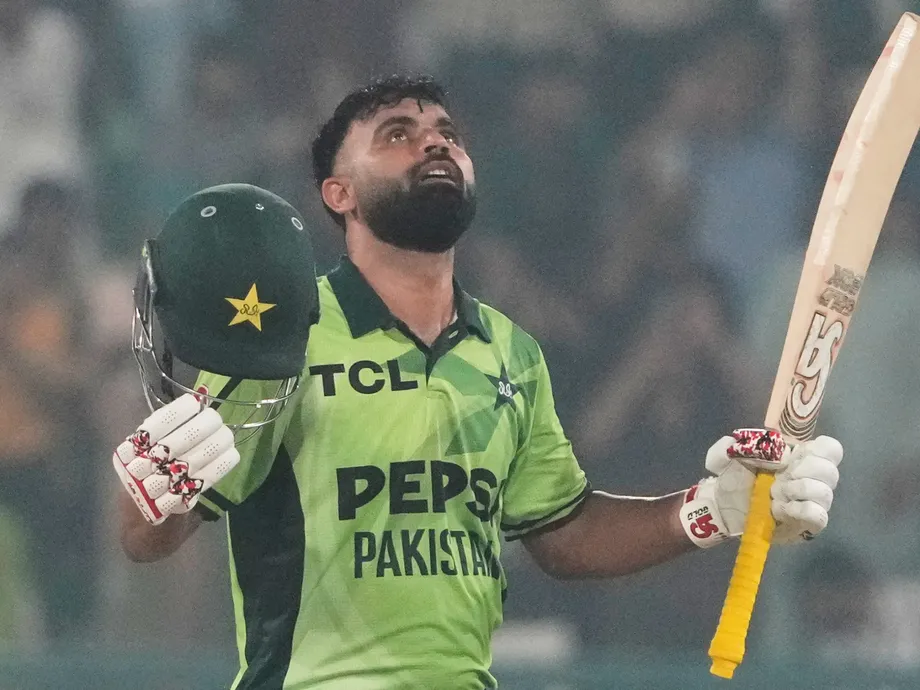
Pakistan turn a bruised knee and an early crisis into a title
Fakhar Zaman scored 127 from 99 balls despite a bruised right knee as Pakistan defeated Sri Lanka by three wickets in the one-day international tri-series final at Gaddafi Stadium in Lahore on October 31, 2026. Pakistan reached 331 for seven in 48.3 overs, completing a chase of 326 with nine balls remaining before 31,265 spectators.
Contents
- Pakistan turn a bruised knee and an early crisis into a title
- How Sri Lanka built a platform for more
- Kamindu's first century meets Pakistan's late response
- Fakhar and Baig rescue the chase from 14 for two
- A century built on acceleration and missed chances
- Minhas breaks the scoring drought
- Two late wickets before Afridi's winning six
- The records behind Pakistan's victory
- Awards and congratulations follow the title
- Key Points
The successful chase equalled the highest target overhauled in an ODI final, matching India's pursuit of 326 against England in the 2002 NatWest final at Lord's. The teams' combined 656 runs also set a record for an ODI final, exceeding the 651 scored in that 2002 match.
Pakistan's victory depended on three very different innings. Fakhar supplied the century, 19-year-old Saad Baig helped rescue the chase with 74 from 75 balls, and Arafat Minhas accelerated towards the finish with 61 from just 31 deliveries. Shaheen Shah Afridi struck the winning six after Sri Lanka took two wickets in successive balls near the end.
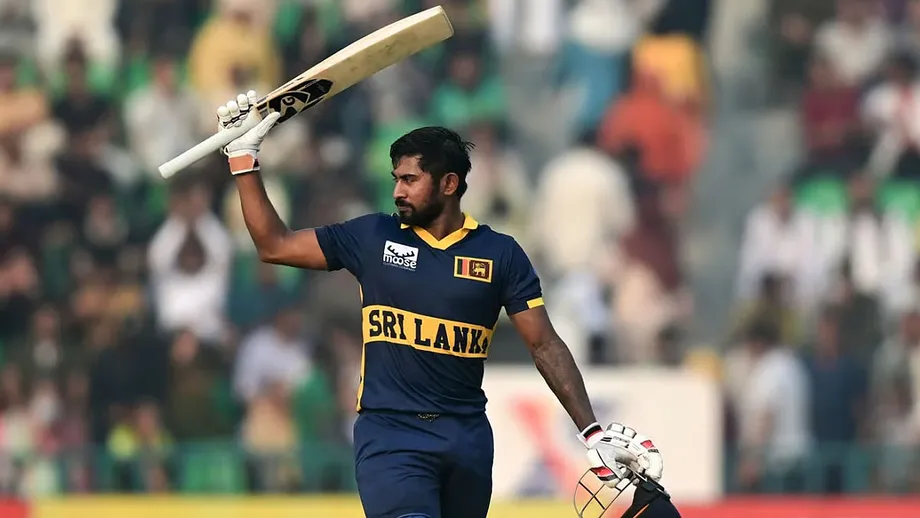
Kamindu Mendis had earlier made his maiden ODI century, scoring 131 from 128 balls to carry Sri Lanka to 325 for eight. His partnership with Pavan Rathnayake put the visitors in position for an even larger total before Pakistan's bowlers struck repeatedly in the closing overs.
The result gave Pakistan their first ODI final victory at home after three previous defeats. It also secured their first ODI tri-series title since the 2008 Kitply Cup in Bangladesh, when they beat India in the final.
How Sri Lanka built a platform for more
Pakistan won the toss and chose to field, putting Sri Lanka in to bat first for the first time in the tournament. Avishka Fernando and Kamindu negotiated the opening overs before increasing the scoring rate, taking their side to 51 without loss after 10 overs.
Fernando attacked Naseem Shah in the sixth over with two fours and a six, while Kamindu hit Afridi for six in the 10th. Kamindu also survived an early scare when a caught behind decision off Minhas was overturned on review, the process through which players ask television officials to check an umpire's decision.
Pakistan slowed the innings through accurate bowling. Haris Rauf delivered a maiden, an over in which no runs were scored, to Fernando in the 17th. Salman Ali Agha then dismissed the opener for 38 in the following over.
Agha took a return catch to remove Kusal Mendis as well, leaving Sri Lanka at 109 for two in the 22nd over. Kamindu and Rathnayake responded with a partnership of 146 from 119 deliveries, moving the visitors from a steady opening towards a potentially commanding finish.
Kamindu's first century meets Pakistan's late response
Kamindu's 131 included 12 fours and two sixes. Rathnayake contributed 77 from 65 balls, registering his fourth score of at least 50 in the series. Together, they took Sri Lanka to 255 for two after 41 overs, with nine overs remaining to build on that platform.
Afridi broke the partnership by trapping Kamindu leg before wicket after an attempted sweep. He also removed Dasun Shanaka, whose 17 from nine balls briefly threatened another burst of scoring. Rauf dismissed Rathnayake as Pakistan took five wickets in a late cluster.
Sri Lanka added 70 runs over their final nine overs but lost six wickets during that period. That changed the task facing Pakistan: the hosts still needed a large chase, but Sri Lanka had been prevented from turning their strong position into a total closer to 350.
Afridi finished with two wickets for 50 runs from his 10 overs. Naseem, Rauf and Agha also took two wickets each. Kamindu's innings was Sri Lanka's third highest individual score in an ODI final, behind Sanath Jayasuriya's 189 against India in 2000 and Marvan Atapattu's unbeaten 132 against England in 1998.
Fakhar and Baig rescue the chase from 14 for two
Dilshan Madushanka gave Sri Lanka an immediate opening by dismissing Maaz Sadaqat for five and Babar Azam without scoring. Babar faced only five deliveries, and Pakistan slipped to 14 for two while pursuing a target requiring more than six runs an over.
Fakhar entered the final with just 31 runs from his previous four innings. He had also spent much of Sri Lanka's innings in the dressing room after injuring his right knee while fielding. Pakistan needed him to reverse both his recent form and the direction of the chase.
Baig provided the support that made the recovery possible. The teenager struck 11 fours in his 74 and reached his maiden ODI half-century, helping Pakistan get to 50 for two after 10 overs without allowing the early wickets to bring scoring to a halt.
The pair added 149 for the third wicket. Their partnership supplied almost 46 percent of the 326 runs Pakistan needed, turning a fragile start into a platform from which the middle and lower order could attack. Maheesh Theekshana eventually ended Baig's innings with a catch off his own bowling.
A century built on acceleration and missed chances
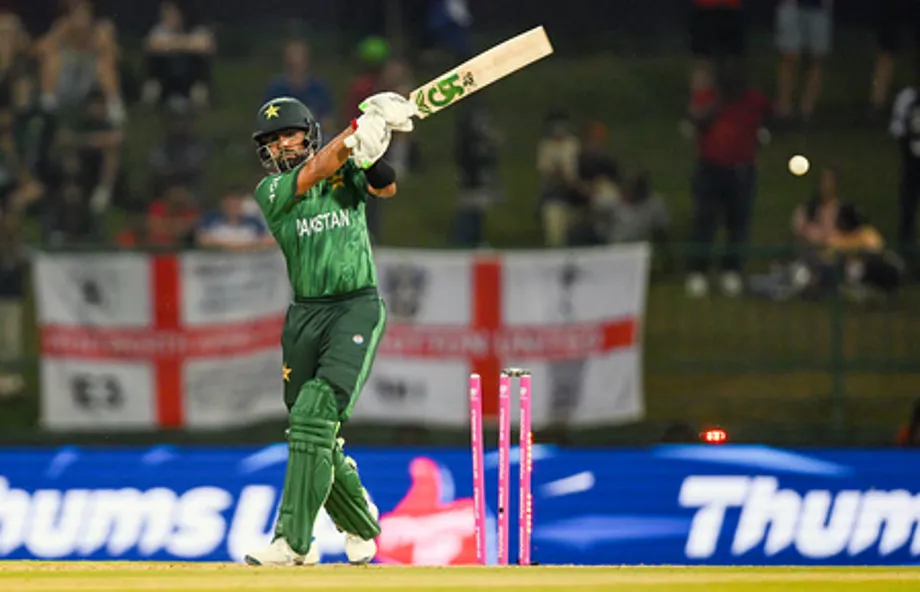
Fakhar needed 52 balls to reach fifty, then moved to his century from 84 deliveries. His second fifty therefore came from only 32 balls, a sharp change of pace that helped Pakistan keep the required scoring rate within reach.
His completed innings contained 11 fours and six sixes. Those boundary shots supplied 80 of his 127 runs. He was particularly productive on the leg side, the half of the field behind a batter's legs when taking guard, where he scored 72 runs through shots including sweeps and pulls.
Theekshana, playing his first match of the series, missed opportunities to dismiss Fakhar on 69 and 106. The chances included a return catch and a catch near the boundary, allowing Pakistan's most dangerous batter to extend his innings.
Madushanka finally bowled Fakhar in the 34th over, with Pakistan still needing 106 runs. Fakhar had also shared a brisk partnership of 57 with Agha, but the chase still required a substantial contribution from the remaining batters. Agha's subsequent dismissal for 17 left Pakistan at 230 for five.
Minhas breaks the scoring drought
Pakistan needed 96 from the final 13 overs, then 82 from the last 10. A stretch of 10 overs without a boundary increased the pressure on Minhas and Hasan Nawaz, even as they preserved wickets and collected smaller scores.
Minhas broke that drought with a four off Shanaka in the 43rd over. Another boundary followed against Asitha Fernando in the 45th, and Pakistan entered the final five overs needing 46 runs. Minhas then struck sixes against Shanaka and Madushanka to bring the target down rapidly.
Minhas and Nawaz added 94 from 65 deliveries for the sixth wicket. Nawaz finished unbeaten on 37, while Minhas scored 48 from his final 17 balls, transforming a cautious start into the decisive attacking innings of the closing stages.
Pakistan needed 18 from 18 deliveries when Minhas attacked Fernando with two sixes and a four. He reached his half-century from 28 balls and finished with four sixes and three fours in his 61. His late acceleration brought Pakistan within two runs of victory.
Two late wickets before Afridi's winning six
Fernando briefly revived Sri Lanka's hopes by dismissing Minhas and Faheem Ashraf with successive deliveries. Pakistan were seven wickets down, but Nawaz remained at the crease and the target was almost within touching distance.
Afridi settled the contest in the next over by hitting Madushanka over deep midwicket for six. Pakistan finished on 331 rather than 326 because the full six runs counted from the winning shot. The notation 48.3 overs means 48 complete overs and three balls, leaving nine of the allotted 300 deliveries unused.
Madushanka finished with three wickets for 63 runs, having removed Maaz, Babar and Fakhar. Fernando took two for 72. Sri Lanka's bowlers also had to contend with evening dew, which made the ball wet and harder to grip and control.
Pakistan's recovery therefore required two partnerships under different pressures. Fakhar and Baig rebuilt after the early wickets, while Minhas and Nawaz managed the rising scoring requirement after the century maker departed. Neither stand alone would have completed the chase.
The records behind Pakistan's victory
Pakistan's pursuit of 326 also equalled the highest successful target chase in a men's ODI knockout match. It was the second highest successful chase against Sri Lanka in ODIs, behind Pakistan's own pursuit of 345 in Hyderabad during the 2023 World Cup.
Fakhar registered his 12th ODI century and his second in three ODI finals. His first came against India in the 2017 Champions Trophy final. He joined Saeed Anwar as the only Pakistan batters with two centuries in ODI finals; Anwar's came in the 1993 Wills Trophy and the 1998 Silver Jubilee Independence Cup.
Fakhar also became Pakistan's leading century maker in ODI chases of targets above 300, with four hundreds. Babar and Younis Khan have three each. During the innings, Fakhar passed 4,000 ODI runs in his 96th innings, second fastest for Pakistan behind Babar, who reached the mark in 82.
Pakistan's 331 for seven was their second highest total in an ODI knockout match, behind the 338 for four they made in the 2017 Champions Trophy final. Sri Lanka's 325 for eight was also their second highest knockout total, after 339 for four against Pakistan in the first final of the 1997 Independence Cup.
Awards and congratulations follow the title
Fakhar was named Player of the Match, while Minhas received the Player of the Series award. Minhas's contribution came early in his international career: after eight ODIs, he had two scores of at least 50 and two innings in which he took five wickets.
Pakistan Cricket Board chairman Mohsin Naqvi credited the three principal contributors to the chase in a statement released by the board.
Fakhar Zaman, Arafat Minhas and Saad Baig's aggressive batting played a key role in the victory. The cricketers displayed excellent teamwork and delivered an outstanding performance.
President Asif Ali Zardari also congratulated the players and management, praising their performance, hard work and teamwork. He congratulated Naqvi on the staging of the tournament and Pakistan's victory.
The title was Pakistan's first in an ODI competition involving several nations since the 2017 Champions Trophy. It followed their defeat by New Zealand in the final of a home tri-series in 2025. England, the third team in the Lahore tournament, had been eliminated after losing three of their four matches.
Key Points
- Pakistan beat Sri Lanka by three wickets in Lahore, reaching 331 for seven with nine balls remaining.
- Fakhar Zaman scored 127 from 99 balls despite a bruised right knee and poor recent form.
- Saad Baig made 74, Arafat Minhas hit 61 from 31 balls, and Hasan Nawaz finished unbeaten on 37.
- Kamindu Mendis scored his maiden ODI century, making 131 in Sri Lanka's 325 for eight.
- The successful chase of 326 equalled the record for an ODI final, while the combined 656 runs set a new final record.
- Fakhar won Player of the Match, Minhas won Player of the Series, and Pakistan claimed their first ODI final victory at home.