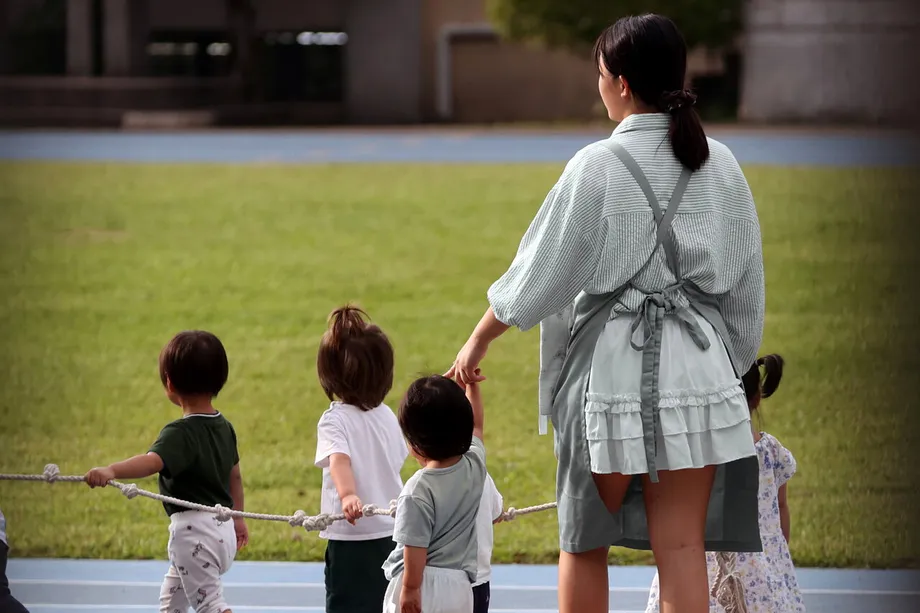
A monthly payment split between family needs and a child's future
Taiwan plans to provide NT$5,000 a month in support for children from birth to age 18 starting in 2027, President Lai Ching-te said at a youth program event in Kaohsiung on October 30, 2026. The proposal depends on the Legislative Yuan approving the budget.
Contents
- A monthly payment split between family needs and a child's future
- How the NT$360,000 would accumulate
- Budget approval comes before payments
- A separate account law has different rules
- Overseas participation more than doubles
- What young people brought back from abroad
- Tuition support is the earlier step
- Why family circumstances matter in Lai's argument
- Two forms of support for different stages of life
- Key Points
The proposal was set out in the Presidential Office's May 27 announcement of the Taiwan Population Strategy — Family Support plan in 2026. It called for monthly support of NT$5,000 for children from birth to age 18, with the full amount available for family use before age six and an equal split between family payments and a dedicated child growth allowance account from age six.
Families with children in the younger age group, described as ages 0 to 6, would receive the full NT$5,000 each month. During the proposed savings period from ages 6 to 18, parents would receive NT$2,500 a month, while another NT$2,500 would be deposited for the child.
Those deposits would add up to NT$360,000 over 12 years, before investment earnings. Lai said the return would be guaranteed at no less than the interest rate on a fixed deposit held for two years, with all investment earnings belonging to the child.
The May 27 plan specified that the government would entrust professional financial teams with managing and investing the account funds, with a guaranteed return at least equal to the two-year fixed deposit rate. The funds would become available for withdrawal when the child turns 18.
The practical change for families would be a combination of money available for current expenses and savings intended for the child's later education, overseas experiences or first business. For the older age group, half of the proposed monthly support would go to parents and half toward the child's future.
Lai presented the allowance alongside tuition assistance and the Youth Overseas Dream Fund, a program that helps young people learn abroad. He described these measures as connected parts of a Taiwan Renewal Plan, linking support during childhood with opportunities after graduation.
How the NT$360,000 would accumulate
A monthly deposit of NT$2,500 produces NT$30,000 in savings each year. Across 12 years, or 144 monthly deposits, that reaches NT$360,000. Parents would separately receive another NT$30,000 annually during the same period.
The combined proposed support therefore amounts to NT$60,000 a year per child in either age group. What changes at the transition is how the money is divided: the full amount goes to the family during early childhood, while half is reserved for the child during the later period.
Lai also described an ambition for the savings to reach about NT$500,000 by age 18 through investment gains. Reaching that amount would require roughly NT$140,000 in earnings on top of the NT$360,000 deposited, an increase of about 39% over the contributions.
The NT$500,000 figure is an investment target; the promised minimum return is tied to the rate on a fixed deposit held for two years. A fixed deposit is money placed with a bank for an agreed period in exchange for interest. The proposal uses that kind of savings rate as the floor for returns.
Because contributions would arrive monthly, the earliest deposits would have more time to earn returns than the last ones. The eventual balance would depend on the investment arrangements and the returns earned over the years.
Budget approval comes before payments
The Legislative Yuan, Taiwan's legislature, must approve the necessary spending before the proposed allowance can begin. Lai's announcement sets out a desired start in 2027, with implementation conditional on that budget review.
In the May 27 announcement, Lai also instructed the Executive Yuan to complete the legal work for measures requiring amendments and strengthen communication with the Legislative Yuan. He described the package as sharing the gains from economic growth while taking fiscal capacity into account, but the announcement did not specify the allowance's total public cost or a dedicated funding source.
The official proposal sets out the age-six transition, professional investment management and withdrawal at age 18. Families still need details on eligibility, applications, detailed account and withdrawal procedures, and the total public cost. No exact payment date or date for legislative approval was given.
A separate account law has different rules
The Legislative Yuan passed the Taiwan Child Growth and Future Accounts Act on July 24, 2026, but the legislation was still awaiting presidential promulgation. This is a separate framework from the government's monthly allowance proposal: it provides NT$60,000 a year for growth expenses before age seven, then NT$30,000 a year for growth expenses and NT$30,000 a year for a future account from age seven until the child turns 18. Its transition is at seven, not six.
Under the legislation, eligibility requires the child to be under 18, hold Republic of China nationality, have a domicile in Taiwan and reside in Taiwan for at least 183 days each year. There is no household income exclusion or requirement for parents to make matching deposits. These rules belong to the legislation and do not establish the detailed eligibility rules for the government's original proposal.
For a child covered from birth throughout the full period, government contributions under the legislation would total NT$1.14 million: NT$750,000 for growth expenses and NT$390,000 in the future account. That includes a one-time NT$60,000 starting contribution available only to children born after the law takes effect. Children born earlier would not receive retroactive payments for past years.
The legislation assigns future account receipts and custody to the Bureau of Labor Insurance, with investment management entrusted to the Bureau of Labor Funds. Returns must meet a two-year fixed deposit benchmark, with any shortfall covered by the national treasury. Withdrawal of government contributions and related returns after age 18 would require evidence of spending on education, employment, vocational training, starting a business, a home purchase down payment or rent.
The two frameworks cannot simply be added together. How they would be integrated, financed or operated alongside each other remained unsettled, and actual account opening and payment dates under the legislation still depended on promulgation, budget procedures and administrative arrangements.
The sequence of the connected initiatives runs from a presidential campaign promise to an overseas program already operating and a child allowance awaiting funding:
- 2024: Lai proposed the overseas youth program during his presidential campaign.
- 2025: The program began, with 1,463 young people participating.
- 2026: Lai cited 3,073 participants and announced the child allowance proposal at the October 30 event in Kaohsiung.
- 2027: The government aims to introduce the allowance after budget approval and expand overseas program participation to more than 4,000 young people.
The timetable places two different tasks before the government: securing funds for the proposed childhood payments and expanding an overseas program that has already completed its first year.
Overseas participation more than doubles
Lai said participation in the Youth Overseas Dream Fund increased from 1,463 in 2025 to 3,073 in 2026. Another account of his remarks described the 2026 figure as applications approaching 3,073, rather than completed participation.
Using Lai's participation figures, the increase is 1,610 young people, or about 110%. The combined total for the two years would be 4,536, consistent with the expectation that cumulative beneficiaries could exceed 4,500.
The share of participants from disadvantaged families also rose, from 7% in 2025 to 14% in 2026. Their share doubled while the program itself grew to more than twice its initial size.
Applying those rounded percentages to the participation totals suggests approximately 102 participants from disadvantaged families in 2025 and 430 in 2026. These are estimates derived from the percentages, rather than exact counts announced at the event.
Lai said the first group in 2027 was expected to include more than 1,000 young people, with participation across the year exceeding 4,000. Compared with the 2026 figure of 3,073, that would mean at least about 30% further growth.
What young people brought back from abroad
A participant working at an environmental protection bureau studied how air pollution varies at different heights. Lai said that experience could help Taiwan monitor air quality and prepare for or respond to disasters.
Measuring pollution at different heights gives a picture of how it is distributed above an area, rather than only at a monitoring point near the ground. The example connected an overseas learning opportunity with a specific public service task in Taiwan.
Another young person went to Prague to study drone technology. Lai linked that experience to Taiwan's drone industry and national security, presenting technical learning abroad as a way to develop skills useful at home.
Participants also exchanged knowledge about magic performance. Lai connected that example to Kaohsiung's convention, exhibition and performing arts activities, expressing hope that the city could also develop a reputation for magic.
The examples covered public administration, technology and performance. Lai's argument was that overseas opportunities could help young people find a professional direction while bringing knowledge and ideas back to Taiwan.
Tuition support is the earlier step
Lai described educational equality as the foundation for the overseas program. Before a young person can consider studying or gaining experience abroad, the family must be able to support schooling at home.
He pointed to free tuition at public and private senior high schools and vocational high schools, together with annual tuition and fee subsidies for students at private colleges and universities.
The private university assistance he outlined has three levels:
- General students receive NT$35,000 annually.
- Students from households classified as having low incomes receive an additional NT$20,000, bringing the annual total to NT$55,000.
- Students from households classified as having lower middle incomes receive an additional NT$15,000, bringing the annual total to NT$50,000.
The extra support raises the annual subsidy by about 57% for students in the low income category and about 43% for those in the lower middle income category, compared with the standard NT$35,000 payment.
Lai said the approach directs assistance to students to narrow the tuition and fee gap between public and private universities. He contrasted it with an earlier approach in which government support for tuition was greater at public institutions.
Why family circumstances matter in Lai's argument
Lai said access to a public university depends on more than effort and academic ability. Students in rural areas with fewer educational resources can have fewer opportunities to enter those institutions, leaving families to face the higher fees associated with private study.
He recalled attending elementary and junior high school in the countryside. Some classmates left school because their families were poor, he said, while others went into factory work after junior high school.
That personal account explained the connection he drew between tuition assistance, childhood savings and overseas opportunities: support at each stage could give a young person more choices at the next.
Lai, Taiwan's president, described how the proposed savings could support education or travel abroad:
If they want to study, they will have money to study; if they want to go abroad, they will have funds to see the world.
He also said young people could use the money as their first funds for starting a business. The common purpose was to make family finances less decisive when a young adult chooses what to do next.
Two forms of support for different stages of life
The proposed allowance addresses two concrete needs: money parents can use while raising a child and a fund the child could draw on later. In the older age group, those purposes would each receive NT$2,500 of the monthly NT$5,000 allocation.
The tuition subsidies and overseas program operate at other points in the same progression. Tuition assistance reduces the cost of remaining in education, while the overseas program creates opportunities to learn beyond Taiwan after senior high school, vocational school or college.
Lai's presentation brought these measures together under the Taiwan Renewal Plan label. The next concrete step for the new allowance is legislative approval of its funding, followed by the operating details families would need before receiving payments.
Key Points
- Taiwan aims to introduce NT$5,000 in monthly support per child in 2027, subject to budget approval.
- The official May 27 proposal provides the full amount for family use before age six. From ages 6 to 18, NT$2,500 would go to parents and NT$2,500 into savings for the child.
- Twelve years of monthly deposits would total NT$360,000 before earnings, with professional financial teams managing the investments, a minimum return tied to the interest rate on a fixed deposit held for two years and withdrawal available at age 18.
- A separate account law passed on July 24 uses an age-seven transition and nationality and residence requirements; its integration with the government's proposal and funding arrangements remained unsettled.
- Lai described about NT$500,000 at age 18 as an investment target.
- He cited overseas youth program participation rising from 1,463 in 2025 to 3,073 in 2026, with more than 4,000 expected in 2027.
- Annual private university tuition and fee subsidies range from NT$35,000 to NT$55,000 under the categories he outlined.