A border bottleneck squeezes a major copper route
Oyu Tolgoi LLC says restrictions at China's Ganqimaodu border port have reduced its copper concentrate shipments from Mongolia by about 70% over two weeks, disrupting a major export route as Mongolia prepares a budget counting on future income from the mine.
Contents
A company statement dates the restrictions to October 15, 2026, and describes a fall from 13 truck convoys a day to four. Ganqimaodu sits opposite Mongolia's Gashuunsukhait crossing, a gateway used to transport both copper concentrate and coal into China.
Mongolian officials attribute the slowdown to construction, maintenance and technology upgrades on the Chinese side. Finance Minister Mendsaikhan Zagdjav said China had indicated the work would finish by December 31, extending disruption that had initially been expected to end in September.
The pressure reaches beyond one mining company. Mining contributes roughly a quarter of Mongolia's gross domestic product, the value of goods and services produced in the country. Coal and copper concentrates accounted for 82.3% of merchandise exports in 2025, while China received 89.4% of all exports.
Those figures explain why processing capacity at a single crossing matters so much. Mines need a reliable route to their customers, and Mongolia sells most of its exports to the country on the other side of this border. When trucks move more slowly, the effect can spread from transport schedules to sales receipts and public finances.
What has changed for Oyu Tolgoi?
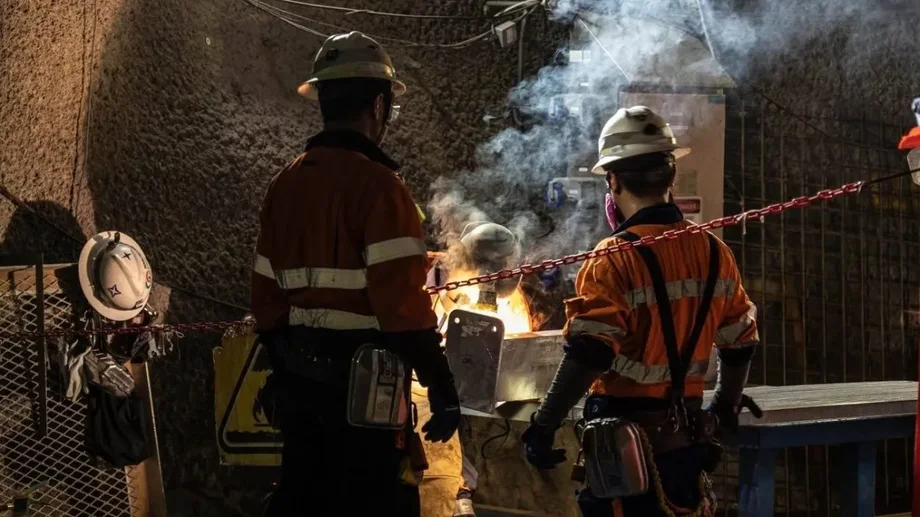
Oyu Tolgoi operates one of the world's largest copper mines. Its concentrate is material processed to contain a higher proportion of copper than the original ore, allowing it to be transported for further processing.
The company described restrictions on the passage used by vehicles returning from Ganqimaodu toward Gashuunsukhait. A bottleneck on the return journey can also disrupt outbound deliveries because trucks must complete that journey before collecting another load.
Reducing daily convoys from 13 to four means nine fewer convoys, a decline of about 69%. That calculation closely matches the company's description of an export reduction of about 70%.
Another company account gives the usual traffic as 12 to 13 convoys a day, falling to around four. Both descriptions put the crossing's recent capacity at roughly one third of its normal level. A convoy is a group of trucks, so these figures describe groups crossing rather than individual vehicles.
How border work stretched into December
Mongolian border authorities say China introduced facial recognition equipment inside vehicles in August to identify truck drivers. Installation and maintenance work at Ganqimaodu have reduced the port's ability to process traffic.
Mongolia's government said the Chinese embassy in Ulaanbaatar informed it that the work could continue until the end of December. Mendsaikhan gave December 31 as the completion date communicated by the Chinese side.
The disruption has developed over several months:
- August 2026: China introduced facial recognition equipment for drivers, and Mendsaikhan says coal exports through Gashuunsukhait began falling.
- Late September: The border work was initially expected to be completed.
- October 15: Oyu Tolgoi says restrictions began on the return passage used by its transport vehicles.
- Late October: The company described an export decline of about 70% over two weeks.
- December 31: Mendsaikhan says China indicated that repairs would be finished by this date.
Road and Transport Minister Delgersaikhan Borkhuu said all transport routes on Mongolia's side remained open. He also said the government had no information suggesting a political reason for the restrictions. Mongolian officials have therefore focused their response on the work and processing capacity across the border.
How much export income is at risk?
Reported estimates put the reduction in export value at about $300 million compared with normal operations, potentially rising to $1.2 billion if restrictions continue through the end of the year. Oyu Tolgoi has not confirmed those amounts.
The larger estimate is four times the smaller figure and depends on disruption continuing. For Mongolia, the immediate concern is the interruption of sales that would normally take place as concentrate moves across the border.
Export revenue is the money earned from selling goods abroad. The amount ultimately received will depend on how much concentrate crosses, when deliveries take place and the terms of the sales. Whether delayed shipments can later be recovered will also matter for the eventual financial cost.
Mongolia's copper concentrate exports reportedly reached 2 million tonnes in the first nine months of 2026. That substantial volume makes reliable transport especially important as copper becomes a growing contributor to the country's export earnings.
Coal is also moving more slowly
Border authorities say daily vehicle crossings through Gashuunsukhait have fallen from around 1,300 to slightly more than 1,000. That is a reduction of somewhat less than 300 vehicles a day, or a little under 23%.
Mendsaikhan gave a larger measure of the pressure on coal, saying coal exports through Gashuunsukhait had fallen 40% since August. His figure concerns coal export volumes over that period; the border authorities' figures concern daily vehicle movements. Truck numbers and tonnes measure different parts of the same transport operation.
Mongolia was China's largest supplier of imported coking coal in 2025, accounting for approximately 51% of those imports. Coking coal is used to make coke, a fuel used in steel production. Mongolia therefore supplied slightly more than half of China's imported coking coal that year.
China is the world's largest consumer of both coal and copper. Disruption at this crossing affects a trade relationship in which Mongolia depends heavily on Chinese customers, while Chinese buyers rely on Mongolia for a substantial share of imported coking coal.
What Mongolia's government is doing
Mendsaikhan said the issue had been presented to the Cabinet two weeks before his remarks and that ministers had received instructions to work on it. Some Cabinet members were tasked with visiting the crossing and holding discussions with Chinese authorities.
The finance minister also said he had contacted Oyu Tolgoi on the Monday before his remarks. The company planned talks with officials on the Inner Mongolian side that week to discuss resolving the disruption.
Mendsaikhan said Mongolia had no border, customs or port problem on its own side and attributed the slowdown to maintenance across the frontier. His account places the immediate response in discussions with Chinese officials about restoring traffic.
The government faces pressure to keep exports moving even after meeting annual targets. Mendsaikhan said Mongolia had already reached its 2026 budget target of 90 million tonnes of coal exports and its planned copper export target, with about two months remaining in the year.
Reaching an annual target still leaves further sales at stake. Mines and transport operators need to keep delivering, and additional exports can generate income beyond the amount assumed when the budget was prepared.
Why the disruption matters for public spending
Mongolia's reliance on a small number of minerals makes border interruptions a national economic concern. Coal and copper concentrates together accounted for more than four fifths of merchandise export earnings in 2025. Other major mineral resources include gold, uranium and fluorspar.
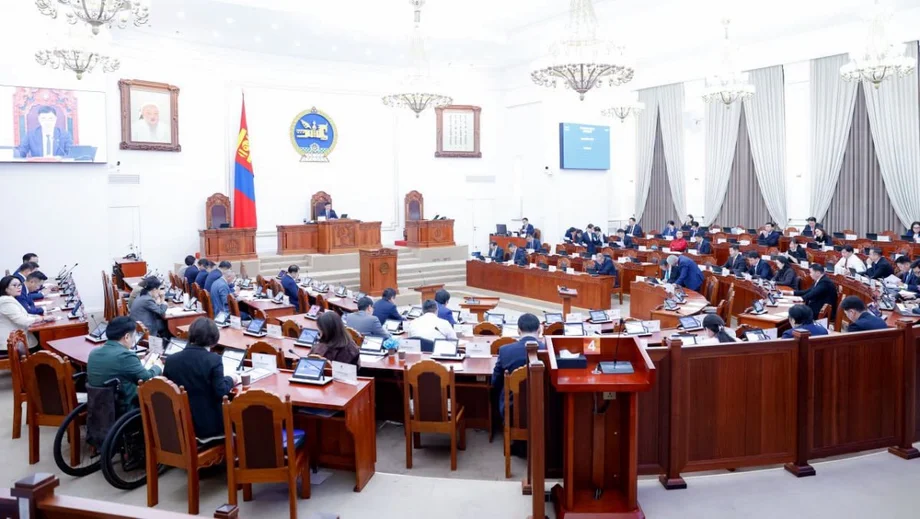
The current slowdown also comes during a debate over how to use future income from Oyu Tolgoi. Mongolia opened a consultation on expected dividends on October 14, one day before the start date for restrictions given in the company's statement. The consultation concerned an expected 3 trillion tugrik payment in 2027 and was scheduled to close on October 28.
Prime Minister Uchral Nyam-Osor proposed saving 1 trillion tugrik and using 2 trillion for public investment, including electricity, schools, border crossings and production. The opposition Democratic Party's parliamentary group argued that the money should instead go into savings accounts held in citizens' names.
A dividend is a payment a company makes to shareholders from profits. Mongolia's expected payment is tied to the state's shares in Oyu Tolgoi. Export sales bring money into the business, while dividends depend on its profits and financial obligations. The border slowdown adds pressure to the mine's sales operations as lawmakers consider how expected mining income should support households and public services.
Key Points
- Oyu Tolgoi says copper concentrate exports to China fell about 70% over two weeks, with daily convoys reduced from about 13 to four.
- The company dates restrictions on the return passage at Ganqimaodu to October 15, 2026.
- Mongolian officials attribute the disruption to work at the Chinese port, with December 31 given as the revised completion date.
- Estimates of $300 million in reduced export value and a possible $1.2 billion by year end remain unconfirmed by Oyu Tolgoi.
- Coal traffic has also slowed, and ministers have been assigned to pursue discussions with China.
- China received 89.4% of Mongolia's exports in 2025, making reliable border access central to the country's economy.