UN review leaves restrictions in place
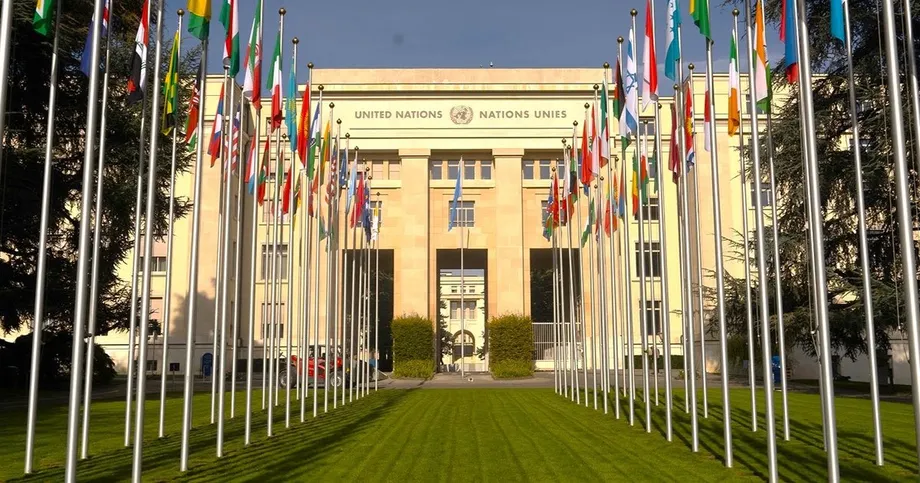
Brunei declined recommendations to join a major international civil rights treaty, protect peaceful assembly and establish an independent national human rights institution during a United Nations review concluded in March 2025. The Office of the UN High Commissioner for Human Rights followed up in June, highlighting restrictions on expression, association and public gatherings under the country's longstanding state of emergency.
Contents
- UN review leaves restrictions in place
- What Brunei declined at the UN
- A review stretching across several years
- How the law limits public criticism
- Newspapers need permission to operate
- A higher press ranking alongside severe penalties
- Censorship reaches books, films and performances
- Thousands walked for Palestine under tight assembly rules
- Why some young advocates work quietly
- Key Points
The CIVICUS Monitor's August 2025 assessment recorded those decisions and rated Brunei's civic space as "repressed", with no documented progress in fundamental freedoms. Civic space means the room people have to speak publicly, organise groups and gather to express shared concerns.
Freedom House's 2026 Freedom in the World assessment rated Brunei "Not Free", with a score of 27 out of 100. Sultan Hassanal Bolkiah exercises executive power in the absolute monarchy, and there are no elected representatives at national level.
A cabinet reshuffle in mid-2026 introduced a new government structure and younger leaders, including the Sultan's sons in their first cabinet roles. Those appointments took place within a political system where national leadership is chosen through royal authority rather than a public election.
For residents, the restrictions reach beyond formal politics. Newspaper licences, rules governing groups of more than 10 people, police powers over certain gatherings of five or more, and criminal penalties for expression shape how people discuss public problems. Some community organisers work discreetly on health, environmental and humanitarian issues, using the language of advocacy rather than activism.
What Brunei declined at the UN
The Universal Periodic Review, known as the UPR, allows other UN member states to examine a country's human rights record and recommend changes. Brunei's review took place in November 2024, with its response adopted at the Human Rights Council in March 2025.
Malta, Chile, Luxembourg, Mexico, the United States, Switzerland, Namibia and Spain recommended ratification of the International Covenant on Civil and Political Rights. The treaty sets international standards for rights including expression, peaceful assembly, association and political participation. Brunei did not support the recommendation.
Brunei also declined to support consideration of an independent national human rights institution meeting the Paris Principles. Those principles set standards for bodies intended to monitor rights and advise governments independently.
The Netherlands recommended a freedom of information law, which would establish rules for requesting information held by public authorities. Spain sought changes to laws restricting expression. Australia and Ukraine called for a timeline to end the state of emergency and the restrictions it places on expression and association. Brunei did not support the recommendations to protect those freedoms.
A review stretching across several years
The sequence matters because the recommendations moved from proposals in November 2024 to government decisions in March 2025, followed by a UN communication in June. The key dates are:
- November 2024: UN member states reviewed Brunei's human rights record and proposed legal and institutional changes.
- 24 November 2024: More than 5,000 people joined a Palestine solidarity walk in Bandar Seri Begawan.
- March 2025: The Human Rights Council adopted the review outcome, including Brunei's responses.
- June 2025: The UN human rights office wrote to the government about concerns raised during the review.
- 1 August 2025: CIVICUS published its assessment of Brunei's rejection of recommendations on civic freedoms.
- 2026: Rights assessments continued to describe substantial restrictions, alongside a cabinet reshuffle and accounts of discreet youth advocacy.
The UN correspondence described the state of emergency as dating to 1962; earlier CIVICUS assessments described it as imposed in 1984. Both accounts describe emergency powers continuing to restrict public freedoms. No timetable for ending the emergency was identified in the government's response described by CIVICUS.
How the law limits public criticism
UNESCO noted before the November 2024 review that Brunei's Constitution, revised in 2011, contained no provisions protecting freedom of expression or press freedom. CIVICUS's UN review account described the laws operating in that setting.
The Sedition Act carries a prison sentence of up to three years for publishing material with seditious intent. Its scope includes challenges to the royal family's authority and the standing of the national philosophy, the Malay Islamic Monarchy concept. The concept places monarchy, Islam and Malay identity at the centre of the state.
CIVICUS's March 2023 assessment also described provisions covering words or acts intended to promote hostility between classes of people or wound religious feelings. The Sharia Penal Code bars contempt for or insult of the Sultan, the administration of sharia, or laws relating to Islam.
The Penal Code provides prison terms of up to five years for criminal defamation, which concerns statements deemed to damage a person's reputation. The Undesirable Publications Act gives the minister power to prohibit the import or sale of publications considered contrary to the public interest.
Police reportedly investigated a viral social media video in May 2026 alleging that officers had failed to act on a foreign woman's report of an alleged rape. The investigation cited the Public Order Act and Sedition Act, bringing laws governing order and expression into a dispute over criticism of police conduct.
Newspapers need permission to operate
The Newspapers Act 1958, amended by the Local Newspapers Order 2001, allows the government to close a newspaper without prior notice or an explanation. Local newspapers need operating licences and prior government approval to hire foreign editorial staff, journalists and printers.
UNESCO's account added that publishing permits must be renewed annually and can be refused, suspended or revoked without reasons or judicial review. Judicial review is a process in which a court examines whether a government decision was lawful. Without that route, publishers have fewer ways to challenge the loss of permission to operate.
The Broadcasting Act of 1997 gives the responsible minister licensing and regulatory powers over broadcasting. State ownership of Radio Television Brunei and ownership of leading daily newspapers by the Sultan's family further concentrate control over major news outlets.
Reporters Without Borders described the environment in its 2023 assessment, discussed in CIVICUS's press freedom assessment. The organisation said press freedom was:
virtually non-existent
Journalists commonly practise self-censorship because of social pressure, government interference, and concerns about their jobs and legal exposure. Independent bloggers also risk defamation proceedings. Government censorship of online content and the capacity to monitor private online communications extend those pressures beyond established newsrooms.
A higher press ranking alongside severe penalties
Brunei ranked 96th out of 180 countries in the 2026 Reporters Without Borders Press Freedom Index, compared with 142nd in 2023 and 144th in 2022. That represents a rise of 46 places from 2023 and 48 places from 2022.
The legal conditions described in the assessments remain severe. Publishing material that undermines the national philosophy can carry a three-year sentence under sedition law, while journalists can face five years for material deemed malicious.
The penal code adopted in 2019 also provides the death penalty for statements or publications deemed blasphemous or to advocate apostasy. Blasphemy refers to expression treated as insulting religion; apostasy means leaving a religion. These provisions place religious expression among the areas carrying the gravest legal consequences.
The ranking and the legal framework describe different parts of the media environment: Brunei's position relative to other countries has risen, while publishers still need government permission and journalists continue to face criminal penalties and pressure to censor themselves.
Censorship reaches books, films and performances
Religious publications and public entertainment face their own approval systems. A US International Religious Freedom report released in May 2023 described continuing restrictions on imports of non-Islamic religious texts. Islamic texts were reviewed to check that they followed the Shafi'i school of Islam.
Public musical, cinematic and theatrical performances require advance approval from a censorship board comprising officials from the Prime Minister's Office, the Ministry of Home Affairs and the Ministry of Religious Affairs. Religious Affairs officials said performances would be censored for content derogatory to Islam.
Cinema owners have practised self-censorship by choosing not to submit films they expect authorities to find objectionable. In October 2022, Brunei banned a Malaysian film over elements described as inconsistent with Islamic teachings.
These controls affect which books can enter the country, which films audiences can watch and which performances organisers can stage. Approval requirements also move decisions about acceptable content to the period before publication or performance, when organisers must decide whether to proceed at all.
Thousands walked for Palestine under tight assembly rules
More than 5,000 people joined the Palestine Solidarity Walkathon at Dermaga Diraja in Bandar Seri Begawan on 24 November 2024. Big BWN Project and Palestine Poppies organised the event with support from the Brunei youth council.
The walk began at 6.30am and followed a route of 1.7 kilometres around landmarks in the capital. Diplomats, families, students and participants of different ages attended. The event ended with brief speeches and a moment of silence for Palestinian victims.
Public gatherings take place within a restrictive legal framework. Under the Public Order Act, police may disperse an unofficial assembly of five or more people considered likely to disturb the peace. Demonstrations require approval from the minister of home affairs.
Authorities have routinely permitted annual events while sometimes disrupting gatherings considered politically or otherwise sensitive. Organisers dealing with sensitive subjects have held private meetings instead of seeking permits, or limited what they say at public events. The Palestine walk shows the scale public participation can reach for an organised event, within a system where authorities retain broad control over assembly.
Why some young advocates work quietly
The Societies Order 2005 requires registration for groups of more than 10 people. Brunei's laws do not provide protection for freedom of association, and domestic and international human rights groups cannot operate freely under government restrictions.
A small number of local organisations provide humanitarian assistance, including support for survivors of domestic violence and free legal advice. Their work addresses immediate needs in a setting where organising around rights faces much tighter constraints.
An October 2026 book on youth activism described the emergence of "quiet activism". People involved often call themselves advocates and work discreetly on community, environmental and health issues to avoid drawing attention from authorities.
The approach connects the legal rules to everyday choices. An organiser must consider whether a group needs registration, whether a public event needs approval and whether its messages could attract scrutiny. Residents continue to find ways to help their communities, while the rejected UN recommendations leave the central restrictions on speech, assembly and association in place.
Key Points
- CIVICUS rates Brunei's civic space as "repressed"; Freedom House gave it 27 out of 100 in 2026.
- Brunei declined key recommendations on civil rights, independent rights monitoring and public freedoms during its UN review.
- Newspapers need government permission to operate, and expression can attract serious criminal penalties.
- Police can disperse certain unofficial gatherings of five or more people; groups of more than 10 must register.
- More than 5,000 people attended the Palestine Solidarity Walkathon in November 2024.
- Some young advocates work discreetly on community needs amid continuing restrictions on public organising.