Hefei tests open the next stage of Volkswagen's China push
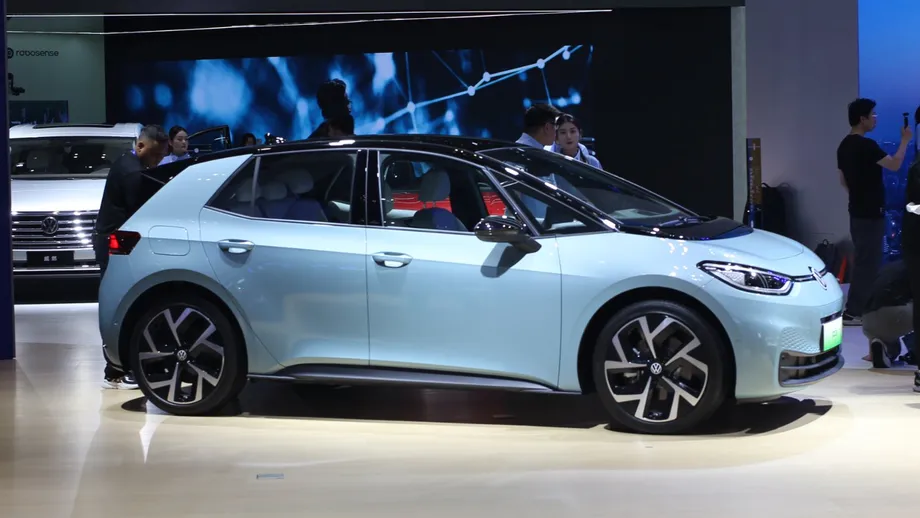
Volkswagen Group China has begun testing Level 3 autonomous driving on public roads in Hefei after securing a local road test permit, bringing its Chinese software, chip and vehicle development programmes closer to a planned 2027 introduction. The company announced the development on October 26, 2026, ahead of its first China Technology Day in the city on October 28.
Contents
- Hefei tests open the next stage of Volkswagen's China push
- What changes when a car reaches Level 3?
- China's first approvals show how limited deployment begins
- A timetable stretching from 2025 to 2029
- CARIZON brings Chinese AI into Volkswagen's driving system
- Millions of simulated kilometres support the road tests
- Hefei combines engineering, manufacturing and diplomacy
- The market puts pressure on Volkswagen's timetable
- Robotaxi plans show a separate route toward L4
- Key Points
The permit allows real road testing and large scale collection of driving data. Volkswagen says it meets China's latest mandatory safety design standards and was granted under what the company describes as the country's strictest current L3 regulatory framework. The company has not disclosed the issuing authority, vehicle models, fleet size or permitted roads.
Volkswagen's immediate goal is technological readiness in 2027. A partnership announcement in July set a more specific commercial ambition: deliveries of vehicles with L3 capabilities could begin as early as the second half of 2027. Those plans place Hefei at the centre of a programme combining Chinese artificial intelligence technology with Volkswagen's vehicle engineering.
China has already moved beyond development permits for some manufacturers. On December 15, 2025, the Ministry of Industry and Information Technology, or MIIT, conditionally approved its first two passenger vehicle products with L3 functions. Their operation was restricted to specified roads and conditions in Chongqing and Beijing.
Volkswagen therefore enters a testing field that already includes Chinese competitors and other German brands. Its challenge is to turn local research into vehicles that can meet regulatory requirements and compete in a market where electric cars and intelligent driving systems are becoming central to purchasing decisions.
What changes when a car reaches Level 3?
Level 3 is usually called conditional automated driving. Within specified conditions, the system performs the driving task, including watching the road. A human must still be available to take control when the system requests it. Those conditions can include the road type, vehicle speed and traffic situation.
Level 2 systems require the driver to keep supervising, even when the vehicle controls steering and speed together. Volkswagen is already rolling out a system it calls L2++, but the extra plus signs are a commercial description rather than a separate formal automation level. The driver still has to pay attention and remain responsible for supervising the journey.
Level 4 goes further: within its approved operating area and conditions, the system can handle driving without relying on a human to take over. A robotaxi service restricted to a particular city or service area is one possible application. The difference matters because Volkswagen is pursuing L3 passenger vehicles while also developing technology intended to support L4 later.
Volkswagen's Hefei permit authorises development testing on designated roads. Customer deployment follows a separate product approval process, including testing, safety assessment and operating restrictions. For buyers, the next meaningful steps will be approval of particular vehicles and publication of the conditions in which their automated functions can operate.
China's first approvals show how limited deployment begins
MIIT's December 2025 decisions covered two electric sedans identified by their regulatory model codes: Changan's SC7000AAARBEV and Arcfox's BJ7001A61NBEV. Both manufacturers had completed and passed the required product tests and safety assessments before receiving conditional approval.
The Changan vehicle was authorised for automated driving within a single lane during traffic congestion on highways and urban expressways, at speeds of up to 50 kilometres per hour. Approved sections included Chongqing's Inner Ring Expressway, part of the New Inner Ring Expressway between Gaotanyan and Laijiaqiao interchanges, and Yudu Avenue between Renhe and Airport interchanges.
The Arcfox vehicle received permission for automated driving within a single lane at up to 80 kilometres per hour on three Beijing routes: designated sections of the Beijing–Taipei Expressway, Airport North Line Expressway and Daxing Airport Expressway. The approvals attached the functions to particular roads rather than allowing use throughout either city.
Chongqing Changan Chelian Technology and Beijing Chuxing Automobile Service were named as the respective operators for the road use pilots. MIIT and other authorities were to monitor vehicle operation and safety. An MIIT official said on October 22, 2026, that work on a second batch of product approval pilots was underway.
A timetable stretching from 2025 to 2029
Volkswagen has outlined its goals through several announcements, while China has gradually expanded the regulatory route for automated vehicles. The main milestones are:
- December 15, 2025: MIIT conditionally approves the first two L3 passenger vehicle products for restricted road use pilots.
- April 11, 2026: Frank Han, executive vice president of Volkswagen Group China and CEO of CARIAD China, sets out targets for L3 in 2027 and L4 in 2029.
- July 22, 2026: Volkswagen and Horizon Robotics announce deeper cooperation, targeting initial L3 vehicle deliveries as early as the second half of 2027.
- August 2026: China introduces mandatory safety standards for L3 and L4 driving systems.
- October 22, 2026: An MIIT official says a second batch of L3 product approval pilots is being prepared.
- October 26, 2026: Volkswagen announces its Hefei L3 testing permit and confirms that testing has begun.
- October 28, 2026: Volkswagen plans to present its latest developments at its first China Technology Day in Hefei.
Volkswagen's 2027 readiness target and the proposed delivery window describe different stages. Readiness concerns the technology being prepared for deployment; deliveries also require approved vehicles and a commercial rollout. The 2029 L4 target is a later ambition within the same development programme.
CARIZON brings Chinese AI into Volkswagen's driving system
CARIZON, Volkswagen's intelligent driving venture in China, is central to the effort. Established in December 2023 by Volkswagen's software subsidiary CARIAD and Horizon Robotics, it is headquartered in Beijing. Volkswagen invested about €2.4 billion in the venture and holds a 60 percent stake.
The expanded July partnership gives CARIZON access to Horizon Robotics' AI foundation model to develop a unified driving solution for Volkswagen Group vehicles in China. A foundation model is a broad AI model that developers can adapt to particular tasks. Here, the task is interpreting road situations and helping a vehicle decide how to move.
The arrangement includes what the companies call white box access. In practical terms, CARIZON is intended to have access to the underlying technology for development and adaptation, rather than simply receiving a finished system to install. That gives the local venture a larger role in shaping how Volkswagen vehicles respond to Chinese driving conditions.
CARIZON's driver assistance system is called Hyper Sense 8, or HS8. Volkswagen describes it as covering a broad range of driving scenarios. Its L2++ technology is being introduced on seven new models in China's new energy vehicle category through the group's Chinese joint ventures during 2026. That rollout gives Volkswagen an immediate product programme alongside its longer L3 effort.
Millions of simulated kilometres support the road tests
Volkswagen says its GAIA 2.0 world model can run simulations equivalent to 5 million kilometres of safety testing each day, drawing on about 30 million clips of real road scenarios. Its target is 10 million simulated kilometres a day, twice the stated current capacity.
A world model helps represent how a driving environment may develop: a pedestrian might step into the road, another vehicle might brake, or traffic might merge. Simulations allow developers to repeat situations and change details so that software encounters many versions of a difficult event.
Hefei's public road programme adds a different kind of input. Vehicles collect information about actual traffic, road layouts and interactions with other road users. Volkswagen's development approach links those observations with simulated testing, allowing events encountered outside the laboratory to become part of further software evaluation.
Volkswagen is also developing the C7H system on a chip, an integrated processor intended to support its automated driving software. The company says its planned capabilities extend up to L4. CARIZON's solution is being developed around the chip and the GAIA data platform, connecting computing hardware, AI software and testing tools within the same programme.
Hefei combines engineering, manufacturing and diplomacy
Hefei houses Volkswagen China Technology Company, or VCTC, the group's largest research and development centre outside Germany. More than 3,000 engineers work there. The city also hosts Volkswagen Anhui's production site, putting vehicle development and manufacturing in the same location as the new road testing programme.
Volkswagen's October 28 Technology Day will provide the next scheduled opportunity for the group to present its progress. The event comes during German President Frank-Walter Steinmeier's planned state visit to China from October 27 to 31. His itinerary includes a visit to Volkswagen's Hefei technology centre on October 27.
The timing connects a specific vehicle development programme with a broader change in industrial cooperation. Volkswagen is investing in Chinese engineering teams and drawing on local AI and semiconductor expertise, while maintaining its established vehicle development and manufacturing operations.
Zhang Xiang, secretary general of the International Intelligent Vehicle Engineering Association, described how the relationship between German manufacturers and Chinese partners is changing:
In the past, cooperation largely followed a model in which German automakers brought their technologies and brands to China while benefiting from the Chinese market. Now, we are seeing the relationship move toward joint research and development and technological innovation, with Chinese companies increasingly contributing core technologies.
The market puts pressure on Volkswagen's timetable
China's new energy vehicles accounted for 67 percent of retail passenger car sales in September 2026, according to the China Passenger Car Association. Among mainstream joint venture brands, their share was 15.9 percent. The gap was 51.1 percentage points, showing how much further established joint ventures have to move toward electric and plug in hybrid vehicles to match the wider market's sales mix.
Volkswagen's technology partnerships extend beyond automated driving. The group acquired roughly 5 percent of XPeng in 2023 and has worked with it on its China Electronic Architecture, or CEA. That architecture organises how a vehicle's electronic systems and computers connect. Audi is also working with SAIC Motor on intelligent electric vehicles for Chinese consumers.
Competition for L3 development permits is already broad. By September 2026, recipients included Avatr, Stelato, Voyah, XPeng, Geely, Aion, IM Motors, Aito, BYD, Zeekr, Maextro, Xiaomi, Mercedes-Benz and BMW. GAC's Hyptec also holds an L3 road test permit.
Volkswagen's response combines products arriving now with technology planned for later. Seven new models receiving L2++ assistance provide a nearer commercial step, while the Hefei tests support the 2027 L3 target. Local software, chips and electronic architecture are intended to make those vehicles better suited to the market in which they will be sold.
Robotaxi plans show a separate route toward L4
XPeng announced another development on October 26: authorisation for L4 robotaxi demonstration operations across Guangzhou. Its Xiaopeng Youyou service plans to open access gradually through invitation codes while validating operations and improving the passenger experience.
XPeng chairman and CEO He Xiaopeng has described a business model centred on supplying vehicle platforms, automated driving software and AI capabilities to partners. Those partners would handle local transport operations. Revenue would come from hardware sales, technology services and commission sharing.
He expects L4 technology could begin deployment in the second half of 2028, with regulatory implementation varying by country, region and application between 2028 and 2032. Huawei senior vice president and Yinwang CEO Jin Yuzhi also anticipates robotaxi commercial services in some cities in 2028. Momenta CEO Cao Xudong has identified 2028 as a possible turning point for L4 deployment at scale. These are executive forecasts, alongside Volkswagen's stated 2029 L4 goal.
For Volkswagen, the immediate task remains the Hefei L3 programme: collecting road data, developing its system and preparing vehicles for the approval process. Its C7H chip and CARIZON partnership give the company a route toward later capabilities, while the current permit gives its engineers access to public roads for the next stage of testing.
Key Points
- Volkswagen announced its Hefei L3 road test permit on October 26, 2026, and says testing and data collection have begun.
- The company targets L3 readiness in 2027, with initial vehicle deliveries planned as early as the second half of that year.
- CARIZON, Horizon Robotics, the GAIA platform and the developing C7H chip form the core of its China automated driving programme.
- China's first L3 product approvals, granted in December 2025, restricted operation to specified roads, speeds and conditions.
- Volkswagen's Hefei engineering centre employs more than 3,000 engineers, and its first China Technology Day is scheduled for October 28.
- Volkswagen's longer development timetable includes an L4 target for 2029.