A growing classroom gap before schools reopen
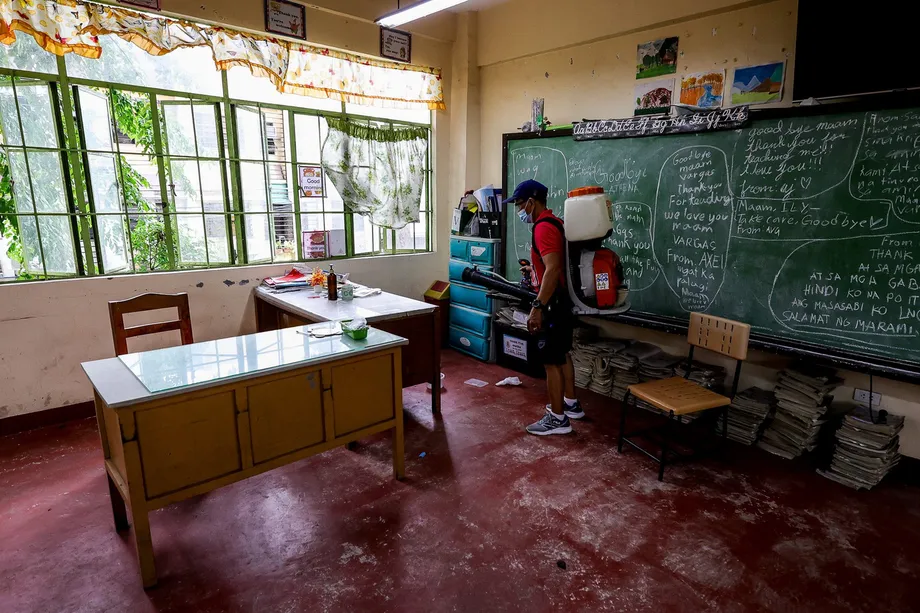
The Philippines faced a shortage of 159,000 classrooms as public schools prepared to open on August 29, 2023, with education officials describing crowded rooms, schools running three shifts and more than a million students learning in temporary spaces.
Contents
- A growing classroom gap before schools reopen
- How the shortage overtook an earlier forecast
- Why the construction budget falls short
- Where crowded classrooms are most common
- Three shifts squeeze the school day
- More than a million students in temporary spaces
- Teacher shortages add another constraint
- What the proposed response would change
- Key Points
The Department of Education (DepEd) presented the 159,000 figure to the Senate Committee on Basic Education on August 23, during discussions about preparations for the 2023-2024 school year and proposals to restore a June-to-March school calendar. The shortage was 68,000 classrooms greater than the previous year's figure of 91,000, an increase of about 75%.
DepEd Assistant Secretary Bringas said the gap included missing classrooms and rooms damaged by typhoons and other disasters. Officials identified 440 classrooms as totally destroyed. The wider problem extended well beyond replacing those rooms: existing school buildings could not accommodate all students at the department's prescribed classroom sizes.
DepEd put the cost of addressing the gap at around P397 billion during the school preparedness hearing; Undersecretary Epimaco Densing III later gave an estimate of around P420 billion during Senate deliberations on the proposed 2024 education budget. Against those estimates, the department had received P10 billion for school building capital outlay in 2023, with roughly the same amount proposed for 2024.
For students, the shortage meant more than a crowded seat. Some schools divided the day among three groups, reducing the time each group could spend in class. Others used makeshift rooms, temporary structures or open spaces. DepEd's response combined plans for more construction, possible prefabricated classrooms and changes to where teachers were assigned.
How the shortage overtook an earlier forecast
DepEd's 159,000 figure marked a sharp departure from its earlier expectations. In August 2022, Densing told a House committee that the deficit was expected to fall to 40,000 classrooms. The figure presented before the August 2023 school opening was almost four times that forecast.
Densing later described the shortage before that year's construction as 165,433 classrooms, potentially falling to about 159,000 once new rooms were completed. His explanation placed the larger number at the starting point and the smaller number at the expected position after construction.
The sequence of announcements shows how the department's assessment changed:
- August 2022: Densing told a House committee that the classroom deficit was expected to decline to 40,000.
- August 23, 2023: DepEd presented a shortage of 159,000 classrooms to the Senate Committee on Basic Education.
- August 29, 2023: Schools were scheduled to begin the 2023-2024 school year.
- During later Senate deliberations on the proposed 2024 budget: Densing gave a starting shortage of 165,433 and outlined funding needs through 2030.
Annual construction therefore had two jobs: replacing the accumulated shortage and keeping pace with new demand. Densing's longer term funding estimate assumed that another 12,000 classrooms would be needed every year, adding to the number the government would have to provide.
Why the construction budget falls short
DepEd said its P10 billion allocation for school building capital outlay in 2023 would support more than 7,100 classrooms. Taking 7,100 as a benchmark, that would cover about 4.5% of the 159,000 classroom gap, before allowing for additional demand or further damage to buildings.
Senator Sherwin Gatchalian, chairman of the Senate basic education committee, described the funding as a "far cry" from the amount needed. With roughly the same allocation proposed for 2024, the department faced another year in which planned construction would cover only a small share of the shortage.
The cost estimates also require care. Bringas cited around P2 million per classroom alongside the P397 billion total estimate, while Densing later used an average of P2.5 million and a total of around P420 billion. Simple multiplication of 159,000 by P2 million gives P318 billion; at P2.5 million, it gives P397.5 billion. DepEd did not provide a breakdown explaining the differences among those unit costs and total estimates.
Densing estimated that P105 billion a year would be needed to clear the shortage by 2030 while meeting an additional requirement of 12,000 classrooms annually. That proposed yearly spending was 10.5 times the P10 billion allocated in 2023. It was a funding requirement presented to senators, with no confirmed appropriation of that size announced in the hearings described.
Where crowded classrooms are most common
Senior high school faced the highest reported level of congestion. At least half of the 7,520 senior high school classrooms cited in the preparedness figures were crowded, compared with 41% of 10,188 junior high school classrooms. The reported congestion rate for kindergarten through Grade 6 was about 32%.
DepEd's classroom standards called for one room for every 35 primary pupils and one for every 40 junior or senior high school students. These are measures of physical space: they describe how many learners a room is intended to accommodate.
The difference between levels was substantial. The senior high congestion rate was at least 18 percentage points above the kindergarten and primary rate. Junior high stood nine percentage points above the younger grades. The figures placed particular pressure on the secondary school system, even as primary schools also faced widespread crowding.
Bringas identified highly urbanized areas as construction priorities, including Metro Manila, Cebu City and parts of Calabarzon. Schools in these places were among those using three shifts to fit students into the buildings available.
Three shifts squeeze the school day
Schools operating three shifts reuse the same rooms for three groups of students at different times. The arrangement lets a building serve more children in a day, but divides the available hours among more groups.
Senate Minority Leader Aquilino "Koko" Pimentel III said students in metropolitan areas were being "shortchanged" through shorter instructional hours. He questioned how children could be expected to process in four hours material normally intended for six hours.
For a student on such a schedule, the shortage becomes a shortage of classroom time as well as space. A seat may be available for part of the day, while the time available for lessons is compressed. Pimentel's concern was that changing the timetable also changed the learning conditions.
Bringas said DepEd was examining the disadvantages of three shifts and prioritizing construction in highly urbanized areas so instructional time would not be compromised. That approach directed attention to places where additional rooms could help schools reduce their dependence on repeated daily shifts.
More than a million students in temporary spaces
Densing gave senators another measure of the pressure on school facilities: 1,004,000 students were being taught in makeshift classrooms, temporary rooms or open spaces. For those learners, providing a regular classroom was the department's stated priority.
DepEd was coordinating with the Department of Public Works and Highways on the possibility of using prefabricated classrooms. Prefabrication means producing building parts in advance and assembling them at the site, rather than carrying out every stage of construction there.
Senator Imee Marcos raised prefabricated school buildings during the budget discussion, asking whether the department was considering the technology. Densing said coordination was taking place, but gave no completion schedule or confirmed number of classrooms to be delivered through that approach.
Densing also said DepEd intended to build more multistory school buildings to make greater use of available land. Building upward allows several floors of classrooms to occupy the same ground area, an approach relevant to crowded urban locations where schools need more rooms within limited sites.
Teacher shortages add another constraint
DepEd's capacity problem extended to staffing. Figures discussed at the preparedness hearing indicated insufficient teachers in 9% of schools serving kindergarten through Grade 6, 24% at junior high level and 34% at senior high level.
The department's ideal teacher ratios were one teacher for every 25 kindergarten pupils, 32 primary pupils, 42 junior high students and 45 senior high students. These staffing ratios serve a different purpose from classroom occupancy standards: one concerns teaching personnel, while the other concerns rooms.
Gatchalian warned that teachers working beyond six teaching hours could have less capacity for other duties. He specifically identified lesson planning as work that could suffer when teachers were stretched too far.
DepEd said its planning service was examining teacher deployment and considering moving teachers from schools with surplus staff to schools with shortages. Bringas also said the annual allocation of 10,000 teachers was insufficient to meet all shortages and demand in schools exceeding the ideal ratios. Assigning staff to places that were difficult to reach presented another problem.
What the proposed response would change
DepEd's proposals addressed several different pressures. More construction in congested cities could help schools move away from three shifts. Regular classrooms could replace temporary learning spaces. Multistory buildings could add capacity where land was limited, while teacher transfers could address uneven staffing.
The scale of annual construction remained central. Densing estimated that 5,000 to 6,000 classrooms could be built each year at an average cost of P2.5 million. Compared with his assumption of 12,000 additional classrooms needed annually, that pace would leave a further 6,000 to 7,000 rooms unmet each year before reducing the existing backlog.
The department's P105 billion annual proposal was intended to address both pressures at once: the classrooms already missing and the new rooms required each year. A program focused only on the existing shortage would still have to account for that continuing demand.
The immediate challenge for the August 29 opening was to accommodate children in the rooms and teaching schedules available. The longer target presented to senators was 2030, with the pace of progress dependent on much larger annual funding and the delivery of new school facilities.
Key Points
- DepEd reported a shortage of 159,000 classrooms before the August 29, 2023 school opening, up about 75% from 91,000 the previous year.
- Officials presented total cost estimates of around P397 billion and, later, P420 billion to address the shortage.
- The P10 billion school building allocation for 2023 was expected to provide more than 7,100 classrooms.
- Some schools in Metro Manila, Cebu City and Calabarzon used three shifts, raising concerns about reduced teaching time.
- DepEd said 1,004,000 students were learning in makeshift classrooms, temporary rooms or open spaces.
- Densing proposed P105 billion annually through 2030, allowing for a further requirement of 12,000 classrooms each year.