Twelve gold medals lead Kazakhstan to a national record
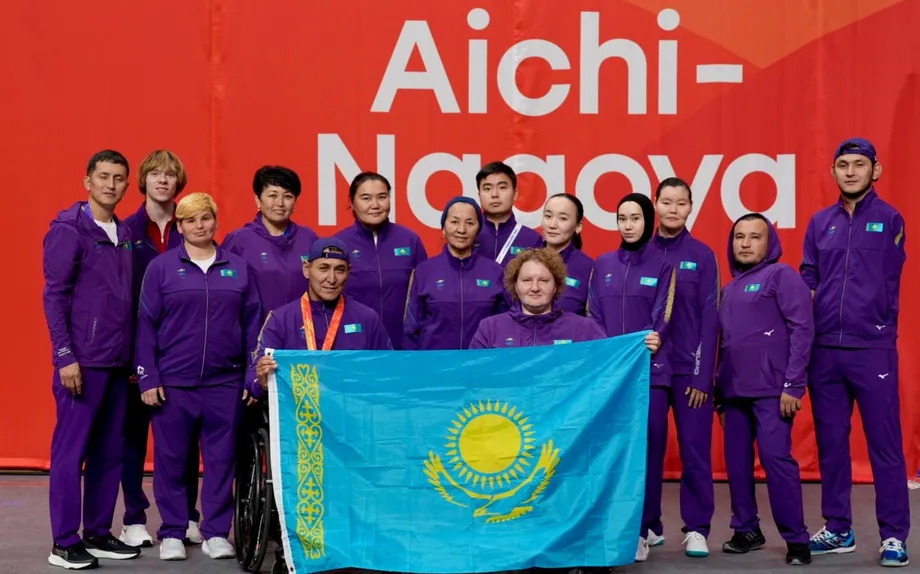
Kazakhstan finished the fifth Asian Para Games in Japan with 50 medals, including 12 gold, setting national records for both its total medal haul and its number of victories. The team placed ninth at Aichi-Nagoya 2026, with Para judo providing five gold medals and Para cycling another four.
Contents
- Twelve gold medals lead Kazakhstan to a national record
- How much did Kazakhstan improve?
- Para judo supplies the biggest share
- Cyclists turn road success into four golds
- Dias Kenzhebek leads a haul of 10 swimming medals
- Records in powerlifting, shooting and athletics
- First podium finishes in table tennis and archery
- Sitting volleyball team takes silver after five set semifinal
- A week in Japan ends with a handover to Doha
- Key Points
The final tally of 12 gold, 16 silver and 22 bronze medals was announced by Kazakhstan's Committee for Sports and Physical Culture after the Games ended on October 24. Kazakhstan sent 150 athletes to compete in 12 sports during the competition, which ran from October 18 to 24 in Aichi Prefecture and Nagoya.
The result surpassed Kazakhstan's previous best at Hangzhou in 2023, where it collected 41 medals, including eight gold, and finished 11th. In Japan, the delegation added nine medals, increased its gold count by half and climbed two places in the standings.
Several achievements gave the result a broader reach. Kazakhstan topped the Para judo standings, earned its first Asian Para Games medals in Para table tennis and Para archery, and celebrated competition records in powerlifting and shooting. Its men's sitting volleyball team also reached the final.
How much did Kazakhstan improve?
Kazakhstan's medal total rose from 41 to 50, an increase of about 22%. Gold medals grew from eight to 12, a 50% rise. The delegation expanded from 131 athletes in Hangzhou to 150 in Japan, an increase of 19 athletes, or about 15%.
The comparison shows that medal growth outpaced the increase in team size. It also shows why the 12 gold medals matter alongside the total of 50: medal tables rank teams first by gold, then silver and bronze. Kazakhstan moved from 11th to ninth, while China finished first, host Japan second and Uzbekistan third.
Bolatbek Duketayev, director of Kazakhstan's Center for Sports Training for Persons with Disabilities, attributed the result to the team's preparation, the work of coaches and government support for Para sport.
Kazakhstan won medals in nine of the 12 sports it entered. Para taekwondo, boccia and wheelchair tennis were the three sports in which the delegation finished without a podium place. Judo, swimming and cycling together supplied 32 medals, or 64% of the national total.
Para judo supplies the biggest share
Kazakhstan's Para judo team won 13 medals: five gold, one silver and seven bronze. That performance put the country first in the sport's team standings and accounted for more than a quarter of Kazakhstan's medals across the Games.
Ibragim Nurmakhanuly won gold in the men's J2 category at 70 kilograms, Bexultan Kulmurza in J2 at 81 kilograms and Zhurkamyrza Shukurbekov in J2 above 95 kilograms. Aktolkyn Seilbekova won the women's J1 title above 70 kilograms, while Zarina Raifova won the women's J2 title above 70 kilograms.
Para judo is contested by athletes with vision impairments. The J1 and J2 labels identify different sport classes, while the weight categories group opponents by body weight. Classification helps organize competition around how an impairment affects an athlete's performance in that particular sport.
Zhanbota Amanzhol added silver in the men's J2 division at 95 kilograms. Bronze medals went to Galymzhan Smagululy, Yermek Nurkabayev, Baglanbek Onalbek, Yerlan Otepov, Alfiya Tlekkabyl, Dayana Fedossova and Ayala Mereke.
The five judo victories represented almost 42% of Kazakhstan's 12 gold medals. Together with cycling's four titles, the two sports delivered nine gold medals, or three quarters of the country's victories.
Cyclists turn road success into four golds
Nail Yermukhambet and Anastassiya Kalaus each won two gold medals as Kazakhstan finished the Para cycling competition with nine medals: four gold, four silver and one bronze. The country's final two gold medals came from cyclists on October 23, the day before the Games closed.
Yermukhambet won the men's B class road race and individual road time trial with pilot Ruslan Aliyev. In B class cycling, an athlete with a vision impairment rides a tandem bicycle with a sighted pilot. Both riders contribute to the performance.
Kalaus won the equivalent women's road events and added silver in the individual track pursuit over 4,000 meters. Her results gave Kazakhstan victories in two different forms of road racing: a race against other riders and a timed effort against the clock.
Kirill Ilyukevich collected silver in the road race and individual road time trial, followed by bronze in the individual track pursuit over 4,000 meters. Zhuldyz Kainarova added silver in the women's road race.
The variety of medals mattered. Kazakhstan's cyclists reached the podium on both road and track, while Yermukhambet and Kalaus converted their road performances into four of the delegation's 12 gold medals.
Dias Kenzhebek leads a haul of 10 swimming medals
Dias Kenzhebek won four medals as Kazakhstan's swimmers collected one gold, five silver and four bronze. He became champion in the men's 100 meters backstroke S10, took silver in the 100 meters freestyle and 200 meters individual medley, and won bronze in the 100 meters butterfly.
The S10 label is a swimming sport class. Para swimming uses different classification labels for different strokes, including SB for breaststroke. An individual medley requires a swimmer to complete butterfly, backstroke, breaststroke and freestyle within one race.
Ali Turganbekov won silver in the men's 100 meters breaststroke SB4 and also contributed to Kazakhstan's silver medal in the mixed 4 x 50 meters medley relay. Kazakhstan earned another silver in the mixed 4 x 50 meters freestyle relay.
Natalya Zvyagintseva, Zulfiya Gabidullina, Aisultan Kulkeyev and Siyazbek Daliyev were also named among the relay medalists. Roman Potapov, Viktor Volkov and Alina Sinelnikova added individual bronze medals.
Swimming supplied one fifth of Kazakhstan's 50 medals. Kenzhebek's four individual podium finishes made him a major contributor, while the relay results brought several teammates into the medal haul.
Records in powerlifting, shooting and athletics
David Degtyarev won the men's powerlifting title in the category up to 54 kilograms with a lift of 192 kilograms, setting an Asian Para Games record. The weight he lifted was more than three and a half times the upper body weight limit for his category.
Para powerlifting uses the bench press: athletes lower a bar to their chest and press it upward under the competition's technical rules. Degtyarev's victory was the gold medal in a six medal return for Kazakhstan, which also included two silver and three bronze.
Tursynay Kabyl took silver in the women's category up to 41 kilograms, and Alina Solodukhina earned silver in the category up to 45 kilograms. Stanislav Shakiyev and Aizhan Berimkulova won individual bronze medals. Yerbolat Karibay, Degtyarev and Shakiyev also secured bronze in the men's team event.
Yerkin Gabbasov delivered Kazakhstan's shooting gold in the men's R1 air rifle standing SH1 event over 10 meters, setting a competition record. The result supplied the country's sole medal in Para shooting.
Aisulu Suleimenova set an Asian record of 16.18 seconds in the women's 100 meters T62. Kazakhstan's four athletics medals came in field events: Islam Salimov won silver in the men's long jump T13, while Dastan Mukashbekov took silver in the men's shot put F36.
Ivan Zaleznyak won shot put bronze in F36, and Makhambet Serikkaliyev earned bronze in F53. In Para athletics, T identifies track and jumping classes, while F identifies throwing classes. The numbers distinguish groups of athletes according to how their impairments affect competition.
First podium finishes in table tennis and archery
Kazakhstan won its first Asian Para Games medals in Para table tennis and Para archery, adding six medals across the two sports. The table tennis team collected four bronze medals.
Nurshat Toleukassym and Temirlan Seitkamal won silver in the men's doubles W1 archery event, securing Kazakhstan's first Asian Para Games medal in the sport. Toleukassym then added bronze in the men's individual W1 competition.
W1 is an archery class for athletes whose impairments affect both their arms and legs. Its competition rules account for those athletes' support and equipment needs.
The six medals represented 12% of Kazakhstan's total. Alongside the larger returns from judo, swimming and cycling, these first podium finishes widened the number of sports contributing to the national result.
Sitting volleyball team takes silver after five set semifinal
Kazakhstan's men's sitting volleyball team reached the final by beating Iraq 3-2 in the semifinal. Winning that match secured a place in the gold medal contest after a match that required all five sets.
Iran won the final 3-0, taking the sets 25-17, 25-15 and 25-17. Kazakhstan finished with silver, adding a team sport medal to a delegation whose largest medal totals came from individual sports.
Sitting volleyball is played with athletes moving across the court while seated, using a lower net and a smaller court than in standing volleyball. Kazakhstan's results showed two very different contests: a narrow semifinal victory followed by a final decided in straight sets.
A week in Japan ends with a handover to Doha
The Games brought together about 3,000 athletes from 45 countries and regions across 18 sports. The Asian Paralympic Committee put the number of registered athletes at more than 2,700 from 45 national Paralympic committees. The competition program covered about 500 medal events.
Japan hosted the Asian Para Games for the first time. The week began with the opening ceremony in Nagoya, where Emperor Naruhito declared the Games open at Paloma Mizuho Stadium. Community preparations had included the flame ceremony in Nishio, where students at a special needs school took part in gathering a flame for the Games.
Kazakhstan's campaign and the wider event followed this sequence:
- October 18: The fifth Asian Para Games opened in Nagoya, beginning a week of competition.
- October 23: Kazakhstan's cyclists delivered the delegation's final two gold medals.
- October 24: The Games ended, with Kazakhstan ninth on 12 gold, 16 silver and 22 bronze medals.
- 2030: Doha, Qatar, is scheduled to host the next Asian Para Games.
The closing ceremony took place at the Mizuho Park athletics complex in Nagoya. Organizing committee president Hideaki Omura thanked athletes and those involved in preparing and staging the Games, praising the competitors' determination.
Asian Paralympic Committee president Majid Rashed called for the event to be followed by more opportunities for athletes, stronger development of sporting talent across countries, and greater participation by people with disabilities in sport and society.
The Asian Paralympic Committee flag was handed to Ahmad Abdullah Al-Buainain, director general of the organizing committee for the 2030 Asian Games in Doha. Qatar's capital will host both the Asian Games and Asian Para Games.
Kazakhstan leaves Japan with a higher medal total, more gold medals and a better position than at Hangzhou. The result combines strength in established medal sports with first podium finishes in two others, giving the delegation a broader record of success to build on before Doha.
Key Points
- Kazakhstan won a record 50 medals: 12 gold, 16 silver and 22 bronze, finishing ninth.
- The team improved on Hangzhou 2023 by nine medals, four gold medals and two places.
- Para judo led with 13 medals and first place in the sport's team standings.
- Para cycling produced four gold medals, with two victories each for Nail Yermukhambet and Anastassiya Kalaus.
- Kazakhstan earned its first Asian Para Games medals in Para table tennis and Para archery.
- David Degtyarev lifted a Games record of 192 kilograms, while the men's sitting volleyball team won silver.
- The Games ran from October 18 to 24, 2026. Doha will host the next edition in 2030.