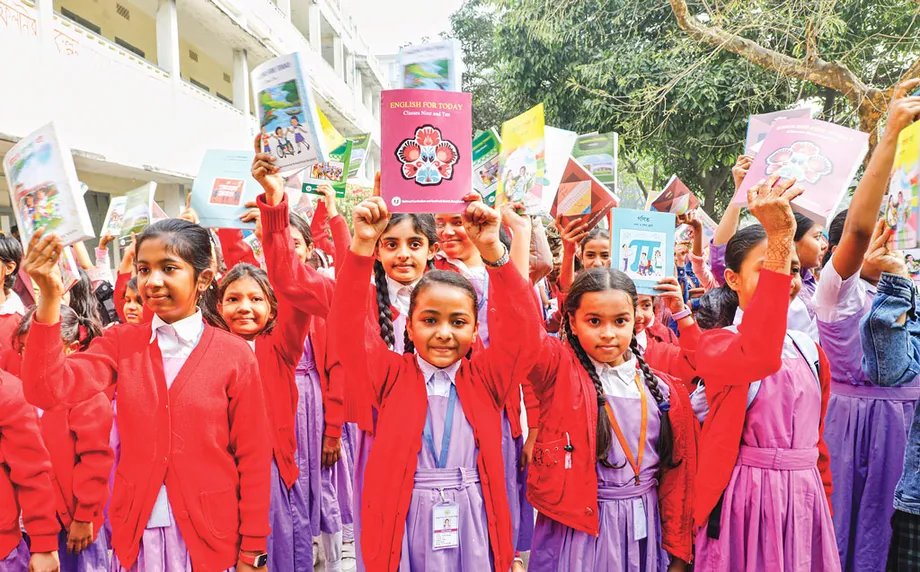
Sports, culture and practical skills enter the classroom
Bangladesh plans to print about 15 million copies of four new textbooks for Classes 4 and 6 in the 2027 academic year, with final approval scheduled for a National Curriculum Coordination Committee meeting on October 25, 2026. The books cover sports, Bangladeshi culture, learning through enjoyable experiences and technical skills.
Contents
- Sports, culture and practical skills enter the classroom
- How the proposal developed
- Sports combines games with safety
- Culture begins with home and community
- Learning with Happiness looks beyond memorising
- Technical education starts with useful tasks
- The government's goals and the review process
- Printing dates leave a tight delivery schedule
- Expansion is planned beyond two grades
- Key Points
The National Curriculum and Textbook Board (NCTB) says the manuscripts have been written and checked. Class 4 pupils would receive Sports and Culture of Bangladesh, while Class 6 students would receive Learning with Happiness and My Technical Education.
The initiative aims to give children more opportunities to play, create, cooperate and solve practical problems, alongside learning from written lessons. Its content ranges from responding to injuries on a sports field to sharing household responsibilities and understanding how technology helps people work.
NCTB Chairman Professor Mohammed Fakhrul Mawla said the manuscripts would go to printing presses after committee approval. Professor Mohammad Abu Nasher Tuku, the board's member responsible for textbooks, set out the production target:
Following the final approval from the NCC committee, we expect to complete the printing of about 1.5 crore copies by December 15,
One crore equals 10 million, so the proposed print run is about 15 million copies across the four titles. That represents roughly 4.8% of the approximately 310 million textbooks planned for the entire 2027 programme, from preprimary through secondary education.
The four books therefore form a relatively small part of the national printing programme, while introducing a substantial change in what children in two grades would study. Their proposed content connects classroom learning with health, relationships, cultural identity and useful work.
How the proposal developed
The outlines were presented on July 12 at the International Mother Language Institute during a workshop involving four ministries. A review beginning that day was intended to run for two days, bringing together specialists, teachers and other participants to examine the initial structure.
Professor Mohammad Ali Jinnah, a professor at the University of Dhaka's Institute of Education and Research and a vice chancellor's deputy at National University, served as chief coordinator. Teachers from the institute and other specialists helped develop the framework and refine its content.
The proposal changed during development. The manuscripts described by NCTB ahead of the October meeting contain 39 chapters: 14 in Sports, 11 in Culture of Bangladesh, six in Learning with Happiness and eight in My Technical Education. The July framework contained 35 chapters, divided into 13, 10, seven and five respectively.
An earlier announcement by then NCTB chairman Md Mahbubul Hoque Patwary described three new books, including a combined Sports and Culture title for Class 4. The October plan instead separates sports and culture into two books, bringing the total to four.
- May 4 to 7: A workshop at the Rural Development Academy in Bogra examined revisions to existing textbooks.
- July 12: The four new books' outlines were presented at the International Mother Language Institute, where a review process began.
- October 25: The National Curriculum Coordination Committee is scheduled to consider final approval.
- December 15: NCTB's textbook member hopes to complete printing of the four new titles.
- 2027 academic year: The books are planned for introduction in Classes 4 and 6.
Sports combines games with safety
The Class 4 Sports book introduces football, cricket, kabaddi, badminton, swimming, athletics and chess. Martial arts, including karate, judo and taekwondo, bring physical fitness and personal protection into the same subject.
Its 14 chapters also cover nutrition, social skills and responses to accidents. Illustrations show situations involving cuts, sprains, nosebleeds and heatstroke, alongside the use of first aid supplies and ways to prevent injuries. Children would learn about looking after themselves and others as part of taking part in sport.
The preliminary framework included warming up, stretching, breathing control and the relationship between exercise and mental wellbeing. Those topics placed preparation and healthy habits alongside the rules of individual games.
An opening story follows teachers Ayman and Sadia as they help form a girls' football team at a primary school in a remote village. A pupil named Mehzabin and her teammates overcome social obstacles and progress through local competitions towards success at national level.
The story presents sport as a possible route to opportunity as well as recreation. Its focus on girls also gives pupils a concrete example of participation despite restrictive expectations. Earlier planning linked the sports initiative to encouraging physical activity and reducing children's dependence on digital devices.
Culture begins with home and community
Culture of Bangladesh uses 11 chapters to introduce language, clothing, art, food, customs and the traditions of ethnic minority communities. Its approach connects national identity with the everyday practices children see at home, at school and in their neighbourhoods.
The book includes practising the Bangla alphabet, school festivals, raising the national flag and making pitha and puli, traditional cakes and sweets. It also depicts parents making decisions together and family members cooperating with household chores.
The earlier framework named Pohela Boishakh, Nobanno, Victory Day and February 21 among the celebrations and commemorations to be covered. It also included folk songs, dances, stories, proverbs, rural fairs, traditional games and regional differences in clothing and crafts.
Ethnic minority communities appear through their languages, dress, festivals and ways of life. Together, these topics explain cultural diversity through things children can recognise, such as different foods, celebrations and family traditions.
A special chapter covers Notun Kuri, a talent competition for children and adolescents. The manuscript's account credits Ziaur Rahman's initiative with its launch in 1976 and includes photographs of winners, connecting cultural practice with opportunities for young performers.
Learning with Happiness looks beyond memorising
The six chapters of Learning with Happiness focus on health, the environment, safety, creativity, relationships and everyday experience. NCTB officials describe a subject intended to make learning less frightening and more enjoyable.
The preliminary outline included exercise, caring for the body, humility, time with loved ones, appreciation of the world and gratitude. Its treatment of relationships examined good friendship, supportive company and the harm that can come from negative companionship.
Mahdi Amin, the prime minister's adviser on education and primary and mass education, told the framework workshop that the approach should reach beyond this single book:
'Learning with happiness' is a philosophy of education. Just as 'Learning with happiness' is a subject in itself, we also want this philosophy to be reflected in every subject, whether Mathematics, Bangla, Geography or History.
For pupils, the proposed shift means more learning through activities, interaction and familiar situations. A lesson can draw on taking care of one's health or dealing with other people, rather than centring entirely on remembering text for an examination.
NCTB officials expect the approach to ease academic pressure. The practical question for schools is how those experiences will fit into lessons and assessment. Details of marks, examination arrangements and teacher preparation were not announced alongside the manuscript and printing plans.
Technical education starts with useful tasks
My Technical Education introduces Class 6 students to technology, practical problem solving, small enterprises, green technology and sustainable living across eight chapters. Its central aim is to connect knowing something with being able to use that knowledge.
The preliminary framework covered observing how work is done, following correct methods, learning safely and recognising the contribution of skilled workers. It also introduced possible careers and the role technical skills play in national development.
The framework described its motivational approach through five ideas: attention, relevance, confidence, satisfaction and purpose. In simple terms, lessons would seek to interest pupils, show why a skill matters, help them practise successfully and connect that learning to a goal.
Small enterprise topics would introduce the idea that practical skills can support an income. Green technology and sustainable living connect technical choices with the use of resources and care for the environment. These are intended as early introductions for students in general education, alongside opportunities to learn through practical work.
The technical book also shares a feature with the other three titles: special sections resembling glossaries. These would help pupils understand unfamiliar words as they encounter new sports, cultural and technical concepts.
The government's goals and the review process
Mahdi Amin links the books to Prime Minister Tarique Rahman's education plans and the government's election commitments. He says the aims include human values, social etiquette, family culture, responsible citizenship and employment opportunities.
According to Amin, NCTB formed a team that included people who had helped formulate the policies, alongside educators. Experts and education specialists then took part in consultations and meetings to develop the manuscripts.
Education Minister ANM Ehsanul Hoque Milon said representatives from the sports, culture and technical ministries would participate in a subcommittee to review the content. At the framework workshop, he also called for attention to paper, printing, covers and illustrations.
The broader revision programme extends well beyond the four books. Patwary said 320 experts were working on 97 secondary textbooks and 36 primary textbooks, while describing a wider revision plan covering 601 titles, including English versions from primary school through Grade 9.
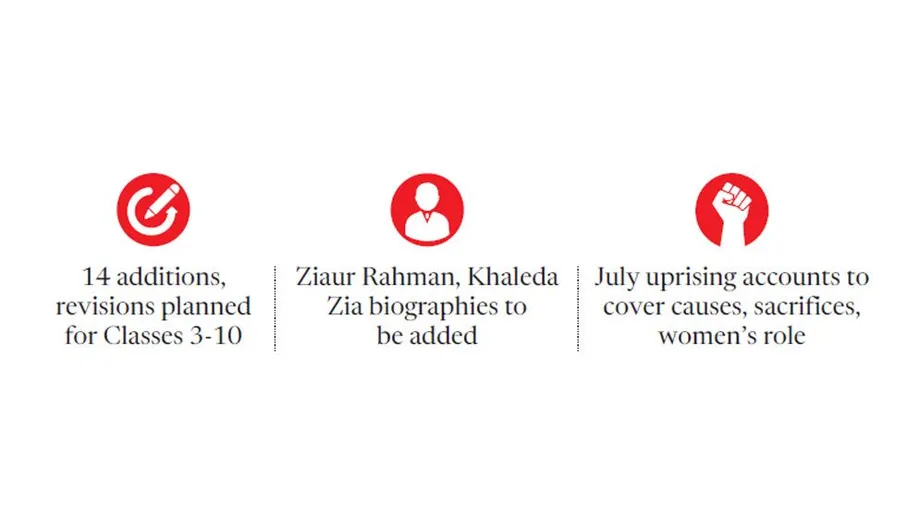
Patwary also outlined changes to historical content, including accounts of the Liberation War and the mass uprisings of 1990 and 2024. ICT textbooks for Classes 6 to 10 were to be redesigned to include artificial intelligence and modern technology. These plans put the new titles within a larger effort to update both subject matter and teaching approaches.
Printing dates leave a tight delivery schedule
NCTB's December 15 target for the four new books sits alongside an earlier programme target of finishing printing and sending textbooks to local distribution points by November 30. The government wants pupils to receive their 2027 books in December, around the time of final examinations.
The Prime Minister's Office described that December distribution plan in its publication on the government's first 180 days. Getting books into children's hands before January would give schools a better chance of beginning the academic year with complete sets.
Recent delays show why delivery matters. Supplying all books for the 2025 academic year took about three months. For 2026, full supply was completed on February 7. Missing books disrupted regular lessons and created uncertainty for schools at the beginning of the year.
The November 30 target concerns the wider textbook programme, while the December 15 estimate specifically concerns the four new titles. If their printing runs to that later date, less of December will remain for transport and distribution.
Paper supplies, tender procedures, corrections, printing capacity and transport all affect the schedule. Printing a book and delivering it to a pupil are separate steps, particularly for schools far from production and distribution centres.
Expansion is planned beyond two grades
Amin says sports and culture would later extend across Classes 1 to 5. Learning with Happiness and technical education would expand across Classes 6 to 10. The 2027 introduction therefore starts with two grades before a wider rollout.
Education ministry and NCTB officials also describe plans for broader curriculum changes from 2028. The four new titles belong to a more limited set of revisions for 2027, ahead of that larger exercise.
For children, the immediate proposed change is specific: two additional titles in Class 4 and two in Class 6, with content built around physical activity, culture, wellbeing and practical competence. For schools, turning those subjects into regular activities will be as central to their purpose as receiving the printed pages.
The next scheduled decision is the October 25 committee meeting. Approval would allow NCTB to move from completed manuscripts to producing millions of copies for the coming academic year.
Key Points
- Four new textbooks are planned for Classes 4 and 6 in the 2027 academic year.
- Final approval is scheduled for October 25, 2026, before printing begins.
- NCTB plans about 15 million copies and aims to finish printing the new titles by December 15.
- The manuscripts contain 39 chapters, compared with 35 in the July framework.
- The government wants to distribute 2027 textbooks in December, ahead of the academic year.
- Wider expansion across grades and broader curriculum changes from 2028 are planned.