Existing rules become the focus of the chip working hours dispute
South Korean President Lee Jae-myung has asked the labor ministry to find ways to make existing overtime rules work better for semiconductor researchers, questioning whether a new legal exemption from the 52-hour working week is necessary. His intervention puts faster government approvals, premium pay and protection of workers' health at the center of a dispute over how to speed up chip development.
Contents
- Existing rules become the focus of the chip working hours dispute
- What semiconductor researchers can already do
- Why businesses want more than longer approvals
- Lee puts pay and health at the center
- The legislative proposal reaches beyond a weekly cap
- Labor opposition and political negotiations continue
- How the overtime debate reached this point
- Faster chip factories are part of the same policy drive
- The government is reviewing a wider set of industry rules
- Key Points
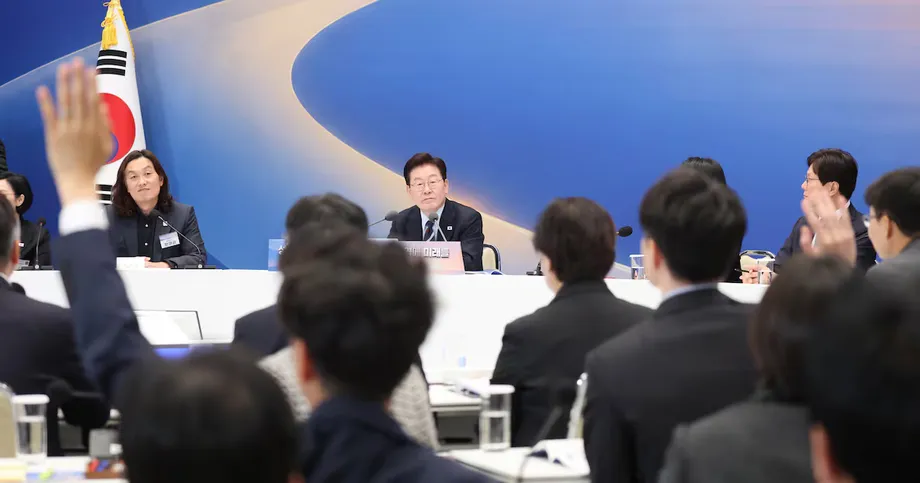
At the Regulatory Rationalization Committee's second plenary meeting at Cheong Wa Dae on October 23, 2026, Park Geon-su, executive vice chairman of the Korea Semiconductor Industry Association, asked for an exception for core research and development personnel within the year. He identified prior authorization and labor ministry approval procedures as obstacles.
Lee responded by asking whether the government could grant approvals in advance or process applications more quickly under the current system. He directed Labor Minister Kim Young-hoon to examine changes to existing rules and simpler procedures, while insisting that additional work must bring additional compensation and safeguards against damage to health.
Cheong Wa Dae subsequently clarified that Lee wanted various solutions considered within the existing system. His remarks left the government examining administrative options while lawmakers continued debating competing special zone bills, one containing labor exemptions and another omitting them.
What semiconductor researchers can already do
South Korea already has a mechanism called special extended work under the Labor Standards Act. It allows work beyond the usual weekly ceiling when employees consent individually and the employer obtains approval from the relevant labor office. Semiconductor research received a dedicated administrative framework in March 2025.
The Ministry of Employment and Labor's semiconductor research guidance, announced on March 13, took effect on March 14, 2025. The ministry said it implemented a decision made at a March 12 ministerial meeting chaired by the acting president and deputy prime minister. Its scope is specifically semiconductor research and development.
The government's March 12 policy announcement gives the practical details. An approval can cover six months, compared with three months under the existing general arrangement, and the semiconductor provision allows a further extension of six months. The longer approval period reduces how often employers must seek renewed permission.
The weekly limits change during a six month approval. Researchers can be authorized to work up to 64 hours a week during the first three months and up to 60 hours during the next three. Against the usual 52-hour ceiling, those limits allow an extra 12 hours and eight hours respectively.
The ministry also specified which work qualifies. Research and research support can be covered, with production personnel included where unavoidable for the relevant task. Routine maintenance is excluded. Companies therefore need approval tied to qualifying work, rather than receiving unrestricted permission for their entire workforce.
Why businesses want more than longer approvals
Park told Lee that semiconductor companies still wanted a legislative exception despite the longer approval period. The industry's argument is that research problems can arise suddenly, while permission must be arranged before employees undertake the additional work.
Park, explaining the procedure as executive vice chairman of the industry association, told the meeting:
When applying for overtime, prior authorization is required, and then there is also a separate administrative procedure for obtaining approval from the Ministry of Employment and Labor.
Businesses also want rules they consider more predictable across changes of government. They favor a statutory exemption over relying on administrative arrangements that future administrations can revise. This makes the dispute about both the speed of individual approvals and the durability of the rules governing research schedules.
Ahn Dong-hyun, a professor of economics at Seoul National University, described research as work that can involve periods of concentrated activity followed by long breaks. He argued that a uniform working hours system fits that pattern poorly and that predictability matters for business management.
The labor ministry cited a survey by the Korea Chamber of Commerce and Industry and the Korea Industrial Technology Association when announcing the March 2025 changes. Among research departments at roughly 500 surveyed companies, 75.8 percent said research and development performance had declined after the introduction of the 52-hour system. That figure records the companies' assessment of their experience, giving a concrete measure of business dissatisfaction.
Lee puts pay and health at the center
Lee asked whether industry and labor agreed that additional work should receive compensation. Park replied that, fundamentally, the issue was not money. The president then focused on how to protect employees who might work substantially longer weeks.
Lee described premium wages as the starting condition for any arrangement, before identifying health as the remaining concern:
The last remaining issue seems not to be compensation but the right to health.
The existing semiconductor framework already includes health protections. The March 2025 policy announcement provided for mandatory health examinations when the special arrangement is used. It also said approval reviews would continue checking core requirements, including the reason for overtime, the authorized duration and hours, and health protection measures, even as other renewal requirements were simplified.
The ministry also announced plans for a reporting center to address misuse and protect workers' rights, with corrective action against employers breaking the law. For researchers, individual consent, medical checks and enforceable limits determine how the longer working schedule operates in practice.
Kim, the labor minister, said his department would examine the difficulties companies face in using the current system, build trust and work toward results. Lee's instruction therefore leaves the ministry with two connected tasks: reduce administrative delays and retain meaningful protection for the people doing the additional work.
The legislative proposal reaches beyond a weekly cap
The Democratic Party filed two versions of the proposed special zone legislation on October 20, 2026. The bill is intended to let several local governments form a broader economic zone, with faster permits, tax benefits and financial support for strategic industries.
The version containing labor exemptions was introduced by Rep. Park Sang-hyeok, while Rep. Choi Gi-sang introduced the version without them. The proposals went to different National Assembly committees, leaving the party to reconcile the competing approaches through parliamentary deliberation.
The proposed white-collar exemption would cover eligible research and development workers whose employment income falls within the top 3 percent. A written agreement between an employer and an eligible employee could set working hours, breaks and days off, including arrangements for overtime, night work and holiday work outside existing Labor Standards Act restrictions.
Its reach is therefore broader than the special extended work system. The current system requires approval for additional hours within a defined framework. The proposed exemption would give qualifying employers and employees wider authority to negotiate several aspects of working time.
Other disputed provisions include extending the maximum period for fixed-term employment from two years to four and expanding the use of dispatched workers in manufacturing. Dispatched workers are employed by one company but assigned to work at another. Those proposals make the special zone debate a wider argument about employment conditions, rather than a decision affecting research schedules alone.
Labor opposition and political negotiations continue
The Federation of Korean Trade Unions and the Korean Confederation of Trade Unions oppose the exemption, describing it as a rollback of labor rights. Both had also criticized the March 2025 administrative guidance for making longer working hours possible.
The Korean Confederation of Trade Unions, which has more than 1 million members, condemned the special zone proposal and warned against reducing protections in the name of industrial competitiveness. Its objections also covered provisions affecting public services, the environment and residents' living conditions.
Government efforts to narrow the disagreement included a preparatory meeting at vice minister level on September 18, followed by five working sessions. The Korean Confederation of Trade Unions participated in the dialogue. By the time the bills were filed, the central disagreement between labor and management remained unresolved.
Democratic Party floor leader Han Byung-do said the party would listen across society and combine consideration of the two bills. People Power Party policy chief Lim Lee-ja criticized the decision to pursue separate committee routes and called for a firmer position on changing working hours restrictions.
The dispute follows an earlier legislative compromise. A special semiconductor act passed in February 2026 without a 52-hour exemption after more than a year of argument. The special zone bills have brought that same unresolved question back into the National Assembly through a broader industrial development proposal.
How the overtime debate reached this point
Samsung Electronics became the first company approved under the dedicated semiconductor guidance. The labor ministry's Gyeonggi office authorized its application on April 9, 2025, allowing covered researchers to use the different weekly limits across the six month period.
The main steps show how the debate moved from administrative changes to a renewed push for legislation:
- March 12, 2025: The labor ministry announced longer approval periods and stronger health measures for semiconductor research overtime.
- March 14, 2025: The dedicated semiconductor research guidance took effect.
- April 9, 2025: Samsung Electronics received the first approval under the new guidance.
- February 2026: The special semiconductor act passed without a 52-hour exemption.
- September 18, 2026: A preparatory government, labor and management meeting began the latest round of discussions.
- October 20, 2026: The Democratic Party filed competing special zone bills, with and without labor exemptions.
- October 23, 2026: Lee asked the labor ministry to examine solutions within the existing system.
Companies have consequently had access to the expanded administrative framework for more than a year. Their renewed request centers on the approvals that remain necessary and their preference for a more durable legal arrangement.
Faster chip factories are part of the same policy drive
The government is pursuing other semiconductor changes alongside the working hours discussion. It plans to shorten the period from development of a national semiconductor industrial complex to the start of factory operations from more than 10 years to within five years.
Permits, land compensation and complex design would proceed simultaneously through a faster administrative process. Running these tasks together is intended to reduce the waiting that occurs when one stage must finish before the next starts.
The government also plans to expand comprehensive bonded areas covering entire semiconductor complexes. A bonded area operates under special customs arrangements. Individual factories currently designated separately face restrictions on moving goods and equipment between sites; a designation covering the wider complex is intended to ease those movements.
The special zone initiative also supports plans for an 800 trillion won semiconductor cluster in the southwestern Jeolla region. Across the wider initiative, the government has proposed about 320 regulatory exceptions and aims to designate at least one zone in each region in the first half of 2027.
The government is reviewing a wider set of industry rules
The committee meeting also addressed artificial intelligence data centers, robotics, biotechnology and autonomous vehicles. For AI data centers, the government will review a unified permitting system and criteria for exempting projects outside the capital region from power grid impact assessments.
Robots meeting safety requirements would be allowed to operate without separate fences. The government also plans to revise standards for outdoor operation of robots that walk on four legs and clarify safety requirements for humanoid and mobile industrial robots.
Biotechnology measures include broader supply channels for cells used as raw materials in regenerative medicine and review standards for drugs developed using AI. Transport plans include performance certification for vehicles without drivers and a legal framework for Level 4 autonomous driving services, which operate without human intervention within specified conditions.
The semiconductor decision now rests on whether faster approvals can satisfy businesses seeking flexibility while retaining consent, compensation and health protections. No final change to the overtime procedure or parliamentary passage deadline has been set. Industry wants action before the end of 2026, while the government's next stated timetable is the first round of regional zone designations in the first half of 2027.
Key Points
- Lee asked the labor ministry to examine faster approvals and changes within existing overtime rules for semiconductor research.
- The current semiconductor framework permits six months of approved extended work, with a possible further six month extension.
- Weekly ceilings are 64 hours during the first three months and 60 hours during the next three.
- Individual worker consent, government approval, premium compensation and health protections remain central to the debate.
- Competing special zone bills contain different approaches to labor exemptions, with no deadline set for passage.
- The government also plans faster semiconductor complex development and regional special zone designations in the first half of 2027.