A $25 memory chip shows how far the squeeze has spread
The August contract price of a widely used DDR4 8Gb memory chip reached $25, about 8.6 times its $2.90 price in June 2016. In South Korea, the lowest listed price for a Samsung DDR5-5600 16GB memory module reached 349,740 won on October 15, roughly five times its September 2025 level. Memory shortages are now reshaping the cost of everything from a home computer to a corporate server.
Contents
- A $25 memory chip shows how far the squeeze has spread
- Why AI memory crowds out ordinary chips
- Earlier production cuts left little spare capacity
- Data center spending changes the balance
- Musk and Apple seek more bargaining room
- Chip designers are adjusting their plans
- PC buyers face higher prices and fewer choices
- Price increases differ across the memory market
- Business servers become harder to afford
- New factories offer relief, but on different schedules
- Chinese supply and weaker demand could ease some pressure
- Key Points
Artificial intelligence is driving the squeeze. Samsung Electronics, SK hynix and Micron are directing more production toward high bandwidth memory, known as HBM, and other memory for data centers. That leaves less production capacity for conventional products used in smartphones, laptops, televisions and gaming consoles.
TrendForce forecasts that contract prices for general purpose DRAM will rise another 10% to 15% in the fourth quarter, while NAND flash prices will increase 15% to 20%. Gartner expects shortages and delivery delays to persist into 2028, with substantial additional supply arriving no earlier than the middle to latter part of 2027.
The pressure reaches beyond component buyers. Computer manufacturers are reducing storage capacities, businesses are reconsidering server replacements, and shoppers are postponing purchases. Even companies with enormous purchasing power are complaining publicly about prices and competing to reserve future output.
South Korea sits at the center of this struggle. Its government semiconductor indicators put the country's share of the global memory market at 61% in 2023 and its DRAM share at 73.5%. Decisions by Korean manufacturers about which chips to produce therefore affect electronics buyers around the world.
Why AI memory crowds out ordinary chips
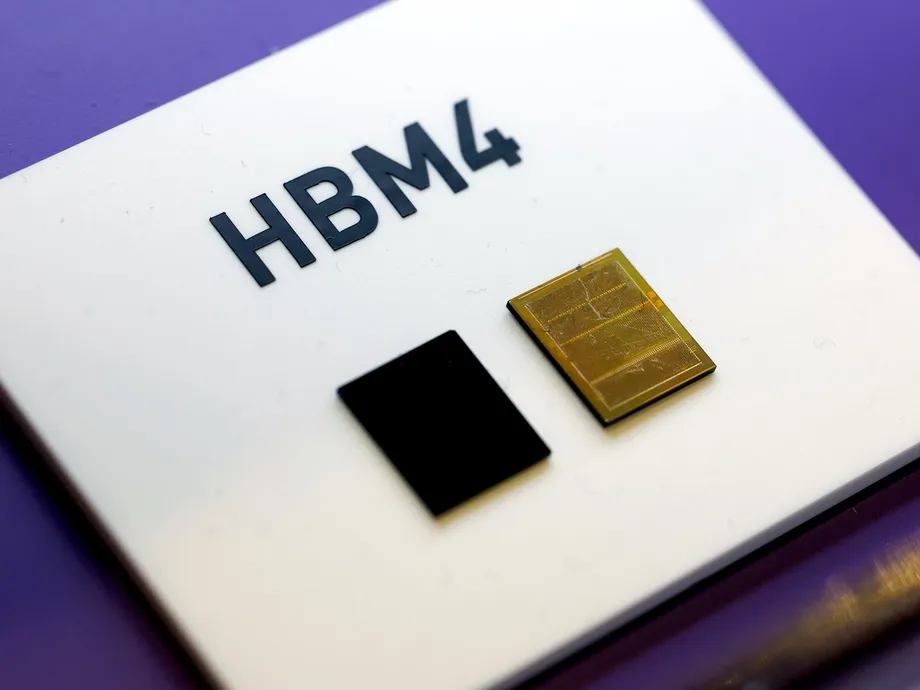
DRAM holds information that a device needs while it is working. NAND flash keeps files when the power is switched off and is used in solid state drives, or SSDs. HBM is a specialized form of DRAM that stacks several chips vertically beside a powerful processor, allowing huge amounts of information to move quickly between them.
AI processors need this speed because they repeatedly move large quantities of data while training models or generating answers. A processor can complete calculations quickly yet spend valuable time waiting for memory to deliver its next task. HBM helps reduce that waiting.
Producing HBM uses more silicon wafer capacity than producing an equivalent amount of conventional memory. Choi Jung-dong, senior vice president at TechInsights, explains that HBM needs larger chip areas, stacking and testing. Wafers are the thin silicon discs on which manufacturers make many individual chips before cutting them apart.
Kyobo Securities estimates that HBM's share of total DRAM production capacity will rise from 27% in 2025 to 40% in 2027. That is an increase of 13 percentage points. Production resources are also moving toward large capacity server DRAM, tightening supplies of memory for less profitable consumer devices.
SemiAnalysis estimates that HBM costs about three times as much as other memory and accounts for at least half the cost of a packaged graphics processing unit. Samsung's recent AI memory strategy, which combines advanced memory, shared server capacity and faster storage, illustrates how suppliers are reorganizing their businesses around those needs.
Earlier production cuts left little spare capacity
The shortage follows a downturn that made manufacturers cautious about expansion. During the COVID-19 pandemic, major cloud companies accumulated memory and storage to protect themselves against disruption and support remote work. Demand later weakened, inventories built up and prices fell through 2022 and 2023.
Thomas Coughlin, president of memory and storage consultancy Coughlin Associates, says Samsung cut production by 50% during that downturn. He describes manufacturers as reluctant to invest again when the market began recovering late in 2023.
Coughlin explained how that caution affected factory investment:
Thus there was little or no investment in new production capacity in 2024 and through most of 2025.
Building a semiconductor factory typically costs $15 billion to $20 billion and takes at least two to three years. Equipment installation, reliable production and customer approval add further work. Manufacturers cannot quickly replace the capacity they previously held back just because buyers now want more chips.
Data center spending changes the balance
Amazon, Google, Microsoft and Meta increased their combined data center investment from $217 billion in 2024 to $380 billion in 2025, with spending projected to reach $650 billion in 2026. The 2026 projection is almost three times the 2024 figure.
Data Center Map counts nearly 2,000 facilities planned or under construction worldwide, alongside roughly 9,000 existing sites. McKinsey projects $7 trillion in company spending on data centers by 2030, including $5.2 trillion for facilities focused on AI. Servers, storage and networking account for a projected $3.3 trillion within that AI spending.
Micron's revenue mix shows how quickly demand has shifted. HBM and other cloud related memory rose from 17% of its DRAM revenue in 2023 to nearly 50% in 2025. Samsung, SK hynix and Micron together accounted for 90.5% of global DRAM revenue in the fourth quarter of 2025, concentrating production decisions among three suppliers.
Forecasts of the HBM market's size vary widely. Micron chief executive Sanjay Mehrotra projected a $100 billion market by 2028, while JPMorgan forecast $280 billion for that year, up from about $64 billion in 2026. Both expect rapid growth, although their estimates of its scale are far apart.
The Export-Import Bank of Korea's 2026 semiconductor outlook forecasts memory market growth above 30% and an 11% increase in South Korean semiconductor exports, subject to American tariff policy. It also projects 20% growth in the foundry market, to $210 billion. Foundries manufacture chips designed by other companies.
Musk and Apple seek more bargaining room
Tesla chief executive Elon Musk has publicly challenged memory suppliers over pricing. Responding on X to a post about JPMorgan's market outlook, he praised Micron while criticizing other manufacturers without naming them.
Musk described the contrast this way:
Micron has been consistently reasonable about future memory prices, but others have been extortionate.
Samsung and SK hynix are widely viewed as the targets because they dominate DRAM supply alongside Micron. Tesla has also reduced the amount of memory in its own AI chips as it seeks supplies. JPMorgan says Micron has secured 26 agreements covering more than 75% of its fiscal 2027 output, showing how much future production customers have already reserved.
Apple faces a related problem as it plans production of its latest iPhones. John Ternus, identified as Apple's newly appointed chief executive, said on October 15 that memory constraints were an absolute crisis and that every option should remain available. He said he had discussed possible solutions with Trump administration officials.
Apple is reportedly testing Chinese memory internally, with ChangXin Memory Technologies, or CXMT, considered a possible alternative supplier. American lawmakers from both parties have raised national security objections. No final supplier decision or timetable for approval has been announced.
Chip designers are adjusting their plans
AMD chief executive Lisa Su, speaking during a visit to South Korea on October 7, described tight memory supplies and the need to plan several years ahead with partners. Her visit prompted speculation about discussions with Samsung and SK hynix to secure memory.
Su explained why coordination matters:
Memory is essential to computing across the board, and supply is tight.
Nvidia is also expected to adjust its memory configuration. Vera Rubin uses 12 layers of HBM4 with 288GB of capacity, while the expected Vera Rubin Ultra configuration uses eight layers of HBM4E and 256GB. Those specifications would reduce capacity by 32GB, or about 11%, while using fewer layers per stack.
Fewer layers can reduce manufacturing costs and the number of memory dies needed for each stack. HBM development still allows taller products: HBM4 standards extend to 16 dies, and Samsung researchers demonstrated a stack with 16 layers using hybrid bonding in 2024. Hybrid bonding joins chips through very fine connections rather than conventional solder bumps.
Intel chief executive Lip-Bu Tan has warned that memory shortages are delaying projects. At the Cisco AI Summit, he offered a blunt assessment of when buyers could expect relief:
There's no relief until 2028.
PC buyers face higher prices and fewer choices
Omdia estimates that DRAM and SSDs now account for nearly 40% of PC production costs, up from about 15%. Manufacturers must decide how much of that increase to charge customers and how much to absorb through lower profits or reduced specifications.
Global PC shipment estimates show a sharp contraction. IDC puts third quarter shipments at 62.7 million, down 20.1% from a year earlier; Omdia puts them at 58.1 million, down 21.2%, while Gartner forecasts 55.35 million against 71.3 million a year earlier. The totals vary with each firm's counting methods, but all describe declines exceeding one fifth.
Omdia records a 31% fall in HP shipments and an 11% decline for Apple. It projects a 24% market contraction in the fourth quarter and a further 7% annual decline the following year. Samsung's Galaxy Book and LG's Gram businesses face the same pressure to protect profits while keeping computers attractive to buyers.
At Seoul's Yongsan electronics market, a PC parts seller described daily assembled computer sales falling from about 10 machines to three or four, with revenue dropping by more than half. Graphics cards and SSDs have also become more expensive, increasing the total cost of a new system.
Some shoppers are choosing older DDR4 systems or used memory. DDR4 and DDR5 require compatible motherboards, so changing generations can involve replacing more than the memory module. Prices also vary by product: some older DDR4 package modules have traded above newer DDR5 products, even while the listed Korean DDR4 retail module remained cheaper.
Price increases differ across the memory market
TrendForce raised its forecast for third quarter PC DRAM contract price increases to 18% to 23%, from 15% to 20%. Some August supplier contracts rose 23% to 28%, and PC makers sought inventories covering more than 10 weeks before the end of the year.
Counterpoint Research recorded DRAM increases of 80% to 90% during the quarter it examined. Gartner's annual outlook estimates increases of 237% for DRAM and 293% for NAND. These figures track different periods and product groups, while retail modules include assembly and distribution costs.
NAND products show particularly uneven movements. August contract prices for 128Gb multi level cell chips rose 1.42% to $30.48. Older single level cell products increased 16.51% to 28.22%, as manufacturers concentrated investment on newer storage technologies.
Telecommunications equipment and smart meters still use some older chips that are difficult to replace in existing designs. Their buyers can face shortages even as demand weakens elsewhere. Smartphones, televisions and consoles are also exposed: Circana analyst Mat Piscatella recorded US Xbox sales down 33% through August and PlayStation sales down 25%, reaching their lowest levels since 2013.
Business servers become harder to afford
Server prices have risen to between two and four times their level a year earlier. Gartner estimates memory's share of server manufacturing costs has increased from 39% in 2015 to 59% in 2026, and could reach roughly two thirds for conventional servers by 2030.
Businesses running ordinary databases, office applications and storage systems therefore face the same supply pressures as AI developers. Higher equipment prices and delivery delays can force them to postpone expansion or cancel replacements.
Gartner recommends reviewing replacement schedules and keeping existing servers in service longer. It expects DRAM prices to begin stabilizing in the first half of 2028, although server vendors may maintain higher selling prices to protect profits. A return to 2025 equipment prices could take longer.
South Korea's semiconductor industry indicators define the government's DRAM price measure as the annual average for DDR4 8Gb. Production, market share and price figures are published every six months, while trade figures are monthly. That older generation benchmark captures one part of a market now moving at very different speeds.
New factories offer relief, but on different schedules
Micron, Samsung and SK hynix are expanding, but factory construction is only the beginning. Producers must install equipment, increase the proportion of working chips and obtain customer approval before plants contribute dependable supplies.
The announced expansion timetable stretches across several years:
- 2027: Micron expects production in Singapore and at a converted Taiwan facility, with Taiwan output beginning in the second half.
- 2027: SK hynix's HBM factory in Cheongju is scheduled for completion.
- 2028: Samsung plans production at a new Pyeongtaek plant, while SK hynix targets the end of the year for its West Lafayette facilities.
- 2030: Micron's Onondaga County complex is expected to reach full production.
Existing plants are part of the response. Samsung and SK hynix increased their combined investment in three Chinese facilities to 1.4871 trillion won in 2025, following their China plant investment increases. Equipment controls affect how those operations can be upgraded.
Longer range plans include a reported 800 trillion won investment by Samsung and SK hynix in four memory factories in southwestern South Korea. TechInsights chief strategy officer Dan Kim warns that expansion can take more than three years, while SK Group chairman Chey Tae-won has said wafer shortages could persist through 2030.
Chinese supply and weaker demand could ease some pressure
CXMT and Yangtze Memory Technologies, or YMTC, are expanding conventional memory production. CXMT was estimated to hold about 8% of the global DRAM market in the middle of 2025, while YMTC accounted for roughly 13% of global NAND shipments in the third quarter of that year.
Their positions are much stronger within China. TechInsights estimates CXMT's domestic DRAM share at about 30% and YMTC's NAND share near 40%, with little presence in North America. Chinese expansion could bring additional conventional memory to market, although access to American customers faces political and commercial barriers.
Demand is also adjusting. PC makers are fitting smaller SSDs, smartphone manufacturers are using existing inventories, and consumers are delaying replacements. Those changes could ease pressure on particular products before the wider shortage ends.
Manufacturers still face the industry's old risk: several waves of new factories could arrive just as demand slows. For now, buyers must plan around limited supply, expensive components and a recovery that depends on both the type of memory they need and when new production becomes usable.
Key Points
- TrendForce forecasts fourth quarter contract price increases of 10% to 15% for general DRAM and 15% to 20% for NAND.
- HBM's share of DRAM production capacity is projected to rise from 27% in 2025 to 40% in 2027.
- Higher memory costs are squeezing PCs, smartphones, consoles and conventional business servers.
- Substantial new supplies are expected from the middle to latter part of 2027, with shortages potentially lasting into 2028.
- Chinese production growth and weaker consumer demand could ease shortages in some conventional memory products.