Reactor Foundations and a New Town Take Shape in Jizzakh
Uzbekistan is working toward completing the first reactor foundation slab at its planned $9.5 billion nuclear power station by the end of 2026, while building a nearby town designed for nearly 33,000 residents. The projects combine electricity generation, specialist training and a substantial expansion of transport, water and power infrastructure in the Farish district of Jizzakh region.
Contents
- Reactor Foundations and a New Town Take Shape in Jizzakh
- What Makes This an Integrated Nuclear Plant?
- How Much Electricity Is Expected?
- Which Construction Milestones Come Next?
- A Town for Workers and Their Families
- Water, Roads and Electricity Beyond the Reactor Site
- Training People to Operate the Station
- A $9.5 Billion Project With Wider Ambitions
- Cooperation Extends to Medicine and Materials
- Key Points
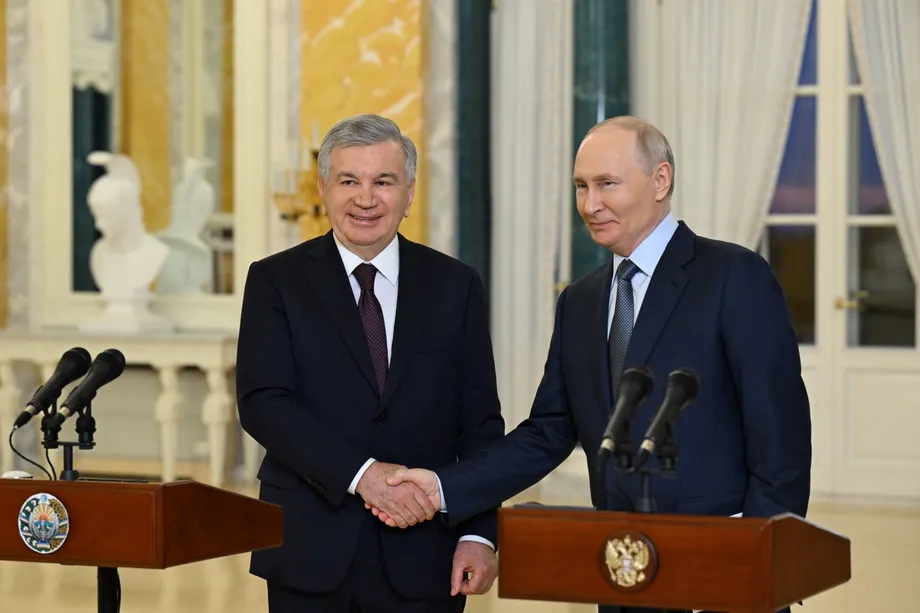
President Shavkat Mirziyoyev met Alexey Likhachev, director general of Russia's state nuclear corporation Rosatom, in Tashkent on October 23, 2026. According to the Uzbek presidential administration, their talks covered construction of the country's first integrated nuclear power plant, continuing design work and the infrastructure needed to support it.
The station near Lake Tuzkan is planned to combine two large VVER-1000 reactors, each with an electrical capacity of 1,000 megawatts, and two smaller RITM-200N reactors, each producing 55 megawatts. Together, the four units would provide 2,110 megawatts of installed capacity.
Rosatom says about 10,000 cubic metres of concrete will be needed for the foundation slab of the first reactor compartment. Concrete placement began in June, with completion targeted for the end of December 2026. Technical startup of the first small reactor is scheduled for 2029, followed by the first large unit in 2033.
The October meeting followed a visit to the construction area on October 22 by delegations from Uzbekistan's nuclear energy agency, Uzatom, and Rosatom. Their inspection covered both the power station and the residential development, where housing and infrastructure work is already under way.
What Makes This an Integrated Nuclear Plant?
Uzbekistan plans to place two different reactor types at one site. The project is described as the first planned combination anywhere of two VVER-1000 units and two RITM-200N units in a single power station.
A reactor supplies heat, which is used to make steam and drive equipment that generates electricity. A power unit includes the reactor and the associated equipment needed to produce power. In this project, the word integrated refers to bringing the large and small units together at the same location.
The large reactors account for 2,000 megawatts of the planned 2,110 megawatts, or about 95% of total capacity. The two smaller units contribute the remaining 110 megawatts, about 5%. Although the first small reactor is scheduled to start earlier, most of the station's eventual generating capacity will come from the larger units.
Atomstroyexport, Rosatom's engineering division, is the general contractor. Its construction responsibilities sit within a wider partnership that also covers training Uzbek personnel and developing the settlement needed to house workers and their families.
How Much Electricity Is Expected?
Annual electricity generation estimates range from up to 15 billion kilowatt hours to about 17.2 billion kilowatt hours once the full station is operating. The difference is 2.2 billion kilowatt hours, so the expected annual output remains an important planning figure to clarify.
Megawatts describe how much power a station can produce at a given moment. Kilowatt hours measure how much electricity it generates over time. A plant's annual production depends on how much of the year its units operate and at what output, including periods when equipment is stopped for maintenance.
The planned 2,110 megawatts would become available in stages rather than all at once. Uzbekistan's timetable places the first small reactor's technical startup in 2029, several years before the first large unit. Full project completion is envisaged for 2034–2035.
Which Construction Milestones Come Next?
Rosatom's immediate construction target is the foundation slab for the reactor compartment of the first small power unit. The slab forms part of the base supporting the reactor building. Work on it is progressing alongside the broader design of the station, according to the presidential administration.
The project's chronology includes earlier site construction, equipment manufacturing and a later presidential launch of the first generating unit. Those milestones describe different parts of the development:
- April 2025: Construction activity at the site began.
- May 2025: Rosatom began manufacturing equipment for the project.
- June 4: Mirziyoyev and Russian President Vladimir Putin launched construction of the first power unit.
- June 2026: Concrete placement began for the first small unit's foundation slab.
- October 22, 2026: Uzatom and Rosatom delegations inspected the station and the town construction area.
- October 23, 2026: Mirziyoyev and Likhachev reviewed progress in Tashkent.
- End of 2026: Target for completing the first reactor compartment's foundation slab.
- 2029: Planned technical startup of the first small reactor.
- 2033: Planned technical startup of the first large unit.
- 2034–2035: Expected completion of the full project.
Technical startup is a stage in bringing a reactor into operation, involving testing and commissioning. The schedule therefore describes a sequence of construction and startup milestones extending over several years, with the smaller reactor due to reach that stage first.
A Town for Workers and Their Families
Uzatom says the new settlement is being built on 200 hectares, with about 10,000 apartments planned for nearly 33,000 residents. Rosatom describes its intended population more broadly as more than 30,000 specialists and family members.
The housing plan works out to roughly 3.3 residents per apartment at the stated population. The development is intended as a permanent community, with schools, kindergartens, healthcare facilities, sports venues, cultural facilities, recreation areas and green space.
Mirziyoyev and Likhachev discussed cooperation on housing that uses energy efficiently and the services needed by residents. The combination of homes, education and healthcare gives the project a local development dimension alongside its electricity generation goals.
Water, Roads and Electricity Beyond the Reactor Site
Uzatom's description of the external infrastructure shows how far construction extends beyond the reactor buildings. The works include electricity connections, separate water systems, roads and railway links serving the wider development.
- 388 kilometres of electricity networks.
- A substation operating at 110 kilovolts.
- 21 kilometres of drinking water pipelines.
- 120 kilometres of pipelines for technical water.
- 39.5 kilometres of roads.
- 11 kilometres of railway.
Technical water is water intended for industrial and other operational uses rather than drinking. The planned technical water network is almost six times the length of the drinking water network, illustrating the scale of utility construction associated with the site.
The town plan also includes smart electricity networks, data centres and systems that store energy. Smart networks use monitoring and controls to manage electricity flows, while storage systems hold energy for later use. During the October 22 visit, the delegations paid particular attention to safety, construction quality and environmental standards, according to Uzatom.
Training People to Operate the Station
Mirziyoyev and Likhachev gave particular attention to preparing qualified staff through the Tashkent branch of the National Research Nuclear University MEPhI and at Rosatom facilities. The objective extends beyond completing construction: Uzbekistan will need people able to operate and maintain the station throughout its working life.
Training cooperation includes plans for postgraduate study in nuclear subjects and opportunities for Uzbek students to undertake placements at Rosatom enterprises in Russia in 2026. Academic study and practical placements are intended to connect classroom learning with experience of nuclear industry facilities.
In July, an Uzbek delegation led by Deputy Prime Minister A. Ramatov visited Russia's Novovoronezh nuclear power plant. The visit covered its Generation III+ reactors, safety systems, supporting infrastructure and nearby residential town. Generation III+ is a designation used for modern reactor designs with additional safety features.
The two sides also agreed to hold monthly operational meetings at the Uzbek construction site. That arrangement provides a regular setting to review progress as reactor construction, utility works, housing and workforce preparation move forward together.
A $9.5 Billion Project With Wider Ambitions
The integrated station's estimated cost is $9.5 billion. Financing terms, the allocation of costs between the reactors and supporting development, and the future price of its electricity were not detailed in the October meeting announcements.
Rosatom brings a broad industrial organisation to the partnership. Established in 2007, the Russian state corporation comprises more than 400 organisations, according to its corporate reporting. Its activities include uranium mining and enrichment, nuclear fuel production, reactor design and construction, electricity generation and radioactive waste management.
Mirziyoyev has also said Uzbekistan is considering a second and third nuclear power station and intends to discuss those possibilities with new partners and investors. Those ambitions would extend the country's nuclear programme beyond the Jizzakh development now under construction.
The concrete milestones remain concentrated on the first site: finishing the initial foundation slab in 2026, preparing staff and progressing toward the first small reactor's technical startup in 2029. The larger generating units and full completion follow later in the schedule.
Cooperation Extends to Medicine and Materials
The October discussions also covered possible cooperation in nuclear medicine and additive manufacturing. Nuclear medicine uses radioactive substances in medical diagnosis or treatment. Additive manufacturing makes objects by building material in successive layers, rather than cutting a finished shape from a larger piece.
Earlier cooperation talks included a possible pilot medical project in Uzbekistan's Fergana region, along with energy storage and composite materials. Composite materials combine different substances to obtain useful properties, such as strength with lower weight. The parties agreed to prepare a roadmap identifying priority areas and proposed joint projects.
Rosatom said Likhachev confirmed the corporation's readiness to expand cooperation and fulfil its commitments on strategically important projects in Uzbekistan. Alongside the reactor programme, the medical, materials and training discussions show the range of activities being considered within the partnership.
For Jizzakh, the most tangible changes are already taking shape in foundations, homes and connecting infrastructure. The project's next scheduled test of progress is completion of the first reactor compartment's foundation slab by the end of 2026, ahead of the longer sequence leading to full operation in 2034–2035.
Key Points
- Mirziyoyev and Rosatom chief Alexey Likhachev reviewed the nuclear project in Tashkent on October 23, 2026.
- The estimated $9.5 billion station will combine two large and two small reactors with a total capacity of 2,110 megawatts.
- Rosatom targets completion of the first reactor compartment's foundation slab by the end of 2026.
- A nearby town is planned with about 10,000 apartments for nearly 33,000 residents.
- The development includes extensive electricity, water, road and railway infrastructure, alongside specialist training.
- The first small reactor's technical startup is scheduled for 2029, with full project completion expected in 2034–2035.