Accounting failures bring a reckoning for former leaders
Nidec's investigation into the legal responsibility of its former management has put an estimated 27.6 billion yen in damages at the center of an accounting scandal that has reached founder Shigenobu Nagamori and eight other former executives. Details published on October 20, 2026, describe a company where meeting profit targets repeatedly took priority over recording necessary losses.
Contents
- Accounting failures bring a reckoning for former leaders
- Who the committee identified
- What legal responsibility means
- How profit targets displaced accounting rules
- An earlier inquiry described pressure from the founder
- Three different financial figures explain the damage
- The October deadlines put the listing under pressure
- Shareholders face falling value and pressure for a sale review
- New management must repair more than the accounts
- Key Points
The committee of outside lawyers and other specialists concluded that the nine had failed to fulfill duties owed to the Kyoto motor manufacturer. Its findings move the crisis beyond correcting financial statements and toward possible claims against the people who ran or supervised the business.
About 22.2 billion yen of the estimated damages came from investigation expenses, while another 5.3 billion yen came from audit costs. The committee connected those expenses to the former executives' failures, while saying the amount attributable to each individual should be determined through court proceedings.
Nidec said it would consider damages claims and other legal measures. It is also working to correct securities reports covering 2022 through 2025, regain its auditor's approval and satisfy the Tokyo Stock Exchange that its internal management systems have improved.
Who the committee identified
Nidec's October 16 official responsibility announcement named eight people and identified a ninth by their former position. The announcement set out the committee's conclusions before publication of the detailed report on October 20.
The eight named were Nagamori, Hiroshi Kobe, Akira Sato, Hiroyuki Yoshimoto, Jun Seki, Mitsuya Kishida, Kazuya Murakami and Hiroyuki Ochiai. The ninth was an unnamed former chief financial officer who served from May 2022 through March 2026.
The group spans several generations of leadership. Kobe was a former chairman; Yoshimoto, Seki and Kishida had each held senior leadership roles, including the presidency or chief executive position. Murakami had been listed as chief legal officer and head of compliance as recently as October 1, although Nidec subsequently said he was no longer employed by the company.
The committee's scope therefore extended beyond the founder and the executives responsible for running operations. It also examined people whose responsibilities involved financial reporting, legal compliance or oversight, reflecting how the accounting problems persisted across successive management teams.
What legal responsibility means
The October 16 announcement said the eight named individuals bore damages liability under Article 423(1) of Japan's Companies Act. In simple terms, that provision allows a company to seek compensation when directors or other covered officers fail to perform their duties and cause it financial harm.
The former CFO's potential liability rested on a different legal basis: Articles 644 and 415(1) of the Civil Code, or Nidec's executive officer regulations. Those provisions concern duties attached to entrusted work and compensation for failing to fulfill an obligation.
Nidec said investigations by both the earlier third party committee and the officer responsibility committee, together with its audit and supervisory committee's work, had led it to recognize legal violations by several directors and other executives in carrying out their duties.
The next step is deciding what claims to bring and how much to seek from each person. The committee said damages should reflect each individual's contribution to the harm. Its detailed findings acknowledged the difficulty of assigning individual amounts and said that question should be left to the courts. No filing date or individual claim amounts were announced.
How profit targets displaced accounting rules
Nidec had accumulated assets across its group whose recorded values were doubtful because necessary losses had been postponed for years. When an asset is worth less than its value in the accounts, a company may need to record a loss to bring that value down.
The investigation described repeated companywide efforts to deal with this accumulated problem. Each time, however, the approach allowed losses to be recorded only to the extent that doing so would not prevent the company from reaching its performance targets.
Normal accounting works in the opposite order: a company records the losses required by its financial position, then calculates the profit that remains. At Nidec, the target profit came first, and the amount of losses management would accept was worked out backward from that target.
The committee traced that approach to Nagamori and other founding figures, including Kobe. Successive presidents and full time corporate auditors allowed the treatment to continue instead of correcting it. The finding explains why changing the person at the top was insufficient to resolve a practice embedded across the group.
An earlier inquiry described pressure from the founder
A separate third party investigation released on March 3 had already described widespread accounting fraud and linked it to intense pressure to meet unrealistic performance targets. That earlier inquiry put potential losses at 250 billion yen.
The March committee said Nagamori was aware of and had condoned some of the practices. It described his role in stark terms:
It must be said that Nagamori is the one who should bear the most blame.
Kobe and three other executives resigned effective the day that report was released. Kishida, who was then president and chief executive, announced that he would forgo his entire monthly salary until autumn.
The October investigation addressed the next legal question: whether failures by individual officers had caused damage for which Nidec could seek compensation. Its focus on responsibility followed the earlier examination of how the accounting misconduct occurred.
Three different financial figures explain the damage
The 27.6 billion yen damages estimate in the October report concerns costs arising from the accounting scandal, including the investigation and audit work. The roughly 22.2 billion yen investigation bill accounts for about four fifths of that estimate, showing how expensive the effort to reconstruct and examine the accounts has become.
The 250 billion yen potential loss identified in March concerned the financial fallout described at that stage of the accounting inquiry. Nidec later reported an operating loss of 519 billion yen for the year ended in March, after recording an impairment charge of 632 billion yen.
An impairment is a reduction in the recorded value of an asset when the business expects to recover less from it than previously assumed. That charge feeds into the company's financial results. Investigation and audit expenses are another burden, arising from the work needed to examine the misconduct and repair reporting.
Nidec has forecast a return to operating profit of 200 billion yen on sales of 2.8 trillion yen for the current fiscal year. Achieving that forecast would require a 719 billion yen swing from the previous year's operating loss, while management continues to address the accounting and legal fallout.
The October deadlines put the listing under pressure
The Tokyo Stock Exchange designated Nidec a security on special alert in October 2025 because its internal management system needed improvement. That status placed the company under closer scrutiny as it worked to repair the controls intended to keep its accounts reliable.
Accounting auditor PwC Japan withheld its opinion after saying it could not obtain sufficient and appropriate evidence. An audit opinion is an outside assessment of a company's financial statements. Nidec is seeking the auditor's approval while correcting past disclosures and documenting changes to its internal systems.
The company faces an October 28 submission deadline as it seeks to avoid a delisting notice. The exchange will assess its improvement confirmation document in deciding whether Nidec can remain listed.
The sequence shows how the legal inquiry and the listing review have converged:
- October 2025: Nidec was placed on special alert over weaknesses in internal management.
- March 3, 2026: The earlier accounting investigation was released, followed by resignations and Kishida's salary forfeiture announcement.
- October 16, 2026: Nidec announced the officer responsibility committee's main legal conclusions.
- October 20, 2026: Nidec published the detailed responsibility report and its estimated damages.
- October 28, 2026: Nidec faces the exchange submission deadline tied to its effort to preserve its listing.
Shareholders face falling value and pressure for a sale review
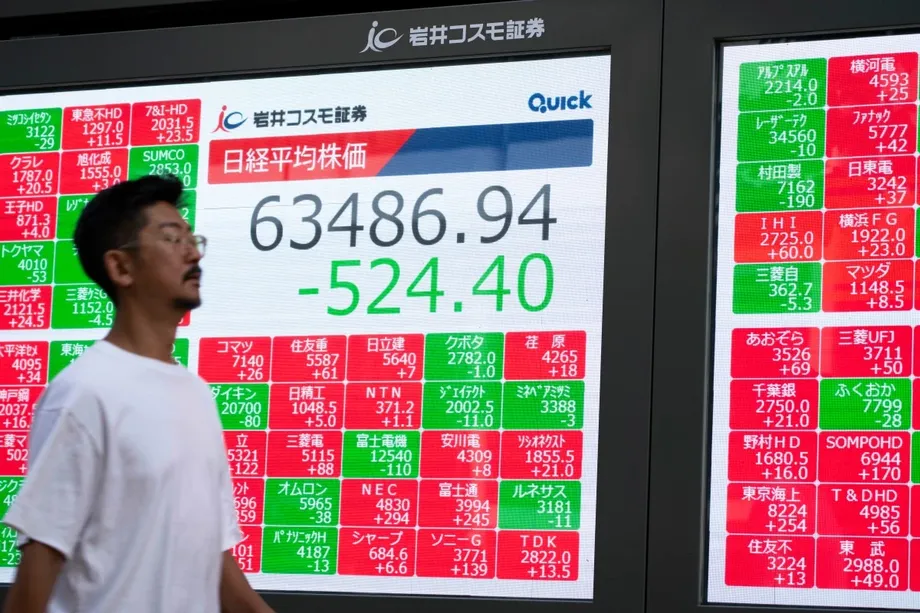
Nidec shares fell as much as 2.8% on Monday, October 19, reaching their lowest level since 2016. The stock had lost more than a third of its value since late September, when the company announced Kishida's sudden departure as chief executive.
The company's market value stood at about 2.1 trillion yen, compared with almost 9 trillion yen less than six years earlier. Market value is the combined price investors assign to a company's shares. The decline reflects the scale of the financial pressure surrounding the accounting corrections, business losses and listing uncertainty.
Oasis Management increased its disclosed stake to 9%, becoming Nidec's largest disclosed shareholder and moving ahead of Nagamori's direct holding. Oasis founder Seth Fischer urged the outside directors to appoint financial advisers and seek preliminary, nonbinding proposals for a possible transaction, including taking the company private, as protection against an unintended delisting.
A transaction would require potential buyers to assess the unresolved accounts, possible legal claims and the position of major shareholders, including Nagamori. A voluntary purchase taking the company private would involve negotiations over ownership and price; the exchange's listing review follows a separate process focused on whether Nidec meets its requirements.
New management must repair more than the accounts
New chief executive Michio Kaida faces several connected tasks: restructuring businesses that are losing money, completing financial corrections, responding to shareholder pressure and deciding how to pursue former executives. The responsibility findings give the board a basis for considering compensation claims while those operational demands continue.
Nagamori founded the business in 1973 and expanded it through decades of acquisitions. Nidec, formerly Nippon Densan, adopted its current name in 2023. It grew into a manufacturer with more than 100,000 employees and leading positions in motors used for electric power steering and hard disk drives.
Leadership succession repeatedly proved difficult. Yoshimoto and Seki were each selected as potential successors before leaving, while Nagamori retained influence. He relinquished his final formal title in February 2026 but remains a major shareholder.
The October findings place accountability alongside the immediate work of keeping the business running and its shares listed. For shareholders, the concrete issues are the cost of the scandal, the reliability of corrected accounts and the terms of any future ownership proposal. For the board, the next decisions concern litigation, financial reporting and the evidence it presents to the exchange.
Key Points
- Nidec's October 20 investigation report found that founder Shigenobu Nagamori and eight other former executives bore responsibility for damages arising from accounting misconduct.
- Estimated damages totaled about 27.6 billion yen, including roughly 22.2 billion yen in investigation costs and 5.3 billion yen in audit costs.
- The committee found that management repeatedly limited necessary loss recognition to protect performance targets.
- Nidec is considering legal action, with individual damages amounts to be assessed according to each person's contribution.
- The company must correct financial disclosures and meet an October 28 exchange submission deadline as it seeks to preserve its listing.
- Oasis Management's disclosed stake reached 9%, adding shareholder pressure to examine possible ownership changes.