November proposal brings a faster overnight connection closer
The proposed Bengaluru–Mumbai Vande Bharat Sleeper is targeting a November 1, 2026 launch, with regular services expected from November 2. Its tentative timetable would cut the Bengaluru to Mumbai journey to 16 hours and five minutes, compared with the 22 to 24 hours taken by existing trains.
Contents
- November proposal brings a faster overnight connection closer
- How the launch timetable has developed
- Evening departures and late morning arrivals
- Seven proposed stops along the route
- Why the Bengaluru terminal matters
- How much travel time could passengers save?
- Three accommodation classes and 823 proposed berths
- Indicative fares put a price on the time saving
- What the capacity figures mean for revenue
- Key Points
South Western Railway sources said Railway Minister Ashwini Vaishnaw is expected to flag off the service on Kannada Rajyotsava, the celebration marking Karnataka's formation. The proposal calls for trains six days a week between Sir M Visvesvaraya Terminal (SMVT) in Bengaluru and Chhatrapati Shivaji Maharaj Terminus (CSMT) in Mumbai.
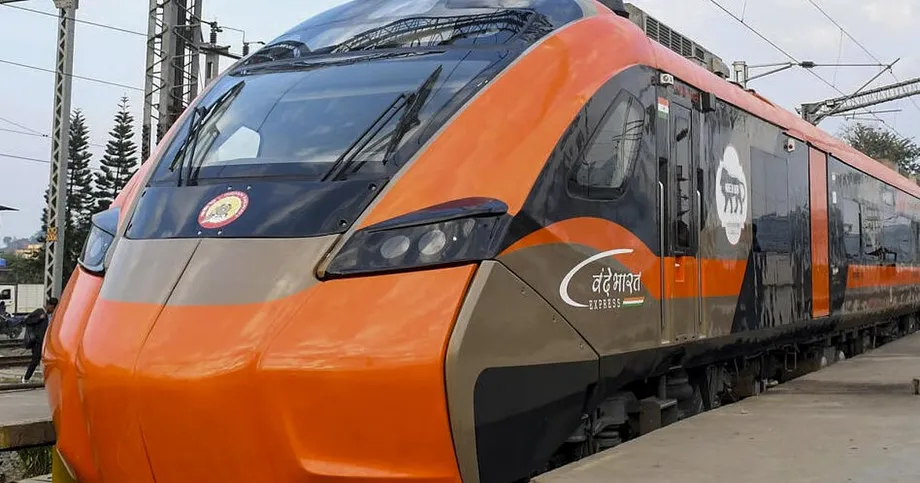
The service is being described as South India's first Vande Bharat sleeper. Two trains with 16 coaches each, manufactured by BEML under a programme led by Integral Coach Factory in Chennai, are expected to serve the route.
Passengers still need the formal railway announcement covering the launch, Bengaluru terminal, operating days, timetable, intermediate stops, fares and booking arrangements. Those details matter because the proposed November start follows earlier October launch expectations, while a reported approval names KSR Bengaluru instead of SMVT.
How the launch timetable has developed
Railway officials have described the service as approved through a Railway Board communication based on minutes of a meeting held on February 16, 2026. That communication reportedly identifies train 27652 for the Bengaluru to Mumbai journey and train 27651 for the return.
The launch expectations have moved through several stages:
- September 2025: The launch was first announced, according to KN Krishna Prasad of Karnataka Railway Vedike.
- February 16, 2026: A meeting produced the minutes cited as the basis for the Railway Board's approval.
- October 2026: Officials initially expected operations to begin during the month, with October 10 or 11 cited as possible inauguration dates.
- November 1, 2026: The later proposal places the flag-off on Kannada Rajyotsava.
- November 2, 2026: Regular passenger services are expected to begin under that proposal.
The proposed announcement could also be affected by the model code of conduct associated with Karnataka Legislative Council elections. This code sets rules for government conduct during elections, including restrictions concerning announcements that could influence voters.
Evening departures and late morning arrivals
The tentative timetable gives both cities an evening departure and an arrival shortly before noon the following day. From SMVT Bengaluru, the train would leave at 7:50 pm and reach CSMT Mumbai at 11:55 am, taking 16 hours and five minutes.
From Mumbai, the proposed departure is 8:10 pm, with arrival in Bengaluru at 11:55 am the next day. That journey would take 15 hours and 45 minutes, making it 20 minutes shorter than the trip towards Mumbai.
For passengers, the practical benefit is the chance to spend much of the journey asleep in a berth. Arrival at 11:55 am would suit afternoon plans better than an early morning appointment, especially after allowing time to leave the station and reach a final destination.
The proposed frequency is six days a week. Travellers planning a return trip will need to check the operating calendar once published, rather than assume a departure is available every day.
Seven proposed stops along the route
The approximately 1,118 km route would run through Guntakal, with seven intermediate stops proposed: Anantapur, Guntakal, Raichur, Kalaburagi, Solapur, Pune and Kalyan. These locations connect the service with passengers in Andhra Pradesh, Karnataka and Maharashtra.
Pune and Kalyan would give passengers alternatives to travelling all the way to CSMT. Raichur and Kalaburagi would bring the overnight service to northern Karnataka, while Anantapur and Guntakal would provide access in Andhra Pradesh.
Indian Railways recently conducted a trial run in the Mumbai–Pune Ghat section, a stretch through hilly terrain on the proposed route. Preparations also include the expected formal allocation of two sleeper trainsets to South Western Railway by the Railway Board's Coaching Directorate.
One trainset has been reported at Bengaluru Cantonment and the other at Varadapura, near Bangarapet. A trainset, also called a rake in railway operations, is the group of coaches used together to operate a service.
Why the Bengaluru terminal matters
SMVT in Byappanahalli appears in the tentative timetable, but the reported Railway Board approval identifies KSR Bengaluru as the starting point. The choice affects where passengers must travel to board and how they arrange their journey home after arrival.
KN Krishna Prasad of Karnataka Railway Vedike has urged the railways to start the service at KSR Bengaluru, the city's main railway station. He said Vaishnaw had promised that terminal and argued that it would be more convenient for passengers.
The terminal issue is especially relevant for a departure at 7:50 pm. Passengers will need to plan their trip across Bengaluru around the station printed on their ticket, with enough time to board. KSR Bengaluru and SMVT are different stations, so the final choice has a direct effect on the usefulness of the proposed timetable.
How much travel time could passengers save?
The Udyan Express provides a useful comparison because it is a daily direct connection between the cities. It covers approximately 1,134 km in around 22 hours, against the proposed sleeper service's approximately 1,118 km in 16 hours and five minutes towards Mumbai.
Using those figures, the proposed train would save five hours and 55 minutes on the Bengaluru to Mumbai journey. The proposed return time of 15 hours and 45 minutes would save six hours and 15 minutes against a journey lasting 22 hours.
The distance difference is only about 16 km, or roughly 1.4% of the Udyan Express route. The much larger reduction in journey time comes with a faster proposed schedule: approximately 69.5 km/h towards Mumbai and 71 km/h towards Bengaluru, including stops, compared with roughly 52 km/h for the Udyan Express.
A road journey is estimated at around 984 km and 15 to 17 hours, depending on traffic and route. The sleeper train would therefore offer a similar broad journey duration while giving passengers a berth and removing the need to drive.
Three accommodation classes and 823 proposed berths
The proposed configuration contains 823 berths across 16 air conditioned coaches. Most of the capacity would be in AC three tier, followed by AC two tier and AC first class.
- AC three tier: 11 coaches with 611 berths.
- AC two tier: four coaches with 188 berths.
- AC first class: one coach with 24 berths.
AC three tier would account for about 74% of the berths, calculated from 611 out of 823. That makes its ticket price particularly important for the largest group of potential passengers.
The class names describe different sleeping arrangements. Three tier accommodation generally has three levels of berths in its main sleeping bays, while two tier has two. First class provides a more enclosed accommodation layout. All three proposed classes would allow passengers to lie down during the overnight journey.
Indicative fares put a price on the time saving
The indicative fares are Rs 2,684 for AC three tier, Rs 3,466 for AC two tier and Rs 4,250 for AC first class. These are proposed prices rather than an announced ticket tariff.
The corresponding approximate Udyan Express fares are Rs 1,475, Rs 2,100 and Rs 3,520. On those figures, the proposed Vande Bharat sleeper would cost Rs 1,209 more in three tier, Rs 1,366 more in two tier and Rs 730 more in first class.
The proportional difference would be greatest in three tier, at about 82% above the quoted Udyan fare. Two tier would be about 65% more expensive, while first class would be about 21% more expensive. The calculation compares the additional charge with the Udyan fare in each class.
For a passenger choosing three tier, the comparison is therefore roughly six hours saved for an additional Rs 1,209. A family buying four such tickets would face a combined difference of Rs 4,836, using the indicative prices. The faster service would give travellers another option, with the value depending on their budget and how much they need the shorter journey.
What the capacity figures mean for revenue
A fully occupied departure could generate approximately Rs 23.94 lakh in gross passenger fares at the indicative prices. Multiplying 611 three tier berths by Rs 2,684, 188 two tier berths by Rs 3,466 and 24 first class berths by Rs 4,250 gives Rs 2,393,532.
Gross passenger revenue is the money collected from ticket sales before costs are paid. Electricity, staff, maintenance and other operating expenses would have to be covered from railway income. Actual receipts would also depend on occupancy and the fares eventually charged.
The passenger calculation is more immediate: the proposal offers a journey of about 16 hours, mostly overnight, with 823 berths per train and prices above the quoted Udyan Express fares. The final railway announcement will determine when those choices become available for booking.
Key Points
- The proposed inauguration is November 1, 2026, with regular services expected from November 2.
- The tentative schedule offers six departures a week in each direction, taking 16 hours and five minutes towards Mumbai and 15 hours and 45 minutes towards Bengaluru.
- SMVT appears in the proposed timetable, while the reported approval names KSR Bengaluru.
- Seven intermediate stops are proposed, including Guntakal, Kalaburagi, Solapur, Pune and Kalyan.
- Two BEML trainsets with 16 coaches each are expected to serve the route, with a proposed capacity of 823 berths per train.
- Indicative fares range from Rs 2,684 to Rs 4,250, with final launch and booking details awaiting a formal announcement.