A possible 2027 listing faces scrutiny in Seoul
South Korea's financial watchdogs believe a potential US listing of Solidigm, the American storage business controlled by SK hynix, conflicts with rules protecting shareholders when a listed company takes a subsidiary public. The proposal could raise as much as $15 billion at a valuation of up to $150 billion, putting a major source of funding for artificial intelligence storage under regulatory scrutiny.
Contents
- A possible 2027 listing faces scrutiny in Seoul
- Why the ownership chain matters
- What the new rules require
- How Korean rules could reach an American IPO
- Shareholders want the same explanation on both sides
- How much money and ownership are involved?
- Can new investment outweigh a smaller stake?
- A domestic example shows what protection can involve
- The dates that brought the dispute to Parliament
- Key Points
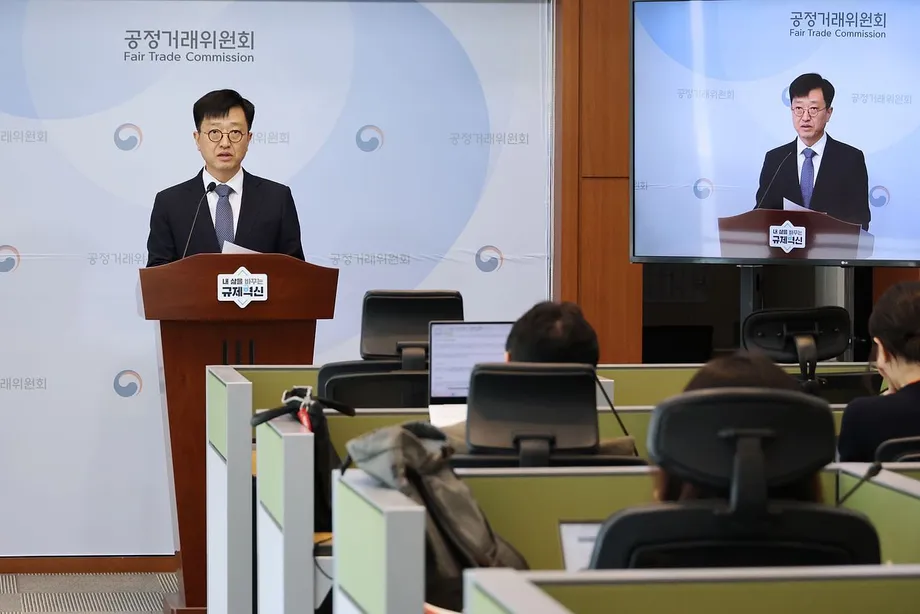
Financial Supervisory Service Governor Lee Chan-jin outlined that position at a National Assembly audit on October 19, 2026. The Financial Services Commission, which sets financial policy, and the FSS, which supervises financial companies and securities disclosures, share the concern.
Lee described the agencies' position during questioning by People Power Party lawmaker Park Sung-hoon.
"We are continuing to monitor the Solidigm issue. Both the Financial Services Commission (FSC) and the FSS consider it to conflict with those rules," Lee said.
A separate legal interpretation is pending on whether Solidigm must file a securities registration statement in South Korea. That decision would determine whether Korean authorities can conduct an additional disclosure review alongside the American listing process. Lee stopped short of announcing that regulators would block the offering.
SK hynix maintains that no listing decision has been made. The company says it is weighing ways to strengthen Solidigm's competitiveness, including investment from its own resources and outside capital, while considering shareholder interests.
The central dispute is practical: how much of Solidigm's future earnings should existing SK hynix shareholders give up in exchange for money that could help the business grow? Answering that requires looking at the ownership structure, the proposed financing and the protections boards must provide.
Why the ownership chain matters
Solidigm emerged in 2021 after SK hynix acquired Intel's NAND flash memory and solid-state drive business in a transaction valued at $9 billion. SK hynix signed the acquisition agreement in 2020. NAND flash stores information without needing a continuous supply of power, while solid-state drives, or SSDs, package memory and control technology into storage devices.
The ownership chain runs from SK Inc. through SK Square and SK hynix to the American intermediate holding company AI Company, and then to Solidigm. A Solidigm listing would put four publicly traded companies within that chain of five companies.
SK hynix currently controls Solidigm through the American holding entity. If Solidigm issues new shares to outside investors, those investors would receive a share of future earnings. SK hynix shareholders would retain an indirect interest through their parent company shares, but that interest would represent a smaller percentage of Solidigm.
A separate listing could also change how investors value SK hynix. Investors seeking exposure to Solidigm could buy its shares directly rather than buy the parent. The parent's market value might then reflect less than the full value of its remaining subsidiary stake, a gap commonly called a holding company discount.
Ownership figures at the end of March illustrate the layers involved: SK Group held 32.14% of SK Square, which held 20.5% of SK hynix. An investment analysis put SK Square's discount to net asset value at 42% on October 6. Net asset value is the estimated value of a company's holdings after subtracting its liabilities.
What the new rules require
South Korea's framework generally prohibits overlapping listings of parents and subsidiaries while allowing exceptions that meet shareholder protection conditions. The Financial Services Commission approved changes to Korea Exchange listing and disclosure rules on July 31, and the framework took effect on August 3.
Parent company boards face five principal duties: assess the impact on shareholders, prepare protection measures, communicate with shareholders or establish their consent, vote on the proposal and notify the subsidiary, and disclose the process at each stage.
An independent special committee must review and approve the proposal beforehand. The finalized requirements call for an independent director to chair the committee and for independent directors and outside experts to make up at least two thirds of its membership.
Shareholder approval requirements depend on how the subsidiary was created. A listing involving a subsidiary formed by separating an existing business from its parent requires shareholder consent under a voting mechanism that limits the controlling shareholder and related parties to a combined 3% of voting rights. Approval requires a majority of votes represented at the meeting and at least one quarter of total voting rights.
For other subsidiaries, including businesses acquired from outside the group, direct shareholder consent is generally recommended rather than automatically mandatory. The board still has to complete the protection process. Solidigm's origin in the Intel acquisition makes this distinction central to its treatment.
A limited exemption can apply when a subsidiary's revenue, operating profit and assets are each below 10% of the parent's corresponding figures. A subsidiary considered important because of its expected valuation may still face closer scrutiny. Solidigm's reported revenue share of about 9% therefore addresses only one part of that assessment.
How Korean rules could reach an American IPO
A Nasdaq listing would bypass the Korea Exchange's normal review of a domestic subsidiary offering. Korean authorities are examining two other routes: duties imposed on the Korean parent company boards, and a possible Korean securities registration requirement for the overseas issuer.
The board obligations can extend through indirect ownership. Under the framework described by financial regulators, they cover a listed company's affiliate stake of at least 20%, followed by controlling stakes exceeding 50% at subsequent levels. Both SK hynix and SK Square could consequently have responsibilities for Solidigm's listing.
Failure to complete those duties can expose a parent to a Korea Exchange penalty of up to 1 billion won, a trading suspension lasting one day and public disclosure of the violation. Those consequences concern the Korean parent even when the subsidiary seeks approval from an American exchange.
The securities filing question is more complicated. Rules governing certain overseas share issues consider whether Korean residents held at least 20% of the foreign issuer at the end of its latest financial year and whether Korean residents could acquire the securities at issuance or within one year afterward.
Solidigm's ownership passes through an American company, making the application of the resident ownership threshold disputed. A Korean registration requirement could add an FSS review, requests for revised disclosures and more time before fundraising. No deadline was given for the authoritative interpretation.
Another law has a different reach. The Fair Trade Act's requirement for full ownership of certain domestic affiliates within holding company structures applies to Korean companies. Solidigm's American incorporation places it outside that particular ownership restriction, while the securities and shareholder protection questions remain under examination.
Shareholders want the same explanation on both sides
Park's questioning focused on what Korean investors had been told. He accused SK hynix of explaining potential damage from a subsidiary listing in US securities disclosures without giving domestic shareholders a comparable explanation.
The company's American prospectus described several possible consequences of subsidiary share sales or IPOs: a smaller ownership percentage, reduced future earnings and cash flow attributable to SK hynix, weaker control, and pressure on the prices of its ordinary shares and American depositary shares. Depositary shares are securities that allow investors to hold an interest in a foreign company through an American market.
Park called for a comparison showing how the value of SK hynix's Solidigm stake and the economic interests of existing shareholders would change before and after a listing. He also stressed the importance of the Korean parent's board procedures because an overseas offering would not undergo a Korea Exchange listing review.
The Korea Corporate Governance Forum has demanded that listing discussions stop. Its concerns extend beyond immediate earnings dilution to the number of listed companies sharing interests in the same underlying businesses.
Shim Hye-seop, a lawyer and auditor at the forum, has argued that acquisition from an outside seller should not automatically spare a subsidiary from a shareholder vote. He also questioned Solidigm's operational independence, pointing to connections between its SSD business and SK hynix's NAND supply.
Boards therefore face a task broader than presenting an attractive IPO valuation. They must explain the amount of ownership being transferred, who receives the money, how it will be invested and what existing shareholders receive in return.
How much money and ownership are involved?
Market estimates place potential IPO proceeds at $10 billion to $15 billion and Solidigm's possible valuation at $100 billion to $150 billion. The larger figures describe the upper end of expectations; other estimates put the offering at $10 billion and the valuation at up to $100 billion.
At $15 billion raised against a valuation of $150 billion after the offering, outside investors would hold about 10% of Solidigm, assuming all proceeds came from newly issued shares. SK hynix would retain roughly 90% indirectly. The same proportion follows from a $10 billion offering at a valuation of $100 billion.
The composition of the sale matters. Newly issued shares put money into Solidigm for investment. A sale of existing shares instead sends proceeds to the selling shareholder. The eventual mix would affect both the business's funding and the benefit reaching the parent.
Goldman Sachs and Morgan Stanley have reportedly been selected as lead underwriters, with JPMorgan Chase, Citigroup and UBS also joining the underwriting group. Underwriters help prepare an offering, find investors and arrange the share sale. Solidigm has also been discussing investment before a possible IPO.
Preparations have included strengthening its American government relations operation. Solidigm hired former Qualcomm executive Andres Castrillon as vice president for government relations and retained Ballard Partners for advice on American semiconductor manufacturing, trade and regulation.
The company's reported first half revenue was 12.25 trillion won, with its contribution described as about 9% of SK hynix revenue. Its enterprise SSD business has become more valuable strategically as AI data centers require greater storage capacity alongside powerful processors and memory.
Can new investment outweigh a smaller stake?
SK hynix is financing several demanding businesses at once, including NAND, server DRAM, advanced chip packaging and high bandwidth memory, or HBM. HBM places memory close to AI processors and moves large amounts of data quickly. Solidigm's SSDs meet a different need: storing the information those systems use.
Outside funding could let Solidigm expand production and research without drawing the entire amount from SK hynix. The parent could then direct more of its investment budget toward HBM and other projects.
Semiconductor analyst Masahiro Wakasugi's October 15 analysis estimated the immediate earnings effect under a specific assumption: Solidigm contributes about 10% of SK hynix's net profit. Selling a 10% interest to outside investors would then reduce SK hynix's earnings per share by about 1%, before accounting for growth financed by the new money.
A 15% outside interest would produce an estimated reduction of 1.5%. An outside stake of 20% to 30% would imply a reduction of about 2% to 3%. Earnings per share means the profit attributable to each share in the parent company.
The arithmetic explains why a 10% sale of Solidigm would have a much smaller percentage effect on SK hynix's total earnings. Solidigm is one part of the wider business. If investment subsequently increases its profits, the parent's smaller ownership percentage could still represent a larger amount of earnings.
Critics focus on the alternative: existing investors could retain the full economic interest if the parent funds expansion itself. Lee Young-gon, head of research at Toss Securities, said in August that a separate listing would be unfavorable to existing SK hynix shareholders because the business would be valued as a separate listed entity.
SK hynix said in its October 1 statement that financing every investment entirely from internal resources might not be the best option. The eventual comparison will depend on the IPO price, the stake sold, investment returns and any shareholder protection measures.
A domestic example shows what protection can involve
Duksan Hi-Metal's proposed listing of acquired subsidiary Duksan Nepcore provides a concrete example of the procedures companies are now undertaking. Revised corporate disclosure form standards, effective August 3, require detailed explanations of shareholder impact, protection measures, communication and operational independence.
Duksan Hi-Metal formed a special committee with two outside directors and three external members. It obtained an external assessment, conducted its own shareholder impact review and held shareholder meetings and investor discussions.
Shareholders also approved a plan to distribute 150,000 Duksan Nepcore shares to ordinary shareholders of the parent if the listing is completed. That represents 5% of the proposed offering volume. A distribution of shares, rather than cash, would give those investors a direct interest in the newly listed company.
Duksan Nepcore became a subsidiary through an acquisition in 2021, making its process relevant to the debate over acquired businesses such as Solidigm. The scale and ownership structures differ, but the example shows the kind of assessment, communication and compensation that boards can put forward.
The dates that brought the dispute to Parliament
Solidigm's possible listing has developed alongside a rapid change in Korean shareholder protection rules. The main milestones are:
- 2020: SK hynix signed the agreement to acquire Intel's NAND and SSD business.
- 2021: Solidigm was established following the acquisition.
- July 31, 2026: The Financial Services Commission approved revised Korea Exchange listing and disclosure rules.
- August 3: The revised framework took effect.
- Early August: Reports of a possible Solidigm listing emerged, followed by a decline of more than 10% in SK hynix shares in one session.
- October 1: SK hynix said it had made no listing decision and would consider shareholder interests.
- October 19: Lee told Parliament that the FSC and FSS viewed the proposal as conflicting with overlapping listing restrictions.
- 2027: The earliest potential IPO timing under discussion.
During trading covered by the October 19 reports, SK hynix shares fell 2% to 1.247 million won while the KOSPI rose 0.8% to 5,715.9 points. That was an underperformance of 2.8 percentage points against the broader index.
The next consequential steps are the legal interpretation on Korean registration requirements and any formal company decision detailing the offering and shareholder protections. Those decisions would shape whether SK hynix changes the timetable, reduces the stake offered or chooses another way to finance Solidigm.
Key Points
- Korean regulators view Solidigm's potential US IPO as conflicting with restrictions on overlapping parent and subsidiary listings.
- An interpretation is pending on whether Solidigm must undergo Korean securities registration review.
- The possible offering could raise $10 billion to $15 billion at a valuation of $100 billion to $150 billion.
- Board protection duties extend beyond a shareholder vote and may apply to both SK hynix and SK Square.
- Outside investment could reduce SK hynix's funding burden while transferring part of Solidigm's future earnings to new investors.
- SK hynix says no listing decision has been made; 2027 is the earliest timing under consideration.