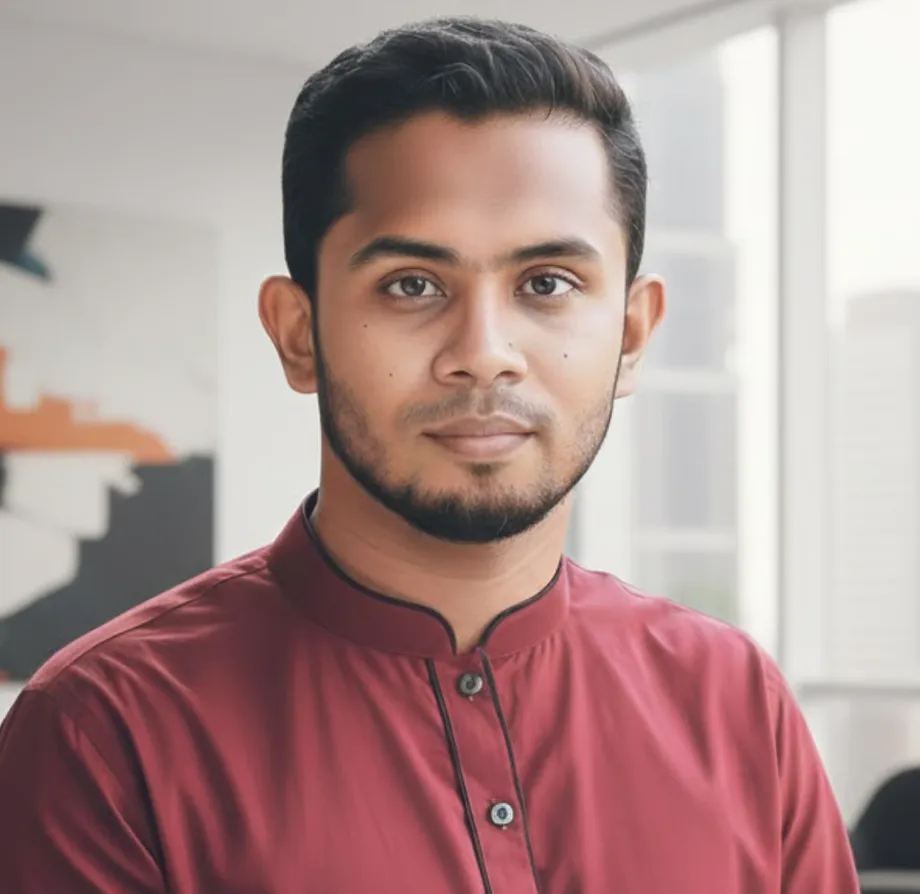
A minister steps aside as worshippers gather
Bangladesh's October 19, 2026, news picture brought together a cabinet resignation, major Hindu religious celebrations and a quieter scene of a child fishing in a field as monsoon water receded. In Dhaka, Ishraque Hossain announced that he was leaving his post as state minister for liberation war affairs, two days after taking part in an operation against drugs while carrying a firearm.
Contents
- A minister steps aside as worshippers gather
- What Ishraque announced
- How the Gandaria operation became a controversy
- Police investigate the use of firearms
- Seizure claims and a promise to continue
- Political criticism reaches Dhakeshwari
- A child at the centre of Kumari Puja
- Forty-eight minutes of Sandhi Puja
- Celebrations across Bangladesh and the next dates
- Key Points
At the National Press Club on Monday afternoon, the Dhaka-6 member of parliament defended his conduct in Gandaria's Ghuntighar area. He said he had asked Prime Minister Tarique Rahman to release him from ministerial duties so that the controversy would not embarrass the ruling Bangladesh Nationalist Party, or BNP, or overshadow the prime minister's work.
Earlier that morning, crowds gathered at Ramakrishna Math and Ramakrishna Mission in Gopibagh for Kumari Puja, where a girl aged six was worshipped as a representation of Goddess Durga. Across Bangladesh, the Bangladesh Puja Udjapan Parishad counted 33,851 puja mandaps, including 258 in the capital. Mandaps are the spaces where images of the goddess are installed and worship takes place.
In Ghoshkanda, Keraniganj, a photograph showed another child clearing water hyacinth to catch fish after rainwater drained from farmland. The image captured an everyday activity alongside the political confrontation and religious gatherings dominating the day's public events.
What Ishraque announced
Ishraque posted his intention to resign on Facebook shortly after 8:30am on Monday, then arrived at the National Press Club at about 1:45pm. His press conference began around 2pm, with party leaders and activists accompanying him.
Ishraque, the son of former Dhaka mayor Sadeque Hossain Khoka, said he wanted to concentrate on fighting drugs in Dhaka-6 and neighbouring areas. He described his departure as voluntary and said the prime minister had agreed to his request. Before the formal announcement, he also told journalists that the party had not wanted him to resign.
Government figures familiar with the matter gave a different account, saying Tarique Rahman had summoned Ishraque after Sunday's cabinet meeting at the Secretariat and instructed him to step down. Ishraque and his press officer had disputed that account on Sunday night, before his announcement the next morning.
The announcement concerned his ministerial responsibilities. The date of any formal administrative approval of his departure was not given. Before leaving his residence, Ishraque personally removed the ministerial emblem from his vehicle.
Nearly 200 party leaders and activists crowded into the press conference room, briefly disrupting proceedings. Ishraque asked them over the microphone to move outside, and many did.
How the Gandaria operation became a controversy
Ishraque's account began with complaints from residents of Ghuntighar and Munsirtek about drug sales and distribution. He said meetings with police and local political figures had considered ways to address the problem, including a proposed police outpost that never materialised.
According to Ishraque, a meeting on September 18 agreed to build community resistance to drugs with residents and police. He said the October 17 operation followed that decision and that police received notice shortly before it began because he feared advance information might leak.
Videos uploaded to his verified Facebook page at around 5:15pm on October 17 showed him and another person carrying firearms near the Gandaria railway line. The footage also showed people being chased and, in another sequence, police taking several people away in handcuffs.
The main developments unfolded over a month:
- September 18: Ishraque said residents and police agreed on a community initiative against drugs.
- October 17: He joined the Ghuntighar operation and posted videos that afternoon.
- October 18: Dhaka Metropolitan Police announced an investigation into the display of firearms.
- October 19: He announced his intention to resign on Facebook, followed by the National Press Club briefing.
Police investigate the use of firearms
Dhaka Metropolitan Police assigned the deputy commissioner of its Wari Division to investigate the incident and submit a report. The police inquiry concerns the conduct of Ishraque and his associates during the operation, including their display of firearms.
Shafiqul Islam, chief of the police Detective Branch, said legal action would follow if investigators found a breach of the law. Asked whether a minister could perform police duties, he declined to comment.
"If there has been any violation of the law, the DMP will take legal action," he said.
Ishraque said he held valid licences for a .32-bore pistol and a rifle. He said the second weapon had been with a colleague who also held a firearms licence. His explanation for taking the pistol in his hand was personal protection after people began running as his group entered the area.
Police are examining how the operation was conducted. Ishraque's defence rests on his account of the security situation, the involvement of police and his stated intention to hand suspects over for prosecution. No deadline for the investigation report was announced.
Seizure claims and a promise to continue
Ishraque said the group spent about 45 minutes walking through the area and entering several buildings in the presence of police. He claimed that approximately 300 grams of heroin, several bottles of alcohol and locally made weapons were recovered, and that police arrested six people.
His descriptions also included a schoolbag containing stolen mobile phones; another account described a stolen phone in the bag. The seizure quantities and arrest total were presented as Ishraque's account of the operation.
Ishraque said he had no personal or party interest in the campaign and wanted police to identify the main drug suppliers. He also alleged that criminal networks had international connections and used drones to drop drugs across the border. He presented those allegations as reasons to focus on supply routes rather than only arresting street sellers.
At the press conference, Ishraque apologised for any mistake or harm while maintaining that carrying the firearm had been justified:
"If I made any mistake, or if I hurt anyone through this operation, I would first like to apologise for that. But I firmly believe that I did nothing wrong that day. I kept the firearm in my hand only for as long as necessary to protect myself. After that, it was no longer visible in my possession," he said.
Ishraque promised to continue his campaign outside the ministry. He also said he would contest a future city corporation election if nominated by the BNP and would support another candidate if the party chose someone else. He previously contested the Dhaka South City Corporation election in 2020.
Political criticism reaches Dhakeshwari
Jamaat-e-Islami criticised the armed operation, describing it as an expression of intimidation. The dispute centred on the conduct of an elected representative taking part in an operation while openly carrying a weapon.
National Citizen Party chief coordinator Nasiruddin Patwary took a different position during a visit to Dhakeshwari Temple on Monday morning, before Ishraque's resignation announcement. He blamed Home Minister Salahuddin Ahmed's handling of law and order for leaving others to deal with the consequences of drug activity.
Patwary also criticised the government's protection of the Hindu community, referring to vandalism over the previous three to four months and cow slaughter at Jagannath University. He urged Muslims to consider Hindu neighbours when carrying out their activities.
The temple visit brought the day's political and religious news into the same setting. While worshippers gathered for Maha Ashtami, political figures were debating both public safety and the government's responsibility to protect communities.
A child at the centre of Kumari Puja
At Ramakrishna Math and Ramakrishna Mission in Gopibagh, devotees gathered before the ceremony to see the child chosen for Kumari Puja. The monastery's head, Swami Purnatmananda Maharaj, identified her as Ijja Chakraborty, a student at Ideal High School and College. Her name also appeared as Irya Chakraborty in descriptions of the event. Her ritual name was Uma.
The day's worship began around 9:30am. The child was placed on the ceremonial seat at about 9:50am, and Kumari Puja ended at 10:30am; another timing placed its opening at approximately 9:45am. Devotees gathered in front of the platform, with many taking photographs and videos.
The child held two lotus flowers, moving them to the beat of the drums and smiling during the ceremony. Kumari Puja honours a girl as a living representation of Durga and divine feminine power. The ritual generally involves girls aged between one and 16, with different ceremonial names according to age.
Swami Purnatmananda explained that worshippers approach the child with the reverence offered to the goddess. He connected the practice with Swami Vivekananda's worship at Belur Math in 1901, when nine girls were honoured during its first Durga Puja celebrations.
Amit Roy, who came from Rayerbazar with his wife Sumati Roy and daughter Nitu Roy, described the ritual as an expression of respect for women, motherhood and human dignity. His explanation reflected the human meaning devotees attach to worship centred on a child.
Forty-eight minutes of Sandhi Puja
At Dhakeshwari National Temple, Sandhi Puja included 108 lamps, 108 lotus flowers and 108 bel leaves offered to the goddess. Priest Barun Chakraborty explained that the ritual occupies the final 24 minutes of Ashtami and the first 24 minutes of Navami, making a period of 48 minutes.
The morning observance was listed as running from 7:55am to 8:43am. At Ramakrishna Mission, a description of the day's proceedings placed Sandhi Puja after Kumari Puja. The ceremony marks the junction between two religious lunar periods, with timing determined by the worship calendar.
Hindu mythology connects Sandhi Puja with Durga taking the form of Chamunda to defeat Chanda and Munda. At Dhakeshwari, prayers called for peace, the defeat of evil and the welfare of the country.
Gopal Chandra Debnath, president of the metropolitan public puja committee, described preparations that began the previous day. Volunteers collected lotus flowers, checked that petals and leaves remained intact, and managed lamps within the brief ceremonial period. Fans were switched off to protect the flames.
For Navami, Debnath said the temple had arranged approximately 250 to 300 large cooking vessels of mahaprasad, food offered during worship and then distributed among devotees. Volunteers and security personnel were assigned to manage the crowds.
Celebrations across Bangladesh and the next dates
The Bangladesh Puja Udjapan Parishad's count of 33,851 mandaps was nearly 1,500 higher than the previous year. Using that rounded increase gives a previous total of about 32,351, making this year's rise approximately 4.6 percent. Dhaka's 258 mandaps accounted for less than 1 percent of the national total, showing how widely celebrations extended beyond the capital.
In Dhaka, major gatherings included the Gulshan-Banani Puja Foundation's celebration at Kamal Ataturk Park, along with Kalabagan ground and Khamarbari. Worshippers also visited Tantibazar, Shakharibazar, Ramna Kali Mandir, Siddheshwari Kali Mandir, Dhaka University's Jagannath Hall and Uttara Sarbajanin Mandir.
Celebrations elsewhere included Kumari Puja at Glaxo Mor in Khulna. In Barishal's Ramakrishna Mission, lotus flowers were prepared for Sandhi Puja, while worship gatherings also took place in Nawabganj.
Maha Navami was scheduled for Tuesday, October 20, with prayers, concluding worship rituals and food offerings. Bijaya Dashami was scheduled for Wednesday, October 21, when devotees would carry Durga images in processions to designated rivers, ponds and other water bodies for immersion, known as Bisarjan.
Those dates set the next stage for worshippers and organisers. For Ishraque and Dhaka police, the immediate next step was the investigation into the Gandaria operation, even as he promised to continue work against drugs.
Key Points
- Ishraque Hossain announced his resignation as state minister on October 19 after controversy over an armed operation in Gandaria.
- He described the decision as voluntary; government figures said the prime minister had instructed him to step down.
- Dhaka Metropolitan Police assigned its Wari Division deputy commissioner to investigate the display of firearms.
- Ishraque claimed six arrests and the recovery of about 300 grams of heroin, alcohol, weapons and stolen phones.
- A girl aged six, worshipped under the ritual name Uma, was the focus of Kumari Puja at Dhaka's Ramakrishna Mission.
- Bangladesh had 33,851 puja mandaps, nearly 1,500 more than the previous year.
- Maha Navami was scheduled for October 20 and Bijaya Dashami for October 21.