Unpaid fine holds up a move to Langgak Duta
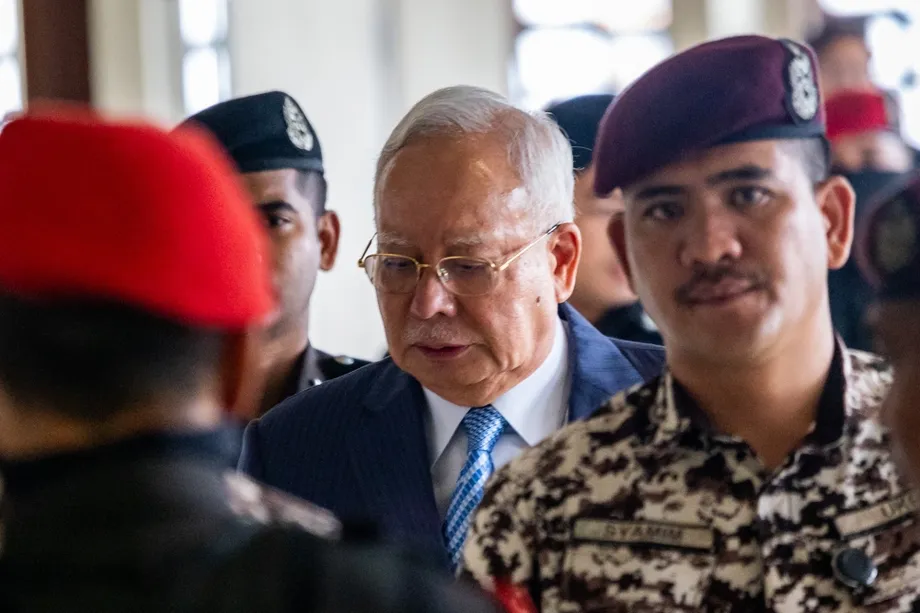
Malaysia's Prisons Department is completing the rules for Najib Razak's proposed house arrest, but the former prime minister remains in Kajang Prison because he has not paid the RM50 million fine required for the move. Home Minister Saifuddin Nasution Ismail confirmed both developments on October 18, a month after King Sultan Ibrahim granted the conditional pardon.
Contents
- Unpaid fine holds up a move to Langgak Duta
- Who is setting the house arrest conditions?
- Where must the RM50 million be paid?
- Why Najib says he cannot access the money
- How far has the fundraising gone?
- How the SRC sentence reached this point
- What happened to the earlier royal addendum?
- What would daily confinement involve?
- A separate 15-year sentence and political divisions
- Key Points
The arrangement would allow Najib to serve the remainder of his sentence in the SRC International case at home until August 23, 2028. His lead lawyer, Muhammad Shafee Abdullah, has identified the intended location as Najib's residence in Langgak Duta, Kuala Lumpur, where he would live with his family.
Two practical issues now shape the transfer: payment of the fine and completion of the rules governing confinement outside prison. Najib's lawyers say government restrictions on his assets limit his ability to raise the money. Prison authorities are preparing conditions for an arrangement that Saifuddin described as new to Malaysia.
A separate sentence also lies ahead. On October 14, the High Court refused to suspend Najib's 15-year prison term in another case involving 1Malaysia Development Berhad, or 1MDB. That sentence is due to begin after his current SRC sentence ends in August 2028.
Who is setting the house arrest conditions?
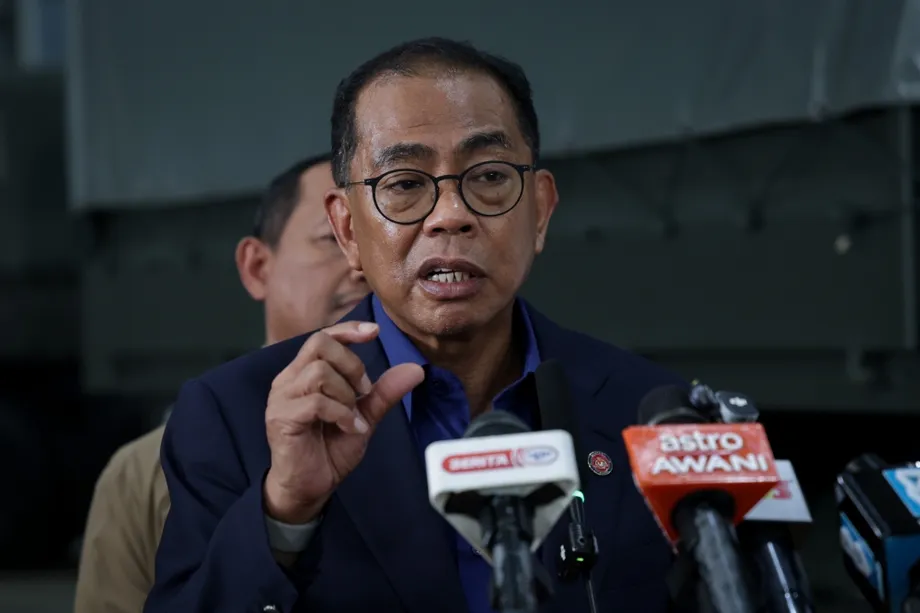
Saifuddin said the Prisons Department was acting on a letter from the Pardons Board secretariat authorising it to impose conditions. He spoke after a National Anti-Drugs Agency event at Felda Tenang in Jertih.
The home minister described the department's work as being in its final phase and explained the authority set out in the letter:
In the letter from the pardons board secretariat to the prisons department, it is stated that the department can impose any conditions.
Saifuddin said the department's task was to develop the regulations needed to put the decision into practice. No completion date or transfer date has been announced.
Attorney-General Mohd Dusuki Mokhtar said on September 19 that standard operating procedures were expected to cover visits, security and monitoring of Najib's movements. Those procedures are the practical instructions for supervising a sentence served at a private residence rather than inside a prison.
Shafee said Najib had already received the royal order and an appendix containing its terms. The Prisons Department was nevertheless still finalising implementation rules on October 18. Legal Affairs Division director-general Zamri Misman also said the department had given Najib further clarification about the mechanism.
Where must the RM50 million be paid?
Attorney-General Dusuki said the fine must be paid at the Kuala Lumpur High Court Registrar's Office because the SRC case was filed and heard there. On September 21, he confirmed that Najib's family had not made the payment.
Dusuki also explained that settling the fine would leave administrative work before any transfer. Asked about the timing, he said:
Once payment is made, I cannot say exactly when Datuk Seri Najib will be brought home, as the process may take some time.
Najib's lawyer Hasnal Rezua Merican said there was no specified deadline for paying the fine. Najib could meet the condition at any time, but would continue serving his sentence in Kajang Prison until payment.
The Legal Affairs Division of the Prime Minister's Department said the conditional pardon required compliance with every imposed term. A breach would revoke the pardon and require Najib to return immediately to prison to serve the remainder of his sentence.
Why Najib says he cannot access the money
Najib's legal team said in a September 20 statement that a substantial part of his assets, bank accounts and properties remained subject to government freezing orders and enforcement proceedings. Those restrictions, the lawyers said, put disposal of the assets beyond his sole control.
A freezing order restricts dealings with an asset. For Najib, his lawyers say the immediate problem is turning property or other holdings into money that can be paid to the court.
Messrs Shafee & Co., the firm representing Najib, described the steps he was considering:
In those circumstances, our client is presently taking advice and considering his options as to how best to give effect to the condition,
Hasnal said the legal team was seeking the release of some assets to help satisfy the payment requirement. An application could be made through the courts if necessary. He also said efforts to raise funds would require approval from the authorities.
Najib's legal team said he was grateful for assistance, particularly from Deputy Prime Minister Ahmad Zahid Hamidi, who leads the United Malays National Organisation, or UMNO. The statement also said Najib did not want party members or the public to feel obliged to contribute.
How far has the fundraising gone?
UMNO launched a solidarity fund following the September 18 pardon decision. Party secretary-general Asyraf Wajdi Dusuki said it collected more than RM634,000 in its first three hours and reached RM1 million by 9:30 a.m. the following day.
Asyraf said many supporters contributed RM10 or RM50. The early total showed a rapid response from donors, although the sum needed for the court payment was much larger.
RM1 million represents 2% of the RM50 million fine. Measured against that early fundraising total, another RM49 million would have been needed to cover the full amount through donations alone.
Saifuddin's October 18 statement confirmed that the court payment remained outstanding. The fundraising figures describe money collected by the party at an earlier point, while the transfer condition requires the fine to be paid to the court.
How the SRC sentence reached this point
Najib's SRC International conviction concerned RM42 million transferred into his personal bank accounts in 2014 and 2015. SRC was formerly a subsidiary of 1MDB, the state investment fund associated with the wider financial scandal.
In July 2020, Najib received a sentence of 12 years in prison and a RM210 million fine. He was convicted on three counts of criminal breach of trust, three counts of money laundering and one count of abuse of power. He entered Kajang Prison on August 23, 2022, after the Federal Court dismissed his final appeal.
The Pardons Board reduced the prison term to six years and the fine to RM50 million through the 2024 partial pardon. The sentence was halved, while the fine fell by RM160 million, or about 76% of its original amount.
The main developments leading to the current arrangement are:
- July 2020: Najib was sentenced to 12 years in prison and fined RM210 million in the SRC case.
- August 23, 2022: He began serving his sentence after losing his final appeal.
- 2024: A partial pardon reduced the prison term to six years and the fine to RM50 million.
- September 11, 2026: The Pardons Board deferred consideration of a fresh pardon petition.
- September 18, 2026: Sultan Ibrahim granted the conditional pardon following the board's 64th meeting.
- October 14, 2026: The High Court rejected a request to suspend the separate 15-year 1MDB sentence.
- October 18, 2026: Saifuddin said house arrest rules were nearing completion and the RM50 million remained unpaid.
What happened to the earlier royal addendum?
Najib previously sought house arrest through an addendum attributed to the former king, Sultan Abdullah. He argued that the additional royal document allowed him to serve the rest of his SRC sentence at home following the 2024 partial pardon.
The government initially disputed the document's existence and legality. The Pahang palace later verified its authenticity, while Najib pursued a judicial review seeking to enforce it. A judicial review allows a court to examine whether a public decision or action complies with the law.
In December 2025, the High Court dismissed that application. It found that the addendum had not been deliberated and decided upon at the Pardons Board meeting on January 29, 2024, and did not comply with Article 42 of the Federal Constitution, which governs royal pardons.
Najib appealed but withdrew that appeal in 2026. He then submitted the fresh petition that led to Sultan Ibrahim's September 18 decision. The present arrangements therefore follow a new pardon process after the earlier court challenge ended.
What would daily confinement involve?
Kepong Member of Parliament Lim Lip Eng has called for the basic conditions to be disclosed. His request covers who could visit Najib, whether he could use a telephone or the internet, and how prison authorities would monitor him.
Lim, a Democratic Action Party lawmaker, said the arrangement could influence future decisions about confinement at home. He acknowledged that some security information might need to remain confidential, while seeking public clarity on the restrictions.
Lim described Najib's continuing legal position in direct terms:
Najib is still a prisoner, not a person who has been released,
Shafee said prison authorities had advised Najib against disclosing the order's contents to avoid speculation. The detailed rules on visitors, communications, entertainment and possible electronic tracking have not been made public.
For Najib and his family, the proposed move would change where he serves the SRC sentence and allow them to live together. For the Prisons Department, it creates a need to supervise confinement at a private home under conditions whose breach would trigger a return to prison.
A separate 15-year sentence and political divisions
Najib was convicted in December 2025 of abuse of power and money laundering in a separate case involving more than RM2 billion linked to 1MDB. He received a 15-year prison term and a RM11.38 billion fine and is appealing the conviction.
On October 14, Judge Noor Ruwena Md Nordin rejected his request for a stay, meaning a temporary suspension of the sentence while the appeal proceeds. His lawyers had cited declining health and the scale of the financial penalties.
The judge said there were no special circumstances warranting a stay and explained her public interest reasoning:
The gravity of the offence is a more important public interest consideration, which this court must have regard to,
Shafee said the defence would apply directly to the Court of Appeal for a stay. He maintained that the High Court decision did not affect the royal order covering the SRC sentence. The separate 15-year term is due to begin after the SRC term ends in August 2028.
The pardon has also exposed divisions in Prime Minister Anwar Ibrahim's governing coalition. DAP leader Anthony Loke offered to resign as transport minister in protest and later said he would remain in Cabinet until Najib began house arrest. Other DAP ministers stayed in government to maintain political stability.
Anwar said the pardon decision did not weaken the government's position against corruption and abuse of power, and that ongoing cases must continue through the courts. UMNO president Zahid welcomed the decision. The immediate next steps remain concrete: payment of RM50 million, completion of prison procedures and the defence's planned application to the Court of Appeal.
Key Points
- Najib remains in Kajang Prison because the RM50 million fine required for house arrest is unpaid.
- The Prisons Department is finalising rules under authority conveyed by the Pardons Board secretariat.
- The proposed confinement would be at Najib's Langgak Duta residence until August 23, 2028.
- His lawyers say frozen assets restrict his ability to pay and are seeking access to some holdings.
- UMNO's fund reached RM1 million early in the campaign, equal to 2% of the required fine.
- A separate 15-year sentence is due to follow the SRC term; Najib is appealing and seeking its suspension.
- A breach of the house arrest conditions would revoke the conditional pardon and require an immediate return to prison.