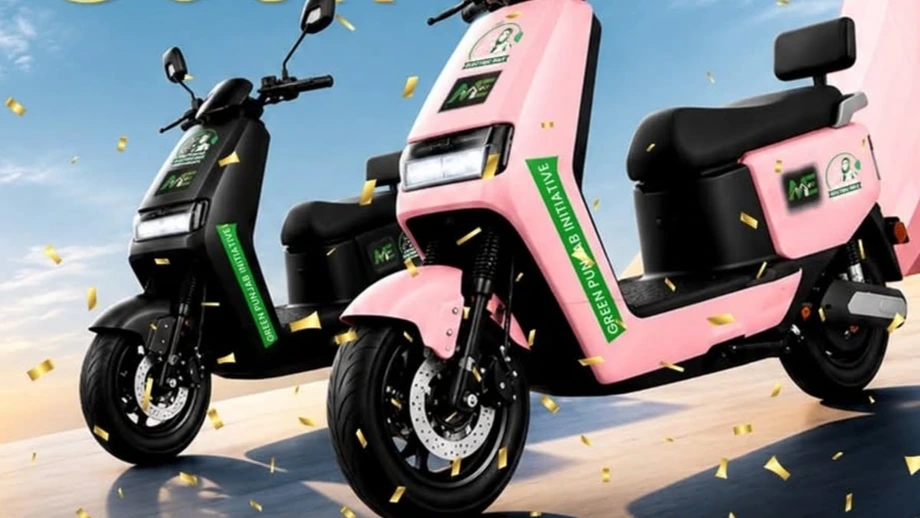
Student demand puts Punjab's bike promise to the test
Punjab Chief Minister Maryam Nawaz Sharif has announced that 100,000 electric bikes will be provided to students across the province this year, with distribution planned to begin on November 15. Speaking at the University of Sahiwal, she said 1.2 million applications had already been received, equivalent to 12 applications for every bike in the announced allocation.
Contents
- Student demand puts Punjab's bike promise to the test
- What students would pay
- Who qualifies and how selection works
- September preparations and a November distribution date
- Training, licences and safer travel
- Scholarships and laptops tackle other education costs
- Sahiwal also receives four development projects
- Expansion beyond students is still at the planning stage
- Key Points
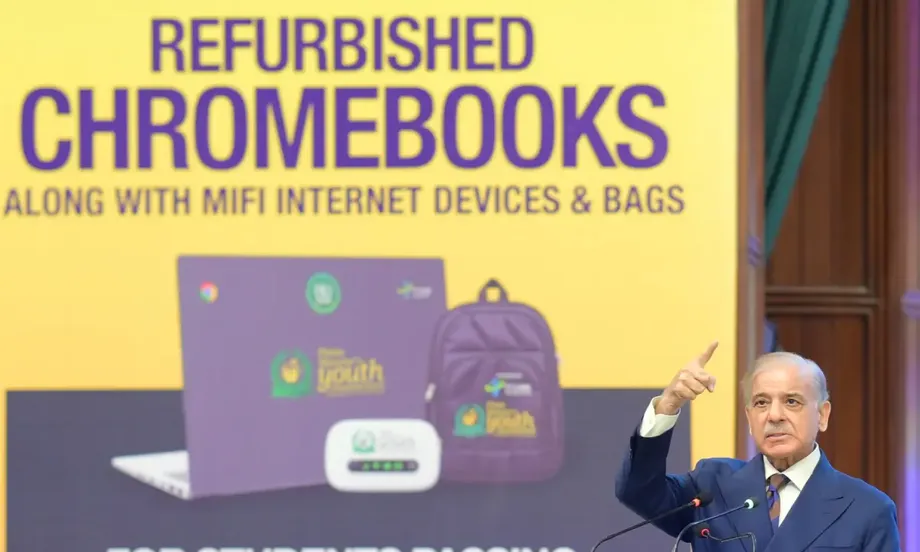
The announcement accompanied the distribution of Honhaar scholarships to 1,500 students and laptops to 4,700 male and female students. Together, the measures address several costs of attending college or university: paying for education, obtaining a computer and travelling to classes.
The Punjab government's CM e-Bikes Scheme page sets out a larger target for its second phase in 2026: more than 125,000 electric bikes. That is more than 25,000 above the 100,000 announced in Sahiwal. The government has not explained how the two allocations fit together.
For students considering an application, the practical details matter as much as the headline number. The official plan calls for no down payment, government payment of interest and insurance costs, and a monthly instalment of approximately Rs. 3,000, agreed in principle. Students would still repay the bike through instalments.
Maryam presented the assistance as part of a commitment to ensure that family finances do not prevent capable students from continuing their education. The scale of applications also makes selection a central issue: against the 100,000 allocation, the announced supply would cover about 8.3 percent of applications, assuming each application represents a different student.
What students would pay
The second phase would remove the initial down payment, an expense that can make a purchase difficult even when a household can manage smaller monthly payments. The government page also says proposals for charges other than the monthly instalment have been rejected.
Punjab would cover the interest and insurance associated with the bikes. Interest is the cost of borrowing money, while insurance provides financial protection under the terms of a policy. Government payment of those costs would leave students responsible for the agreed instalments rather than the full financing bill.
A payment of Rs. 3,000 a month would amount to Rs. 36,000 over 12 months. The final repayment period and total amount payable have not been specified in the announced arrangements, so families cannot yet calculate the full cost of acquiring a bike.
Electric bikes also require electricity for charging and ongoing maintenance. The benefit for an individual student will depend partly on the distance travelled, access to charging and the transport costs the bike replaces. The announcement gives no fixed estimate of those household savings.
Who qualifies and how selection works
The official scheme page lists three basic eligibility conditions: applicants must be at least 18 years old, be regular students at a degree college or university recognised by the Higher Education Commission, and hold a valid motorcycle learner's permit or driving licence.
A learner's permit allows someone to begin learning to ride under the applicable rules. Requiring a permit or licence connects access to the bike with the legal process for using it on public roads.
The same page describes an initial scheme covering five districts, equal quotas for male and female students at the divisional level, and proportional quotas for the rest of Punjab. It also says the electric bike category has no restricted quota. Detailed rules for the expanded phase will be needed to show how those provisions operate together.
Where applications exceed the available quota, the stated selection method is electronic balloting based on domicile district. Domicile identifies the district to which an applicant officially belongs. With applications far above the Sahiwal allocation, students will need to know which quota applies to them and whether their application meets the final requirements.
September preparations and a November distribution date
The government page and the Sahiwal announcement set out different stages of the rollout. The official second phase instructions call for the application portal to open in the second week of September 2026, with arrangements for eligible students to receive bikes within six weeks of opening. Maryam's Sahiwal announcement gives November 15 as the planned start of distribution.
The dates describe an earlier delivery target and a later announced distribution start. No explanation was given for the change. Students should use the final official application and allocation notices to establish when their own bike is due.
- Second week of September 2026: the chief minister directed authorities to open the second phase application portal.
- Within six weeks of opening: the official page sets a target for eligible students to receive their bikes.
- Sahiwal ceremony: Maryam announced 100,000 bikes and said 1.2 million applications had been received.
- November 15: distribution is planned to begin, according to the Sahiwal announcement.
The application total shows substantial demand, while the delivery schedule will determine when that demand begins to translate into transport for students. Application checks, allocation and handover are separate steps, particularly where a ballot is required.
Training, licences and safer travel
Students receiving bikes under the second phase are also promised a helmet, a safety rod and free riding training lasting two days. The bikes will use Lithium Iron Phosphate batteries, commonly called LFP batteries, a type of rechargeable battery used in electric vehicles.
Maryam said police had been directed to provide a special facility for students concerning driving licences for two days. That licensing arrangement is separate from the two days of riding training described on the scheme page.
For students who have never ridden a motorcycle, receiving a vehicle is only one part of becoming able to travel independently. The licence requirement, helmet and training are the announced measures intended to prepare recipients for road use.
Maryam also urged families to support their daughters' independence. The chief minister told parents:
Parents should empower their daughters and make them strong,
The equal male and female quotas described in the initial scheme could help shape access to that independence. Maryam also said there would be no compromise on girls' safety and that offenders would be brought to justice.
Scholarships and laptops tackle other education costs
The Sahiwal ceremony brought together support for travel, study expenses and access to technology. Honhaar scholarships went to 1,500 students from different educational institutions, while 4,700 male and female students received laptops.
Those figures describe recipients under two separate programmes; they do not give a combined count of distinct students. A student could need help with more than one expense, such as paying for education while also needing a computer.
Maryam said the government wanted achievement, rather than personal connections, to determine access to opportunities. She described this as a victory for merit over "sifarish", a term used for recommendations or influence through connections.
The chief minister stated her commitment to students whose families lack money:
We will not allow a lack of resources to become an obstacle in the education of bright students,
Maryam also said artificial intelligence laboratories were being established in all government schools and that shortages of necessary facilities would be addressed. No completion timetable was given for that programme. The school laboratory plan extends the education agenda beyond the college and university students eligible for the bike scheme.
Sahiwal also receives four development projects
Maryam inaugurated four development projects in Sahiwal valued together at Rs. 5.61 billion. They cover sport, commercial streets, agriculture and road transport, placing the student announcements alongside a broader package of local works.
The projects are the Maryam Nawaz Sports Arena, the renovation and beautification of Model Saddar Bazaar, a Model Agriculture Mall, and a dual carriageway connecting Sahiwal and Arifwala over 27 kilometres.
A dual carriageway separates traffic travelling in opposite directions onto different carriageways. The road project concerns movement between places, while the bike scheme concerns whether individual students have a vehicle available for their daily journeys. The announcements did not provide a separate cost for each of the four projects.
Maryam also linked her government's transport policies to household spending, saying passengers using electric buses had been protected from rising petrol and diesel prices. During the same address, she claimed that rural livestock theft had fallen by 80 percent. She did not give a comparison period for that figure.
Expansion beyond students is still at the planning stage
The official scheme page records an agreement in principle to extend the programme gradually to government employees, government departments and public delivery riders. Such an expansion would bring the financing model to people using bikes for work as well as education.
Eligibility, application procedures, repayment terms and implementation arrangements for those additional groups are to be announced through the relevant official portal. For now, the detailed conditions described on the page centre on students.
Punjab's immediate task is to turn a large allocation into completed handovers. Students and their families need the final instalment terms, the rules governing selection and a confirmed delivery schedule. Those decisions will determine who receives a bike and what receiving one costs.
Key Points
- Maryam Nawaz announced 100,000 electric bikes for students, with distribution planned from November 15.
- She said 1.2 million applications had been received, equivalent to 12 applications per announced bike.
- The official second phase page sets a larger target of more than 125,000 bikes in 2026.
- The plan provides for no down payment, government payment of interest and insurance, and monthly instalments of approximately Rs. 3,000 agreed in principle.
- Listed eligibility conditions include being at least 18, attending an HEC recognised institution and holding a motorcycle learner's permit or licence.
- Recipients are promised a helmet, a safety rod and two days of free riding training.
- The Sahiwal ceremony also included 1,500 scholarships, 4,700 laptops and four development projects worth Rs. 5.61 billion.