Two unanimous rejections interrupt 13 diplomatic nominations
Nepal's Parliamentary Hearings Committee has rejected Giri Bahadur Sunar as the proposed ambassador to Saudi Arabia and Chuda Mani Kharel as the proposed ambassador to Malaysia, while leaving Jigyan Kumar Thapa's nomination for Japan pending further documents. The committee approved the other 10 nominees, including those proposed for India, China and the United States.
Contents
- Two unanimous rejections interrupt 13 diplomatic nominations
- How the nominations reached this point
- Why Sunar failed the hearing
- Money and recruitment ties shaped Kharel's rejection
- Japan's nominee awaits confirmation from abroad
- Members disagreed over whether to wait
- The 10 nominees who received approval
- Earlier disputed nominations ended in withdrawal
- Why the Saudi Arabia and Malaysia posts matter
- Key Points
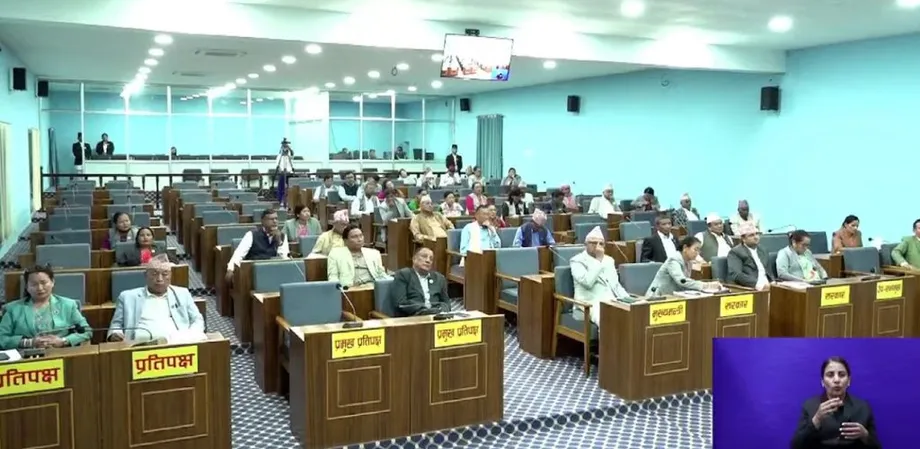
The decisions were taken at a Wednesday meeting at Singha Durbar in Kathmandu. Committee chair Bodh Narayan Shrestha announced the two rejections after lawmakers examined complaints about Sunar's conduct and Kharel's financial and business dealings. Both nominations were rejected unanimously by the committee, which has 15 members.
The outcome was unusual because lawmakers from the ruling party make up an overwhelming majority of the panel. Government backing did not secure approval for either candidate. Their proposed appointments cannot proceed through the current approval process.
Sunar faced a complaint alleging violence and threats against a woman, questions about his reported deportation from Germany, and allegations involving money and political connections. Kharel faced questions about financial transactions, alleged links with businesses that recruit workers for overseas employment, and his qualifications. Both denied allegations against them.
Thapa's case took a different course. He said he had already given up his Japanese permanent residency, but the committee was still waiting for documents confirming that account. Shrestha said a decision would follow after the Dashain festival, once the requested information could be considered.
How the nominations reached this point
The Cabinet recommended ambassadors for 13 countries at its meeting on Asoj 2, a date in Nepal's calendar. The parliamentary committee then examined the candidates through hearings, where lawmakers could question their suitability and consider complaints.
A government nomination puts a person forward for a post. Parliamentary approval is another step in that process. In this batch, 10 of the 13 candidates received approval, roughly 77 percent. Two were rejected and one remained pending.
- Asoj 2: The Cabinet recommended ambassador nominees for 13 countries.
- During the hearings: Lawmakers questioned nominees and examined complaints, documents and other material.
- Asoj 28: The committee approved 10 nominees, rejected Sunar and Kharel, and held Thapa's nomination.
- After Dashain: The committee was expected to return to Thapa's case after receiving and examining further documents.
Rastriya Swatantra Party lawmaker Deepak Bohara, a committee member, described the result as 10 approvals, two rejections and one deferred decision. The different outcomes reflected the committee's assessment of each candidate rather than a single decision on the Cabinet's entire list.
Why Sunar failed the hearing
Giri Bahadur Sunar's nomination was rejected after the committee concluded that he did not meet the standard of high moral character expected of an ambassador. A complaint alleging violence and threats against a woman was central to the questioning.
The woman, who was abroad, gave an account through a complainant. She alleged that Sunar threatened her after their relationship ended and sent intimate material to members of her family. The committee also obtained documents from Lalitpur police concerning an agreement to delete intimate videos.
Lawmakers questioned Sunar about the relationship, the alleged threats and the police agreement. He denied wrongdoing and said no police complaint, arrest warrant or criminal case had been filed against him. He also disputed the claim that he had entered the relationship while married, saying he was divorced at the time and had divorce papers.
Nepali Communist Party lawmaker Barshaman Pun urged Sunar to withdraw his candidacy during the hearing. Other members, including Bohara and Rastriya Swatantra Party lawmaker Gajala Shamim Miya Mikrani, also advised him to step aside. Sunar refused to withdraw, leaving the committee to make a formal decision.
Kabindra Burlakoti, a committee member and the Rastriya Swatantra Party's chief whip, said Sunar's presentation, documents and qualifications had appeared good, but the earlier incident raised a question about his character. Burlakoti also acknowledged Sunar's work as a member of the Dalit community.
Burlakoti described the standard he believed the diplomatic post required. Speaking in Nepali, he said:
An ambassador needs high moral character. Even though his incident is old, it appears connected to his character.
The committee also questioned Sunar about an allegation that German authorities had detained and deported him. Sunar denied having been deported. Shrestha said the rejection followed discussion of several concerns about the nominee.
Money and recruitment ties shaped Kharel's rejection
Chuda Mani Kharel's hearing focused on alleged financial misconduct, possible conflicts of interest and connections with operators of overseas recruitment businesses. Members also questioned whether his qualifications suited the Malaysia posting.
A conflict of interest arises when someone's private interests could compete with the duties of a public job. For an ambassador, lawmakers were examining whether personal financial or business relationships might affect decisions made on Nepal's behalf.
Kharel faced an allegation that he had taken money while promising to arrange grants for local governments. Questions also concerned an alleged payment of about 20 million Nepalese rupees from a recruitment business associated with Vijay Mishra. Kharel denied the allegations against him.
The route by which lawmakers received the accusations was unusual. No complaint against Kharel had been formally lodged with the committee, but members received allegations and audio and video material through WhatsApp. They used that material to question him during the hearing.
The committee paused its meeting to ask Kharel to withdraw his name. He declined. Members then took his nomination to a separate decision and unanimously rejected it.
Sunar also faced financial questions. A complaint alleged that he and Rastriya Swatantra Party lawmaker Khagendra Sunar had received 3.3 million rupees in connection with a police deputy inspector general's promotion. Another allegation said Giri Bahadur Sunar managed money collected by Khagendra Sunar. Asked about the money, the nominee described himself as someone living at his sister's house and earning a salary to support himself.
Questions about Sunar's political connections included his alleged affiliation with Hamro Nepal Party and efforts to support his nomination at the Foreign Ministry, reportedly involving spiritual leader Swami Anand Arun. These matters formed part of the broader scrutiny of his background.
Japan's nominee awaits confirmation from abroad
Jigyan Kumar Thapa's nomination was held because the committee had not received the documents it wanted concerning his Japanese permanent residency. Thapa told members he had already renounced that status.
Permanent residency, often shortened to PR, generally allows a person to live in another country indefinitely under that country's rules. It is different from citizenship. The committee wanted to establish Thapa's current status before deciding whether to approve him as Nepal's ambassador to Japan.
The panel sought further information from Japan through the government. According to Shrestha, the Foreign Ministry sent a letter saying the requested information had not yet arrived. The committee therefore had Thapa's explanation but was still waiting for the confirmation it had requested.
Members said Thapa had lived in Japan for about 25 years and had held permanent residency for seven years. They also raised concerns about his family's circumstances, saying his wife held permanent residency and property in Japan.
Those questions extended beyond his own residency document. Lawmakers discussed whether family interests and assets in the country where he would serve could create competing obligations in a diplomatic role. Some members also questioned his qualifications and ethical suitability.
Shrestha proposed waiting for a Foreign Ministry letter addressing both the renunciation of permanent residency and whether Thapa had received money from government funds. The committee agreed to keep the nomination pending while it sought clarification.
Members disagreed over whether to wait
Kabindra Burlakoti argued that Thapa's nomination should remain on hold until the required documents arrived. Barshaman Pun took a different position, arguing that the committee should reject it.
Rastriya Swatantra Party lawmaker Madhukumar Chaulagain supported waiting. He said that, once the committee had written for more information, deciding before a reply arrived would be inappropriate.
CPN UML lawmaker Padmakumari Aryal also favoured examining the documents before reaching a conclusion. She spoke positively about Thapa and supported proceeding if there was no obstacle, while accepting that the committee should wait for the requested paperwork.
Shrestha adjourned the meeting after hearing the competing positions. The next step was a decision after Dashain, subject to the documents being received and studied. No exact meeting date was announced.
The result left Thapa in a different position from Sunar and Kharel. His nomination remained open for consideration, with the committee waiting for information that members regarded as necessary to make their decision.
The 10 nominees who received approval
The committee unanimously approved nominees for 10 destinations across Asia, Europe and North America. India, China and the United States were among the countries covered by those approvals.
The approved candidates were:
- India: Dr. Nischal Nath Pandey.
- China: Dr. Kalyan Raj Sharma.
- United States: Chiran Jung Thapa.
- United Kingdom: Gaurav Shumsher Jung Bahadur Rana.
- Germany: Saru Joshi.
- Israel: Suresh Kumar Karn.
- Oman: Dr. Padmakshi Rana.
- South Korea: Prof. Dr. Sangam Shrestha.
- Spain: Prapti Sherchan.
- Sri Lanka: Dr. Manchala Kumari Jha.
The approvals allowed those nominations to move forward in the appointment process. The committee's announcement concerned parliamentary endorsement; it gave no dates for the nominees to take up their posts.
Earlier disputed nominations ended in withdrawal
The two rejections were described as a possible first in Nepal's parliamentary history for government nominees to ambassador posts. Earlier disputed nominations had ended with names being withdrawn before the committee formally rejected them.
One example involved Shailaja Acharya, who was recommended as ambassador to India when Girija Prasad Koirala was prime minister. The nomination attracted criticism over a family connection, and the government withdrew her name amid the prospect of questions in the parliamentary hearing process.
Another involved Ram Krishna Bhattarai, proposed as ambassador to Sri Lanka in 2081 in Nepal's calendar. Questions arose over his academic certificate, and he withdrew his own candidacy.
Sunar and Kharel were also given opportunities to withdraw. Both chose to keep their nominations before the committee. Members then voted separately on the two names and rejected both unanimously, making the panel's decisions the reason their current appointment processes stopped.
Why the Saudi Arabia and Malaysia posts matter
Saudi Arabia and Malaysia are major destinations for Nepalese workers seeking employment abroad. Large numbers of Nepalese citizens work in both countries, giving the embassies an important role in protecting citizens' interests, helping address labour problems and coordinating with local authorities.
Kharel's alleged recruitment connections were therefore directly relevant to the proposed Malaysia posting. Businesses that arrange overseas jobs deal with the same workers whose interests the embassy must represent. The hearing examined whether his relationships with those businesses could conflict with that responsibility.
Sunar's hearing centred on personal conduct and moral character. Members treated those questions as part of deciding who should represent Nepal in Saudi Arabia, rather than limiting their assessment to qualifications and a presentation at the hearing.
The government now has to determine how to proceed with the two rejected postings. No replacement nominees or timetable for fresh nominations were announced. Japan's appointment process, meanwhile, remained dependent on the requested documents and a further committee decision.
The batch shows three different results from the same Cabinet recommendation: approval for 10 candidates, rejection for two, and continued scrutiny for one. For the rejected candidates, the committee's unanimous votes ended their present route to appointment. For Thapa, the immediate task was to resolve the outstanding documentary questions.
Key Points
- The Parliamentary Hearings Committee unanimously rejected Giri Bahadur Sunar for Saudi Arabia and Chuda Mani Kharel for Malaysia.
- Sunar faced questions about conduct, alleged threats against a woman, financial matters and reported deportation. He denied allegations.
- Kharel faced questions about money, recruitment business connections and qualifications. He denied allegations.
- Jigyan Kumar Thapa's nomination for Japan remained pending confirmation about permanent residency and other requested information.
- The committee approved 10 of the 13 nominees, including those for India, China and the United States.
- A decision on Thapa was expected after Dashain. No exact meeting date or replacement timetable was announced.