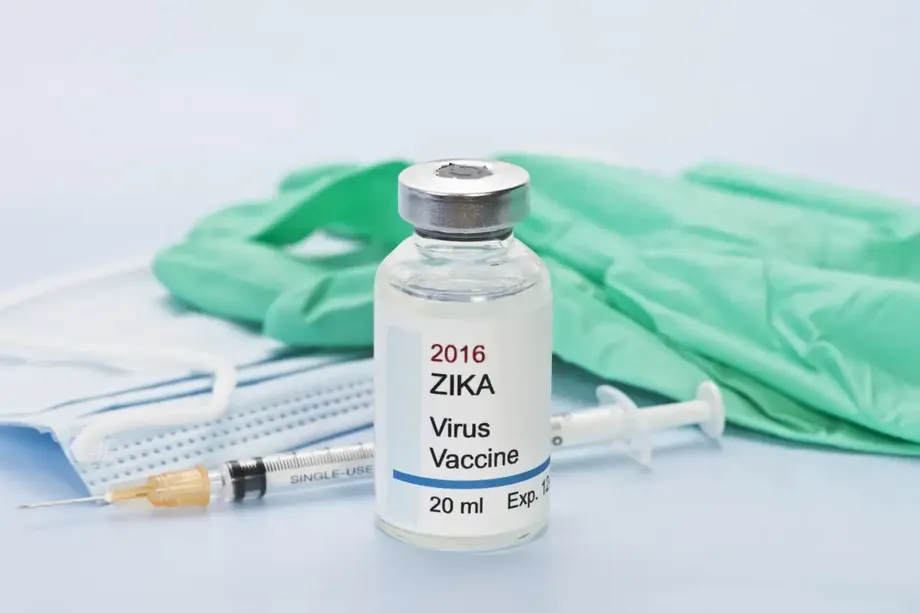
Two vaccine designs addressed protection and safety together
Two experimental Zika vaccines, MutB and MutC, protected mice against Zika virus after a single immunization, blocked transmission from pregnant mice to their fetuses, and produced immune serum that did not enhance infection by any of the four dengue virus serotypes in the experiments reported. The study, published on July 15, 2021, in Nature Immunology, tackled a difficult vaccine problem: antibodies against one virus can sometimes worsen infection with a related virus.
Contents
- Two vaccine designs addressed protection and safety together
- Why antibodies can become a safety concern
- The sequence of infections matters
- Changing the target without damaging the protein
- What happened in the mouse experiments
- Testing all four dengue serotypes
- How the immune response shifted
- A timeline and the limits of the evidence
- Key Points
The distinction between that finding and a claim about an mRNA vaccine in rhesus monkeys is essential. The MutB and MutC study used chimpanzee adenovirus vectors, designated AdC7, and mouse models. It was not an mRNA vaccine study and did not report rhesus monkey experiments. Its results support an approach to safer antigen design, not a conclusion that an mRNA vaccine has reduced this risk in primates or people.
The Chinese Center for Disease Control and Prevention, in its 2021 research summary, describes how researchers altered three key amino acids in the Zika envelope protein. The goal was to redirect the immune response away from an antibody target associated with dengue enhancement while retaining targets that generate protection against Zika.
The team included Gao Fu, Dai Lianpan and Yan Jinghua of the Institute of Microbiology, Chinese Academy of Sciences, as corresponding authors. Dai, Xu Kun of Hainan Medical University and Li Jinhe of the Beijing Institutes of Life Science were joint first authors. Their paper was titled Protective Zika vaccines engineered to eliminate enhancement of dengue infection via immunodominance switch.
Why antibodies can become a safety concern
Antibody dependent enhancement, or ADE, occurs when antibodies attach to a virus without neutralizing it effectively and help it enter certain immune cells. Those cells have receptors that recognize the antibody attached to the virus. Instead of stopping infection, the interaction can increase infection in susceptible cells.
This concern is especially relevant to Zika and dengue because their surface proteins share antibody targets. Both viruses can also be transmitted by Aedes aegypti mosquitoes, and their areas of circulation overlap. A vaccine intended to prevent Zika therefore needs evaluation for its possible effects on a later dengue infection.
The academic review Zika Virus Vaccines, published in 2018 and available through PubMed Central, describes a practical warning from Dengvaxia. Children without previous dengue infection who received that dengue vaccine were more susceptible to severe dengue complications than unvaccinated children, leading to a halt in its use in the Philippines. That experience shows why previous infection status can matter when assessing vaccine safety.
It does not establish that every vaccine against a flavivirus carries the same danger. Yellow fever and Japanese encephalitis belong to the same broader virus group, but the evidence discussed here concerns particular antibody responses, vaccine designs and sequences of infection. Treating ADE as a universal barrier for all vaccines in this family would go beyond those findings.
The sequence of infections matters
The 2018 review distinguished between dengue immunity followed by Zika infection and Zika immunity followed by dengue infection. These are different biological situations, and results from one cannot automatically explain the other.
At that time, experiments in rhesus monkeys with previous dengue immunity had not shown increased Zika viral burden or disease after Zika exposure. Preliminary human evidence also did not indicate worse Zika disease in people with existing dengue immunity. In the reverse sequence, however, studies in nonhuman primates had found increased viral levels and inflammatory signals after dengue serotype 2 exposure in animals previously infected with Zika.
By 2021, the Chinese CDC summary cited a human cohort study published in Science in 2020 that found previous Zika infection increased the severity of subsequent dengue infection. This later finding strengthened the reason to examine dengue safety during Zika vaccine development. It did not, by itself, demonstrate that a particular Zika vaccine would cause severe dengue.
Changing the target without damaging the protein
The researchers focused on the fusion loop, a region of the Zika envelope protein, also called the E protein. An epitope is a specific part of a molecule recognized by an antibody. The fusion loop contains an epitope that can attract antibodies capable of binding related viruses without reliably neutralizing them.
Simply changing this region can create another problem. The fusion loop is highly conserved among related viruses, meaning its sequence has remained similar through evolution. Altering it carelessly can damage the protein structure and reduce the vaccine's ability to stimulate useful immunity.
The team instead replaced the Zika fusion loop sequence with a corresponding sequence from an evolutionarily distant flavivirus specific to insects. This substitution changed three amino acids important for the binding of antibodies associated with ADE. Researchers then screened the modified proteins with protective antibodies and antibodies associated with enhancement, seeking designs that preserved desirable recognition while removing undesirable recognition.
Two selected designs, MutB and MutC, were incorporated into AdC7 vaccines. An adenovirus vector is a delivery vehicle used to carry genetic instructions for an antigen. An mRNA vaccine uses messenger RNA to deliver such instructions. Both can present a designed antigen to the immune system, but they are distinct vaccine platforms. Results from one platform do not establish the performance of the other.
What happened in the mouse experiments
Following one immunization, both MutB and MutC protected mice against experimental Zika exposure. The Chinese CDC summary reports that virus was not detected in the target tissues examined. It describes the response as sterilizing immunity, meaning protection strong enough to prevent detectable infection rather than merely reduce symptoms.
In pregnant mice, the vaccines also blocked transmission to the fetuses. Viral load was not detected in the placentas or fetal brains examined. This was a central outcome because the most serious consequences of Zika include microcephaly and other birth defects following infection during pregnancy.
These results need to remain tied to their experimental setting. Absence of detectable virus in the tested mouse tissues is not proof that a vaccine will prevent every fetal infection in humans. The summary does not give the animal counts, detailed detection limits or a duration of protection that would allow a fuller assessment of the size and durability of the effect.
The pregnancy result also addresses a more demanding question than whether a vaccine lowers virus levels in blood. The 2018 review noted that some earlier vaccine and antibody experiments reduced infection substantially but still left detectable Zika RNA in some placentas or fetal tissues. Protection of the mother and complete prevention of fetal exposure are related outcomes, but they are not interchangeable.
Testing all four dengue serotypes
The team tested whether serum from vaccinated animals could enhance dengue infection, using both laboratory and animal experiments. Dengue has four serotypes, distinct forms of the virus that must be considered separately in this safety assessment. The reported MutB and MutC results covered all four.
Serum from animals receiving the modified vaccines showed no dengue ADE in the tests described. Serum transfer experiments, in which serum from vaccinated animals was given to recipient animals, also found no enhancement associated with MutB or MutC. Such experiments help isolate the contribution of circulating antibodies from other parts of the vaccine response.
The comparison with the unmodified, or wild type, construct was important. Serum associated with that construct worsened disease and accelerated death in the animal experiments. The contrast supports the idea that antigen design changed the behavior of the antibody response, rather than simply producing a vaccine that protected against Zika.
No ADE detected under the tested conditions is not the same as no possible ADE under every condition. Antibody concentration, previous infections and the interval since vaccination would need consideration in subsequent studies. The 2018 review specifically called for careful measurement of existing flavivirus antibodies in primate studies and clinical trials.
How the immune response shifted
The researchers investigated why the modified designs behaved differently by sequencing individual B cell receptors from antigen specific cells in mouse lymph nodes. B cells produce antibodies, and their receptors help reveal which parts of an antigen dominate the immune response.
With the wild type vaccine, more than 60% of the analyzed B cell receptors used three groups of germline genes. These inherited gene segments help build antibody recognition regions. MutB and MutC produced a more dispersed pattern of gene use, breaking the concentration seen with the unmodified antigen.
The team then produced representative antibodies from the dominant groups. Those induced by the wild type vaccine targeted the fusion loop, bound all four dengue serotypes and showed substantial ADE. Dominant antibodies induced by MutB and MutC showed little binding to the dengue serotypes and no ADE in the reported assays.
Structural analysis of MutC offered a physical explanation. The modified protein maintained the paired E protein arrangement important for recognition by protective antibodies. At the altered fusion loop, changes in molecular shape and electrical charge interfered with binding by antibodies associated with enhancement. Together, the receptor analysis, antibody tests and structural work explain the immunodominance switch named in the paper: the response shifted away from a previously dominant target.
A timeline and the limits of the evidence
The findings belong to a research sequence spanning several years. Keeping those dates separate prevents earlier clinical trial information or later mouse results from being presented as a new primate vaccine breakthrough.
- 2015 to 2016: The Zika epidemic became an international public health emergency, with fetal injury a central concern.
- 2016 onward: The Chinese research team studied Zika E protein structures and protective antibodies, building the basis for antigen redesign.
- 2018: The academic review described vaccine trials, animal protection studies and unresolved concerns about dengue enhancement and fetal protection.
- 2020: A human cohort study cited in the Chinese CDC summary linked previous Zika infection to more severe subsequent dengue.
- July 15, 2021: The MutB and MutC study was published online in Nature Immunology.
The 2018 review listed 13 ongoing Zika vaccine trials across several platforms, including mRNA, DNA and inactivated virus vaccines. Those figures describe the field at that time, not current trial status. Likewise, the 2021 accounts stated that no Zika vaccine had been approved then; they do not establish today's regulatory position.
The MutB and MutC findings do not provide human efficacy results, pregnancy safety data in people or a clinical testing schedule. No future hearing, regulatory decision or trial start date is specified. Further assessment would need to address durability, previous dengue exposure, protection during pregnancy and whether the antibody response remains favorable as its strength changes over time.
The advance is therefore specific: a deliberate change to the antigen preserved Zika protection while removing detectable dengue enhancement in the mouse experiments. It offers evidence for a design strategy, while leaving the separate tasks of primate evaluation, clinical testing and regulatory review unresolved.
Key Points
- MutB and MutC were AdC7 vector vaccines tested in mice, not mRNA vaccines tested in rhesus monkeys.
- One immunization protected mice against Zika and blocked detectable transmission to fetal tissues in the reported experiments.
- Immune serum showed no ADE against any of the four dengue serotypes under the tested conditions.
- The design changed three key amino acids in the E protein fusion loop while preserving protective antibody targets.
- B cell and structural analyses supported a shift away from antibodies associated with dengue enhancement.
- The study was published on July 15, 2021, and did not establish safety or efficacy in humans.