A comeback with five wickets and screws in his foot
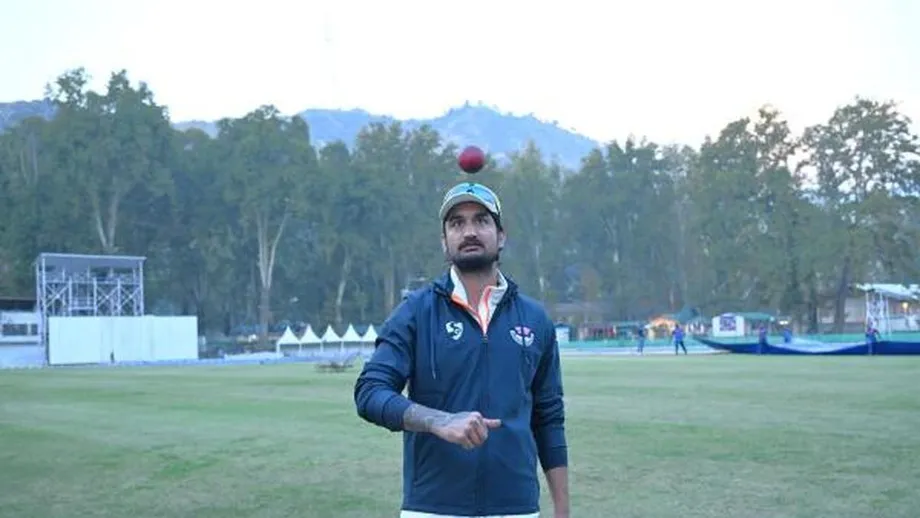
Rohit Sharma returned to the Ranji Trophy after nearly two years and took 5/36 in 21.2 overs as defending champions Jammu and Kashmir dismissed Madhya Pradesh for 196 at the Sher-i-Kashmir Stadium in Srinagar. Behind the figures was a recovery from an Achilles tendon rupture, a fractured heel bone and a further injury to the same area. The 32-year-old fast bowler still has screws in the foot that absorbs the impact of his bowling action.
Contents
- A comeback with five wickets and screws in his foot
- An injury that required more than one recovery
- The mental strain of waiting to play
- A fresh blow on the eve of the match
- Sunil Kumar helped turn pressure into wickets
- Shubham Sharma kept Madhya Pradesh in the innings
- A late wicket kept the contest open
- How the return fits Rohit's career
- A personal milestone in a busy Ranji opening round
- Key Points
His performance on Sunday, October 11, gave J&K a strong start to their 2026-27 Group A campaign. Left arm seamer Sunil Kumar contributed 4/69, while Auqib Nabi took 1/42. Together, Rohit and Sunil claimed nine of Madhya Pradesh's 10 wickets.
The visitors found resistance through captain Shubham Sharma, who made 79 from 174 balls. They also struck back before the close: Avesh Khan dismissed Shubham Khajuria with the penultimate delivery of the day, leaving J&K at 3/1 and still 193 runs behind.
For Rohit, who shares his name with the former India captain, the day was about returning to competitive cricket after a prolonged absence. It was also an immediate contribution to a team beginning the defence of its first Ranji Trophy title.
An injury that required more than one recovery
Rohit's absence followed an Achilles tendon rupture and a fracture to his heel bone. The Achilles tendon connects the calf muscles to the heel and helps the foot push off the ground. For a fast bowler, whose action involves running, jumping and landing repeatedly, injuries in that area affect the basic movements needed to play.
After recovering and returning to cricket, Rohit injured the same area again. Another lengthy period of rehabilitation followed. His last Ranji Trophy appearance before this match came against Services in October 2024, when he finished without a wicket.
He underwent surgery at Breach Candy Hospital in Mumbai. Recalling his conversation with the surgeon, the J&K fast bowler described how firmly he wanted cricket to remain part of his life.
I told the surgeon, 'Sir, I have to play again. Do whatever you need to do with my leg, but I want to return to cricket.'
The five wickets in Srinagar gave that ambition a concrete result. They did not, however, mean the physical work behind his return was finished. Rehabilitation remains part of his daily routine.
The mental strain of waiting to play
Rohit has played cricket at state level since 2011. Being unable to compete interrupted a routine built over many years, and he described the frustration of wanting to return before his body was ready.
Speaking about the recovery, Rohit said the psychological challenge outweighed the physical one.
It is more mental than physical. You want to play, but your body does not allow you to. That is challenging,
The Jammu and Kashmir Cricket Association kept him with the team during rehabilitation. That allowed him to remain connected with teammates and the dressing room even while he could not take the field. He also used the time to work on his fitness and bowling.
Time away from competition brought more time with his wife, parents and maternal uncle in Jammu. His daughter, six months old at the time of the report, was another source of happiness. Rohit described the break as a chance to attend family occasions that a cricket season would often keep him away from.
His account gives the comeback a meaning beyond the scorecard: he had to manage both the uncertainty of recovery and the loss of the familiar rhythm of playing for his state.
A fresh blow on the eve of the match
The return was complicated by another painful incident just before the Madhya Pradesh fixture. While batting in the nets on the eve of the match, Rohit was struck in the area where he had undergone surgery by a delivery from Umran Malik.
The extent of that knock was not specified. Rohit nevertheless played the following day and completed 21.2 overs, equivalent to 128 legal deliveries. Each over required repeated loading of the foot that had been surgically repaired.
Explaining the continuing demands on his body, Rohit said the screws remained in place and that recovery work was still necessary.
I still have screws in my landing foot. The bone near my ankle that fractured has been fixed with screws. My landing foot has to bear the load when I bowl, so rehabilitation and daily work remain essential. That is the nature of this profession,
His bowling figures show what he achieved on the day, but they do not establish that the injury concerns are over. No further medical assessment or timetable for reducing his rehabilitation work was reported.
Sunil Kumar helped turn pressure into wickets
J&K chose to bowl after winning the toss, and Sunil Kumar troubled Madhya Pradesh's openers before dismissing Yash Dubey. Rohit then applied pressure of his own, preventing the visitors from settling into a sustained rhythm.
Sunil's four wickets were central to keeping the innings below 200. He had an opportunity to take five himself but dropped a sharp return catch offered by Shubham Sharma. Later, he dismissed Aryan Pandey and removed Avesh Khan with the next delivery, breaking through the lower order in the final session.
Rohit's 5/36 came at a cost of roughly 1.69 runs per over. That combination of wickets and restricted scoring helped J&K maintain control even when Madhya Pradesh built partnerships. Sunil finished with 4/69, while Nabi, who struggled to find his rhythm, eventually claimed the remaining wicket.
The distribution matters for J&K's opening match as champions. On a day when Nabi was below his best, two other seamers supplied almost all the dismissals. Rohit's return added a productive option to an attack already facing strong competition for places.
Shubham Sharma kept Madhya Pradesh in the innings
Madhya Pradesh fielded three debutants, placing a particular burden on their experienced batters. Captain Shubham Sharma responded with a patient 79 containing eight fours. His innings accounted for about 40.3 percent of the team's total of 196.
He shared a stand of 65 for the fourth wicket with debutant Chanchal Rathore, then added 51 for the seventh wicket with Aryan Pandey. Those two partnerships produced 116 runs, about 59.2 percent of Madhya Pradesh's innings total.
The figures illustrate how much of the visitors' resistance depended on their captain being able to build partnerships at different stages. Even after earlier wickets had fallen, the stand with Pandey gave Madhya Pradesh a route toward a more competitive total.
J&K closed that route in the final session. Madhya Pradesh lost their last four wickets for 34 runs, with Sunil's consecutive dismissals helping bring the innings to an end. Shubham's contribution prevented a smaller total, but it could not carry the visitors beyond 196.
A late wicket kept the contest open
J&K did not finish the day with an entirely comfortable reply. Avesh Khan trapped opener Shubham Khajuria leg before wicket off the penultimate ball, leaving the home side at 3/1.
A leg before wicket dismissal occurs when the ball strikes the batter's body and the umpire judges, subject to the laws governing its path and impact, that it would otherwise have hit the stumps. Here, it gave Madhya Pradesh a breakthrough just before play ended.
J&K's bowling had put them in a promising position, but their batting response was still barely underway. They needed another 193 runs to draw level with Madhya Pradesh's first innings total, with nine wickets remaining.
The distinction is important: bowling a side out cheaply creates an opportunity rather than deciding the match. No result, later innings score or confirmed schedule for subsequent play was included in the reports of the opening day.
How the return fits Rohit's career
Before facing Madhya Pradesh, Rohit had played 22 first class matches and taken 39 wickets at an average of 34.66. His five wickets in Srinagar took that career tally to 44. He had also played eight List A matches and five Twenty20 games, taking eight wickets across those formats, all in List A cricket.
Reports differ on whether the Srinagar performance was his first or second five wicket haul. The detailed accounts of his career and the match describe it as his second in first class cricket. A broader roundup of the opening day's matches calls it his maiden haul. The reported match figures, 5/36, are consistent.
His recent route back to the side can be traced through three points:
- October 2024: Rohit played against Services and went without a wicket in his last Ranji Trophy appearance before the absence.
- Earlier in October 2026: He was named in J&K's Irani Cup squad but did not make the playing XI as Rest of India won by 167 runs in Srinagar.
- October 11, 2026: He returned against Madhya Pradesh and took five wickets on the opening day.
Selection for the Irani Cup squad had brought him close to a return. The Ranji opener supplied the opportunity to show what he could contribute in a match.
A personal milestone in a busy Ranji opening round
Rohit's performance came on a day when several established players and emerging batters made substantial contributions elsewhere. Mohammed Shami took 4/30 in 17.3 overs for Bengal against Delhi in Kalyani, helping dismiss Delhi for 240. His spell included nine maiden overs, meaning overs in which no runs were charged to the bowler.
In Group A, Akshay Wadkar and Yash Rathod scored centuries as Vidarbha recovered from 54/5 to reach 300/5 against Puducherry. Karnataka captain Ravichandran Smaran made 126 from 218 balls against Andhra after his side had fallen to 22/4, helping Karnataka reach 274.
Those performances place the Srinagar spell within an opening round marked by both bowling success and batting recoveries. Rohit's distinction was the long injury absence behind his contribution and the immediate value it brought to the defending champions.
He has also changed how he prepares. Describing his approach to practice, the J&K fast bowler said he now aims to reproduce the effort required in competition.
Now, whenever I practise, I try to bowl with the same intensity that I would maintain in a match,
The competition for places in J&K's pace attack remains strong. For this opening day, however, Rohit had delivered a clear contribution: five wickets, sustained control and a successful return to the format in which he had not played for nearly two years.
Key Points
- Rohit Sharma took 5/36 in 21.2 overs on his Ranji Trophy return for Jammu and Kashmir.
- Madhya Pradesh were dismissed for 196, with Sunil Kumar taking 4/69 and Auqib Nabi 1/42.
- Rohit's comeback followed an Achilles tendon rupture, a heel fracture, surgery and another injury to the same area.
- Madhya Pradesh captain Shubham Sharma scored 79 from 174 balls and shared partnerships of 65 and 51.
- J&K ended the opening day at 3/1 after Avesh Khan dismissed Shubham Khajuria.
- Detailed career accounts describe Rohit's haul as his second in first class cricket, although one roundup calls it his first.