New Routes and More Trains Start on January 26
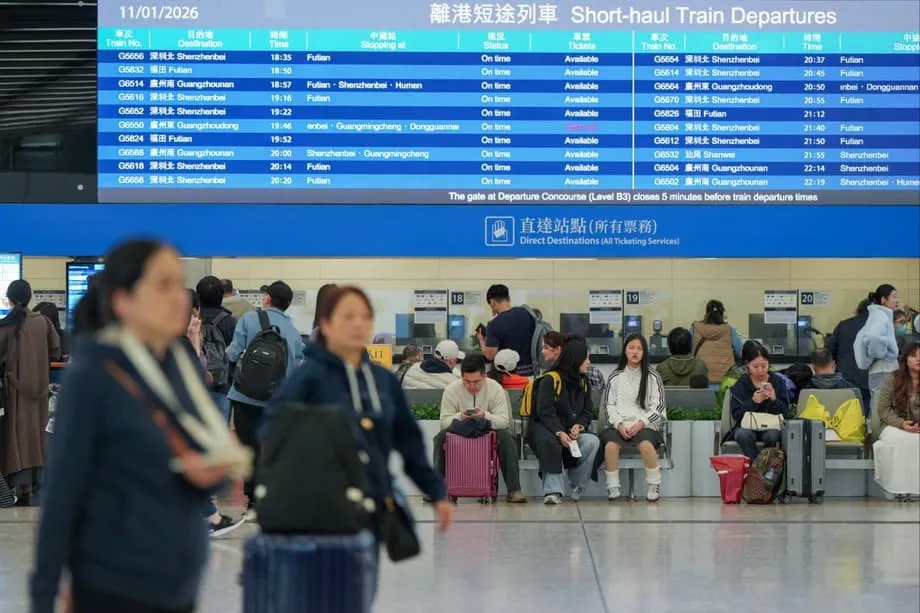
Hong Kong West Kowloon Station will gain direct high speed rail services to 16 more mainland destinations from January 26, taking its network to 110 destinations. MTR Corporation's expansion includes Nanjing and Wuxi in Jiangsu province, Hefei in Anhui province and nine new stops in Guangdong, alongside more frequent services on established routes.
Contents
- New Routes and More Trains Start on January 26
- Nanjing, Wuxi and Hefei Join the Direct Network
- Nine New Stops Extend Guangdong Connections
- Western Guangdong Routes Laid the Groundwork
- Shanghai Sleeper Trains Will Run Every Day
- Guangzhou, Shantou and Fuzhou Gain Services
- Hong Kong Connects to a Network Exceeding 50,000 Kilometres
- Expansion Follows Nearly Three Years of Disruption
- Electronic Tickets Simplify Station Travel
- Visa Free Transit Adds an International Travel Option
- Business, Tourism and Family Travel Share the Benefits
- Tracks and an Underground Hub Support the Services
- Further Growth Depends on Demand and New Lines
- The Bottom Line
The changes also bring daily sleeper trains to Shanghai Hongqiao, replacing a schedule of four pairs a week. Services to Guangzhou South, Shantou and Fuzhou will expand, giving passengers more choices for journeys ranging from short trips into Guangdong to overnight travel to China's financial capital.
MTR says the revised timetable will provide 106 pairs of trains daily, rising to 107 on Fridays, Sundays and Mondays and up to 109 on Saturdays. A train pair means one service in each direction. The totals cover short journeys, longer routes and sleeper services.
Jeny Yeung, chief executive officer of MTR Corporation, described the cooperation between the railway operator and authorities in Hong Kong and mainland China behind the expansion.
MTR has worked closely with government departments of the Hong Kong Special Administrative Region and the mainland, as well as mainland railway authorities, to continuously add new destinations and enhance services, further facilitating cross-boundary travel, unlocking the economic potential of high-speed rail, and supporting national development.
Demand was strong on the first day of ticket sales. By the afternoon, business class seats on the January 26 train to Nanjing South, costing HK$3,136 (US$402.40), had sold out. Only seven first class seats remained, priced at HK$1,628. Several seating classes on trains to the newly added destinations sold out quickly, showing interest in the new connections for both leisure and business travel.
Nanjing, Wuxi and Hefei Join the Direct Network
Nanjing and Wuxi give Hong Kong passengers direct access to more of the Yangtze River Delta, one of China's most economically powerful regions and an area with a rich cultural heritage. Hefei adds another destination with historical attractions and a growing role in technology and manufacturing.
Nanjing, an ancient capital associated with the Six Dynasties, offers visitors a night cruise along the Qinhuai River, its famous salted duck and the Sun Yat-sen Mausoleum. The mausoleum's grand architecture is among the attractions through which visitors can explore the city's combination of historical heritage and modern life.
Wuxi is known as the Pearl of Taihu Lake. Its waterways offer a quieter route through Jiangnan, the region associated with picturesque waterside scenery, making it an option for passengers seeking a break from Hong Kong's busy urban surroundings.
Hefei's attractions include heritage linked to Bao Zheng, also known as Lord Bao, and the Three Kingdoms period. Bao Gong Park introduces visitors to Bao Zheng's reputation for honesty and integrity, while Binhu Wetland Park offers lakeside and mountain scenery.
Nanjing, Wuxi and Hefei are also included in the Individual Visit Scheme. That scheme concerns eligible mainland residents visiting Hong Kong and Macao individually; Hong Kong residents travelling in the other direction use the applicable mainland entry arrangements. For passengers leaving West Kowloon, the practical change announced here is the availability of direct trains to these destinations.
Nine New Stops Extend Guangdong Connections
Guangdong accounts for nine of the 16 new destinations: Qingyuan, Huidong, Huizhou South, Shantou South, Huilai, Lufeng East, Lufeng South, Chaonan and Xingning South. Together, they broaden the choice of places passengers can reach directly from Hong Kong.
Qingyuan's addition is part of the wider development of transport connections around the Greater Bay Area. The Guangdong routes strengthen economic and social ties between Hong Kong and neighbouring cities, while making regional journeys more convenient.
The announced total is 16 new destinations, although the destinations named here account for 12: the three cities in Jiangsu and Anhui and the nine Guangdong stops. The remaining four are not identified in the announcement details described in this article.
Western Guangdong Routes Laid the Groundwork
The January expansion follows the introduction of the Zhanjiangxi route in October. That service connected Hong Kong with five destinations in western Guangdong: Jiangmen, Kaiping South, Yangjiang, Maoming and Zhanjiang West. Zhanjiangxi is the station name rendered in English as Zhanjiang West.
Jiangmen is one of the 11 cities in the Guangdong-Hong Kong-Macao Greater Bay Area. Following those additions, Hong Kong's direct high speed rail connections covered seven major cities in the area: Shenzhen, Guangzhou, Zhaoqing, Foshan, Dongguan, Huizhou and Jiangmen.
Yeung, identified as MTR's Hong Kong transport services director in connection with that earlier expansion, pointed to the deep ties linking overseas Chinese communities in Jiangmen and Kaiping with Hong Kong residents and overseas Chinese. Those family and community connections give the routes a purpose beyond sightseeing.
Jiangmen also has a national level zone for high technology industrial development and several bases for youth innovation and entrepreneurship. These facilities make it a destination for business travellers as well as tourists, connecting the railway expansion with opportunities for commercial exchanges.
Shanghai Sleeper Trains Will Run Every Day
Shanghai Hongqiao's sleeper service will move from four pairs of trains a week, operating from Friday to Monday, to daily departures. MTR is increasing the service in response to strong demand since its launch.
The overnight schedule follows a simple pattern: leave in the evening and arrive in the morning. Passengers can spend the journey resting and begin activities after arrival, making fuller use of their time at the destination. Some trains will also stop at Nanchangdong and Ganzhouxi, adding options for passengers travelling to other regions.
Daily departures remove the need to arrange a trip around the existing four operating days. That gives business travellers and tourists greater flexibility when planning visits between Hong Kong and Shanghai, two of Asia's most important financial centres.
The sleeper upgrade reflects the popularity of overnight rail as an alternative to flying for journeys of this kind. Combining travel and a night's rest can reduce the need for overnight accommodation, while offering a comfortable way to reach the destination ready for the day.
Guangzhou, Shantou and Fuzhou Gain Services
Guangzhou South, also called Guangzhounan, will have 37 daily train pairs linking it with Hong Kong West Kowloon. Some trains that previously ended at Futian or Shenzhen North, known as Shenzhenbei, will continue to Guangzhou South.
The fastest journey to Guangzhou South takes 47 minutes. More departures mean a wider choice of travel times and shorter waits between available services for passengers heading to Guangdong's capital for work or leisure. Guangzhou's role as a major commercial and transport centre makes the additional trains useful for regional business connections.
Shantou services will increase to five pairs daily. Some trains will stop at Huiyangdong, Lufengdong and Shantounan, extending the range of stations served along the route. Services to Chaoshan, Xiamen and Fuzhou are also being improved.
One of the three pairs of trains currently operating daily between Hong Kong West Kowloon and Xiamen will be extended to Fuzhou. The changes widen travel choices for eastern Guangdong and southern Fujian, combining new destinations with adjustments to existing services.
Hong Kong Connects to a Network Exceeding 50,000 Kilometres
Hong Kong's expanded timetable brings its direct services further into China's high speed rail system, the world's longest and the one with the highest ridership. The mainland network has more than 50,000 kilometres in operation and accounts for roughly two thirds of the world's total.
The network extends to all provincial level administrative divisions and the Hong Kong Special Administrative Region. Its scale allows passengers to use rail for both short journeys between neighbouring cities and much longer trips across provinces.
Train letters help describe different types of service. G series trains are the fastest and most common, reaching about 350 kilometres per hour on dedicated high speed lines. D series trains usually operate at 200 to 250 kilometres per hour. C series trains serve shorter intercity routes, typically at 200 to 350 kilometres per hour.
For Hong Kong residents and visitors, access to 110 destinations changes the range of mainland trips possible without changing trains. The connections support tourism, business visits and family travel, while strengthening links within the Greater Bay Area and with more distant regions.
Expansion Follows Nearly Three Years of Disruption
High speed rail services between Hong Kong and mainland China were suspended on January 31, 2020, during the COVID-19 pandemic. They resumed on January 15, 2023, after nearly three years, as part of the Hong Kong government's gradual reopening of the boundary and return to normal travel.
Families separated by travel restrictions, businesses dependent on mainland connections and the tourism industry all faced difficulties during the suspension. The restart brought relief to passengers seeking to reconnect with relatives, friends and business partners.
Mang Lee, a passenger aged 33, was among dozens passing through border checks at West Kowloon before boarding trains when services resumed. Lee described how the railway's return changed the journey home.
The resumption of the high-speed railway has made it very convenient for us and has brought us closer to home. For the past three years, due to the pandemic, it has not been easy to enter China in any way.
Only short journeys were available at first, with longer services returning gradually. The January 26 expansion carries that recovery into a wider network, restoring and improving services after the pandemic interruption and responding to demand for travel between Hong Kong and the mainland.
The main stages of that change are:
- January 31, 2020: Hong Kong's high speed rail services to mainland China were suspended.
- January 15, 2023: Services resumed, initially with short journeys.
- October: The Zhanjiangxi route added five destinations in western Guangdong.
- November 6: West Kowloon's cross border terminus joined the 240 hour visa free transit programme.
- January 26, 2026: The expanded timetable is scheduled to add 16 destinations and daily Shanghai sleeper services.
Electronic Tickets Simplify Station Travel
West Kowloon's ticketing arrangements have also changed since the pandemic. Electronic tickets have replaced paper tickets and are linked to passengers' travel documents. Travellers can use the relevant document to pass through gates and board, following the system used across China's high speed rail network.
West Kowloon Station connects with Austin Station on the MTR Tuen Ma Line and Kowloon Station on the Tung Chung Line and Airport Express. Overhead bridges or pedestrian tunnels provide access between the stations, linking longer rail journeys with Hong Kong's local transport network.
The station opens daily from 6 am to midnight and provides parking spaces for passengers. English signage helps international visitors navigate the building, while its connections and ticketing arrangements support a smoother journey through the rail hub.
Visa Free Transit Adds an International Travel Option
China's National Immigration Administration confirmed that the 240 hour visa free transit programme was extended to the cross border West Kowloon high speed rail terminus from November 6. The programme allows eligible travellers from 55 countries to spend up to 10 days in the permitted areas across 24 mainland provinces before continuing to a third country.
International visitors can fly into Hong Kong and then cross into the mainland through the rail terminus, opening more choices for trips that include both Hong Kong and mainland destinations. The arrangement makes visits to cities such as Guangzhou, Shenzhen, Nanjing, Wuxi and Hefei possible without arranging a full visa in advance, provided travellers meet the transit conditions.
A transit journey involves continuing onward rather than simply returning along the same route. Passengers using the scheme must carry an onward ticket dated within the 240 hour period and complete a brief arrival form. The onward travel requirement is central to planning an eligible itinerary.
Business activities such as meetings and site visits are permitted. That makes the scheme useful to corporate travel managers arranging visits that combine Hong Kong with mainland business destinations, as well as tourists planning trips to several cities.
Hong Kong tourism officials hope the arrangement will attract more visitors stopping in the city on their way elsewhere and strengthen its role as a gateway for short visits to China without a visa. The rail expansion increases the choice of direct destinations for those itineraries.
Business, Tourism and Family Travel Share the Benefits
Hong Kong's connections to Nanjing, Hefei and other mainland economic centres are expected to support access to markets, suppliers and business partners. Nanjing has a strong industrial base, while Hefei has developed into a major centre for technology and manufacturing.
Direct rail links can make business exchanges easier and support Hong Kong's role as an international financial hub. For mainland destinations, the same services bring access to tourists, business visitors and potential investors travelling from Hong Kong or using the city as their entry point.
Nanjing and Wuxi combine cultural attractions with modern economic activity, giving them opportunities to draw leisure and business passengers. Guangdong's expanded routes also serve family and community connections, including the longstanding ties associated with Jiangmen and Kaiping.
Within the Greater Bay Area, improved passenger transport makes travel between places of residence and work easier and supports exchanges involving goods and services. The wider goal is a more connected regional economy, consistent with national development plans to strengthen the area's competitiveness as a global economic centre.
Tracks and an Underground Hub Support the Services
China's high speed railway uses track technology designed to support safe operation at high speeds. One important feature is the widespread use of ballastless track, which replaces the traditional bed of gravel beneath the rails with a solid concrete slab.
The concrete foundation provides a smoother ride, reduces maintenance costs over the longer term and supports frequent, heavy train traffic. This infrastructure helps the network accommodate services ranging from short intercity trips to journeys across several provinces.
West Kowloon, described as the world's largest underground station, is Hong Kong's hub for the network. It has five floors, with G1, B1 and B2 accommodating the floor level lobbies, ticket booths and arrival concourses respectively.
The station combines that large underground structure with access to local rail lines, pedestrian connections, ticketing systems and passenger facilities. Its design and operation reflect the focus on efficiency and convenience across the wider high speed rail network.
Further Growth Depends on Demand and New Lines
China plans to extend its high speed rail network to 60,000 kilometres by 2030. The January 26 changes form one stage in Hong Kong's participation in that continuing development, with further service improvements likely as passenger demand grows and new mainland lines are completed.
The railway's role extends beyond individual journeys. More direct connections help people maintain family relationships, conduct business and visit destinations that previously required less convenient travel arrangements. Those exchanges contribute to economic activity and closer ties between Hong Kong and mainland cities.
Future cooperation could include additional rail connections, improvements to border facilities and closer coordination between transport systems. These are prospects for continued development; the immediate scheduled changes are the 16 added destinations, daily Shanghai sleeper trains and expanded services on established routes.
The Bottom Line
- From January 26, 2026, Hong Kong will gain 16 direct mainland rail destinations, bringing the total to 110.
- Named additions include Nanjing, Wuxi, Hefei and nine Guangdong stops.
- Shanghai Hongqiao sleeper trains will increase from four pairs a week to daily services.
- Guangzhou South will have 37 daily train pairs, while Shantou services will rise to five pairs daily.
- One of the three daily Xiamen train pairs will extend to Fuzhou.
- The revised network will offer 106 to 109 train pairs a day, depending on the day of the week.
- Business class tickets to Nanjing South for January 26 sold out on the first day of sales.
- Eligible travellers from 55 countries can use West Kowloon for the 240 hour visa free transit programme, subject to its conditions.
- Hong Kong's expansion connects passengers to China's network of more than 50,000 kilometres, with a national target of 60,000 kilometres by 2030.