13,835 Recruits, 7,726 Deaths and a Promise Left Unfulfilled
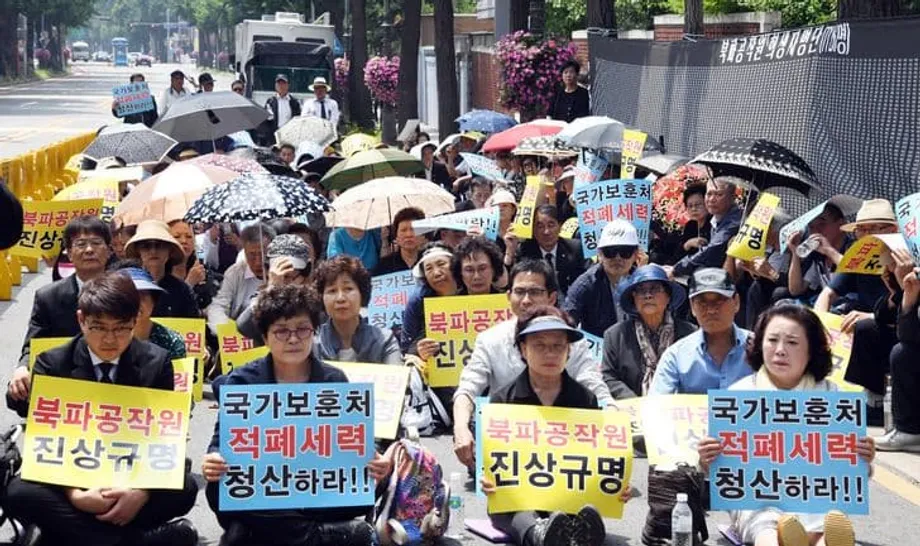
South Korea acknowledged in 2003 that it had trained 13,835 agents for covert missions and that 7,726 had died during training or operations. More than two decades later, former operatives still describe lives shaped by injuries, secrecy, broken promises and difficulty proving that they served. According to the Ministry of Patriots and Veterans Affairs, only 2,808 had been deemed eligible for benefits by June 2025.
Contents
- 13,835 Recruits, 7,726 Deaths and a Promise Left Unfulfilled
- How a Hidden Program Became Public
- The Border Conflict Behind the Missions
- Training Without a Recognized Military Identity
- Trauma That Followed Operatives Home
- Pay and Employment Promises That Failed
- Why Benefits Have Been Difficult to Obtain
- Submarine Incidents Showed the Continuing Danger
- A Reported U.S. Mission in 2019
- Support for Survivors Who Are Growing Older
- Key Points
Kim Ho entered that hidden world in 1992, when he was 20. A recruitment poster offered a route to financial security. When he asked about the position, a government representative promised enough pay to buy a home and guaranteed employment after his service. For a young man looking for stability, the offer appeared to provide a future.
Kim passed a physical test in Busan, the southern port city, before undergoing further screening in central Seoul's Yongsan District. About 400 applicants competed for places. Roughly 30 finalists were sent to Sokcho in Gangwon Province, where Kim spent 28 months in brutal training. They learned techniques for assassinating VIPs and infiltrating North Korea, without receiving an official military service number or rank.
Kim's promised compensation never arrived. After discharge, government officials appeared unexpectedly at his workplace and questioned him about his activities. Their visits made colleagues suspicious of his unexplained absence and made steady employment difficult. Kim, now executive director of the Korea Special Mission Exploits Association's Gyeonggi branch, described the consequences:
After my discharge, government officials would show up at my workplace and ask what I was doing. That led co-workers to suspect I had been involved in something questionable, making it hard for me to keep a job,
His experience reflects a wider complaint among former operatives: the state recruited them for dangerous, secret service, then left them struggling for recognition and support.
How a Hidden Program Became Public
South Korea's clandestine infiltration program remained a closely guarded secret for decades. Its former members' plight surfaced during a parliamentary audit in 2000. The government's acknowledgment in 2003 confirmed the existence of thousands of operatives and disclosed the deaths that had occurred during their training or missions.
South Korean law defines these operatives as people who served in military intelligence units between 1948 and 2002, either undertaking intelligence missions involving great danger or receiving related training. The legal designation refers to "special sacrifice for the state." Recognition therefore covers training as well as completed missions.
Most operatives in that period were sent into North Korea as civilians rather than uniformed soldiers. The program used that arrangement because deploying uniformed military personnel across the border would have violated international law and risked a major international incident. For the recruits, civilian classification also meant serving without the formal status normally associated with military duty.
The main dates show how long it took for their experiences to reach public institutions:
- 1948 to 2002: The period of service covered by the legal definition of special mission operatives.
- 1992: Kim Ho joined the recruitment process at age 20.
- 2000: A parliamentary audit brought the operatives' plight into public view.
- 2003: The government acknowledged 13,835 trained agents and 7,726 deaths.
- 2004: A compensation and recognition law was passed.
- 2013: A study of 257 operatives documented high scores for post-traumatic stress disorder.
- June 2025: The Ministry of Patriots and Veterans Affairs counted 2,808 operatives deemed eligible for benefits.
The 2004 law created a route to compensation and recognition. Former operatives nevertheless continued to face practical problems that legislation alone had not resolved, particularly missing records, injuries and the consequences of enforced secrecy.
The Border Conflict Behind the Missions
The Korean War ended in an armistice in 1953, without a formal peace treaty. An armistice stops fighting but does not provide the same settlement as a peace treaty. North and South Korea consequently remained officially at war, with skirmishes and infiltration incidents occurring along the Demilitarized Zone separating them.
Both sides carried out espionage during the Cold War, sometimes sending infiltrators deep into the other's territory. South Korea's covert program combined intelligence gathering for defense with a potential ability to conduct offensive operations.
Historical records cited in the account put the number of armed North Korean agents infiltrating South Korea between 1954 and 1992 at 3,693. Infiltration attempts peaked in 1967 and 1968, which together accounted for 20% of the incidents. In 1968, North Korean commandos reached within striking distance of the South Korean presidential residence while attempting to assassinate President Park Chung Hee.
North Korea used submarines, small boats and routes over land through the Demilitarized Zone to insert agents. Its agents were responsible for attempted assassinations of South Korean leaders and terrorist attacks against civilian targets. These threats formed the setting in which South Korean recruits were prepared for dangerous missions across the border.
For those recruits, the conflict was also personal. Their training required them to prepare for capture, injury or death while accepting that much of their service would remain hidden from the people around them.
Training Without a Recognized Military Identity
Special mission recruits learned counterintelligence, escape and evasion, combat without weapons, weapons handling and methods of entering North Korea undetected. Some received training in VIP assassination. Instructors repeatedly tested their endurance, strength and mental resilience.
Operatives underwent this preparation without official military identification, leaving them without the protections and benefits normally available to military personnel. Their unofficial status also affected how injuries were recorded. Serious physical trauma sustained in training often went undocumented in proper military medical records, creating problems years later when they sought treatment or benefits.
A former Army noncommissioned officer in his 60s recalled being warned before discharge that he could be detained at any time if he spoke carelessly about his service. The warning continued to frighten him after his military duty had ended:
My military service was over, but it didn't feel over. I was scared,
An operative in his 70s, who served with the Army during the 1970s and 1980s but was officially classified as a civilian, described humiliation as part of the training. He recalled an instructor telling him that his death would have no meaning:
The instructor told me, 'If you die here, it will be a death without meaning. No one will care.' I felt humiliated, but the fear was stronger,
The government's figures put the scale of loss at more than half of all those trained. The 7,726 deaths among 13,835 operatives amount to approximately 56%. The figure combines deaths during training and missions; a separate breakdown between the two was not given. Some activists believe the actual number of deaths was higher.
Families often received little explanation or support because the covert nature of the work prevented open discussion of what had happened. The secrecy that surrounded an operative's service could continue after death, leaving relatives without the information needed to understand their loss.
Trauma That Followed Operatives Home
A 2013 study by Kyungpook National University and Yeungnam University College surveyed 257 special mission operatives. It found an average score for post-traumatic stress disorder, or PTSD, of 34.3, compared with a general population average of 15 and a stated diagnostic threshold of 17.
The operatives' average was about 2.3 times the general population figure. PTSD involves lasting psychological distress associated with traumatic experiences. For these former recruits, those experiences included extreme training pressure, dangerous missions and witnessing fellow operatives die during exercises.
Survivor's guilt added to the burden for people who had watched others lose their lives. Enforced secrecy made it difficult to talk about those experiences with friends, relatives or mental health professionals. Fear of exposure or retaliation continued to produce anxiety in everyday life.
Former operatives described feeling isolated from society. They struggled to explain why they were distressed, why their bodies were injured or what had happened during the years they could not discuss. That isolation reduced their access to support from people who might otherwise have helped them.
Physical and psychological injuries also reinforced one another. As operatives aged, lasting damage from training became harder to manage, while many had never received adequate care for the trauma associated with their service. Their difficulties extended far beyond the moment of discharge.
Pay and Employment Promises That Failed
Every interviewee described promises of high pay and employment in the public sector that went unfulfilled after discharge. Like Kim Ho, they had committed years of their young adult lives in the expectation that service would lead to economic security.
Former operatives instead returned to civilian life without the resources they had expected to support themselves and their families. Many were too old to begin new careers in their chosen fields. Injuries restricted their ability to perform manual work, while the absence of recognized military service limited other opportunities.
A former Navy noncommissioned officer in his 80s expressed his sense of betrayal, describing a damaged body and a youth spent serving the country:
I gave my youth to the country in my 20s, and my body is broken. We carried out missions in the shadows and were discarded,
A former noncommissioned officer in his 40s, who trained in the 2000s, described a similar recruitment experience. He applied after being promised high pay and a government job. Neither promise was fulfilled. His account shows that these complaints also came from people who trained much later than the oldest surviving operatives.
Families carried financial losses too. Many operatives who died during training or missions left relatives who received no compensation or death benefits. Without official recognition of the service, those families were ineligible for standard military benefits for widows or children who had lost a parent.
Children consequently grew up without support their fathers had been promised. For surviving operatives, years of unstable employment and untreated injuries also limited retirement savings. By old age, many faced poverty while being unable to work because of injuries associated with their service.
Why Benefits Have Been Difficult to Obtain
The Ministry of Patriots and Veterans Affairs' count of 2,808 eligible operatives by June 2025 sits alongside a much larger historical population of people trained for secret missions. Verifying their service has been difficult because the program was designed to leave few traces.
Operatives often used aliases or false names during training. Many had no official military records. When they later applied for benefits under their civilian identities, they lacked documents connecting those identities to the units in which they had served.
Conventional veterans reviews usually rely on military service records, discharge papers and medical documentation. Operatives classified as civilians frequently had none of these. A process built around ordinary military paperwork was therefore poorly suited to people whose service had deliberately taken place outside that system.
A recent report by the Korea Institute for Health and Social Affairs identified those problems and called for review criteria tailored to special mission operatives. The report argued that conventional veterans review standards were inappropriate for their circumstances.
Medical claims presented another obstacle. Serious training injuries had often gone unrecorded because recruits lacked official status. When those injuries worsened with age, former operatives struggled to establish the connection between their health problems and their service, making treatment and disability compensation difficult to obtain.
The proposed changes included accepting other evidence of service, such as testimony from fellow operatives and recognition of training locations or methods. Such approaches would give applicants ways to demonstrate their participation without relying entirely on documents that had never been created.
Submarine Incidents Showed the Continuing Danger
North Korea's use of maritime infiltration produced several dramatic incidents. In 1996, a disabled North Korean submarine was spotted near Kangnung on South Korea's east coast. Twenty-six North Korean military personnel landed during what was determined to be an espionage or reconnaissance mission.
According to South Korean accounts, North Korean commandos from the submarine shot 11 of the infiltrators dead. Another 13 refused to surrender and were killed fighting South Korean troops. One was captured and one escaped.
During the hunt, North Koreans killed 11 South Korean military personnel and civilians and wounded five others. The incident demonstrated how a covert reconnaissance mission could turn into a prolonged and deadly search on South Korean territory.
In 1998, South Korean patrol boats encountered a North Korean semi-submersible spy vessel off the southern coast. A semi-submersible travels with much of its hull beneath the water, making it less visible than an ordinary surface vessel.
After a prolonged chase and an exchange of fire, the South Korean navy sank the vessel. A North Korean diver's body was recovered at sea. The wreck was later salvaged, revealing sophisticated infiltration equipment and the bodies of additional crew members.
These incidents formed part of the continuing confrontation in which both Koreas maintained intelligence capabilities against each other. They also illustrate the dangers associated with covert movement by sea, one of the methods used to approach a heavily guarded country.
A Reported U.S. Mission in 2019
Recently revealed reporting described a separate covert operation in early 2019 involving U.S. Navy SEALs. The team reportedly entered North Korea to plant a device that would allow Washington to listen to Kim Jong Un's communications.
The mission was reportedly authorized by President Donald Trump. According to the account, it went disastrously wrong when the SEALs encountered and killed unarmed North Korean civilians who were diving for shellfish.
The operatives then reportedly used knives to puncture the victims' lungs so their bodies would sink, before abandoning the mission. The account presents another example of the extreme risks surrounding covert entry into North Korea, including danger to civilians who encounter an operation.
South Korean former operatives' demands remain centered on their own service: recognition of what they were asked to do, care for lasting injuries and trauma, and fulfillment of commitments made when they were recruited.
Support for Survivors Who Are Growing Older
The Korea Institute for Health and Social Affairs report called for counseling focused on recovery and care for trauma. It proposed a system to help people return to civilian life modeled on Finland's military social worker framework, which provides dedicated counseling after discharge and has helped military personnel manage that transition.
Specialized mental health programs could address the experiences of training and missions alongside the psychological damage associated with living under enforced secrecy. Many operatives have never had a chance to discuss their experiences in a therapeutic setting, despite decades of distress.
The report's recommendations also sought changes to benefits reviews so that the unusual circumstances of covert service would be considered. Financial compensation remains a pressing concern for people whose injuries prevent work and whose unstable civilian careers left them without adequate savings for retirement.
Most surviving operatives are now elderly, and their average age continues to rise. Poor health and lasting trauma make delays more costly in daily life. Recognition, medical treatment and financial support address different parts of the same problem: people who served secretly are still living with the consequences.
Kim Ho, speaking as executive director of the Korea Special Mission Exploits Association's Gyeonggi branch, said the state had failed to provide adequate care:
After decades, most operatives are elderly, in poor health and still struggling with lasting trauma. The state has failed to provide adequate care,
For Kim and other survivors, the issue is no longer simply whether the program is acknowledged. That acknowledgment came in 2003, followed by legislation in 2004. Their demand is for recognition to translate into practical help with injuries, trauma, financial hardship and the evidence needed to obtain benefits.
Key Points
- South Korea acknowledged in 2003 that 13,835 operatives had been trained and 7,726 had died during training or missions.
- The legal definition covers service in military intelligence units between 1948 and 2002, including dangerous missions and related training.
- A parliamentary audit exposed the operatives' plight in 2000, and a compensation and recognition law followed in 2004.
- Only 2,808 operatives had been deemed eligible for benefits by June 2025, according to the Ministry of Patriots and Veterans Affairs.
- A 2013 study of 257 operatives found an average PTSD score of 34.3, compared with 15 in the general population.
- Former operatives described unfulfilled promises of pay and government employment, missing service records and injuries left undocumented.
- The Korea Institute for Health and Social Affairs called for tailored benefits reviews, counseling and trauma care.
- Many surviving operatives now face old age with poor health, financial hardship and lasting psychological distress.