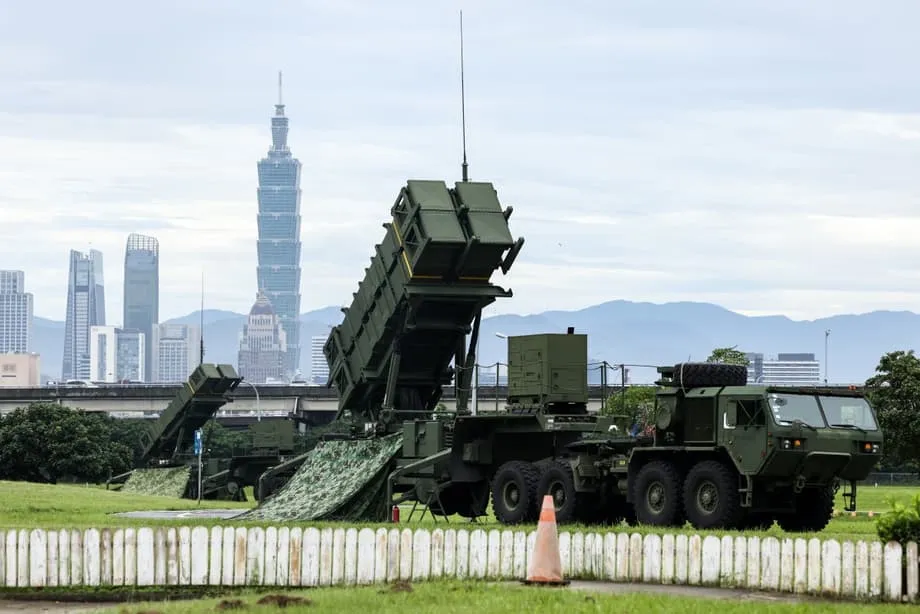
A faster shield against missiles and drones
Taiwan is proposing a $40 billion defense program running from 2026 to 2033, with an air and missile defense network called T-Dome at its center. President Lai Ching-te unveiled the project during National Day celebrations, describing a system intended to protect civilians, military forces and critical infrastructure against attacks ranging from drones to ballistic missiles.
Contents
- A faster shield against missiles and drones
- What the $40 billion package would fund
- How T-Dome would connect existing defenses
- From spotting a target to choosing a launcher
- Different weapons for different heights
- Why the Iron Dome comparison has limits
- Lessons from Ukraine and pressure from the PLA
- Approval, deliveries and the eight year schedule
- Lai's defense message and Beijing's response
- Industry, supply chains and regional security
- What to Know
As of December 1, 2025, the proposal still requires legislative approval. A special budget to begin funding T-Dome and related projects is due for review at the end of the year. The opposition holds a parliamentary majority, making agreement over spending an immediate test for a program that would take eight years to develop.
T-Dome would connect Taiwan's existing defenses with new weapons and a faster command network. Its purpose is to detect incoming threats, track their movement and direct the right weapons toward them, while keeping the government, military and essential services operating under attack.
Lai introduced the network as a nationwide safety measure in his National Day address. He described the protection it was intended to provide:
multilayer defense, high level detection and effective interception
Lai also said it would:
weave a safety net
The proposal comes amid sustained People's Liberation Army drills around Taiwan and frequent flights into its Air Defense Identification Zone (ADIZ). Taiwan's defense ministry has warned that exercises could turn into military operations with little warning. T-Dome is intended to reduce the advantage an attacker could gain from a surprise strike, partly by shortening the time between spotting a threat and firing at it.
Lai has also committed to raising defense spending above 3 percent of gross domestic product in 2026 and to 5 percent by 2030 if the plan holds. Those targets accompany a wider effort to make Taiwan's forces harder to disable and more capable of resisting an invasion.
What the $40 billion package would fund
The proposed funding is linked to the Special Budget for Strengthening Defense Resilience and Asymmetric Warfare Capabilities. That program covers T-Dome and related projects intended to help a smaller military survive an attack and make an invasion more difficult.
Asymmetric warfare means using capabilities that complicate a stronger opponent's plans. In this package, air defense sits alongside precision artillery, missiles capable of striking distant targets, unmanned systems and supplies needed to keep forces operating after the first attacks.
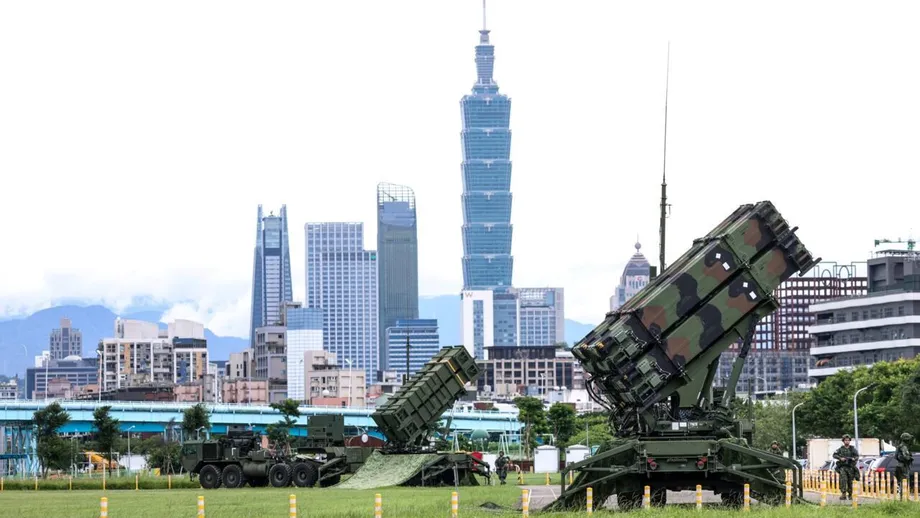
Defense officials have identified additional air defense fire units, more Patriot interceptors and continued mass production of Taiwan's Sky Bow systems among the priorities. Taiwan is also awaiting delivery of National Advanced Surface to Air Missile System units, known as NASAMS.
Precision artillery and missiles for strikes over long distances would allow Taiwan to threaten enemy launchers and areas where forces gather. The unmanned equipment includes aerial drones, drone boats and other unmanned surface vessels. Improved command systems would use automation and artificial intelligence to sort information faster and assign tasks more effectively.
Spare parts and war reserve munitions are another major part of the plan. An air defense battery needs replacement missiles after firing, while radars, vehicles and communications equipment need maintenance. Keeping those supplies available is central to sustaining protection through repeated attacks.
The administration estimates that the defense buildup could generate around $13 billion in economic activity and support as many as 90,000 jobs. Production, maintenance and supply chain work would contribute to those projections. The proposed $40 billion package therefore reaches beyond the purchase of a single air defense system, covering weapons, integration and the industrial support needed to keep them working.
How T-Dome would connect existing defenses
T-Dome is a network, with two closely connected parts. One is a command and control layer that combines information and directs weapons. The other consists of interceptor layers designed to engage threats at different ranges and altitudes.
Taiwan already operates Patriot and the domestically built Sky Bow family of surface to air missiles. T-Dome would link those systems with incoming NASAMS units and defenses such as Stinger teams and mobile guns. Taiwan is also developing the Chiang Kong interceptor for missions at high altitude, particularly against fast ballistic targets descending at steep angles.
The command system would take in information from radars on the ground, airborne sensors and civil aviation feeds. Electro optical sensors and data processing nodes would contribute to a shared picture of the airspace. The system would identify and classify targets, then assign suitable weapons.
Automation, stronger communications and multiple backup connections are intended to move decisions in seconds rather than minutes. Taiwan's defense ministry describes the objective as increasing the likelihood of a successful interception while making better use of limited missile stocks when many threats arrive together.
Mobile and dispersed command nodes are part of that design. They would be able to relocate, survive initial strikes and continue directing fire from launchers spread across different locations. Defense officials say procurement would prioritize mobile launchers, decoys and communications equipment that can be set up quickly to restore a network after a hit.
The command system would also coordinate electronic warfare, including jamming and deception. Incoming missiles and drones would face a combination of weapons that physically strike them and measures intended to interfere with their operation.
From spotting a target to choosing a launcher
The sensor to shooter concept connects detection, decision and firing without slow handoffs. A sensor finds a possible threat, the command network checks and tracks it, and a launcher receives instructions to engage.
A coastal radar detecting cruise missiles flying at low altitude illustrates how the proposed chain would work. Other sensors would help confirm the targets and their direction. The command system would assign nearby launchers carrying suitable missiles, alert civil authorities to shelter vulnerable sites and direct other batteries to move before later strikes could hit them.
A launcher unable to fire safely because of jamming or a detected decoy could pass the engagement to another launcher. Updated information would move across the network in real time. This is the operating approach Taiwan wants to build, while the complete architecture will require years of integration and training.
US forces have pursued similar concepts to connect sensors and weapons that previously operated through separate systems. Taiwan's version applies that approach to an island with limited room to retreat, dense cities and critical infrastructure concentrated within a small area.
The benefit would be a shorter sequence from detection to engagement, often called the kill chain. Faster coordination would also help operators manage interceptor stocks during a prolonged conflict or a large missile salvo intended to overwhelm defenses. Choosing suitable weapons quickly matters because firing too many expensive interceptors at one target leaves fewer available for the next wave.
Different weapons for different heights
Taiwan's planned layers would give defenders more than one opportunity to engage an incoming threat. Each layer would cover targets suited to its weapons, rather than expecting every missile system to handle every attack.
Stinger teams, mobile guns and missiles for short distances would protect air bases, ports, power stations and troop concentrations against drones, helicopters and cruise missiles flying close to the ground. Stingers are portable missiles carried and operated by personnel.
NASAMS and improved versions of the Sky Bow family would engage threats at medium altitude. Patriot units and Taiwan's Tien Kung 3 would handle aircraft and ballistic missiles at high altitude during the terminal phase, the final part of a missile's flight toward its target.
The planned Chiang Kong interceptor would extend the altitude range further, adding another defensive layer against fast targets following high, steep trajectories. Together, these systems are intended to cover a wider range of attacks than any single battery could manage.
Layered protection also depends on launchers remaining available after the opening strikes. Mobility, dispersed positions and decoys would make them harder to locate and attack. Reloads, communications and functioning command nodes would allow surviving batteries to continue protecting priority locations as further waves arrived.
Why the Iron Dome comparison has limits
Israel's Iron Dome helped inspire the T-Dome concept, but Taiwan is planning for a broader set of threats. Iron Dome developed around the need to intercept large numbers of rockets fired over short distances, often following ballistic arcs and costing relatively little per round.
Taiwan's threat picture includes People's Liberation Army fighters and bombers, cruise missiles flying at low altitude and ballistic missiles descending quickly at steep angles. Its network would need to handle those different flight patterns while surviving the opening stages of a coordinated attack from the mainland and at sea.
Taiwan's geography adds pressure to the design. The island is small and densely populated, making mobility and dispersal important. More warning time and faster decisions would give operators a better chance to protect crowded areas and essential infrastructure.
Cost is another constraint. Advanced interceptors are expensive, and an attacker may launch more missiles than defenders can shoot down. Smart fire control, decoys and electronic warfare are intended to complicate the attack before an interceptor is fired, preserving costly missiles for threats that require them.
T-Dome's central promise is to coordinate those tools. Its effectiveness would depend on how well sensors, command systems, weapons and operators work together under pressure, as well as on the number of batteries Taiwan can field.
Lessons from Ukraine and pressure from the PLA
Ukraine's experience has influenced Taiwan's approach to air defense. Kyiv's ability to maintain electricity, protect its leadership and continue military operations during waves of missile and drone attacks depended heavily on layered defenses, mobile launchers and a command system that could prioritize what needed protection.
Taiwan's planners draw similar lessons: essential sites need several layers of protection, launchers need to hide and move, and false positions can complicate an attacker's targeting. Operators also need training to switch quickly between targets when drones and missiles arrive together.
The People's Liberation Army has enough weapons to put those defenses under severe pressure. Warships and coastal launchers can fire hundreds of missiles within minutes. Aircraft can launch cruise missiles from beyond the reach of many missiles fired from the ground.
Taiwan's defense ministry's warning about drills becoming operations with little notice makes the opening moments of an attack especially important. The proposed network is intended to keep enough launchers and command nodes functioning after the first strikes to continue defending key locations.
Surviving defenses would also force an attacker to make further choices about where to aim. Protecting government functions, military operations and infrastructure through successive attacks is therefore a central purpose of the project, alongside intercepting individual missiles.
Approval, deliveries and the eight year schedule
Taiwan's special budget needs legislative approval before the government can release the proposed funding. Lawmakers have clashed over defense spending during 2025, and the opposition's parliamentary majority could slow that process.
Deliveries also depend on US production capacity and export approvals. A large share of the missiles and radars would come from American production lines already dealing with substantial backlogs. Taiwan's domestic defense industry can produce more equipment at home, but many essential components would still come from overseas partners facing their own delays.
The military has set a goal of high joint combat readiness by 2027 and more comprehensive deterrent capacity by 2033. Officials acknowledge that completing the whole T-Dome architecture by 2027 is not feasible. Integration, operator training and interceptor production take time, with reliability and safety requiring attention throughout.
The proposed schedule brings several milestones together:
- National Day 2025: Lai unveiled T-Dome and described its role in protecting civilians and military forces.
- End of 2025: The special budget is due for legislative review.
- 2026: The proposed eight year funding period begins, with defense spending expected to exceed 3 percent of GDP.
- 2027: Taiwan targets high joint combat readiness, while full T-Dome implementation would take longer.
- 2030: Lai seeks defense spending equal to 5 percent of GDP.
- 2033: The proposed funding period ends, alongside the goal of more comprehensive deterrent capacity.
Early elements could arrive as new batteries are delivered and existing units become more closely connected. Officials have given no precise completion date for the full network. Developing a command system across military services, training operators to use automation while retaining human judgment and building sufficient reload stocks would all take years.
Lai's defense message and Beijing's response
Lai presented T-Dome as a defensive project intended to preserve the status quo and deter aggression. In his National Day speech, he said Taiwan sought stability rather than confrontation, with military strength supporting that goal.
Lai, Taiwan's president, described his government's position in these words:
determined to maintain peace through strength
He also called on Beijing to renounce the use of force in the Taiwan Strait. Beijing responded swiftly, with Chinese officials asserting that Taiwan belongs to China and accusing Lai of incitement.
A Chinese foreign ministry spokesperson said Lai's speech misrepresented the situation and increased tensions:
Lai's remarks distort facts and mislead public opinion,
The spokesperson also labeled Lai a "troublemaker" and a "warmonger". The exchanges accompanied Taiwan's presentation of a defense program intended to preserve government functions and military capability during an attack.
Industry, supply chains and regional security
Taiwan's proposed buildup would require software specialists, electronics workers, aerospace personnel and technicians able to maintain radars, missiles and mobile command nodes. The government's estimates of around $13 billion in economic activity and up to 90,000 jobs include the production and support work behind the equipment.
Factories would need reliable supplies of parts and the capacity to increase production to replace losses during a crisis. Maintenance teams and spare parts would remain essential long after weapons arrived. The plan therefore ties military readiness to the ability of domestic industry and overseas suppliers to keep equipment operating.
The United States is a critical supplier and a partner in training and exercises. Japan, Australia and European partners also have an interest in a stable Indo Pacific. A more mobile and layered Taiwanese air defense could make it harder for an attacker to achieve a quick, decisive result.
That is the deterrence argument behind T-Dome: making an attack harder to carry out could reduce the risk of miscalculation and allow more time for diplomacy during a crisis. Regional militaries are also studying closer connections between sensors and weapons because rapid decisions and coordinated networks are increasingly central to surviving precision strikes.
Taiwan's immediate tasks are securing funding, obtaining equipment and connecting it reliably. The eight year proposal seeks to build a defense that can keep operating under repeated attacks, with missiles, communications, trained personnel and replacement supplies supporting one another.
What to Know
- Taiwan proposes a $40 billion defense package for 2026 to 2033, with T-Dome connecting air and missile defenses across the island.
- The special budget is due for legislative review at the end of 2025 and still needs approval.
- Patriot, Sky Bow, NASAMS, Stinger teams and mobile guns would form connected defensive layers, with Chiang Kong under development for higher altitude missions.
- The sensor to shooter approach aims to shorten decisions and conserve interceptors during large attacks.
- The package also covers precision artillery, missiles for distant strikes, unmanned systems, command technology, spare parts and reserve ammunition.
- Lai seeks defense spending above 3 percent of GDP in 2026 and 5 percent by 2030.
- Officials say the full network cannot be completed by 2027; Taiwan targets more comprehensive deterrent capacity by 2033.
- The administration projects around $13 billion in economic activity and as many as 90,000 jobs.
- Lai describes the project as defensive, while Beijing has condemned his remarks.