A royal document from a kingdom between larger powers
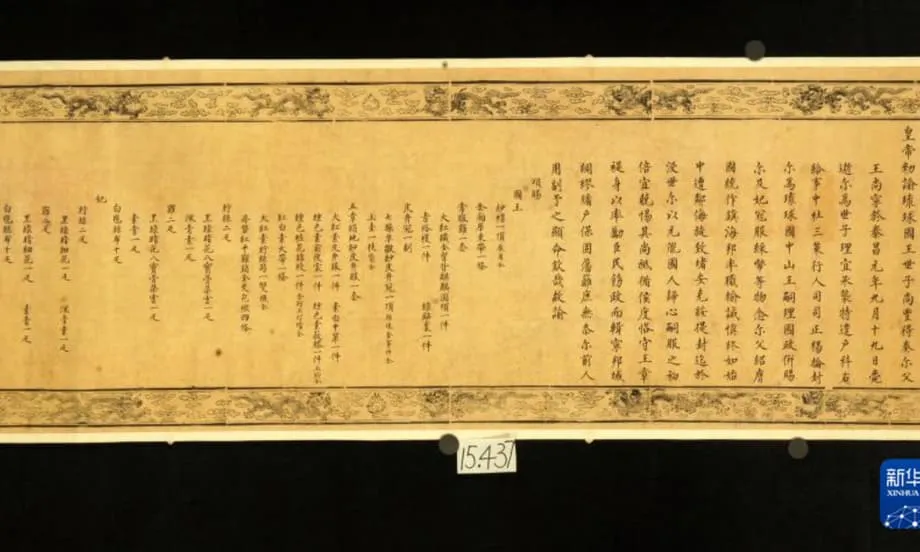
A 1629 imperial edict displayed again at the Lushun Museum in Dalian records how China's Ming court recognized a new king of Ryukyu while the island kingdom was already under pressure from Japan. Issued under Emperor Chongzhen, the document confirms Shang Feng as ruler after the death of Shang Ning, known in Japanese sources as Sho Nei. It also preserves praise for the late king, instructions for his successor and references to threats in the surrounding seas.
Contents
- A royal document from a kingdom between larger powers
- What the emperor granted to Shang Feng
- The invasion recalled in the edict
- How tribute connected ceremony and commerce
- Fifteen Ming missions and a route through Naha
- Why Japan allowed the Chinese relationship to continue
- A warning about northern Taiwan
- What the paper, seal and gifts conveyed
- New seals under the Qing, then the end of the kingdom
- Understanding the description of Ryukyu as a vassal
- The dates that connect the document to Ryukyu's history
- Key Points
The museum displays a replica and keeps the original in its archives, protecting the fragile document while allowing visitors to examine its content. The edict is written in regular script on yellow paper, surrounded by golden cloud and dragon patterns. A square vermilion seal bears the words Imperial Seal of Expansive Fortune.
Addressed to the King of Ryukyu, the edict authorizes appointed envoys to bestow royal investiture on behalf of the Ming court. Investiture was the formal recognition of a ruler through an imperial ceremony and documents. For Ryukyu, it supplied royal standing within the diplomatic order recognized by China and helped sustain access to trade.
The document brings together two relationships that shaped the kingdom's history. Ryukyu accepted titles and ceremonial obligations from China, while Japan's Satsuma domain exercised control after its invasion in 1609. The kingdom retained its royal court and continued tribute to China, making it both a subordinate of Satsuma and a bridge to Chinese commerce.
The exhibit connects the formal language of imperial authority with the practical choices of a small island kingdom. Its rulers used ceremony, trade and carefully worded messages to navigate relationships with larger powers whose interests overlapped at sea.
What the emperor granted to Shang Feng
The 1629 edict recognizes Shang Feng's succession and gives imperial envoys the authority to carry out the ceremony installing him as king. It praises Shang Ning for loyalty and good service, then urges the new ruler to guard his realm and uphold royal statutes. A list of ceremonial gifts records the favor extended by the emperor.
Ming investiture served several purposes at once. It recognized a foreign ruler's legitimacy, defined his relationship with the dynasty issuing the document and began another cycle of ceremonial exchange. Tribute missions carried local products and formal letters to the Chinese court. In return, the court supplied edicts, robes, seals, calendars and lavish gifts.
Ryukyu's rulers gained trade opportunities and prestige from this relationship. A seal and an edict announced that a new king had been accepted into the order recognized by Chinese officials. These objects were instruments of rule as well as valuable ceremonial possessions.
The instructions to Shang Feng also tied recognition to responsibility. The new king was expected to preserve the kingdom's laws and defend its territory. In a maritime region where larger powers were testing one another, those duties had practical urgency.
The invasion recalled in the edict
The edict says the king had suffered harassment from a neighboring state. Museum researchers connect that language to the incursion by Japanese forces that seized the Ryukyu king and looted treasures. The reference places an episode of violence within a document otherwise devoted to royal succession and ceremony.
The Chinese chronicle History of the Ming records the Japanese seizure under Wanli 40, corresponding to 1612, while modern scholarship generally dates the Satsuma invasion to 1609. The chronicle describes the king's abduction and the plunder of treasures, then notes that he was later released and tribute resumed.
Satsuma, a domain in southern Kyushu, forced Ryukyu into submission and imposed tribute and monopolies. The royal court remained in place, but Japanese control continued behind the scenes. Ryukyu's Chinese investiture and tribute missions survived within that new arrangement.
How tribute connected ceremony and commerce
The Chinese tributary system organized foreign relations through formal rules, titles and exchanges. The court described those relationships as a hierarchy. Smaller states gained recognition, access to markets and security, while the Chinese court affirmed its central position and regulated exchanges that might otherwise lead to conflict.
Korea and Vietnam were usually ranked as peer neighbors, while Ryukyu, Siam and others occupied a lower rung. All participated in a shared set of ceremonies and trading practices. The relationship combined political status with practical benefits for both sides.
Ryukyu's sailors and merchants connected China, Japan, Southeast Asia and the islands stretching between Taiwan and Kyushu. Tribute embassies also functioned as trading ventures. They returned with silk, ceramics and books, while departing with sulfur, horses, dyed textiles and pepper.
Ryukyu's lacquerware, textiles and ritual documents show influences from both China and Japan. These objects preserve the kingdom's role as a meeting point in the maritime world. Its connections were visible in what people wore, what they made and the documents used at court.
Ritual texts, portraits of foreign envoys and gift lists survive in East Asian archives and museums. They allow researchers to reconstruct the links between diplomacy and commerce, including how dress, titles and staged ceremonies displayed rank. The 1629 edict belongs to this wider record of exchanges.
Fifteen Ming missions and a route through Naha
Research by museum experts identifies 15 investiture missions sent by the Ming court to Ryukyu. Each involved a sea journey from Fujian to Naha and weeks of ceremonies at the Ryukyu court. Envoys installed kings, issued edicts and checked credentials.
The missions also kept a valuable commercial channel open. Their official purpose was royal recognition, but the travel, gifts and exchanges brought diplomacy and trade together. Ryukyu depended on that connection for standing with a powerful neighbor and for opportunities to conduct business.
By the late Ming period, investiture had become a regular practice. The 1629 edict under Emperor Chongzhen is recorded as the dynasty's last investiture of a Ryukyu king. The document therefore marks both a succession in Ryukyu and the final Ming ceremony in a longer series.
Why Japan allowed the Chinese relationship to continue
Satsuma's invasion left Ryukyu answering to two masters. The kingdom remained subordinate to Satsuma while receiving royal recognition from China. It was expected to continue tribute to the Chinese court, and Satsuma used that relationship to preserve access to Chinese trade when direct relations were blocked.
The arrangement suited different interests at the same time. Ryukyu gained prestige and trading opportunities from Chinese investiture. Japan allowed the tribute relationship to continue because it maintained access to Chinese goods and helped Nagasaki merchants.
The Tokugawa shogunate managed external contacts through what scholars call a four portal system. Nagasaki handled exchanges with China and the Netherlands. Tsushima mediated with Korea, Satsuma handled Ryukyu, and Matsumae handled the Ainu in Ezo.
These arrangements connected Japan to Asian trade while maintaining official distance. Within that system, Ryukyu served as a channel to China as well as a kingdom subject to Satsuma's demands. Its court continued to perform the ceremonies required for Chinese recognition while operating under Japanese supervision.
A warning about northern Taiwan
The 1629 edict praises Shang Ning for loyalty and prudence, including his report of Japanese interest in Jilong Mountain. The location was on Taiwan's northern coast near Fujian. The Ming court received a report from Ryukyu in 1616 that Japan was considering seizing it.
The Chinese court responded by ordering coastal defenses to be strengthened. Ryukyu's communication therefore carried information that could prompt military preparations beyond the kingdom's own shores. Tribute partners could also serve as early warning outposts.
The reference places Ryukyu within a maritime network connecting Taiwan, Fujian and Japan. Its rulers watched developments around the Chinese coast and passed information to the Ming court. The edict's instruction that Shang Feng guard his realm fits this setting of contested waters and pressure from larger powers.
For researchers, these passages offer more than a list of royal titles. They preserve the language officials used to describe danger, reward useful service and direct a successor's conduct. The praise for Shang Ning and the instructions to Shang Feng connect the succession ceremony to events at sea.
What the paper, seal and gifts conveyed
The yellow paper, dragon motifs and vermilion seal marked the edict as a command from the highest authority. The words Imperial Seal of Expansive Fortune presented the emperor as a cosmic source of order. Its appearance reinforced the authority expressed in its text.
The gifts exchanged through investiture also communicated rank. Silk robes, musical instruments, incense and seals sent to Ryukyu showed the king's place within the hierarchy. They carried material value as well, providing resources that could be used after a mission returned home.
Gift lists helped make status visible and measurable. A ruler received recognition through the words of the edict, the ceremony conducted by the envoys and the objects accompanying them. The relationship was expressed through possessions as well as promises and duties.
The preservation of such documents gives historians ways to connect specific rulers with journeys, envoys and ceremonies. Names, titles, seals and references to earlier events help establish who held the throne at a particular time and how messages moved between courts.
New seals under the Qing, then the end of the kingdom
After the dynastic change in China, Ryukyu sought new documents and seals from the Qing court. Archival notes preserved by museum staff record that, early in the Qing period, the Ryukyu king returned two old edicts, one decree and a gilded silver seal to request fresh instruments of rule.
A new dynasty in Beijing required documents bearing its own era name. The return of the earlier objects shows how carefully these instruments were tracked. Their recorded movement helps historians connect surviving papers to particular diplomatic journeys and ceremonies.
The Qing court continued to invest Ryukyu kings through the seventeenth, eighteenth and nineteenth centuries. The final Qing investiture mission reached Naha in 1866, when the older diplomatic system was already under strain.
Within a decade of that mission, Japan had consolidated domestic rule and moved to absorb Ryukyu formally. In 1879, the Meiji government transformed the kingdom into Okinawa Prefecture, bringing it into the modern Japanese state and ending its place in the older tributary order.
Understanding the description of Ryukyu as a vassal
The Lushun Museum has displayed the edict again at a time of close attention to maritime history and the legacy of East Asian diplomacy. The document is being cited as evidence of Ryukyu's position as a Chinese vassal state. No date is given for the renewed display.
In this diplomatic setting, vassal described a tributary partner bound by ritual ties. Ryukyu maintained its own court, language and law while accepting titles and gifts from Beijing and sending tribute according to a set calendar. Its relationship with China operated through recognition, ceremony and exchange rather than provincial administration.
Modern political discussion sometimes turns historical documents into arguments about sovereignty. Historians describe the tributary system as a flexible diplomatic order in which formal rank and practical control could take different forms. Ryukyu's relationship with China supplied prestige and commerce, while Satsuma exercised control following its invasion.
The edict makes that complexity tangible. A Chinese emperor recognized a Ryukyu king, praised information supplied about Japanese activity and issued instructions for protecting the realm. At the same time, the kingdom's continued trade with China served Japanese interests.
The dates that connect the document to Ryukyu's history
The edict sits within a sequence stretching from Satsuma's invasion to the end of the kingdom. The dates show how royal recognition continued through military pressure and a change of dynasty in China.
- 1609: Satsuma invades Ryukyu, captures King Sho Nei and imposes control while leaving the royal court in place. Tribute to China continues under Satsuma supervision.
- 1612: The History of the Ming records a Japanese seizure of Ryukyu, the king's abduction and the plunder of treasures under Wanli 40. It says the king was later released and tribute resumed.
- 1616: The Ming court receives Ryukyu's report of Japanese plans to seize Jilong Mountain on Taiwan and orders stronger coastal defenses.
- 1629: Emperor Chongzhen issues the edict recognizing Shang Feng after Shang Ning's death. It is recorded as the last Ming investiture of a Ryukyu king.
- The 1640s and afterward: With the rise of the Qing, Ryukyu returns older seals and documents and requests replacements. The Qing continues the investiture cycle.
- 1866: The final Qing investiture mission arrives in Naha.
- 1879: The Meiji government transforms Ryukyu into Okinawa Prefecture, ending the kingdom's participation in the tributary order.
The surviving document helps researchers identify rulers, trace the movement of imperial messages and establish which ports and routes mattered. Its references to harassment, coastal defense and royal duties also preserve details that a simple list of missions would leave out.
Key Points
- Lushun Museum in Dalian displays a replica of the 1629 Ming edict and preserves the original in its archives.
- The edict recognizes Shang Feng as king, praises the late Shang Ning and records ceremonial gifts and duties.
- Museum researchers connect its reference to harassment with Japan's seizure of Ryukyu and its king.
- Ryukyu maintained Chinese investiture and tribute while remaining subordinate to Satsuma after the 1609 invasion.
- Museum research identifies 15 Ming investiture missions, with the 1629 edict marking the dynasty's last Ryukyu investiture.
- The Qing continued royal investiture, sending its final mission in 1866. Japan transformed Ryukyu into Okinawa Prefecture in 1879.
- The edict brings together royal recognition, trade, maritime warnings and the kingdom's balancing of relations with China and Japan.